Source 20 Foot PP PE Flexitank for Food, Chemical, and Water
Find 24 listings for the 20 Foot PP PE Flexitank designed for food, chemical, and water transport. Buyers can compare specifications, capacities, and packaging options from verified Chinese manufacturers.
Key considerations
Products List


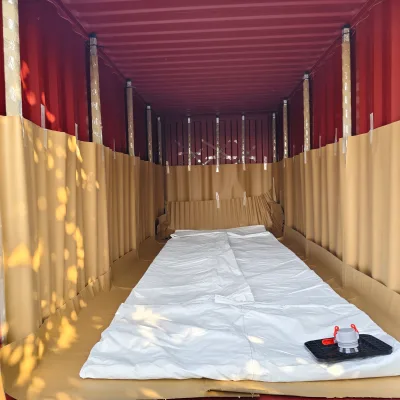
24000L Ast Factory Flexitank 20 FT Container Flexi Flexitanks for Detergents
$159.00 - $169.00
MOQ: 10 Pieces



Comprehensive Sourcing Guide
Strategic Sourcing Guide for 20 Foot PP PE Flexitanks
Understanding the Core Product Architecture and Material Composition
The 20-foot PP PE flexitank represents a specialized class of flexible intermediate bulk container (FIBC) designed specifically for the transportation of non-hazardous and certain hazardous liquids within standard shipping containers. Unlike rigid tanks, these units utilize a composite structure that balances flexibility with structural integrity. The fundamental architecture relies on a multi-layered construction, where the inner layer is typically composed of Polyethylene (PE) films, and the outer layer consists of Polypropylene (PP) woven fabric. This combination is critical; the PE film provides the necessary impermeability and chemical resistance to contain the liquid, while the PP woven outer layer offers the tensile strength required to withstand the hydrostatic pressure of the liquid load during transit.
The raw materials used in the manufacturing process are derived from PE and PP resins, often processed into high-pressure polyethylene plastic bags for the inner lining. The production method is classified as composite packaging bag manufacturing, which involves laminating these distinct materials to create a unified barrier. The resulting product is often described as a "Track Flexitank" or a "special shape flexitank," indicating its adaptability to specific container dimensions and cargo requirements. The shape of these units is generally that of a plastic bag, though specific models may feature a square bottom design to maximize volume utilization and stability within the container. The outer appearance is frequently noted as white, which aids in visual inspection for potential leaks or damage during loading.
Technical Specifications and Capacity Standards
When evaluating a 20-foot PP PE flexitank, buyers must focus on the precise capacity and dimensional standards that align with international shipping regulations. The standard capacity for these units typically ranges from 12,000 liters to 24,000 liters, with specific models available in the 16,000 to 24,000-liter range. Some specialized variants may support capacities as low as 5,000 liters or as high as 24,000 liters, depending on the specific model designation such as "BlueWhale001" or "Anthente." It is essential to verify that the selected flexitank capacity matches the volume of the 20-foot container being utilized, as the standard container volume is approximately 33 cubic meters, but the usable liquid volume is constrained by the flexitank's design limits.
The physical dimensions of the packaged flexitank prior to inflation are also a critical technical specification. Observed packing standards indicate dimensions such as 53 cm by 105 cm by 42 cm, or alternatively 53 cm by 105 cm by 42 cm, which facilitates efficient storage and shipping of the empty unit. Once deployed, the flexitank is designed to fit within 20-foot, 30-foot, or 40-foot freight containers, with the 20-foot variant being the primary focus for this sourcing guide. The construction is often described as "multi-layer," and the product is frequently categorized under a standard of "Cube," implying a design that maximizes the cubic capacity of the container. The unit is typically supplied in a compressed packing state, with dimensions potentially reaching 590 cm by 240 cm by 170 cm when fully packed for shipment, or customized as per request. The product is also characterized as an "enclosed" type, ensuring that the liquid is fully contained within the bag structure without external exposure.
Compliance, Certification, and Regulatory Verification
Navigating the regulatory landscape for flexitanks requires a rigorous verification process, as the industry does not universally mandate a single certification for all products. While some background information may reference ISO 9001 or ISO 14001 standards, these should be treated as potential supplier attributes rather than guaranteed product features. Buyers must explicitly request and verify the specific quality management system certifications held by the manufacturer, as these are not inherent to the product itself but are organizational credentials.
The primary compliance focus for flexitanks involves the chemical compatibility of the materials with the intended cargo. The product is approved for shipping lines such as MSC, COSCO, MCC, Hapag-Lloyd, APL, and CMA-CGM, which implies that the design meets the general safety requirements of major global carriers. However, specific regulatory approvals for hazardous materials transport (such as UN certification) are not explicitly listed in the general product facts and must be confirmed on a case-by-case basis. Buyers should verify that the manufacturer provides test reports or certificates of compliance for the specific liquid being transported, particularly for applications involving acids, alkalis, industrial alcohols, or oils. The product is noted as having a "Disposable" feature, which suggests a single-use lifecycle, but this does not automatically confer regulatory compliance for hazardous goods without specific testing data.
Cost Drivers and Pricing Dynamics
The pricing for 20-foot PP PE flexitanks is influenced by several variable factors, with the observed market range falling between 80 and 260 USD. This wide range indicates that price is not solely a function of the base unit but is heavily dependent on customization, capacity, and material thickness. The Minimum Order Quantity (MOQ) is another significant cost driver, with observed ranges spanning from 1 to 65 units. Buyers purchasing small quantities may face higher per-unit costs, while those ordering near the upper end of the MOQ range may benefit from economies of scale.
Additional cost factors include the customization of the product. Since customization is available, any deviation from standard dimensions, valve placements, or material thicknesses will likely incur a premium. The packing method also affects logistics costs; units packed in cartons and pallets may have different handling costs compared to those in bulk liquid packages or compression packing. The origin of the product, primarily from China or specifically Zibo, Shandong Province, influences the base manufacturing cost, but shipping costs to the destination port will vary based on the chosen shipping line and current freight rates. Buyers should also consider the "track" suitability of the product, as specialized tracking or monitoring features, if available, could impact the final price.
Typical Applications and Cargo Compatibility
The versatility of the 20-foot PP PE flexitank is demonstrated by its wide range of applications. The product is explicitly suitable for the transport of water, industrial wastewater, alkalis, industrial alcohol, and oil. This broad compatibility makes it a preferred solution for industries such as food, agriculture, and apparel, where liquid transport is a critical logistical component. The material composition, specifically the PE film inner layer, provides the necessary barrier against chemical degradation, allowing the flexitank to handle corrosive substances like acids and alkalis, provided the specific chemical resistance has been validated.
The application scope extends to chemical industries, where the containment of various liquid chemicals is required. The "Track Flexitank" designation suggests suitability for tracking and monitoring systems, which is valuable for high-value or sensitive cargo. The product is also noted as being suitable for "special shape" requirements, indicating that it can be adapted for non-standard cargo configurations. The "Bag Variety" is listed as "Upright Bag" or "PP Fabric+PE Film," which influences how the liquid is contained and dispensed. For applications involving food or agriculture, the hygiene and material purity of the PE film are paramount, and buyers should ensure that the raw materials meet relevant food-grade standards, even if not explicitly stated in the general product facts.
Supplier Evaluation and Quality Control Protocols
Selecting a reliable supplier for 20-foot PP PE flexitanks requires a thorough evaluation of their manufacturing capabilities and quality control processes. Buyers should prioritize suppliers who demonstrate a clear understanding of the "composite packaging bag" making process and can provide evidence of their raw material sourcing, such as high-pressure polyethylene resin. The location of the supplier, particularly those in Zibo, Shandong Province, China, should be verified for logistical efficiency and production capacity.
Quality control should focus on the integrity of the multi-layer construction. Buyers must verify that the inner PE films are free from pinholes and that the outer PP woven layer is securely laminated to prevent delamination under pressure. The "Disposable" nature of the product means that quality control must be absolute, as the unit cannot be reused. Inspection protocols should include pressure testing, leak detection, and visual inspection of the "Square Bottom Bag" or "Plastic Bags" shape to ensure uniformity. Suppliers should also be evaluated on their ability to provide "Carton & Pallet" or "Compression Packing" that protects the product during transit to the destination. The availability of customization should be balanced with the supplier's ability to maintain consistent quality across different specifications.
Long-Term Procurement and Operational Considerations
For long-term procurement, buyers should consider the operational efficiency and environmental impact of using PP PE flexitanks. The "Disposable" feature simplifies end-of-life handling, as the used units can be disposed of according to local regulations, though buyers should verify the recyclability of the PE and PP materials. The standardization of the product, with models ranging from 12,000L to 24,000L, allows for consistent inventory management and predictable logistics planning.
Buyers should also plan for the lead times associated with customization and shipping. While specific lead times are not provided in the product facts, the variability in MOQ and the availability of customization suggest that production schedules may fluctuate. Establishing a relationship with a supplier who can accommodate both small and large orders (1 to 65 units) will provide flexibility in responding to market demands. Finally, buyers should maintain a proactive approach to compliance, regularly updating their knowledge of international shipping regulations and ensuring that their flexitank selections remain compliant with the latest standards for liquid transport.
FAQs
What materials are used to construct 20 foot pp pe flexitanks?
These units are constructed from a multi-layer composite of PE film and PP woven fabric. The inner PE layer ensures impermeability while the outer PP layer provides tensile strength for liquid containment.
Which capacity ranges are available for these flexitank models?
Standard capacities range from 12,000 to 24,000 liters, with specific models supporting 16,000 to 24,000 liters. Some variants can accommodate volumes as low as 5,000 liters depending on the design.
Can these flexitanks be customized for specific container sizes?
Yes, customization is available for various container dimensions including 20, 30, and 40-foot freight containers. Buyers can request specific shapes or dimensions to maximize volume utilization within the vessel.
How are these units typically packed for shipment?
They are commonly packed in cartons and pallets or in bulk liquid packages with compression packing. Standard packed dimensions often measure approximately 53 cm by 105 cm by 42 cm for efficient storage.
What applications are suitable for this type of flexible tank?
They are suitable for transporting water, industrial wastewater, alkalis, industrial alcohol, and oil. The materials also support applications in food, agriculture, and apparel industries requiring non-hazardous or specific chemical transport.
What is the typical price range for purchasing these flexitanks?
The observed price range in the market is between 80 and 260 USD per unit. Final pricing depends on factors such as capacity, customization requirements, and the specific minimum order quantity selected.
Where are these flexitanks primarily manufactured and sourced from?
These products are primarily manufactured in China, with specific production hubs located in Zibo, Shandong Province. The origin location influences logistics planning and shipping options for international buyers.