Source 360 Degree Circular Bubble Level for Construction, Machinery, and DIY
Find 30 verified listings for the 360 Degree Circular Bubble Level suitable for construction, machinery alignment, and DIY projects. Buyers can compare specifications like size, material, and certifications from suppliers in Zhejiang, China.
Key considerations
Products List


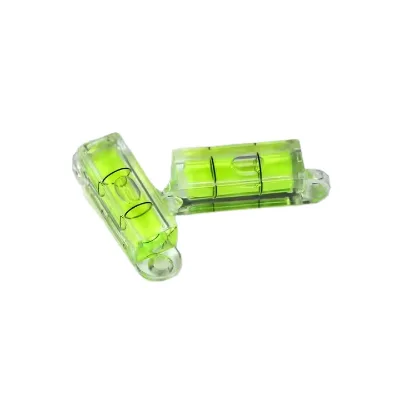
High Transparent Appearance High Accuracy Mini Bubble Level Circular Level Bubble
$0.12 - $0.40
MOQ: 500 pieces


![[8*5.5mm] Universal Round Bubble Level Zhejiang Jinhua Bubble Level](https://file.focusaim.com/api/image/preview/c7c06102aab56d3daa8145c6fd03967e.png?bi=true&local=true)


High-Accuracy Bubble Level with Calibration Certificate – ISO Certified
$0.08 - $0.14
MOQ: 500 Pieces


Comprehensive Sourcing Guide
Strategic Sourcing Guide for 360-Degree Circular Bubble Levels
Understanding Technical Specifications and Variants
When sourcing 360-degree circular bubble levels, buyers must first navigate a complex landscape of technical specifications that define the utility and precision of the instrument. The core product category encompasses various models, each tailored to specific measurement needs. Based on available market data, the physical dimensions of these vials vary significantly, ranging from compact units with a diameter of 8mm and a height of 5.5mm to larger industrial variants measuring 20mm in diameter and 14mm in height. Some specialized models extend the diameter range from 8mm up to 100mm, indicating a broad spectrum of applications from miniature assembly to heavy machinery calibration.
The physical form factor is equally critical. While the core keyword implies a circular design, the product data reveals specific model identifiers such as YJ-CR0855, YJ-CR2014, and YJ-HG3015, which correspond to distinct dimensional profiles. For instance, the YJ-CR0855 is associated with a size of Dia85.5mm, whereas the YJ-CR2014 corresponds to Dia2014mm. Another variant, the YJ-HG3015, is described with a size of Dia30*15mm. These dimensional differences directly influence the field of view and the sensitivity of the bubble movement. Buyers should verify the exact diameter and height requirements for their specific machinery or assembly line before placing an order, as a mismatch can lead to inaccurate leveling readings.
Furthermore, the material composition and surface finish play a pivotal role in durability. The supply chain data indicates that these products are often constructed with an alloy standard, ensuring structural integrity under stress. The surface finish is frequently noted as plastic, which offers a lightweight alternative to metal housing while maintaining resistance to corrosion. Color options are diverse, with suppliers offering Green, Yellow, Red, Blue, Orange, and Clear variants. The choice of color often relates to visibility requirements; for example, a green beam or a clear vial might be preferred for specific lighting conditions in a workshop. The weight of individual units is also a consideration, with some specific models weighing approximately 9.7g, a factor that matters when integrating multiple sensors into a single device.
Compliance, Certification, and Safety Standards
In the realm of industrial instrumentation, compliance with international safety and quality standards is non-negotiable. Buyers must rigorously verify that their suppliers possess the necessary certifications to guarantee the reliability of the 360-degree circular bubble levels. The market data highlights several key certifications that are commonly associated with these products, including MSDS (Material Safety Data Sheet), ISO9001, ISO14001, and RoHS (Restriction of Hazardous Substances).
The presence of MSDS certification is particularly important for logistics and safety, as it details the chemical composition and handling requirements of the materials used in the vial, such as the liquid inside and the casing. ISO9001 certification indicates that the manufacturer adheres to a recognized quality management system, ensuring consistent production processes. Similarly, ISO14001 suggests a commitment to environmental management, which is increasingly relevant for companies with strict sustainability mandates. RoHS compliance is essential for electronic and mechanical components, confirming that the product does not contain hazardous substances like lead or mercury, which is a prerequisite for selling in many global markets, including the European Union.
Additionally, some product listings reference CE certification, which signifies conformity with health, safety, and environmental protection standards for products sold within the European Economic Area. When evaluating potential suppliers, procurement teams should request copies of these certificates and verify their validity dates. It is crucial to understand that while these certifications are observed in the market, they are not automatically granted to every listed product. Buyers must explicitly confirm that the specific batch or model they intend to purchase carries the relevant documentation. The absence of these certifications could lead to regulatory hurdles, product recalls, or safety incidents in the field.
Cost Drivers and Pricing Dynamics
The pricing structure for 360-degree circular bubble levels is influenced by a combination of factors, including material quality, customization requirements, and order volume. The observed price range in the market spans from $0.03 to $100 USD, a wide disparity that reflects the diversity of the product offerings. The lower end of the spectrum typically corresponds to basic, non-customized vials with standard dimensions, such as the 8mm or 14mm variants, produced in high volumes. Conversely, the higher price points are associated with specialized models, custom branding, or units with enhanced durability features.
Order volume is a primary driver of cost efficiency. The Minimum Order Quantity (MOQ) varies significantly across suppliers, ranging from as low as 1 unit to as high as 10,000 units. For small-scale procurement or prototyping, buyers may find suppliers with low MOQs, though the unit cost will likely be higher. Large-scale industrial buyers can leverage economies of scale, but they must be prepared to meet higher volume thresholds. Some specific listings indicate an MOQ of 5,000 pieces, which suggests that certain manufacturers specialize in bulk industrial supply.
Customization is another significant cost factor. The market data confirms that customization is available, with OEM (Original Equipment Manufacturer) support offered by many suppliers. This allows buyers to request specific dimensions, colors, or branding on the packaging. However, these custom requests often incur additional setup costs and may require a higher MOQ to justify the production line changes. The packaging details also influence the final cost; options range from simple OPP bag packing to more robust paper box or precision plastic round circular packaging. The choice of packaging affects both the unit price and the shipping logistics, as bulkier packaging increases freight costs.
Typical Applications and Industry Use Cases
The versatility of 360-degree circular bubble levels makes them indispensable across a wide array of industries. The primary function of these devices is to measure horizontal and vertical alignment, ensuring that machinery, structures, or components are perfectly level. The data indicates that these products are explicitly designed for "Measure" applications, serving as critical tools in construction, manufacturing, and maintenance sectors.
In the construction industry, these levels are used to ensure the foundation and structural elements of buildings are level before proceeding with further work. The various sizes, from the compact 8mm vials to the larger 30mm units, allow for use in different contexts, from small-scale carpentry to heavy civil engineering. In manufacturing, the levels are integrated into machinery to ensure precision during the assembly process. The "Industrial" grade classification suggests that these tools are built to withstand the rigors of factory environments, where accuracy is paramount for product quality.
The specific model YJ-HG3015, described as a "Circular Universal Spirit Bubble Level," points to its adaptability for universal applications. The availability of different colors, such as green, yellow, and red, allows for customization based on visibility needs in different lighting conditions. For instance, a green beam might be preferred in high-glare environments, while a red vial could be more visible in low-light settings. The product's use in machine measuring level gauges highlights its role in maintaining the operational efficiency of automated systems. Whether it is a 9.5x39.8mm tubular level or a 30x15mm circular unit, the application is consistently focused on achieving precise alignment to prevent mechanical failure or structural instability.
Supplier Evaluation and Procurement Logistics
Selecting the right supplier requires a comprehensive evaluation of their capabilities, logistics, and communication standards. The supply chain data indicates that the primary origin of these products is Zhejiang, China, a region known for its manufacturing prowess in precision instruments. Buyers should verify the specific location and capabilities of the supplier within this region to ensure they can meet their quality and delivery expectations.
Lead time is a critical logistical factor. The observed delivery time for these products ranges from 7 to 15 days, which is relatively standard for manufactured goods from this region. However, this timeframe can be affected by the complexity of the order, the availability of raw materials, and the current production load. Buyers should confirm the exact lead time for their specific order, especially if they are dealing with customized requests or large volumes.
Payment terms are another essential aspect of supplier evaluation. The market data lists accepted payment methods including T/T (Telegraphic Transfer), Paypal, and Western Union. T/T is the most common method for B2B transactions, offering a balance of security and flexibility. Buyers should negotiate payment terms that align with their cash flow and risk management strategies. Additionally, the packaging details, such as "500PCS/OPP 5000PCS/CTN" or "Box" packaging, should be confirmed to ensure that the goods are protected during transit. The gross weight (G.W) and net weight (N.W) of the shipment, which can be around 9kg and 8kg respectively for certain batches, are vital for calculating shipping costs and planning logistics.
Quality Control and Long-Term Procurement Strategy
Ensuring consistent quality is paramount when sourcing 360-degree circular bubble levels. Buyers should implement a robust quality control (QC) process that includes pre-shipment inspections and sample testing. Given the precision required for these instruments, even minor defects in the vial or the liquid filling can render the product useless. The "Industrial" grade standard suggests a baseline of durability, but buyers must verify that the specific units they receive meet their internal quality thresholds.
Long-term procurement strategies should focus on building strong relationships with reliable suppliers. The availability of OEM support and customization options indicates that suppliers are willing to collaborate on product development. Buyers should consider establishing a long-term contract with a supplier who can consistently deliver high-quality products at competitive prices. This approach can help mitigate the risks associated with supply chain disruptions and ensure a steady supply of critical measurement tools.
Furthermore, buyers should monitor the market for changes in certifications and standards. As regulations evolve, suppliers may need to update their products to maintain compliance. Proactive communication with suppliers regarding these changes can prevent future disruptions. By maintaining a clear understanding of the technical specifications, compliance requirements, and logistical constraints, buyers can make informed decisions that support their operational efficiency and product quality goals. The ability to verify attributes such as the specific model number, size, and color ensures that the procured items match the exact requirements of the application, minimizing the risk of errors and rework.
FAQs
What certifications do 360 degree circular bubble levels have?
These products commonly hold MSDS, ISO9001, ISO14001, RoHS, and CE certifications. Buyers must verify that specific batches carry valid documentation, as certifications are not automatically granted to every listed product.
How can I customize 360 degree circular bubble levels for my brand?
Customization and OEM support are available for these items. Suppliers can accommodate specific dimensions, colors, and packaging requirements, though custom requests often incur additional setup costs and may require higher minimum order quantities.
What are the standard dimensions for these circular bubble levels?
Available sizes range from Dia8*5.5mm to Dia30*15mm and up to Dia100mm. Specific models like YJ-CR0855 measure 8mm in diameter, while YJ-HG3015 measures 30mm, allowing selection based on machinery or assembly needs.
Where are 360 degree circular bubble levels manufactured?
The primary origin for these products is Zhejiang, China. Buyers should verify the specific location within this region to ensure the supplier meets their quality and delivery expectations for precision instruments.
What is the typical delivery time for these levels?
The standard delivery time ranges from 7 to 15 days. This timeframe can be affected by order complexity, raw material availability, and current production loads, so exact lead times should be confirmed for each order.
Can I find 360 degree circular bubble levels with low MOQ?
Minimum Order Quantities vary from 1 unit up to 10,000 units depending on the supplier. While some listings require 5,000 pieces, others offer lower thresholds for prototyping, though unit costs may be higher for smaller volumes.