Source 6s1p Drone Battery with BMS Protection for drones, e-bikes, and power tools
Find 23 listings for a 6s1p Drone Battery with BMS Protection tailored for drones, electric bikes, and portable power tools. Compare specifications like capacity, voltage, and cycle life to select the right supplier for your project needs.
Key considerations
Products List


Fpv Drone Battery 6s 16000mAh for Drone Hot Selling Lithium Polymer Battery
$141.00 - $162.00
MOQ: 10 Pieces


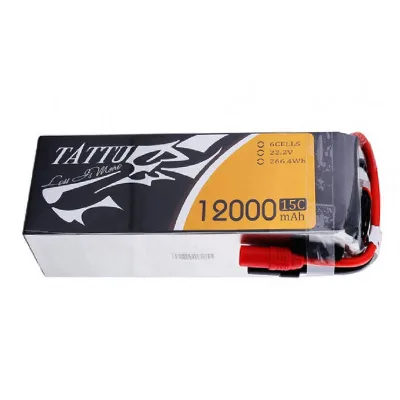


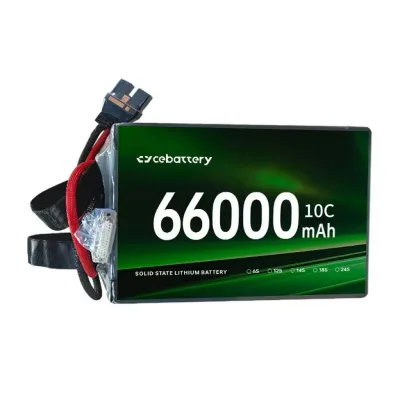


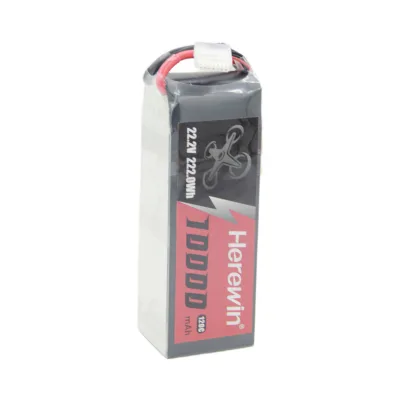

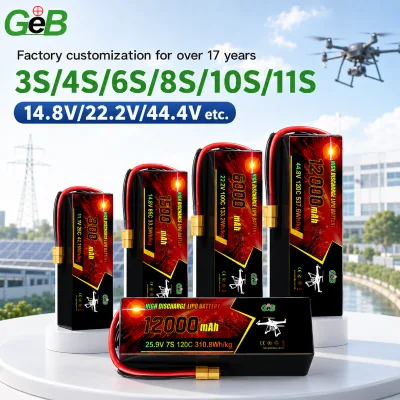
High-Performance 6s Li-ion Drone Battery 22.2V 7400mAh Lithium-Ion Battery
$122.00 - $123.00
MOQ: 10 Pieces
Comprehensive Sourcing Guide
6s1p Drone Battery with BMS Protection Sourcing Guide
Sourcing a 6s1p drone battery equipped with Battery Management System (BMS) protection requires a disciplined approach to verifying electrical architecture, safety certifications, and supplier reliability. The 6s1p configuration indicates a series-parallel arrangement where six lithium-ion cells are connected in series to achieve a nominal voltage of approximately 22.2V, while the "1p" designation suggests a single parallel string, though market listings often vary this configuration to increase capacity. Buyers must distinguish between true 6S1P packs and higher-capacity variants like 6S4P or 7S configurations, as the internal cell arrangement directly impacts discharge rates, weight, and physical dimensions. The inclusion of a BMS is critical for balancing cell voltage, preventing over-discharge, and managing thermal runaway, which are primary failure modes in high-drone applications.
Procurement decisions should be grounded in observed market signals rather than generic assumptions. Current listings indicate a wide price range from $1 to over $3,000 USD, reflecting significant variance in cell quality, capacity, and brand positioning. Minimum Order Quantities (MOQs) typically range from 1 to 50 units, offering flexibility for both prototyping and small-batch production. Buyers should note that while some suppliers offer customization, the core technical specifications such as nominal voltage and cell chemistry must be explicitly confirmed for each order. The presence of certifications like CE, RoHS, UN38.3, and MSDS is a strong indicator of compliance, but verification of the specific test reports is necessary to ensure they apply to the exact model being purchased.
Product Scope and Observed Listing Signals
The observed product landscape for 6s1p drone batteries reveals a diverse array of models with varying physical dimensions and capacities. Listings show models such as the SY-6S-22.2V-22Ah and SY-6S-22.2V-16Ah, which share similar lengths but differ in width and height, indicating that capacity increases often require larger physical footprints. For instance, the 22Ah model measures 195mm x 75mm x 65mm, while the 16Ah variant is slightly shorter in height at 50mm. Another model, the SY-6S-22.2V-27Ah, expands significantly to 205mm x 88mm x 62mm, demonstrating that higher capacity demands more internal volume. Buyers must match these physical constraints to their drone’s battery bay, as even minor dimensional discrepancies can prevent installation or affect the aircraft’s center of gravity.
Capacity and voltage specifications are not always consistent across listings, requiring careful cross-referencing of model numbers and technical attributes. Some products list a nominal voltage of 22.2V with a capacity of 12000mAh, while others specify 8400mAh or 5000mAh for similar voltage levels. The cathode material is predominantly listed as NCM (Nickel Cobalt Manganese), which offers high energy density suitable for drones, though some entries mention LiFePO4, which provides greater safety and cycle life at the cost of energy density. Buyers should verify the specific cell chemistry for their use case, as NCM cells are more sensitive to thermal management than LiFePO4. Additionally, the discharge rate is a critical performance metric, with some batteries supporting high discharge rates of 15C, which is essential for agile drone maneuvers, while others may have lower limits.
Technical Specifications to Verify
Verifying the electrical architecture is the first step in ensuring compatibility with drone flight controllers and motors. The 6s1p configuration should yield a nominal voltage of 22.2V, with a fully charged voltage of approximately 25.2V for NCM cells. Buyers must confirm the actual capacity in mAh or Ah, as listed values can vary; for example, one model specifies 12000mAh, while another lists 8400mAh. The discharge rate, often expressed as a C-rating, determines the maximum current the battery can deliver. A 15C discharge rate on a 12000mAh battery allows for a peak current of 180A, which is crucial for high-performance drones. Buyers should request detailed discharge curves from suppliers to understand how voltage sag behaves under load, as this impacts flight stability and motor efficiency.
Physical dimensions and weight are equally important for drone aerodynamics and payload capacity. Listings show weights ranging from approximately 1.49kg to 2.0kg for various models, with dimensions such as 195mm x 75mm x 65mm or 52mm x 71mm x 190mm. The weight-to-capacity ratio is a key efficiency metric; a lighter battery with the same capacity extends flight time. Buyers should also verify the connector type and pinout configuration, as these must match the drone’s power distribution board. The BMS protection features should include over-current, over-voltage, under-voltage, and short-circuit protection. Some listings mention intelligent BMS systems, which may offer additional features like cell balancing and temperature monitoring, providing real-time data to the flight controller for enhanced safety.
Compliance and Safety Documentation
Safety certifications are non-negotiable for drone batteries, which are high-energy devices prone to thermal events if mishandled. Listings frequently cite CE, RoHS, UN38.3, and MSDS certifications. UN38.3 is particularly critical for air transport, as it verifies that the battery has passed a series of tests simulating conditions encountered during transportation, including altitude simulation, thermal cycling, and vibration. Buyers must request copies of these certificates and verify their validity with the issuing body. RoHS compliance ensures that the battery is free from hazardous substances like lead and mercury, which is important for environmental regulations and recycling. CE marking indicates conformity with health, safety, and environmental protection standards for products sold within the European Economic Area.
Beyond certifications, buyers should inquire about the battery’s operational temperature range and cycle life. Some listings specify an operating temperature range of -40°C to 60°C, which is essential for drones operating in extreme environments. Cycle life, often rated at 600 to 800 cycles, indicates the number of charge-discharge cycles before the capacity drops to 80% of its original value. Buyers should understand that cycle life can be affected by discharge rates and charging habits; high C-rates can reduce longevity. Additionally, the presence of a BMS is a key safety feature, but its effectiveness depends on the quality of the components and the programming. Buyers should ask for BMS specifications, including the balance current and protection thresholds, to ensure it aligns with the cell chemistry and usage patterns.
Cost Drivers and Commercial Terms
The price of a 6s1p drone battery is influenced by several factors, including cell quality, capacity, and the sophistication of the BMS. Listings show a wide price range, from under $1 to over $3,000, reflecting differences in brand, certification, and performance. Higher-priced batteries often use premium cells with better consistency and longer cycle life. The cost of raw materials, such as nickel, cobalt, and manganese, also fluctuates, impacting the final price. Buyers should consider the total cost of ownership, including replacement frequency and potential downtime due to battery failure, rather than just the initial purchase price. Customization options, such as specific connectors or dimensions, may incur additional costs, so buyers should clarify these requirements early in the negotiation process.
Commercial terms, including MOQ and lead time, vary among suppliers. Some suppliers offer an MOQ of just 1 unit, which is ideal for testing and prototyping, while others require orders of 50 units or more for production runs. Lead times can range from a few days to several weeks, depending on inventory levels and production schedules. Buyers should negotiate clear terms for payment, shipping, and returns. Shipping costs for lithium batteries can be high due to hazardous material regulations, so buyers should factor this into their budget. Additionally, warranty terms should be clearly defined, including the duration and coverage for defects or premature failure. Buyers should also inquire about the supplier’s policy on defective units and whether they offer replacement or refund options.
Supplier Qualification and Quality Control
Evaluating supplier qualifications is essential to mitigate the risk of receiving substandard products. Buyers should verify the supplier’s business license, manufacturing capabilities, and quality control processes. Suppliers with in-house manufacturing can offer better control over product consistency and customization. Certifications like ISO 9001 indicate a structured quality management system, though they are not always listed. Buyers should request samples before placing bulk orders to test performance, fit, and safety. Sample testing should include charge/discharge cycles, temperature monitoring, and BMS functionality checks. Suppliers who are willing to provide samples and support testing are generally more reliable and transparent.
Quality control measures should include incoming material inspection, in-process testing, and final product verification. Buyers should ask about the supplier’s testing protocols, such as capacity testing, internal resistance measurement, and safety discharge tests. Suppliers with rigorous QC processes will have documented procedures and traceability for each batch. Buyers should also inquire about the supplier’s experience in the drone battery market, as this indicates familiarity with specific requirements and challenges. References or case studies from existing customers can provide insights into the supplier’s reliability and product performance. Avoiding suppliers with vague or incomplete product descriptions is a good practice, as it may indicate a lack of technical expertise or transparency.
Long-Term Procurement Checks
Establishing a long-term procurement strategy requires ongoing monitoring of supplier performance and product quality. Buyers should track key performance indicators such as defect rates, delivery times, and customer support responsiveness. Regular audits or quality checks of incoming batches can help identify issues early. Buyers should also stay informed about changes in regulations and standards that may affect battery imports and usage. Keeping a record of all certifications and test reports is essential for compliance and liability purposes. As technology evolves, buyers should be open to upgrading to newer cell chemistries or BMS technologies that offer improved performance and safety.
Building a strong relationship with suppliers can lead to better pricing, priority production, and access to new products. Buyers should communicate their long-term needs and volume projections to suppliers to secure favorable terms. Regular feedback on product performance can help suppliers improve their offerings. Buyers should also consider diversifying their supplier base to reduce risk, rather than relying on a single source. This strategy can provide flexibility in case of supply chain disruptions or quality issues. Finally, buyers should continuously evaluate the market for new products and suppliers to ensure they are getting the best value and performance for their drone operations.
FAQs
What is the cycle life of this 6s1p drone battery?
The cycle life is 800 times for the 22.2V 22Ah model and 600 cycles for the 22.2V 12000mAh variant. This duration depends on the specific capacity and cathode material used, such as NCM or LiFePO4, within the battery pack.
Can I customize the size of the 6s1p drone battery?
Yes, customization is available for this product line. Buyers can request specific dimensions like 195mm by 75mm or 205mm by 88mm depending on the required capacity and cell configuration for their drone application.
Which certifications does the 6s1p drone battery hold?
The battery holds CE, RoHS, UN38.3, and MSDS certifications. These standards ensure safety during transport and operation, meeting international requirements for lithium-ion batteries used in drones and other electronic devices.
How does the BMS protect the 6s1p drone battery?
The battery includes a Battery Intelligent Relationship System for protection. This BMS manages the 6S1P cell configuration to prevent overcharging or deep discharge, ensuring safe operation at high discharge rates up to 15C.
What is the operating temperature range for this battery?
The operating temperature range is from -40 to 60 degrees Celsius. This wide range allows the battery to function reliably in various environmental conditions, making it suitable for outdoor drone operations in extreme climates.
Can I find a 6s1p drone battery with 12000mAh capacity?
Yes, a 12000mAh capacity option is available for the 22.2V model. This specific capacity is paired with a weight of approximately 1491 grams and comes in a carton package for standard shipping and handling.
Where is the 6s1p drone battery manufactured?
The product originates from Taizhou, Jiangsu, China, and Fujian, China. These locations are the primary places of origin for the listed lithium-ion cells and battery packs supplied for drone applications.