Find 72V 140Ah Off Road UTV for Golf Courses, Farms, and Construction
Source 30 verified listings for the 72V 140Ah Off Road UTV to compare specifications like battery capacity, speed, and cargo load. Buyers can evaluate gas and electric models with varying wheelbases and brake types for diverse industrial applications.
Key considerations
Products List


4WD 72V 2 Seats off-Road Hunting Transport Utility Cart Dune Buggy UTV
$7560.00 - $8565.00
MOQ: 1 Sets

Automatic Road Street Legal UTV Electric 4X4 off Road 4 Seater Electric Farm Utvs
$13200.00 - $16800.00
MOQ: 1 Pieces


Reliable 4X4 Electric UTV for off-Road Enthusiasts and Professionals
$9000.00 - $11000.00
MOQ: 1 Pieces


2-Seater Electric Side by Side UTV off-Road Ready Electric UTV for Sale
$7000.00 - $7900.00
MOQ: 1 Pieces

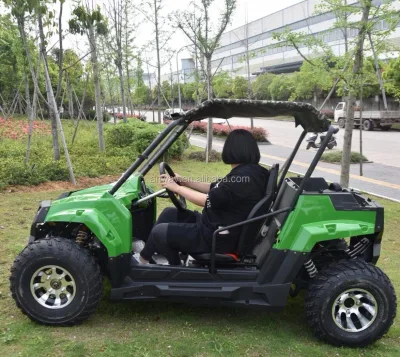

Utv Street Legal Utility Vehicles Pug Utv Parts Side by Side Utv Tent
$1500.00 - $1600.00
MOQ: 1 Minimum

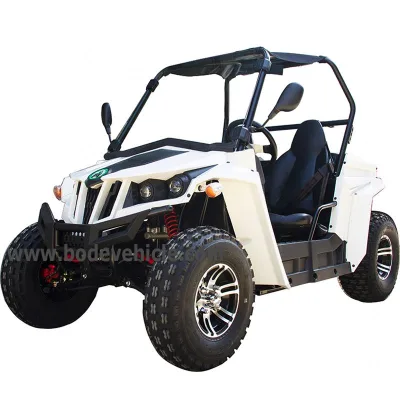
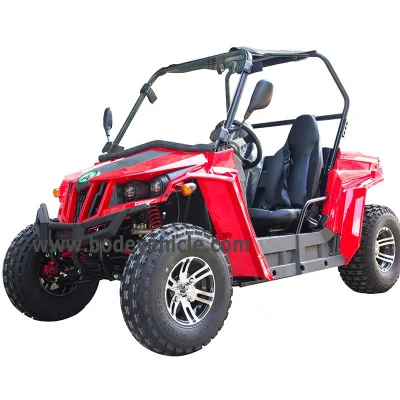


Comprehensive Sourcing Guide
Sourcing Guide for 72V 140Ah Off-Road Utility Terrain Vehicles
Understanding the Core Powertrain Configuration
When sourcing a vehicle described by the core keyword "72V 140Ah Off Road UTV," buyers must first recognize that this specific configuration points to an electric powertrain rather than a traditional internal combustion engine. The supply market contains distinct product lines, and conflating gas-powered and electric specifications can lead to procurement errors. The observed data confirms the existence of models featuring a 72V 140AH battery capacity, which utilizes a Lead Acid Gel Battery type. This specific energy storage setup is paired with a PMSM (Permanent magnet synchronous motor) rated at 10KW.
The performance metrics for this electric configuration differ significantly from gas counterparts. While gas models in the same catalog may offer a single driver top speed of 65km/h, the electric variant with the 72V 140AH specification lists a maximum speed of 52km/h. Furthermore, the operational range for a single driver is observed at 75km. It is critical for buyers to verify the charging infrastructure requirements, as the charge time for this specific battery system is noted between 9 and 10 hours using an On-Board Charger. This long charging window necessitates planning for depot operations or overnight charging cycles, distinguishing it from rapid-charging lithium solutions often found in other market segments.
Technical Specifications and Dimensional Analysis
A detailed review of the technical attributes reveals a diverse range of chassis designs and dimensions within the utility terrain vehicle (UTV) category. The physical footprint of these vehicles varies based on the specific model intended for the application. For instance, one observed model, designated as UTV450X, has a standard dimension of 3300x1440x1980mm. In contrast, the electric model EV100 4X4 presents a standard dimension of 2623x1440x2003mm, while another gas model, UTV450, measures 2620x1440x1930mm.
The wheelbase and ground clearance are critical for off-road stability. The electric 72V configuration features a wheelbase of 1840mm and a minimum ground clearance of 235mm. These dimensions suggest a design optimized for maneuverability in tighter spaces while maintaining sufficient clearance for uneven terrain. The weight with full equipment for the electric model is recorded at 515kg, which is lighter than the gas-powered UTV450X observed at 595kg. This weight difference impacts payload capacity and transport logistics.
Tire specifications are another key differentiator. The electric model utilizes a front tire size of 25x8-12 and a rear tire of 25x10-12. These dimensions are standard for utility vehicles requiring traction on loose surfaces. The braking system is consistently hydraulic disc brakes for both front and rear wheels across the observed models, ensuring reliable stopping power. The parking mechanism is identified as a hand brake, a standard feature for stationary security.
Compliance, Certification, and Regulatory Standards
Navigating the regulatory landscape is essential for international procurement. The observed product data indicates a split in certification requirements depending on the powertrain and target market. Gas-powered models, such as the UTV450, are listed with certifications including CE, DOT, and ISO. These certifications suggest compliance with European safety standards, Department of Transportation regulations for road use in the US, and international quality management systems.
Conversely, the gas-powered UTV450X is noted with EPA certification, which is a specific requirement for emissions compliance in the United States. The electric models, including the 72V 140AH variant, do not explicitly list EPA certification in the provided data, as emissions standards typically apply to internal combustion engines. However, buyers must verify if the electric models meet specific regional electrical safety standards, such as UL or IEC, which are not explicitly detailed in the source text but are industry norms for battery-operated vehicles.
The "Standard" field in the product data lists dimensions (e.g., 3300x1440x1980mm) rather than regulatory standards like ISO 9001. Buyers should not assume that dimensional standards equate to safety certifications. When sourcing these vehicles, it is imperative to request specific test reports for the battery management system (BMS) and the electrical system to ensure they meet the safety regulations of the destination country. The presence of DOT certification on gas models implies a level of road legality that may not automatically transfer to electric models without separate verification.
Cost Drivers and Pricing Structure
The market for these vehicles exhibits a significant price variance, with observed listed prices ranging from 1500 to 16800 USD. This wide range is driven by several factors, including the powertrain type, battery capacity, and included features. The electric models with the 72V 140AH battery configuration likely occupy a higher price tier within this spectrum due to the cost of the battery pack and the PMSM motor. The lead acid gel battery, while common, adds substantial weight and cost compared to smaller capacity alternatives.
Minimum Order Quantity (MOQ) is another variable affecting the total cost of ownership. The observed MOQ range spans from 1 to 50 units. Buyers purchasing a single unit for testing or small fleet deployment will face a different per-unit cost structure compared to those ordering 50 units for a large commercial operation. Customization is available across the product line, which can further influence the final price. Customization options may include changes to the cargo box capacity, tire types, or specific branding, all of which require additional manufacturing time and resource allocation.
Typical Applications and Operational Use Cases
The versatility of these off-road UTVs allows for deployment in various sectors. The data explicitly mentions that certain models are suitable for golf courses, indicating a use case in recreational and hospitality management. The electric 72V 140AH model, with its 75km range and 52km/h top speed, is particularly well-suited for large estates, resorts, or golf courses where noise reduction and zero emissions are priorities.
For utility applications, the cargo capacity is a primary consideration. The electric model features a dump bed with a capacity of 150kg and dimensions of 930x1270x380mm. This makes it ideal for transporting materials, tools, or waste on construction sites, farms, or industrial facilities. The rear cargo box load capacity for other models is listed at 100kg, providing a baseline for comparison. The gradeability of the vehicles is noted as 20-30%, which is sufficient for moderate slopes found in agricultural or landscaping environments.
The 4x4 configuration of the EV100 model suggests enhanced traction capabilities for challenging terrains, making it suitable for search and rescue operations, security patrols, or maintenance in difficult-to-reach areas. The choice between the gas and electric models often depends on the specific operational environment; electric models are preferred for indoor or enclosed areas due to the lack of exhaust fumes, while gas models may be chosen for extended range requirements where charging infrastructure is unavailable.
Supplier Evaluation and Quality Control Protocols
When evaluating potential suppliers for these vehicles, buyers should focus on the consistency of the product data and the transparency of the manufacturing process. The origin of the products is listed as Shanghai, indicating a concentration of manufacturing in this region. Buyers should verify the factory's capacity to handle the specific customization requests, such as the iron frame packing observed for the EV100 model.
Quality control should begin with a review of the battery and electrical system. Since the 72V 140AH system relies on lead acid gel batteries, the supplier must provide documentation on the battery cycle life and warranty terms. The charge time of 9-10 hours is a fixed parameter that should be tested during the sampling phase to ensure the On-Board Charger functions correctly under various voltage conditions.
For gas models, the fuel system is electronic fuel injection, which requires precise calibration. Buyers should request a sample unit to test the compression ratio of 10:01 and the displacement of 391ml to ensure the engine performance matches the specifications. The lubrication oil requirement of SAE 15W-40 is a standard specification that should be verified against the operating temperature range of the intended application.
Long-Term Procurement and Maintenance Considerations
Sourcing these vehicles involves planning for long-term maintenance and lifecycle management. The electric models require specific attention to battery health. The lead acid gel battery type has a different maintenance profile compared to lithium-ion batteries, often requiring regular water level checks and terminal cleaning. The 9-10 hour charge time also implies that fleet operators need sufficient charging infrastructure to support multiple units simultaneously.
For gas models, the maintenance schedule will focus on engine oil changes, air filter replacements, and spark plug inspections. The weight with full equipment of 595kg for the gas model suggests a robust chassis that may require suspension checks over time. The hydraulic disc brake system requires periodic fluid checks and pad replacements.
Customization availability is a significant advantage for long-term procurement. As operational needs evolve, buyers can request modifications to the cargo bed dimensions or the addition of specific accessories. However, buyers must be aware that customization may impact the lead time and the MOQ. The observed MOQ of 1 to 50 units suggests flexibility for small orders, but larger custom orders may require negotiation on pricing and delivery schedules.
In conclusion, sourcing a 72V 140Ah off-road UTV requires a careful balance of technical verification, regulatory compliance, and operational planning. The distinct differences between the electric and gas models, as evidenced by the provided data, necessitate a clear understanding of the specific application requirements. By focusing on the verified specifications, certification status, and supplier capabilities, buyers can make informed decisions that align with their procurement goals and operational needs.
FAQs
What is the maximum speed of the 72v 140ah electric UTV?
The maximum speed is 52km/h for a single driver. This electric model uses a PMSM motor and lead acid gel battery, offering a top speed lower than gas counterparts which reach 65km/h.
How long does it take to charge the 72v 140ah battery?
Charging takes between 9 to 10 hours using the onboard charger. This duration requires planning for overnight cycles or depot operations rather than rapid charging solutions.
Which certifications are available for gas-powered UTV models?
Gas models like the UTV450 carry CE, DOT, and ISO certifications. The UTV450X model specifically holds EPA certification for emissions compliance in the United States.
Can I customize the cargo capacity of the utility terrain vehicle?
Customization is available for the product line including cargo modifications. Buyers can request changes to dimensions or features, though this may affect lead times and minimum order quantities.
What is the ground clearance of the electric 72v 140ah model?
The minimum ground clearance is 235mm for the electric variant. This dimension supports maneuverability in tight spaces while maintaining sufficient clearance for uneven off-road terrain.
How much weight can the dump bed of the electric UTV hold?
The dump bed capacity is 150kg with dimensions of 930x1270x380mm. This payload supports transporting tools or materials on construction sites and farms effectively.
What is the origin location for these off-road utility vehicles?
The products originate from Shanghai. Buyers should verify factory capacity for customization requests and quality control protocols specific to this manufacturing region.