Find 76-81 ghz radar level gauge for tanks, silos, and corrosive liquids
Source 30 verified 76-81 ghz radar level gauge units suitable for tank, silo, and corrosive liquid applications. Compare specifications including accuracy, explosion-proof ratings, and signal output options from suppliers in Anhui.
Key considerations
Products List


Comprehensive Sourcing Guide
Strategic Sourcing Guide for 76-81 GHz Radar Level Gauges
The industrial demand for precise level measurement has driven the adoption of high-frequency radar technology, specifically within the 76-81 GHz band. This frequency range offers superior resolution and the ability to detect small targets in complex environments compared to lower frequency alternatives. For procurement professionals, navigating the market for these devices requires a disciplined approach that distinguishes between verified product attributes and marketing claims. The following guide outlines the critical technical, compliance, and operational factors necessary for a successful sourcing strategy, grounded in the specific capabilities observed in the current supply base.
Technical Architecture and Frequency Band Advantages
The core differentiator of a 76-81 GHz radar level gauge is its operating frequency. This millimeter-wave band allows for the use of smaller antennas while maintaining high beam concentration. The high frequency results in a narrow beam angle, which minimizes interference from tank internals such as ladders, stirrers, or heating coils. When evaluating potential suppliers, buyers must verify the specific frequency range stated in the product documentation. While some market listings indicate a frequency range of 26 GHz, the specific requirement for 76-81 GHz implies a need for higher precision and smaller form factors.
Key technical specifications to scrutinize include the measuring range and accuracy. In the observed product data, specific models demonstrate measuring ranges extending up to 20 meters, with some configurations supporting pole types up to 6 meters and cable types up to 20 meters. Accuracy is a critical metric; observed data points to accuracies as high as ±3mm or 0.1% of the measured value. Buyers should verify if the device supports the specific range required for their application, as the 76-81 GHz band is particularly effective for small-range liquid level measurement where high resolution is paramount.
The signal output capabilities are equally vital for integration into existing control systems. The supply base indicates a variety of output options, including 420mA+Hart, RS485, Modbus, and voltage outputs like 0-5VDC. The choice between two-wire and four-wire configurations often depends on the power supply constraints of the installation site. Common power supply inputs observed include 1236VDC, 24VCD, and 220VAC. Procurement teams must ensure the selected unit's power requirements align with the facility's electrical infrastructure to avoid costly retrofits.
Environmental Resilience and Material Compatibility
Industrial environments often present harsh conditions that can degrade sensor performance. The material construction of the radar gauge is the first line of defense. Stainless steel is a prevalent material in the supply chain, with specific grades like SS360L and SS304/SS316 appearing in product specifications. The choice of material is directly linked to the chemical nature of the medium being measured. For applications involving corrosive liquids or strongly corrosive environments, the device must feature a corrosion-resistant design.
Temperature and pressure ratings define the operational envelope of the sensor. Process temperature ranges observed in the market span from -40℃ to 250℃, while medium temperature limits often sit between -40℃ and 120℃. It is crucial to distinguish between the process temperature (the temperature of the vessel environment) and the medium temperature (the temperature of the liquid). Similarly, process pressure ratings typically range from -0.1 MPa to 2 MPa, though some units are rated for normal pressures only. Buyers must cross-reference these limits with their specific process conditions to prevent sensor failure.
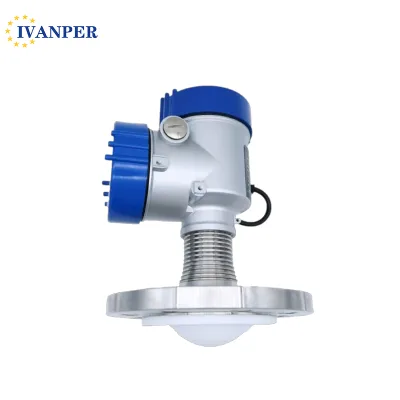
The protection grade is another essential environmental factor. The IP Rating indicates the degree of protection against solid objects and water ingress. Observed data includes IP67 ratings, which signify total protection against dust and temporary immersion in water. Some listings also mention lightning protection types, which are critical for outdoor installations. The antenna construction, often a combination of Planar Antenna with PTFE and stainless steel, plays a significant role in maintaining signal integrity in extreme weather conditions.
Compliance, Certification, and Safety Standards
In the B2B procurement of industrial instrumentation, compliance is non-negotiable. The safety of personnel and the integrity of the facility depend on the device meeting rigorous standards. Certification marks such as CE are frequently observed in product attributes and serve as a baseline indicator of conformity with European health, safety, and environmental protection standards. However, buyers must verify the scope of these certifications to ensure they cover the specific application and frequency band in question.
Explosion-proof ratings are mandatory for installations in hazardous areas where flammable gases, vapors, or dusts may be present. The supply base lists explosion-proof grades such as Exidiict6 and Exdlict4GB. These designations refer to specific standards for equipment protection levels. Procurement teams must ensure that the selected device's explosion-proof grade matches the zone classification of the installation site. Using a device with an insufficient rating in a hazardous area can lead to catastrophic safety failures.
Additionally, the standard of the product itself should be verified. While some listings indicate "Customized" standards, others may adhere to specific industry norms. The warranty period, typically observed as 1 year, provides a baseline for supplier confidence but should be supplemented by a detailed service level agreement. The "Standard Export Package" noted in product attributes suggests a baseline for shipping and handling, but buyers should confirm packaging requirements for sensitive electronic components to prevent transit damage.
Cost Drivers and Procurement Economics
Understanding the cost structure of 76-81 GHz radar level gauges is essential for budgeting and total cost of ownership analysis. The price range observed in the market spans from approximately $98.9 to $2,000. This significant variance is driven by several factors, including the complexity of the antenna design, the material grade of the housing, the level of customization, and the specific certification requirements.
The Minimum Order Quantity (MOQ) is another economic factor. Observed MOQs range from 1 to 5 units, indicating that suppliers are generally flexible for small-scale pilots or single-unit replacements. However, for large-scale deployment, buyers should negotiate volume discounts. Customization options, such as specific process connections (e.g., Flange, G1-1/2) or tailored signal outputs, often incur additional costs and may extend lead times.
Lead times and availability are critical components of the procurement timeline. While specific lead times are not universally standardized in the provided data, the "Customized" nature of some products implies longer production cycles compared to off-the-shelf units. Buyers should account for potential delays when planning installation schedules, especially if the device requires specific antenna configurations or explosion-proof certifications.
Supplier Evaluation and Quality Assurance
Selecting the right supplier requires a rigorous evaluation process that goes beyond price comparisons. The "Kind" of product, such as "Liquid Level Transmitter" or "Radar," must align with the buyer's technical requirements. Suppliers should be able to provide detailed technical datasheets that confirm the frequency range, accuracy, and environmental ratings. The "Contactless" nature of radar technology is a key feature that reduces maintenance needs, as there are no moving parts to wear out.
Quality control measures should be a primary criterion for supplier selection. Buyers should request evidence of factory testing, including calibration reports and performance verification under simulated process conditions. The "Feature" of being corrosion-resistant and the "Application" of use in anti-corrosion environments should be backed by material test reports. Furthermore, the "Structure" of the device, such as "All in One" designs, can simplify installation and reduce the potential for wiring errors, which is a positive quality indicator.
Supplier reputation and after-sales support are also vital. The "Warranty" of 1 year is a standard offering, but the responsiveness of the supplier in case of defects or the need for technical support is equally important. Buyers should inquire about the availability of spare parts and the supplier's experience with similar applications, particularly in small tank level measurement or large-scale industrial processes.
Long-Term Procurement and Application Strategy
The long-term success of a radar level gauge installation depends on its suitability for the specific application. The "Application" data highlights uses in small-range liquid level measurement, small tank level measurement, and environments with strongly corrosive liquids. The "Measurement Range" capabilities, such as 0-15m or 0-20m, must be matched to the physical dimensions of the storage tanks to ensure optimal performance.
Future-proofing the procurement strategy involves considering the scalability of the solution. The "Signal Output" options, including RS485 and Modbus, facilitate integration with modern industrial IoT platforms, allowing for remote monitoring and data analytics. As facilities evolve, the ability to upgrade software or add modules without replacing the entire sensor is a significant advantage.
Buyers should also consider the "Process Connection" requirements. Whether the application requires a Flange connection or a G1-1/2 thread, the supplier must offer compatible fittings. The "Ambient Temperature" range of -20~75℃ ensures the device can operate in various climates, but the specific installation environment must be verified against these limits.
In conclusion, sourcing 76-81 GHz radar level gauges requires a meticulous approach that balances technical specifications, compliance requirements, and economic factors. By focusing on verified attributes such as material grade, accuracy, and certification, buyers can mitigate risks and ensure the selection of high-performance devices that meet the rigorous demands of modern industrial applications. The observed data provides a solid foundation for making informed decisions, but continuous verification of supplier capabilities and product performance remains essential for long-term operational success.
| Feature Category | Observed Attribute | Verification Requirement |
|---|---|---|
| Frequency | 26GHz (Observed), Target 76-81GHz | Confirm specific band in datasheet |
| Material | SS360L, SS304/SS316 | Verify grade for chemical compatibility |
| Accuracy | ±3mm, 0.1% | Request calibration certificate |
| Protection | IP67, Exdlict4GB | Match to zone classification |
| Output | 4-20mA, RS485, Modbus | Confirm protocol compatibility |
| Range | 0-15m, 0-20m | Match to tank dimensions |
| Temperature | -40 | Verify against process conditions |
FAQs
What is the measuring range of these radar level gauges?
The measuring range extends up to 20 meters for cable types and 6 meters for pole types. Some models support a range of 0 to 15 meters specifically for small-range liquid level measurement applications.
Which certifications are available for these industrial sensors?
Products commonly carry CE certification and specific explosion-proof grades like ExdIIC T6. Buyers must verify the specific explosion-proof rating matches their hazardous area zone classification requirements.
Can these devices operate in corrosive liquid environments?
Yes, they are designed for corrosive liquids and feature corrosion-resistant stainless steel construction. The material grades include SS360L and SS304/SS316 to ensure durability in anti-corrosion environments.
What signal output options are supported by the transmitters?
Signal outputs include 4-20mA with Hart, RS485, Modbus, and voltage options like 0-5VDC. These outputs allow integration with various control systems using two-wire or four-wire configurations.
How does the process temperature affect the device operation?
The process temperature range spans from -40 to 250 degrees Celsius for the device itself. The medium temperature limit is typically between -40 and 120 degrees Celsius depending on the specific model.
What is the accuracy specification for the radar level gauge?
Accuracy is specified as either ±3mm or 0.1% of the measured value depending on the model. This high precision makes them suitable for small tank level measurement and complex environments.