Source Adjustable Industrial Control Room Command and Dispatch Console for Control Room, Office Building, Hospital
Source 30 Adjustable Industrial Control Room Command and Dispatch Console units from verified manufacturers. Buyers can compare models with metal legs, manmade board desktops, and customizable features for control rooms, office buildings, and hospitals.
Key considerations
Products List


Dispatch Communication Control Room Consoles
$460.00 - $650.00
MOQ: 1 Meters
Beijing Jingcheng Chuangxin Intelligent Technology Co., Ltd.


Modern Design Control Room Console Equipped for Command Control Console
$800.00 - $1500.00
MOQ: 1 Meters


Manufacturer Control Room Console Dispatch Room Console Data Center Console
$500.00 - $2000.00
MOQ: 1 Pieces
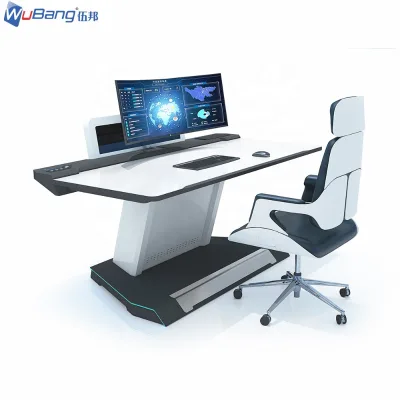
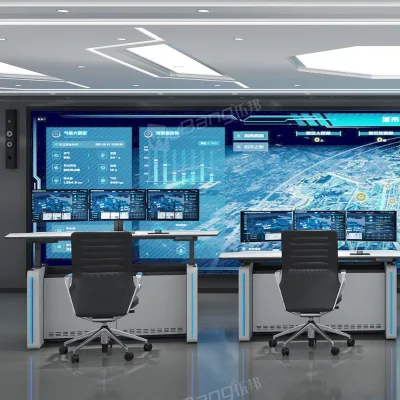


Monitoring Console Thickened Workbench Command Center Console Dispatching Console
$499.00 - $690.00
MOQ: 1 Meters

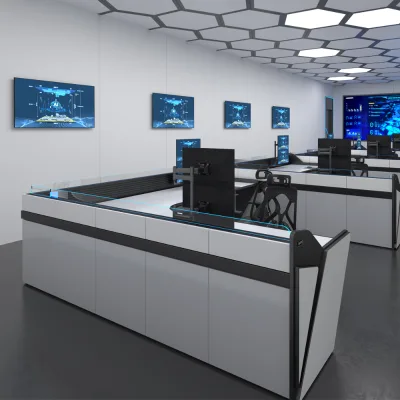
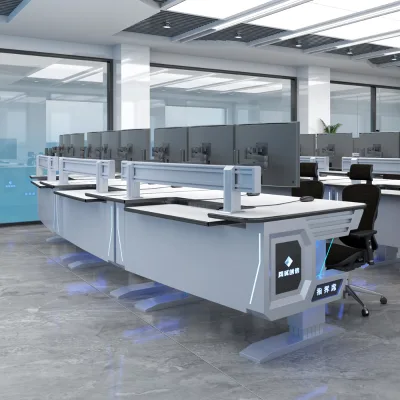
Control Room Console for The Integrated Information Monitoring Command Center Console
$250.00 - $450.00
MOQ: 1 Meters




Comprehensive Sourcing Guide
Strategic Sourcing Guide for Adjustable Industrial Control Room Command and Dispatch Consoles
Understanding the Core Product Architecture and Material Composition
When sourcing an Adjustable Industrial Control Room Command and Dispatch Console, the primary objective is to identify a unit that balances structural integrity with ergonomic flexibility. Based on current market observations, the foundational architecture of these consoles typically relies on a hybrid material strategy. The leg structures are predominantly constructed from metal, providing the necessary load-bearing capacity for heavy monitoring equipment and operator weight. In contrast, the desktop surfaces often utilize manmade board or OSB (Oriented Strand Board) materials, which offer a cost-effective yet durable surface for mounting screens and control interfaces.
The customization of the frame is a critical differentiator in this category. While some units feature a standard aluminum frame, others offer fully customizable leg materials to suit specific aesthetic or functional requirements. The "Wood Style" is frequently observed as "Panel," which contributes to the modern or industrial design language often required in high-stakes environments. The condition of the product is consistently listed as "New," ensuring that buyers receive units with no prior operational wear. The "Style" attribute generally aligns with "Modern" or "Industrial" design philosophies, characterized by clean lines and functional aesthetics that fit seamlessly into command centers, control rooms, or dispatch hubs.
Technical Specifications and Dimensional Flexibility
The technical viability of a control room console hinges on its ability to accommodate specific spatial constraints and equipment layouts. The market data indicates a significant variance in standard dimensions, ranging from compact units to large-scale command stations. For instance, specific models have been observed with standard dimensions such as W2400xD1600xH750mm, while others are defined by modular components like D=900MM H=750MM W=1200MM+200MM. A critical specification to verify is the base cabinet space, which is often standardized at a depth of D=500mm to ensure adequate cable management and storage for peripherals.
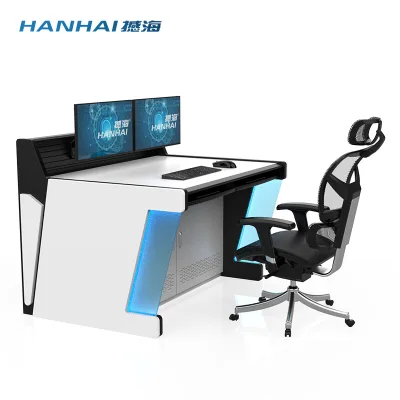
Adjustability is a defining feature of the "adjustable" keyword in your search. The product attributes confirm that customization is available, allowing buyers to tailor the console to their specific workflow. This includes the ability to customize the color schemes, with options frequently appearing as White/Black, Side Panel Gray and Black, or Desktop Warm White. Some manufacturers offer OEM color options, ensuring the console matches the existing corporate identity of the facility. The "prod_model" identifiers, such as JCCX-series, KCH-GROUP BOX, KSN, and KCD, suggest that buyers must navigate a complex catalog of specific configurations rather than a single monolithic product.
| Specification Category | Observed Standard Values | Customization Potential |
|---|---|---|
| Desktop Material | Manmade Board, OSB Board | High (Material type and finish) |
| Leg Material | Metal | High (Customize available) |
| Frame Material | Aluminum Frame | Moderate to High |
| Base Cabinet Depth | D=500mm | Moderate (Based on model) |
| Overall Dimensions | W2400xD1600xH750mm, D=900MM H=750MM W=1200MM+200MM | High (Size is often customized) |
| Color Options | White/Black, Gray/Black, Warm White | High (OEM/Customized) |
Compliance, Certification, and Safety Standards
In the industrial sector, particularly for control rooms and command centers, compliance with international safety and environmental standards is non-negotiable. The sourcing guide must prioritize verifying that the console meets rigorous certification requirements. The supply chain data highlights several key certifications that are commonly associated with these products, including ISO9001, RoHS, and CE. The presence of ISO9001 indicates that the manufacturer adheres to quality management system standards, ensuring consistent production processes. RoHS compliance is essential for verifying that the materials used do not contain restricted hazardous substances, which is critical for both environmental safety and regulatory adherence in many jurisdictions.
Buyers should explicitly request proof of these certifications rather than relying on general claims. The term "etc" in certification lists suggests that additional standards may apply depending on the specific model or destination market. Furthermore, the "prod_standard" is often listed as "Customizable," which implies that the physical dimensions and structural standards can be tailored to meet specific project requirements. However, the buyer must ensure that any custom standard still adheres to the underlying safety protocols mandated by the destination country. For applications in sensitive environments like hospitals, schools, or airports, the certification status serves as a primary filter for supplier eligibility.
Cost Drivers and Procurement Economics
The pricing structure for industrial control room consoles is influenced by a combination of material costs, customization levels, and logistical factors. The observed price range in the current market spans from approximately $219 to $3,166.74 USD. This wide disparity is not indicative of quality variance alone but reflects the spectrum from basic, standardized units to highly customized, large-scale command stations. The lower end of the price range likely corresponds to smaller, less complex models with standard dimensions and minimal customization. Conversely, the higher price points are associated with larger units, such as those with W2400mm widths, or those featuring complex aluminum frames and specialized finishes.
Minimum Order Quantity (MOQ) is another significant economic factor. The data shows an MOQ range of 1 to 10 units, offering flexibility for both small pilot projects and large-scale deployments. Buyers should note that while single-unit orders are possible, the unit price may vary based on volume. Lead times are also a critical cost driver; a standard delivery time of 30 days is observed, but this can fluctuate based on the level of customization requested. Customizing the size, color, or material composition can extend the production cycle. Additionally, packaging requirements, such as "Wooden Case Packing" or "Wooden Box," add to the overall cost and must be factored into the total landed cost calculation.
Typical Applications and Operational Environments
The versatility of these consoles is demonstrated by their wide range of application scenarios. The "Application" attribute lists diverse environments including Control Rooms, Hotel, Office Building, Hospital, School, Mall, Station, Airport, Park, Supermarket, and Cinema. This breadth indicates that the product is designed to be adaptable to various operational needs, from high-security command centers to public-facing service desks. The "General Use" classification as "Commercial Furniture" reinforces their suitability for professional environments where durability and aesthetics are paramount.
In a control room setting, the console serves as the central hub for monitoring and dispatch operations. The "Name" of the product often includes terms like "Console Control Room" or "Control Room Consoles," signaling their specialized function. The "Design Style" is frequently noted as "Industrial," which is particularly relevant for facilities like power stations, transportation hubs, or emergency response centers where a robust and functional aesthetic is preferred. The "Feature" list, which includes Storage, Adjustable, Eco-Friendly, Durable, and Multi-use, further underscores the console's role in optimizing workspace efficiency. For example, the storage capabilities are essential for organizing cables and equipment, while the adjustable nature allows for ergonomic tailoring to different operator heights and postures.
Supplier Evaluation and Quality Assurance Protocols
Evaluating suppliers for industrial control room consoles requires a rigorous approach to verifying their capabilities and track record. The supply chain data identifies specific manufacturers, such as "Beijing Kesino Engineering Technology Co., Ltd," and brands like "Jingchengchuangxin." However, buyers should not limit their search to named entities but should evaluate potential suppliers based on their ability to meet the specific technical and compliance requirements outlined in this guide. Key evaluation criteria include the supplier's capacity for customization, their adherence to the observed lead times, and their ability to provide valid certification documentation.
Quality control should be integrated into the procurement process from the outset. Buyers must verify that the "Condition" is strictly "New" and that the "Warranty" terms are clear. The observed warranty periods range from 1 to 2 years, which serves as a benchmark for expected product longevity. A warranty of 2 years suggests a higher confidence in the product's durability compared to a 1-year term. Additionally, the "Package" details, such as "Wooden Case Packing," are indicators of the supplier's attention to protecting the product during transit, which is crucial for preventing damage to delicate electronic interfaces or structural components.
Long-Term Procurement and Lifecycle Management
Sourcing an adjustable industrial control room console is not merely a one-time transaction but a long-term investment in operational infrastructure. The "Eco-Friendly" feature mentioned in the product attributes suggests that modern consoles are designed with sustainability in mind, which can be a factor in corporate social responsibility goals. However, the true value of the console lies in its adaptability. The "Customized" and "Adjustable" attributes ensure that the unit can evolve alongside the facility's needs, whether that involves changing the layout, upgrading the equipment, or reconfiguring the workspace.
Buyers should consider the total cost of ownership, which includes not only the initial purchase price but also the costs associated with maintenance, potential modifications, and the longevity of the product. The "Warranty" period is a direct indicator of the manufacturer's confidence in the product's lifespan. A 2-year warranty provides a safety net for early-life defects, but the long-term reliability depends on the quality of the materials, such as the metal legs and aluminum frames. Furthermore, the "Standard" of the product being "Customizable" means that future modifications may be possible without replacing the entire unit, extending its useful life.
In conclusion, the procurement of an Adjustable Industrial Control Room Command and Dispatch Console requires a meticulous analysis of technical specifications, compliance standards, and supplier capabilities. By focusing on the observed data points regarding materials, dimensions, certifications, and applications, buyers can make informed decisions that align with their operational requirements. The wide range of customization options and the diverse application scenarios available in the market provide ample opportunity to find a solution that fits the unique needs of any command or dispatch center.
FAQs
What materials are used for the legs and desktop?
Legs are constructed from metal to ensure structural integrity, while desktops typically use manmade board or OSB board. This combination provides a durable surface for equipment while maintaining cost-effectiveness for commercial furniture applications.
Can the console dimensions be customized for specific rooms?
Yes, the product standard and size are customizable to fit unique spatial requirements. Buyers can specify dimensions like W2400xD1600xH750mm or request other measurements to ensure the console fits their control room layout perfectly.
Which certifications ensure the console meets safety standards?
Common certifications include ISO9001, RoHS, and CE, which verify quality management and environmental safety. These standards are critical for industrial applications in hospitals, schools, and airports to ensure compliance with international regulations.
How long is the delivery time for these consoles?
The standard delivery time is 30 days from the order date. This timeline may vary depending on the level of customization requested, such as specific colors or dimensions, so buyers should confirm lead times before purchasing.
What warranty periods are available for the product?
Warranty periods typically range from 1 to 2 years depending on the specific model and manufacturer. A 2-year warranty indicates higher confidence in the product's durability and long-term performance in demanding commercial environments.
Can the color and finish be customized to match branding?
Yes, color options include White, Black, or customized OEM shades like Side Panel Gray and Desktop Warm White. This flexibility allows facilities to match the console to their existing corporate identity or interior design scheme.
What is the minimum order quantity for purchasing these units?
The minimum order quantity ranges from 1 to 10 units, offering flexibility for both small projects and large deployments. Buyers can order single units for pilot testing or bulk orders for full facility outfitting.