Source Aerospace CNC Machining Parts for automotive, machinery, and hardware
Compare 30 listings for Aerospace CNC Machining Parts from verified Chinese suppliers. Buyers can evaluate materials like stainless steel and aluminum, surface treatments, and customization options for metal processing machinery and hardware accessories.
Key considerations
Products List


Comprehensive Sourcing Guide
Strategic Sourcing Guide for Aerospace CNC Machining Parts
The procurement of aerospace-grade CNC machining parts demands a rigorous approach that balances technical precision with stringent compliance requirements. Unlike general industrial components, aerospace parts must withstand extreme operational environments while adhering to strict safety and quality protocols. Buyers entering this market must navigate a complex landscape of material specifications, surface treatments, and certification standards. This guide provides a structured framework for evaluating potential suppliers and defining the necessary parameters for successful procurement, grounded in observed industry capabilities and verified product attributes.
Technical Specifications and Material Selection
The foundation of any aerospace CNC machining project lies in the precise selection of materials and the definition of technical tolerances. The market offers a diverse range of base materials suitable for high-performance applications. Observed capabilities include the use of Stainless Steel, Aluminum Alloy, Copper, Titanium, Iron, Brass, Plastic, Nylon, and various Alloys. The choice of material is dictated by the specific mechanical properties required, such as tensile strength, weight-to-strength ratio, and resistance to corrosion or high temperatures.
Manufacturing processes play a critical role in achieving the necessary geometry and surface finish. Advanced machining centers are utilized to perform Turning, Grinding, Milling, and Electrical Discharge Machining (EDM). These processes allow for the creation of complex geometries that are essential for aerospace components. The availability of CNC Machining as a standard service ensures that parts can be produced with high repeatability and accuracy. Furthermore, the distinction between micro-machining and standard machining is a key consideration; some suppliers offer Micro Machining capabilities, which are vital for smaller, intricate aerospace components.
Surface treatment is another critical technical specification. The integrity of the final part often depends on post-machining treatments such as Polishing and Oiling, Electroplating, Zinc Plating, and Passivating. These treatments enhance durability and protect against environmental degradation. Buyers must verify that the supplier's surface treatment capabilities align with the specific environmental conditions the part will face in service.
Compliance and Certification Verification
In the aerospace sector, compliance is not merely a formality but a prerequisite for market entry. While specific certification statuses vary by supplier, the presence of recognized standards is a strong indicator of quality management systems. Buyers should look for evidence of ISO certifications, with ISOCondition:New and ISOCE being observed attributes in the supply base. Additionally, compliance with RoHS (Restriction of Hazardous Substances) and CE (Conformité Européenne) marks is frequently observed, indicating adherence to environmental and safety directives.
Standards compliance extends beyond general management systems to specific industry codes. The observed supply base demonstrates familiarity with a wide array of standards, including GB (China National Standard), DIN (Deutsches Institut für Normung), ASTM (American Society for Testing and Materials), ASME (American Society of Mechanical Engineers), JIS Code (Japanese Industrial Standards), and EN (European Norms). When sourcing parts, buyers must explicitly request documentation proving that the manufacturing process and final product conform to the specific standard required for the application. Relying on a single standard like ISO 9001:2015 as a blanket assurance is insufficient; the specific application standard must be verified.
Cost Drivers and Procurement Economics
Understanding the cost structure of aerospace CNC parts is essential for budgeting and negotiation. The price range in the market is broad, observed between 0.1 and 1000 USD per unit, reflecting the vast difference between simple hardware accessories and complex, high-tolerance aerospace components. Several factors drive these costs, including material selection, machining complexity, and surface treatment requirements.
Materials such as Titanium and specialized Stainless Steels typically command higher prices due to their processing difficulty and raw material costs. Similarly, the inclusion of advanced processes like EDM or micro-machining increases the operational time and equipment wear, thereby raising the unit cost. The level of customization is another significant cost driver. While standard off-the-shelf parts are available, the "Customized" attribute is prevalent, indicating that bespoke solutions are common. Customization often involves additional engineering time, specialized tooling, and unique quality control procedures.
Minimum Order Quantity (MOQ) is a critical economic factor. The market shows a wide range, from 1 PCS to 1000 PCS, with specific listings showing 10 PCS as a common threshold. For prototyping or low-volume production runs, suppliers accepting 1 PCS orders are valuable, though the unit cost may be higher. For batch production, the ability to leverage economies of scale becomes apparent. Buyers should evaluate the trade-off between the flexibility of low MOQs and the cost efficiency of larger batch orders.
Typical Applications and Functional Requirements
Aerospace CNC Machining Parts serve a multitude of functions across various sectors of the industry. The observed application spectrum includes Metal Casting Machinery, Metal Coating Machinery, Metal Drawing Machinery, Metal Engraving Machinery, Metal Forging Machinery, Metal Processing Machinery Parts, Metal Straightening Machinery, Metal Cutting Machines, and Metal Recycling Machines. While some of these applications are industrial, the precision required often overlaps with aerospace standards.
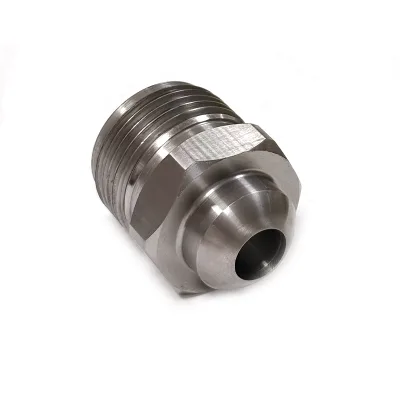
Specific component types identified in the market include Spline bushings, spare parts (e.g., model 0002), and various custom models like CNC093 or dc028-d. These parts function as hardware tools, machinery accessories, fasteners, and accessories for automobiles and motorcycles, which often share supply chains with aerospace. The "Type: Other Machining Services" classification suggests that suppliers often provide comprehensive solutions rather than just selling discrete parts. This is particularly relevant for aerospace, where integrated assemblies or custom sub-components are frequently required.
Supplier Evaluation and Service Capabilities
Evaluating a supplier for aerospace parts requires looking beyond basic product listings to assess their service infrastructure. A key indicator of capability is the availability of a "Professional Team Provides Solutions" for customized services. This suggests that the supplier offers engineering support, which is crucial for translating aerospace design requirements into manufacturable parts. The ability to provide Customized OEM (Original Equipment Manufacturer) and ODM (Original Design Manufacturer) CNC Machining services is a standard expectation for high-value contracts.
The production type is another vital metric. The market observes "Batch Production" as a common mode, which implies the supplier has the capacity for volume manufacturing. However, the acceptance of "Small Orders" indicates flexibility for prototyping or low-volume specialized runs. Buyers should verify the supplier's equipment capabilities, specifically the presence of "Machining Centres" and their ability to handle "CNC Turning." The condition of the products is consistently listed as "New," which is a baseline requirement, but buyers must also inquire about the age and calibration of the machinery used to ensure consistent output.
Quality Control and Inspection Protocols
Quality assurance is the cornerstone of aerospace procurement. The observed supply base highlights "100% Inspection" as a standard practice for many suppliers. This level of scrutiny is essential for ensuring that every part meets the rigorous demands of the industry. Buyers must confirm that this inspection covers critical dimensions, material properties, and surface finishes.
The "Quality Control" attribute should be explicitly defined in the contract. While "100% Inspection" is a strong claim, buyers should understand the methodology behind it. Does it involve visual inspection, coordinate measuring machine (CMM) verification, or non-destructive testing? The standard of the inspection should align with the specific aerospace quality standards applicable to the project. Additionally, the "Customized" nature of surface treatments and materials requires that the inspection process be tailored to verify the specific treatment applied, such as the thickness of electroplating or the efficacy of passivation.
Long-Term Procurement Considerations
Sourcing aerospace parts is often a long-term relationship rather than a one-time transaction. Logistics and packaging play a significant role in maintaining part integrity over time. The observed packaging options include "Wooden Box," "Carton," "Carton + Pallet," and "Customized" solutions. For aerospace components, which may be sensitive to moisture, vibration, or static electricity, the choice of packaging is critical. Customized packaging is often necessary to ensure that parts arrive in perfect condition, ready for installation.
Lead times and location are also long-term considerations. The origin of products is primarily "China," with specific mentions of "Hangzhou" as a production hub. Buyers must account for shipping times and potential supply chain disruptions when planning production schedules. The "Selling Units" are typically "Single Item," which allows for flexible ordering but requires careful management of inventory and logistics.
Finally, the standardization of parts is a key factor for long-term maintenance. While many parts are "Customized," maintaining a library of standard models (e.g., 0001, 0001-1, 0002) can simplify future replacements. Buyers should work with suppliers to establish a standardized catalog of critical parts to reduce lead times and costs for future maintenance cycles. The ability of the supplier to maintain consistency in "prod_standard" dimensions, such as 100100 or 10050mm, ensures interchangeability and reduces the risk of part failure due to dimensional variance.
Summary of Key Sourcing Parameters
To facilitate a structured evaluation, the following table summarizes the critical parameters buyers should verify when sourcing Aerospace CNC Machining Parts. This table consolidates the observed attributes into actionable checklist items.
| Parameter Category | Key Verification Points | Observed Market Standards |
|---|---|---|
| Material | Verify alloy composition and grade | Stainless Steel, Aluminum Alloy, Titanium, Copper, Iron, Brass |
| Process | Confirm machining capabilities | Turning, Grinding, Milling, EDM, CNC Turning |
| Certification | Request valid documentation | ISO, ISOCE, RoHS, CE |
| Standards | Match to project requirements | GB, DIN, ASTM, ASME, JIS, EN |
| Surface Treatment | Verify specific treatment type | Polishing, Oiling, Electroplating, Zinc Plating, Passivating |
| Quality Control | Define inspection scope | 100% Inspection, Micro Machining verification |
| Packaging | Ensure protection during transit | Wooden Box, Carton, Customized, Palletized |
| MOQ | Align with production volume | 1 PCS to 1000 PCS (Common: 10 PCS) |
| Service | Assess engineering support | OEM/ODM, Customized Solutions, Professional Team |
By adhering to these guidelines and rigorously verifying each parameter against the specific needs of the aerospace project, buyers can mitigate risks and secure high-quality CNC machining parts that meet the demanding standards of the industry. The focus must remain on evidence-based evaluation, ensuring that every claim regarding material, certification, and process capability is substantiated by the supplier's documentation and track record.
FAQs
What materials are available for Aerospace CNC Machining Parts?
Suppliers offer Stainless Steel, Aluminum Alloy, Copper, Titanium, Iron, Brass, Plastic, and Nylon. These materials are selected based on specific mechanical properties required for high-performance aerospace applications.
Which certifications do suppliers typically hold for these parts?
Common certifications include ISO, CE, RoHS, and ISOCE. Buyers should verify specific documentation proving compliance with standards like GB, DIN, ASTM, ASME, JIS, or EN for their specific project needs.
Can suppliers provide customized OEM and ODM services?
Yes, professional teams provide customized OEM and ODM CNC machining solutions. These services include tailored engineering support, surface treatments like polishing or electroplating, and specific material selections.
What is the typical minimum order quantity for these parts?
Minimum order quantities range from 1 piece to 1000 pieces, with 10 pieces being a common threshold. Suppliers accepting small orders are valuable for prototyping, while batch production suits larger volumes.
How are quality control and inspection handled for these parts?
Many suppliers perform 100% inspection to ensure every part meets rigorous demands. This process verifies critical dimensions, material properties, and surface finishes against the required aerospace quality standards.
What packaging options are available for shipping these components?
Packaging options include Wooden Boxes, Cartons, Cartons with Pallets, or Customized solutions. These methods protect parts from moisture, vibration, and static electricity during transit to ensure integrity upon arrival.
Which machining processes are used to manufacture these parts?
Manufacturing utilizes Turning, Grinding, Milling, and Electrical Discharge Machining on CNC centers. These processes enable the creation of complex geometries and precise tolerances required for aerospace components.