Source Aerospace Titanium Brake Pedal Tip for Dirt Bike, KTM, and Motocross
Explore 30 listings for the Aerospace Titanium Brake Pedal Tip designed for dirt bikes, KTM motorcycles, and motocross applications. Buyers can compare specifications, materials, and pricing to find the right supplier for their needs.
Key considerations
Products List
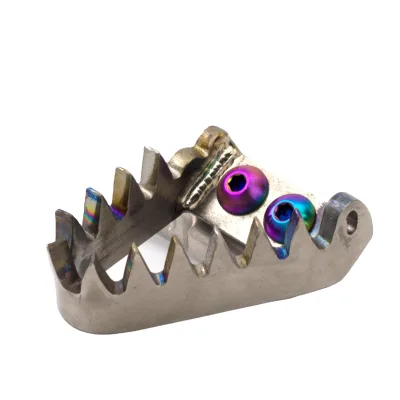
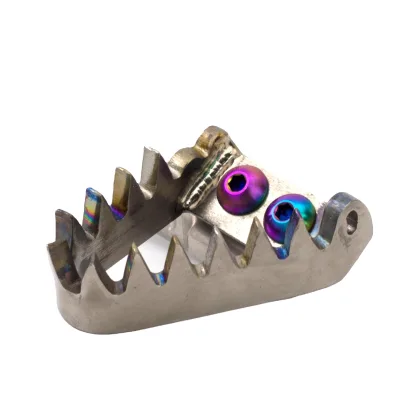
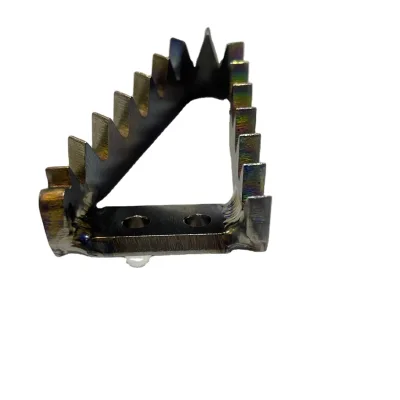
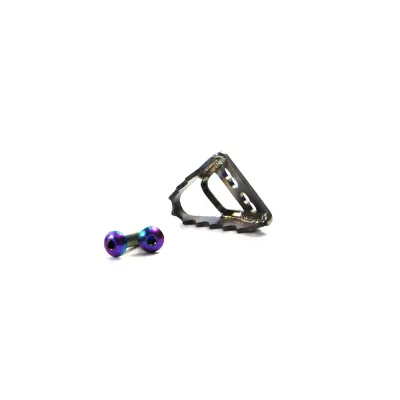
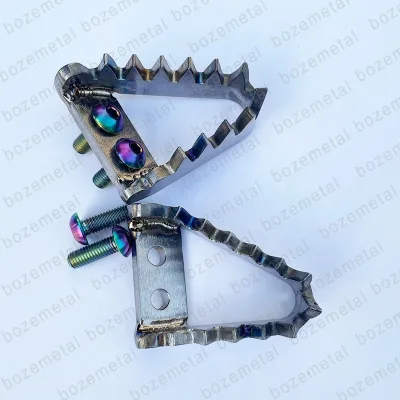
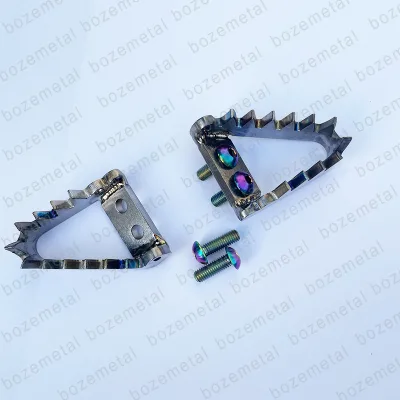


As9100 Turning Aerospace Parts with ISO9001 for Medical Machine High Quality
$2.50 - $3.00
MOQ: 100 Pieces

China OEM Factory Other Auto Parts Plastic and Metal Accelerator Throttle Pedal
$20.00 - $26.00
MOQ: 100 Pieces
Comprehensive Sourcing Guide
Strategic Sourcing Guide for Aerospace Titanium Brake Pedal Tips
Understanding the Material and Technical Specifications
When sourcing aerospace titanium brake pedal tips, the primary focus must be on the specific alloy grade and its mechanical properties. The market data indicates that the dominant material specification for these components is Grade 5 titanium, often referred to as Ti-6Al-4V. This alloy is selected for its exceptional strength-to-weight ratio, which is critical for reducing unsprung mass in high-performance motorcycles and dirt bikes. The observed density for these components is approximately 4.51g/cm³, a figure that buyers should verify against the specific batch of material provided by the manufacturer to ensure consistency.
The manufacturing process is equally critical to the final product's integrity. The supplied facts highlight that these parts are produced using CNC machining rather than micro-machining or casting. This distinction is vital because CNC machining allows for tighter tolerances and superior surface finishes required for brake pedal applications where friction and wear are constant factors. The surface treatment observed in the product listings is typically polished, which not only enhances aesthetic appeal but also contributes to corrosion resistance. Buyers should confirm that the "polished" finish is a result of the machining process or a secondary treatment that does not compromise the structural integrity of the titanium alloy.
Furthermore, the dimensional specifications vary based on the intended vehicle model. While some listings specify fixed sizes such as 47mm or 52mm, others offer customized sizes to fit specific retrofit or upgrade requirements. The single package dimensions observed range from 10x10x5 cm to 30x10x10 cm, indicating that packaging standards are not uniform across suppliers. When evaluating a potential supplier, the buyer must ensure that the "Customized Size" capability is backed by precise engineering drawings and that the supplier can maintain the tight tolerances required for a secure fitment on dirt bikes, motocross motorcycles, or specific models like KTM.
Compliance, Certification, and Quality Assurance Standards
In the B2B procurement of aerospace-grade components, verifying compliance with international quality management systems is a non-negotiable step. The available product data explicitly mentions ISO 9001:2015 certification as a standard attribute for several suppliers in this category. This certification indicates that the manufacturer has established a quality management system that meets international standards for consistency and process control. However, buyers should not assume that every listed product automatically satisfies this standard without requesting a valid, current certificate. The certification should cover the specific manufacturing processes used, including CNC machining and surface treatment, to ensure that the quality assurance protocols are applied throughout the production lifecycle.
Beyond general quality management, the material itself must meet aerospace-grade specifications. The term "Aerospace titanium Grade 5" implies that the raw material source is traceable and meets the rigorous standards of the aerospace industry, which often exceed those of standard automotive applications. Buyers should request material test reports (MTRs) that verify the chemical composition and mechanical properties of the Gr5 titanium used. This verification is essential to ensure that the material is not a lower-grade substitute that might fail under the high-stress conditions of motocross or racing environments.
The supply chain transparency is another aspect of compliance. While specific supplier names are not disclosed in the general market data, the "Place of Origin" is consistently listed as Shaanxi, China. This region is known for its manufacturing capabilities, but it also necessitates a rigorous vetting process regarding logistics and export compliance. Buyers must ensure that the supplier can provide documentation proving the origin of the raw materials and the legitimacy of the manufacturing facility. Additionally, the acceptance of OEM (Original Equipment Manufacturer) and ODM services suggests that many suppliers are capable of custom branding and logo application, which requires a clear agreement on intellectual property rights and trademark usage to avoid legal complications.
Cost Drivers and Pricing Structure Analysis
The pricing structure for aerospace titanium brake pedal tips is influenced by several distinct factors, primarily the material cost of Grade 5 titanium and the complexity of the machining process. The observed price range in the market spans from $0.05 to $50.89 USD. This wide variance is not indicative of a single product type but rather reflects differences in order volume, customization levels, and packaging requirements. The lower end of the price spectrum likely corresponds to bulk orders of standard sizes with minimal customization, while the higher end reflects single-unit purchases, complex custom shapes, or premium packaging.
Minimum Order Quantity (MOQ) is a significant driver of the effective unit cost. The data shows a broad MOQ range, from as low as 1 piece to as high as 5000 sets. For buyers looking to test the market or fulfill small fleet needs, suppliers with an MOQ of 1 piece or 10 pieces offer flexibility, though the per-unit cost will be higher. Conversely, buyers planning large-scale procurement can leverage the economies of scale offered by suppliers with higher MOQs, such as 100 sets or more, to reduce the overall cost per unit. The "Selling Units" are typically listed as single items, which suggests that the pricing is often quoted per piece, but bulk discounts are likely available for larger orders.
Other cost drivers include the surface treatment and finishing options. The choice between standard polished finishes and specialized colors such as silver, gold, blue, burnt blue, or purple can impact the final price. Customized colors and logos, which are marked as acceptable features, add a layer of complexity to the production process, potentially increasing the cost. Additionally, the packaging method, described as "plastic bag + carton boxes," must be considered in the total landed cost, especially for international shipping. Buyers should request a detailed breakdown of costs that separates the material, machining, finishing, and packaging fees to understand the true value proposition of each supplier.
Typical Applications and Fitment Requirements
The primary application for aerospace titanium brake pedal tips is in the realm of high-performance two-wheeled vehicles, specifically dirt bikes, motocross motorcycles, and specific models like KTM. The keywords and product descriptions consistently emphasize "retrofit" and "upgrade" purposes, indicating that these components are designed to replace standard steel or aluminum pedals with lighter, more durable titanium alternatives. The fitment data confirms compatibility with a range of dirt bikes and motocross machines, making them a versatile upgrade for riders seeking performance improvements.
The "Fit for" attribute highlights the specific use case of enhancing braking performance and reducing weight. In motocross and racing environments, every gram of unsprung weight reduction can translate to better suspension response and handling. The use of Gr5 titanium, with its high strength and corrosion resistance, ensures that the pedal tips can withstand the harsh conditions of off-road riding, including exposure to mud, water, and debris. The "Corrosion resistance" feature is particularly valuable for riders who operate in wet or humid environments, as it prevents the degradation that can occur with steel components.
Buyers must also consider the customization aspect of these applications. Since many riders have specific requirements for their bikes, the ability to order "Customized Size" and "Customized Logo" is a significant advantage. This flexibility allows teams and individual riders to match the aesthetic and functional requirements of their specific motorcycle models. The "Purpose" is clearly defined as upgrading the vehicle, which implies that the installation process should be straightforward and compatible with existing mounting points. However, buyers should verify the exact fitment details with the supplier to ensure that the custom dimensions will align with the specific bike model they intend to upgrade.
Supplier Evaluation and Selection Criteria
Selecting the right supplier for aerospace titanium brake pedal tips requires a multi-faceted evaluation process that goes beyond price and product specifications. The first step is to verify the supplier's manufacturing capabilities. The data indicates that CNC machining is the standard process, but buyers should confirm the specific machinery and tooling used to ensure precision. Suppliers that offer "Type: Other Machining Services" may have broader capabilities, but the focus should remain on those with proven expertise in titanium machining.
The brand name and reputation are also important factors. While the data lists brands such as "BZ" and "Boze Metal," buyers should not rely solely on brand recognition. Instead, they should assess the supplier's track record in delivering aerospace-grade components. The presence of ISO 9001:2015 certification is a strong indicator of a supplier's commitment to quality, but it should be validated through direct communication and document review. Buyers should also inquire about the supplier's experience with OEM and ODM projects, as this demonstrates their ability to handle custom orders and maintain confidentiality.
Another critical aspect of supplier evaluation is the payment terms and logistics. The observed payment method is 100% TT (Telegraphic Transfer), which is a standard practice in international trade but requires a clear agreement on the timing of payments relative to production milestones. Buyers should also assess the supplier's ability to handle the "Delivery time," which is listed as 3-15 days. This range suggests variability based on order complexity and current production capacity. A reliable supplier should provide a realistic lead time estimate and a clear communication channel for tracking order status.
Quality Control and Long-Term Procurement Considerations
Implementing a robust quality control (QC) strategy is essential for ensuring the long-term success of the procurement of titanium brake pedal tips. Given the critical nature of brake components, buyers should establish a QC protocol that includes pre-shipment inspections and material verification. The "Single gross weight" of 1.000 kg or 1.0 kg observed in the listings serves as a baseline for checking the weight of the finished product, which can be an indicator of material density and consistency. Any significant deviation from this weight could signal a quality issue or a substitution of materials.
Long-term procurement considerations also involve the scalability of the supply chain. As a buyer's needs grow, the ability of the supplier to increase production volume without compromising quality becomes paramount. The observed MOQ range of 1 to 5000 sets suggests that suppliers have the flexibility to accommodate both small and large orders. However, buyers should discuss future volume projections with potential suppliers to ensure they can meet increased demand. Additionally, the "Delivery time" of 3-15 days should be evaluated in the context of the buyer's inventory management strategy to avoid stockouts.
Finally, the long-term viability of the product depends on the durability and performance of the titanium components. The "Special Features" of aerospace-grade titanium and strong welding are key selling points, but buyers should request evidence of these claims, such as test results or case studies. The "Feature: Corrosion resistance" should be validated through accelerated aging tests or third-party verification. By maintaining a proactive approach to quality control and supplier relationship management, buyers can ensure a steady supply of high-performance brake pedal tips that meet their rigorous standards.
Summary of Key Procurement Parameters
To facilitate a streamlined procurement process, the following table summarizes the key parameters observed in the market for aerospace titanium brake pedal tips. This summary serves as a checklist for buyers to verify against supplier proposals and product listings.
| Parameter | Observed Range / Value | Verification Requirement |
|---|---|---|
| Material Grade | Gr5 Titanium / Ti-6Al-4V | Request Material Test Reports (MTRs) |
| Density | 4.51 g/cm³ | Verify via weight and volume calculations |
| Manufacturing Process | CNC Machining | Confirm absence of micro-machining or casting |
| Surface Treatment | Polished | Inspect for finish quality and uniformity |
| Certification | ISO 9001:2015 | Validate current certificate and scope |
| MOQ | 1 PC to 5000 Sets | Negotiate based on order volume needs |
| Lead Time | 3-15 Days | Confirm specific timeline for custom orders |
| Payment Terms | 100% TT | Agree on payment milestones |
| Fitment | Dirt Bike, KTM, Motocross | Verify specific model compatibility |
| Customization | Size, Color, Logo | Ensure design files and approvals are clear |
By adhering to these guidelines and maintaining a disciplined approach to verification, buyers can successfully source high-quality aerospace titanium brake pedal tips that meet the demanding requirements of the motocross and racing industries.
FAQs
What material grade is used for these brake pedal tips?
These brake pedal tips are manufactured using Grade 5 titanium, also known as Ti-6Al-4V aerospace alloy. This specific material provides exceptional strength and corrosion resistance while maintaining a low density of approximately 4.51g/cm3 for optimal weight reduction.
Which certification do the manufacturers typically hold?
Suppliers in this category typically hold ISO 9001:2015 certification to ensure consistent quality management. This standard verifies that the production processes, including CNC machining and surface polishing, meet rigorous international requirements for aerospace-grade components.
How long is the delivery time for these titanium parts?
The standard delivery time for these parts ranges from 3 to 15 days depending on order complexity. This lead time covers the CNC machining, polishing, and packaging processes required to prepare the aerospace-grade titanium components for shipment.
Can I order custom sizes for my specific dirt bike model?
Yes, you can order customized sizes to fit specific retrofit or upgrade requirements for various dirt bike models. The manufacturers support OEM services and can produce parts with dimensions tailored to your exact specifications beyond standard sizes like 47mm or 52mm.
What is the minimum order quantity for purchasing these tips?
The minimum order quantity varies significantly, ranging from as low as 1 piece to 5000 sets depending on the supplier. Some vendors accept single item orders for testing, while bulk discounts are often available for orders starting at 10 or 100 sets.
Which surface treatment options are available for the finished product?
The standard surface treatment is a polished finish which enhances corrosion resistance and aesthetic appeal. Additional options include customized colors such as silver, gold, blue, burnt blue, or purple, along with acceptable customized logo applications for branding purposes.