Source Air Compressor O Ring for Pumps, Engines, and Seals
Compare 30 listings for Air Compressor O Ring options including standard and nonstandard types. Buyers can review specifications like temperature range, material colors, and customization availability for pumps, engines, and sealing applications.
Key considerations
Products List




Comprehensive Sourcing Guide
Strategic Sourcing Guide for Air Compressor O-Rings and Sealing Components
Navigating the global market for air compressor O-rings requires a disciplined approach that distinguishes between generic sealing elements and components engineered for specific compressor architectures. The core keyword "Air Compressor O Ring" often encompasses a diverse array of products, ranging from standard elastomeric seals to specialized piston rings and custom-molded components. For procurement professionals, the primary challenge lies in aligning technical specifications with operational requirements while verifying supplier capabilities against rigorous quality standards. This guide synthesizes available product attributes and industry knowledge to provide a structured framework for sourcing, evaluating, and integrating sealing solutions into air compressor systems.
Technical Specifications and Material Compatibility
The foundation of successful procurement begins with a precise definition of technical specifications. In the context of air compressors, the O-ring is not merely a passive seal but a critical component that maintains system integrity under varying pressures and temperatures. The observed product data indicates that these components are available in standard and non-standard configurations, with a specific emphasis on the "O Ring" shape as a primary specification. However, buyers must also recognize that the market includes related sealing technologies, such as piston rings, which serve different mechanical functions within the compressor cylinder.
Material selection is paramount when addressing the operational temperature range. The supplied facts highlight a critical operational window of -20°C to +220°C. This wide range suggests that the sourcing strategy must accommodate materials capable of withstanding extreme thermal fluctuations without degrading. Buyers should verify that the specific elastomer used in the O-ring matches this thermal profile, as standard materials may fail at the upper limit of 220°C or become brittle at -20°C. Furthermore, the working medium is a decisive factor. The data lists Oil, Water, Atmosphere, and Sunshine as potential working media. An O-ring designed for oil lubrication may not be suitable for water or atmospheric exposure without specific chemical resistance properties.
The structural configuration of the compressor also dictates the seal requirements. Attributes such as "Horizontal" cylinder position, "Parallel Arrangement," and "Multistage" compression levels indicate that the sealing solution must handle complex mechanical stresses. In multistage compressors, the pressure differential between stages can be significant, requiring seals with high compressibility and recovery rates. The "Closed Type" structure and "Lubricated" or "Oil-free" lubrication styles further complicate the selection process. An oil-free compressor requires seals that do not introduce contaminants into the air stream, necessitating materials with low outgassing properties and high purity. Conversely, lubricated systems may allow for a broader range of materials but require seals compatible with the specific lubricant chemistry.
Compliance, Certification, and Regulatory Standards
In the industrial sector, compliance is not optional; it is a prerequisite for market entry and operational safety. The sourcing landscape for air compressor components is heavily influenced by international certifications. The provided facts explicitly mention IATF 16949:2016, RoHS, Reach, PAHs, and FDA as relevant certifications. These standards address different aspects of quality and safety. IATF 16949:2016 is the automotive industry standard for quality management, indicating that the supplier likely adheres to rigorous process controls suitable for high-volume, high-reliability applications. RoHS (Restriction of Hazardous Substances) and Reach (Registration, Evaluation, Authorisation and Restriction of Chemicals) are critical for ensuring that the O-ring materials do not contain prohibited substances, which is essential for export to the European Union and other regulated markets.
PAHs (Polycyclic Aromatic Hydrocarbons) testing is particularly relevant for seals exposed to high heat or friction, as these compounds can be released during degradation. FDA compliance suggests that the material may be suitable for applications involving food or beverage processing, where air compressors are often used for packaging and handling. Buyers must verify that the certification status is current and that the specific product batch carries the necessary documentation. The presence of "Standard" and "Nonstandard" components in the data implies that while off-the-shelf items may meet basic certifications, custom orders require specific validation to ensure they do not compromise the overall system compliance.
Additionally, the "ISO" standard mentioned in the product attributes serves as a baseline for dimensional and quality consistency. However, relying solely on the ISO label is insufficient. Procurement teams should request specific test reports, such as the "machinery test report" noted in the data, to validate performance claims. These reports provide empirical evidence of the seal's durability, compression set, and resistance to the specified working media. Without such documentation, the risk of selecting a component that fails under load or chemical exposure increases significantly.
Cost Drivers and Economic Considerations
Understanding the cost structure of air compressor O-rings is essential for budgeting and total cost of ownership (TCO) analysis. The observed price range in the market spans from $0.01 to $600 USD, a disparity that reflects the vast difference between generic, mass-produced seals and highly engineered, custom-molded components. The lower end of this spectrum typically corresponds to standard O-rings with common dimensions and materials, produced in high volumes. The upper end often includes custom-designed seals, those made from exotic materials to withstand extreme temperatures, or components with complex geometries required for multistage compressors.
Several factors drive these costs. Customization is a primary driver; the data confirms that "Customization" and "Customized" options are available. Custom molds, unique dimensions, and specialized material formulations incur significant tooling and setup costs. The "MOQ" (Minimum Order Quantity) range of 1 to 1000 units also influences pricing. Suppliers offering an MOQ of 1 piece are likely catering to prototyping or maintenance needs, where unit costs are higher due to the lack of economies of scale. Conversely, bulk orders of 1000 units typically benefit from reduced per-unit pricing.
Packaging and logistics also contribute to the final cost. The data lists various packaging methods, including "PE Bag," "Carton," "Box," "Color Box," "Blister Card," and "Foreign Trade Packaging." While these may seem like minor details, specialized packaging is often required to prevent damage during international shipping, especially for components originating from Shenzhen or Fujian, China. The weight of the product, noted as 0.1 kg for some items, affects shipping costs, particularly for air freight. Buyers should consider the total landed cost, including duties, taxes, and freight, rather than focusing solely on the unit price.
Typical Applications and System Integration
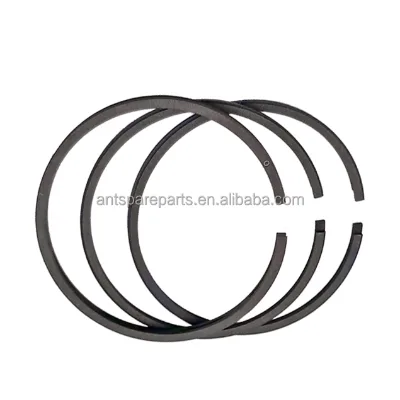
The application of air compressor O-rings extends beyond simple sealing; they are integral to the efficiency and longevity of the entire system. The data identifies specific applications, including the "1051 Air Compressor Pump" and general "Compressor" usage. These components are found in piston ring assemblies, where they must withstand high friction and pressure cycles. The "Piston Ring" specification suggests that some products in this category are designed for the cylinder bore, providing a seal between the piston and the cylinder wall to prevent gas leakage and maintain compression efficiency.
The "Life" attribute of 7500 hours indicates a performance benchmark for high-quality seals. This lifespan is relevant for industrial applications where downtime is costly. Buyers should evaluate whether the stated life expectancy aligns with their operational cycles. For instance, a compressor running 24/7 will reach 7500 hours in approximately 10 months, whereas a machine running only 8 hours a day will take over 3 years. The "Speed" attribute of 1500rpm further defines the dynamic environment in which the seal operates. High-speed applications require seals with low friction coefficients and excellent heat dissipation properties to prevent thermal degradation.
Integration considerations also include the "Cooling System" type. The "Air Cooling" specification implies that the O-ring must function effectively in an environment where heat is managed by airflow rather than liquid cooling. This can lead to higher operating temperatures, reinforcing the need for materials that can handle the upper limit of the -20°C to +220°C range. The "After Warranty Service" of "Online Support" suggests that suppliers are expected to provide technical assistance for troubleshooting and replacement, which is crucial for maintaining system uptime.
Supplier Evaluation and Geographic Sourcing
Evaluating suppliers requires a multi-faceted approach that considers location, production capacity, and service capabilities. The data indicates that products originate from "Shenzhen, China" and "Fujian," two major manufacturing hubs known for their expertise in rubber and plastic components. Shenzhen is particularly renowned for its electronics and precision manufacturing ecosystem, while Fujian has a strong presence in industrial machinery parts. Buyers should verify the specific factory location to ensure it aligns with their logistics strategy and quality expectations.
The "Processing Service" of "Moulding" and "Cutting" indicates that suppliers offer both custom molding and precision cutting services. This flexibility is valuable for buyers who need to adapt existing designs or create entirely new sealing solutions. The availability of "Standard Component" and "Non-Standard Component" options suggests that suppliers can handle both off-the-shelf and bespoke orders. However, the distinction between "Standard" and "Non-Standard" components should be clearly defined to avoid confusion regarding lead times and costs.
Service capabilities are equally important. The "Online Support" mentioned in the data is a positive indicator of post-sales engagement. Buyers should assess the depth of this support, including the availability of technical drawings, material data sheets, and troubleshooting guides. The "Machinery Test Report" being "Provided" is a strong signal of quality assurance, but buyers should verify the scope of these tests to ensure they cover the specific operating conditions of their application.
Quality Control and Long-Term Procurement Strategy
Ensuring consistent quality is the ultimate goal of any procurement strategy. The "Quality" attribute of "High Performance" is a claim that must be substantiated through rigorous quality control processes. Buyers should implement a multi-stage verification process, starting with the review of supplier certifications and ending with incoming inspection of the delivered goods. The "Standard" and "Nonstandard" product standards mentioned in the data highlight the need for clear acceptance criteria. For standard parts, compliance with ISO dimensions is sufficient, but for non-standard parts, custom specifications must be meticulously defined and agreed upon.
Long-term procurement considerations involve building a resilient supply chain. The "Customized" nature of many products means that relying on a single supplier can be risky. Diversifying the supplier base across different regions, such as Shenzhen and Fujian, can mitigate supply chain disruptions. Additionally, establishing a long-term partnership with a supplier who offers "Online Support" and provides "Machinery Test Reports" can lead to continuous improvement and cost optimization over time.
Buyers should also consider the "Packaging" standards to ensure that the seals arrive in optimal condition. The variety of packaging options, from "PE Bag" to "Carton Box," suggests that suppliers have the capability to adapt to specific shipping requirements. However, for critical applications, buyers may need to specify enhanced packaging to prevent moisture ingress or physical damage during transit.
Conclusion
Sourcing air compressor O-rings is a complex task that demands a deep understanding of technical specifications, regulatory compliance, and supply chain dynamics. By focusing on the operational temperature range, working medium compatibility, and specific compressor architectures, buyers can select components that ensure reliable performance. The availability of certifications like IATF 16949:2016 and FDA compliance provides a baseline for quality, but verification through test reports and supplier audits is essential. With a clear strategy that addresses cost drivers, application requirements, and supplier evaluation, procurement professionals can secure high-performance sealing solutions that enhance the efficiency and longevity of air compressor systems. The diverse range of products, from standard O-rings to custom piston rings, offers flexibility, but success lies in the meticulous alignment of product attributes with operational needs.
FAQs
What certifications do air compressor O-rings typically hold?
These components commonly hold IATF 16949:2016, RoHS, Reach, PAHs, and FDA certifications. Buyers should verify that specific batches carry current documentation to ensure compliance with automotive and food-grade standards for their specific application.
How does customization affect the minimum order quantity?
Customization options are available, but the minimum order quantity ranges from 1 to 1000 pieces depending on the configuration. Standard items may allow lower quantities, while custom-molded parts often require higher volumes to justify tooling costs.
Which temperature range can these O-rings withstand?
The operational temperature range spans from -20°C to +220°C. This wide window requires selecting materials that resist degradation at high heat and remain flexible at low temperatures to ensure reliable sealing in varying environments.
Can I find air compressor O-rings with specific lubrication styles?
Yes, products are available in both lubricated and oil-free styles to match different compressor designs. Selecting the correct style is critical to prevent contamination in oil-free systems or ensure compatibility with lubricants in standard units.
What packaging methods are used for shipping these components?
Packaging includes PE bags inside cartons, color boxes, blister cards, and foreign trade packaging. These methods protect the seals during transit from origins like Shenzhen or Fujian and prevent damage from moisture or physical impact.
How is the quality of these O-rings verified before purchase?
Quality is verified through provided machinery test reports and adherence to ISO standards. Buyers should request these reports to confirm performance claims regarding compression set, durability, and resistance to the specified working media like oil or water.