Source Vertical Stationary Air Compressor Screw for Manufacturing
Explore 30 verified options for the Vertical Stationary Air Compressor Screw designed for industrial applications. Buyers can compare specifications, power sources, and cooling systems to find the right unit for compressed air needs; compare the available evidence and request quotations based on your requirements.
Key considerations
Products List


Stationary screw compressor Air Compressor Screw Direct Drive Screw Compressor
$1250.00 - $1560.00
MOQ: 1 Pieces


variable frequency single screw air compressor double screw air compressor
$4000.00 - $40000.00
MOQ: 1 Sets


0.8/1.0/1.3MPa 8/10/13bar Screw Flange Connecting Vertical Air Compressor
$11850.00 - $14450.00
MOQ: 1 set


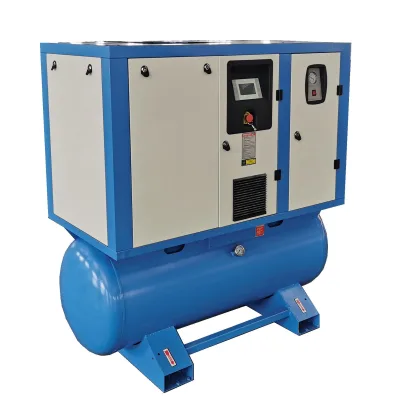
Stable Performance Industrial Grade Direct Connection Screw air Compressor
$49990.00 - $50000.00
MOQ: 1 sets

Industry Air Compressor Rotary Screw Industrial Air Pad Screw Compressor
$499.00 - $599.00
MOQ: 1 Pieces
Comprehensive Sourcing Guide
Vertical Stationary Air Compressor Screw Sourcing Guide
Selecting the right vertical stationary screw air compressor requires balancing spatial efficiency with operational reliability. This configuration is particularly valuable for facilities with limited floor space, as the vertical orientation minimizes the machine's footprint while maintaining robust performance. Buyers must carefully evaluate the installation type to ensure the unit fits within their existing infrastructure without compromising safety clearances or maintenance access. The stationary nature of these units implies a fixed installation, which simplifies piping layouts but demands precise foundation planning to handle operational vibrations and weight distribution.
Procurement teams should also consider the power source and cylinder position when defining their technical requirements. While many modern units utilize AC power for industrial applications, specific models may support DC or diesel options depending on the site’s energy availability. The vertical cylinder arrangement often contributes to a more compact design, but it can also influence the internal lubrication and cooling dynamics. Understanding these mechanical distinctions helps buyers avoid mismatches between their facility’s utility capacity and the compressor’s operational needs, ensuring a seamless integration into the compressed air system.
Product Scope and Observed Listing Signals
Market listings for vertical stationary screw air compressors reveal a diverse range of configurations tailored to different industrial demands. Observed data indicates a wide price spectrum, ranging from affordable entry-level units to high-capacity industrial systems costing up to $800,000. This variance reflects differences in motor power, air end quality, and additional features like noise reduction or custom color schemes. Buyers should note that minimum order quantities typically start at one unit, allowing for flexible procurement strategies whether for single-machine replacement or fleet expansion. The availability of customization options further expands the scope, enabling tailored solutions for specific environmental or operational constraints.
Technical observations highlight significant variations in structural design and cooling methods. While some units feature closed-type structures with air cooling, others may employ different configurations depending on the model. The cylinder position is a critical differentiator, with vertical arrangements being a key focus for space-constrained environments. Additionally, lubrication styles vary between oil-less and lubricated systems, impacting maintenance intervals and air purity requirements. These observed signals suggest that buyers must scrutinize individual product specifications rather than relying on general category assumptions, as the actual capabilities can differ substantially between manufacturers and model lines.
Technical Specifications to Verify
Verifying the air end manufacturer and bearing quality is essential for ensuring long-term reliability and efficiency. High-performance units often feature reputable air end brands, such as Baosi, which are known for their durability and precise machining. The bearing type, whether SKF or other premium brands, directly impacts the compressor’s lifespan and vibration levels. Buyers should also confirm the driven method, with direct drive being a common and efficient configuration that reduces energy loss associated with belt drives. These core mechanical components are the heart of the system, and their quality dictates the overall performance and maintenance costs over the equipment’s lifecycle.
Motor power and voltage compatibility are critical technical parameters that must align with the facility’s electrical infrastructure. Available motor powers range significantly, with some high-capacity units reaching 160KW, while others are designed for lower energy consumption. Voltage options typically include 220V, 380V, or 415V, with some manufacturers offering customized solutions to match specific regional standards. Additionally, the motor protection level, such as IP23 or IP54, indicates the unit’s resistance to dust and water ingress, which is vital for harsh industrial environments. Ensuring these specifications match the site’s power supply and environmental conditions prevents operational failures and ensures optimal energy efficiency.
Compliance and Safety Documentation
Compliance with international safety and quality standards is non-negotiable for industrial air compressors. Buyers should verify that the supplier provides valid certifications such as CE, ISO9001, TUV, and GC, which attest to the product’s adherence to rigorous manufacturing and safety protocols. These certifications ensure that the compressor meets essential requirements for electrical safety, mechanical integrity, and environmental impact. Without proper documentation, facilities risk non-compliance with local regulations, leading to potential fines, operational shutdowns, or safety hazards. Therefore, obtaining and validating these certificates is a critical step in the procurement process.
Pressure vessel and discharge piping standards also require careful attention to detail. The discharge pipe diameter, such as 1*3/4", must be compatible with the existing piping network to ensure efficient airflow and prevent pressure drops. Additionally, the unit’s weight and dimensions, which can vary significantly between models, must be considered for structural support and transportation logistics. Buyers should request detailed technical drawings and weight specifications to plan for foundation requirements and crane operations. Proper documentation of these physical attributes ensures that the installation proceeds smoothly and that the compressor operates within its designed safety parameters.
Cost Drivers and Commercial Terms
The total cost of ownership for a vertical stationary screw air compressor is influenced by several key factors beyond the initial purchase price. Motor power and air end quality are primary drivers, with higher capacity units commanding premium prices. Customization options, such as specific colors or voltage configurations, can also add to the cost. Buyers should evaluate the trade-off between upfront investment and long-term operational efficiency, as more efficient models may have higher initial costs but lower energy bills. Additionally, the packaging type, whether carton, wooden box, or standard export packing, can affect shipping costs and the risk of damage during transit.
Commercial terms and lead times are equally important in the procurement decision. Minimum order quantities and payment terms can vary significantly between suppliers, impacting cash flow and inventory management. Buyers should negotiate clear delivery schedules and warranty terms to mitigate risks associated with delays or defects. The origin of the product, often China for these types of compressors, can influence shipping logistics and import duties. Understanding these commercial dynamics allows buyers to create a realistic budget and avoid unexpected expenses, ensuring a transparent and fair transaction that aligns with their financial objectives.
Supplier Qualification and Quality Control
Evaluating supplier qualifications is crucial for ensuring the reliability and consistency of the purchased equipment. Buyers should assess the manufacturer’s production capabilities, quality control processes, and after-sales support infrastructure. A reputable supplier will have a proven track record of delivering high-quality compressors that meet specified technical standards. Verification of their manufacturing facilities and quality assurance protocols can provide confidence in the product’s durability and performance. Additionally, suppliers with strong engineering support can offer valuable assistance during the installation and commissioning phases, reducing the risk of operational issues.
Quality control measures should extend beyond the final product inspection to include raw material sourcing and assembly processes. Buyers should inquire about the testing procedures used to verify performance metrics such as noise levels, air output, and energy consumption. Suppliers that conduct rigorous factory acceptance tests (FAT) demonstrate a commitment to quality and customer satisfaction. Furthermore, the availability of spare parts and technical documentation is essential for long-term maintenance. Establishing a clear communication channel with the supplier ensures that any technical queries or issues can be resolved promptly, minimizing downtime and maintaining operational continuity.
Long-Term Procurement Checks
Long-term procurement success depends on establishing a robust maintenance and support strategy for the vertical stationary screw air compressor. Buyers should develop a preventive maintenance schedule that includes regular inspections of the air end, bearings, and lubrication system. For oil-less models, this may involve checking seals and filters, while lubricated units require oil changes and filter replacements. Monitoring performance metrics such as pressure stability and energy consumption can help identify potential issues before they lead to costly breakdowns. A proactive maintenance approach extends the equipment’s lifespan and ensures consistent air quality for downstream processes.
Supplier relationship management is also vital for long-term operational efficiency. Buyers should maintain open lines of communication with the supplier for technical support, spare parts ordering, and warranty claims. Regular feedback on the compressor’s performance can help the supplier improve their products and services. Additionally, staying informed about technological advancements in screw air compressor technology can inform future procurement decisions. By treating the supplier as a strategic partner rather than a transactional vendor, buyers can leverage their expertise to optimize their compressed air systems and achieve greater operational resilience over time.
FAQs
What power sources are available for these compressors?
These compressors support multiple power sources including diesel engines, AC power, and DC power options. The specific model determines the available configuration, allowing buyers to select the most suitable energy source for their stationary or mobile industrial applications without requiring external adapters.
Which certifications do the screw air compressors hold?
The products hold recognized certifications including CE, ISO9001, TUV, and GC standards. These credentials verify that the manufacturing processes and final units meet international safety and quality requirements, ensuring reliability for industrial users who require compliant equipment for their operations.
How is the motor protection level defined for these units?
The motor protection level is rated at IP23 or IP54 depending on the specific configuration. This rating indicates the degree of protection against solid objects and water ingress, ensuring the compressor can operate safely in various industrial environments without immediate risk of electrical failure.
Can the compressors be customized for specific needs?
Yes, customization is available for these screw air compressors to meet unique operational requirements. Buyers can request specific modifications to the unit, allowing for tailored solutions that align with particular facility constraints or performance goals while maintaining the core structural integrity of the machine.
What is the typical installation type for these machines?
The compressors are primarily designed as stationary type units for fixed industrial locations. Some models also offer movable type configurations, providing flexibility for different site layouts while ensuring stable operation during the compressed air generation process required for various manufacturing applications.
Which bearing brands are used in the air end assembly?
SKF bearings are utilized in the air end assembly of these compressors. This choice ensures high durability and smooth operation under load, contributing to the overall low noise performance and extended service life of the single screw or twin-screw compressor units.
What is the standard packing method for export?
Export packing typically includes wooden boxes, wooden cases, or standard export packing materials. The specific method depends on the model, such as the SEF series or ZGM7.5, ensuring the unit is protected during transit while meeting the dimensional requirements for safe global shipping logistics.