Source Aluminum Trolley Stroller for Baby Travel, Shopping, and Care
Explore 30 listings for the Aluminum Trolley Stroller for Baby, featuring foldable designs and customizable options. Buyers can compare specifications like wheel materials, frame types, and packing details to find suitable portable solutions.
Key considerations
Products List


Factory Multi-Functional Carriage Baby Pram High Quality Baby Stroller
$145.00 - $160.00
MOQ: 750 Pieces


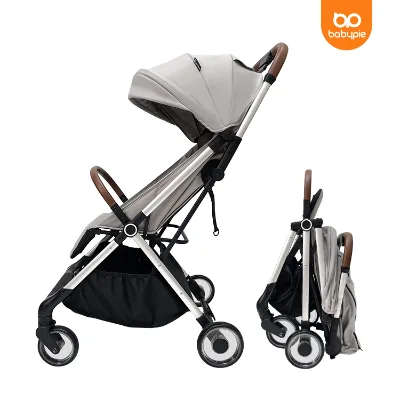


Portable Travel Aluminum Frame Baby Stroller High Landscape Baby Stroller
$35.00 - $36.00
MOQ: 10 Pieces


Comprehensive Sourcing Guide
Strategic Sourcing Guide for Aluminum Trolley Strollers
Understanding Product Specifications and Material Composition
When sourcing an Aluminum Trolley Stroller for Baby, the primary focus must be on the specific material composition and structural design that define the product's utility. The core keyword implies a lightweight frame, typically constructed from aluminum or alloy materials, which offers a balance between durability and portability. In the current market, buyers will encounter various frame materials, including stainless steel and alloy options. For instance, specific product listings indicate the use of "Stainless Steel" for frame construction in certain models, while others specify "Alloy" frames. It is critical for procurement teams to verify the exact alloy composition, as this directly impacts the weight-to-strength ratio, a vital metric for baby strollers intended for frequent travel.
The wheel material is another decisive specification. The observed market data highlights "PU" (Polyurethane) and "EVA/Rubber" as common wheel types. PU wheels generally offer superior shock absorption and wear resistance compared to standard rubber, making them suitable for varied terrains. Conversely, EVA wheels provide a lightweight alternative. The choice between these materials should align with the intended usage environment. Furthermore, the fabric composition varies significantly across listings, with "Linen" and "Oxford" being the primary options. Buyers must assess the breathability and durability of these fabrics, especially for models marketed for infants aged 0-1 years old. The canopy is another functional element, with some models offering a "4 Position" adjustment, which is a significant feature for sun protection and airflow management.
Packaging standards also vary, ranging from "Carton" and "Yellow Corrugated Box" to specific configurations like "2PCS/CTN" or "1PCS/Carton." Some products are individually packed in polybags. These packaging details influence the final landed cost and the efficiency of the logistics chain. A buyer must ensure that the packaging is robust enough to protect the aluminum frame and delicate fabric components during transit, particularly when the product is folded. The standard dimensions provided in listings, such as "82X90X44CM" or "95X46X61CM," serve as critical data points for warehouse planning and shipping container optimization. These dimensions often represent the folded state, which is a key selling point for "Portable" and "Foldable" strollers.
Compliance and Certification Verification Protocols
Ensuring that an aluminum trolley stroller meets international safety standards is a non-negotiable aspect of B2B procurement. While specific certification statuses cannot be assumed for every listed product, buyers must rigorously verify compliance with recognized safety benchmarks. The market context references standards such as "ASTM F833" and "EN 1888," with specific mentions of "EN 1888-2." These standards typically govern the structural integrity, stability, and mechanical safety of baby strollers. However, the presence of these standard references in general background data does not guarantee that a specific supplier's inventory is currently certified.
Procurement teams should request valid test reports from suppliers that explicitly demonstrate compliance with the relevant standards for the target market. For example, if the destination is the European Union, verification against EN 1888 is essential. If the market is North America, ASTM F833 compliance must be confirmed. The observed "Testing: 1888-2" attribute in some product data suggests that certain models may have undergone specific testing protocols, but this should be treated as an observation rather than a universal guarantee. Buyers must demand third-party laboratory reports that are current and applicable to the specific model number, such as "T310-1" or "Aluminum Baby Stroller-076C."
It is also important to note that "Customization" is a widely available attribute in this sector. When a buyer requests custom designs, the compliance status of the final product may differ from the standard model. Customization can involve changes to materials, dimensions, or structural reinforcements, all of which may require re-testing. Therefore, the procurement strategy must include a clause that mandates re-certification of any customized stroller before it can be shipped to the final market. Relying on the certification of a standard model for a customized version is a significant risk that can lead to regulatory non-compliance and product recalls.
Cost Drivers and Pricing Structure Analysis
The pricing structure for aluminum trolley strollers is influenced by a complex interplay of factors, including material costs, customization levels, and order volume. The observed price range in the market spans from approximately $14.06 to $160 USD. This wide variance indicates that the product category encompasses both basic, entry-level models and high-end, feature-rich units. The lower end of the price spectrum likely corresponds to simpler designs with standard packaging and minimal customization, while the higher end reflects advanced features such as multi-position canopies, premium fabrics, and specialized wheel systems.
Order Volume, or Minimum Order Quantity (MOQ), is a primary driver of unit cost. The observed MOQ range is extensive, stretching from 1 unit to 1,060 units. Some listings explicitly state an MOQ of "500PCS," which suggests that suppliers may offer tiered pricing structures where the unit cost decreases significantly as the order volume increases. For buyers looking to minimize initial capital expenditure, finding suppliers with lower MOQs is essential, though this often comes at a higher per-unit price. Conversely, buyers with established distribution networks can leverage high-volume orders to negotiate more favorable pricing, potentially accessing the lower end of the observed price range.
Customization is another significant cost driver. Attributes such as "Design: as Your Requirment," "Logo: Customized," and "Size: Customized" are prevalent. Implementing custom logos, specific color schemes like "Blue/Grey/Balck/Red," or altering the frame dimensions will incur additional tooling and setup costs. These costs are often passed on to the buyer in the form of a higher unit price or a separate setup fee. Additionally, the choice of materials, such as upgrading from standard fabric to high-grade linen or selecting specific wheel materials like PU, will impact the final cost. Buyers must conduct a total cost of ownership analysis that includes not just the unit price but also the costs associated with customization, packaging, and logistics.
Typical Applications and Market Segmentation
Aluminum trolley strollers serve a diverse range of applications, catering to different user needs and market segments. The primary application is for infants and toddlers, with specific products targeting the "0-1 Years Old" age group. These strollers are designed to be "Portable" and "Foldable," making them ideal for urban environments where space is at a premium and frequent folding is necessary for public transport or car trunks. The "Excellent" portability attribute observed in some listings highlights the suitability of these products for travelers and parents who require a lightweight solution for daily commutes.
Beyond the infant market, these strollers are also utilized in commercial and rental settings. The "OEM: Yes" attribute indicates that many manufacturers are willing to produce private-label products for retailers, travel agencies, and rental companies. This flexibility allows businesses to brand the strollers with their own logos and designs, creating a unique identity in the market. The "Design: as Your Requirment" capability further supports this application, enabling customization for specific corporate events or promotional campaigns.
The versatility of the product is also evident in its structural design. The "Foldable" nature and "4 Position" canopy make these strollers suitable for various weather conditions and travel scenarios. Whether for a quick trip to the park or a long-distance journey, the ability to adjust the canopy and fold the stroller compactly adds significant value. The "Convenience: Good" attribute reinforces the idea that these products are designed for ease of use, a critical factor for parents and caregivers. Understanding these applications helps buyers identify the specific features that will resonate with their target audience, whether it is the lightweight frame for travelers or the durable construction for rental fleets.
Supplier Evaluation and Verification Strategies
Evaluating suppliers for aluminum trolley strollers requires a systematic approach that goes beyond surface-level product listings. Buyers should prioritize suppliers who demonstrate transparency in their production capabilities and quality control processes. The "prod_origin: China" and "prod_origin: China Guangdong" attributes indicate that the majority of suppliers are located in these regions, which are known for their manufacturing clusters. However, the location alone does not guarantee quality; buyers must verify the supplier's factory audit reports and production capacity.
One key aspect of supplier evaluation is the ability to handle customization. The "Customization: Available" attribute is common, but the extent of this capability varies. Buyers should inquire about the supplier's design team, their experience with OEM projects, and their ability to meet specific requirements for materials, dimensions, and branding. The "OEM: Yes" attribute suggests that many suppliers are experienced in private labeling, but buyers should request examples of previous work to assess the quality of their customization services.
Another critical factor is the supplier's responsiveness to quality issues. The "Testing: 1888-2" attribute suggests that some suppliers have a history of testing, but buyers should ask for their internal quality control procedures. Do they conduct in-process inspections? Do they perform final random inspections before shipment? A supplier with a robust quality control system will be more reliable in delivering consistent products. Additionally, buyers should evaluate the supplier's communication channels and their willingness to provide detailed product information, such as the specific model numbers and standard dimensions.
Quality Control and Long-Term Procurement Considerations
Implementing a rigorous quality control (QC) plan is essential for ensuring the long-term success of an aluminum trolley stroller procurement project. Given the wide range of observed specifications, from "Stainless Steel" frames to "Alloy" frames, and the variety of wheel materials, buyers must establish clear acceptance criteria for each component. The QC plan should include checks for structural integrity, particularly focusing on the folding mechanism and the stability of the frame. Since the "Folded" attribute is a key selling point, the durability of the folding mechanism must be tested to ensure it can withstand repeated use without failure.
Long-term procurement considerations also involve the supply chain's resilience and the supplier's ability to scale. The observed MOQ range of 1 to 1,060 units suggests that suppliers have varying levels of flexibility. Buyers should assess whether the supplier can handle fluctuations in demand, especially if the product is expected to grow in popularity. The "Customization: Available" attribute implies that the supplier can adapt to changing market trends, but buyers should ensure that the supplier has the capacity to manage these changes without compromising quality or delivery timelines.
Finally, buyers should consider the after-sales support provided by the supplier. This includes the availability of spare parts, such as wheels, fabrics, and canopy mechanisms, and the supplier's willingness to provide technical support. The "Logo: Accept" and "Logo: Customized" attributes indicate that branding is a significant part of the product, and buyers should ensure that the supplier can provide consistent branding over the long term. By focusing on these quality control and long-term considerations, buyers can build a sustainable supply chain that delivers high-quality aluminum trolley strollers to their customers.
Comparative Analysis of Key Product Attributes
To facilitate informed decision-making, the following table compares key attributes observed across the product listings. This comparison highlights the variability in specifications and helps buyers identify the features that best match their requirements.
| Attribute | Observation 1 | Observation 2 | Observation 3 | Observation 4 |
|---|---|---|---|---|
| Frame Material | Stainless Steel | Alloy | Aluminum (Implied) | Alloy |
| Wheel Material | PU | EVA/Rubber | PU | EVA/Rubber |
| Fabric | Linen | Oxford | Linen | Oxford |
| Canopy | 4 Position | Standard | 4 Position | Standard |
| Foldability | Foldable | Foldable | Foldable | Foldable |
| Packaging | Carton | Yellow Corrugated Box | 2PCS/CTN | Polybag |
| Customization | Available | Available | Available | Available |
| Target Age | 0-1 Years Old | General | General | General |
| Origin | China | China Guangdong | China | China |
| MOQ | 500PCS | 1-1060 | 1-1060 | 500PCS |
This table underscores the diversity within the aluminum trolley stroller market. Buyers must carefully evaluate each attribute against their specific needs, considering factors such as the intended user age group, the required level of customization, and the logistical constraints of their supply chain. By leveraging this comparative analysis, buyers can make more strategic decisions that align with their business objectives and customer expectations.
FAQs
What materials are used for the frame and wheels?
Frames are constructed from stainless steel or alloy materials, while wheels typically use PU or EVA rubber. Buyers should verify the specific alloy composition for weight-to-strength ratios and check wheel durability for varied terrains.
Can I customize the design and logo on the stroller?
Yes, customization is available for design, logo, and size according to buyer requirements. Custom orders may require re-testing for safety compliance, so suppliers must confirm certification status for any modified structural or material changes.
What are the typical minimum order quantities for these strollers?
Minimum order quantities range from 1 unit to 1060 units, with some listings specifying 500 pieces. Lower MOQs often result in higher per-unit costs, while larger volumes can access lower price points within the observed range.
How are the strollers packaged for shipping?
Packaging varies by model, using cartons, yellow corrugated boxes, or polybags, often at 1 or 2 pieces per carton. Robust packaging is essential to protect the folded frame and fabric components during transit to ensure product integrity.
Which safety standards apply to these baby strollers?
Products may reference standards like ASTM F833 or EN 1888, with some listings noting specific testing like 1888-2. Buyers must request valid third-party test reports for the specific model to ensure compliance with target market regulations.
What is the origin and location of the manufacturers?
The majority of suppliers are located in China, specifically in the Guangdong region. Buyers should verify factory audit reports and production capacity, as location alone does not guarantee quality or consistent delivery schedules.