Source Carry-on Luggage for Travel Business School
Compare 30 Carry-on Luggage options featuring materials like leather, ABS, and plastic with customization available. Buyers can evaluate styles, sizes, and features for travel, business, and school needs; compare the available evidence and request quotations based on your requirements.
Key considerations
Products List

Vintage Suitcase Luggage Leather Carry on Luggage Leather Travel Bags Luggage
$101.50 - $111.70
MOQ: 50 Sets


Leather Suitcase Suitcase Luggage Genuine Leather Leather Carry on Luggage
$101.50 - $111.70
MOQ: 50 Sets


Leather Carry on Luggage Trolley Luggage Leather Hides and Skins Luggage
$101.50 - $111.70
MOQ: 50 Sets

Carry on Trolley Luggage for Promotion Wholesale Suitcase Travel Suitcase Luggage
$27.50 - $30.00
MOQ: 500 Pieces


Compact Black Business Luggage: Ideal for International Travel Lightweight ABS Luggage
$10.00 - $13.00
MOQ: 500 Pieces


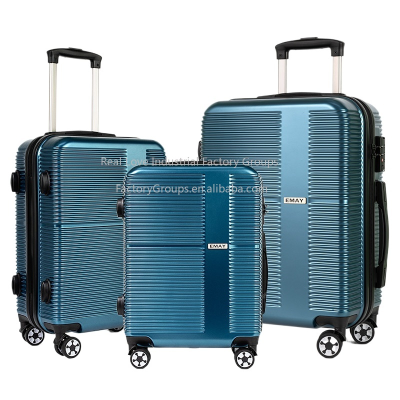
New Suitcase Set Luggage Trolley Compatible Products Trolley Manufacturer Luggage
$25.85 - $28.46
MOQ: 100 Pieces




Leather Rolling Suitcase Bag, Mens Carry-on Backpack Trolley Luggage Case
$59.99 - $61.99
MOQ: 500 Pieces


Comprehensive Sourcing Guide
Carry-on Luggage Sourcing Guide
Buyers must first distinguish between rigid and soft-shell options based on the observed material diversity in the current market. The supply base includes units constructed from ABS plastic and leather, alongside polyester and general plastic variants, each offering distinct durability profiles. Rigid ABS shells provide superior impact resistance for fragile contents, while soft leather or polyester constructions offer flexibility and weight savings. Procurement teams should align material selection with the specific cargo requirements, ensuring the chosen shell type matches the intended protection level for business or leisure travel.
The observed product range also reveals significant variation in internal configurations and functional features that dictate suitability for different user demographics. Listings indicate options with built-in casters versus external wheels, and some models feature dedicated passport pockets while others rely on standard zipper closures. Buyers should verify if the internal lining material, such as polyester or leather, meets hygiene and wear expectations for frequent use. Understanding these structural differences is essential before engaging suppliers, as the wrong internal setup can lead to premature failure or user dissatisfaction in the field.
Product Scope and Observed Listing Signals
The current market signals a strong emphasis on versatility, with products explicitly marketed for travel, business, school, and camping applications. Listings confirm that many units are designed as unisex luggage, catering to a broad consumer base without gender-specific styling constraints. This broad applicability suggests that successful sourcing strategies should prioritize models with adaptable features, such as the observed "Simplicity" and "Leisure" styles, which appeal to diverse travel needs from airport transit to outdoor adventures.
Price and minimum order quantity (MOQ) data indicate a wide spectrum of commercial entry points, with observed prices ranging from $2.60 to $111.70 and MOQs spanning from 20 to 5000 units. This variance allows buyers to select suppliers based on their specific volume requirements and budget constraints, whether for small boutique orders or large-scale corporate procurement. However, the significant price spread necessitates a careful review of the included features, such as waterproofing capabilities or specific wheel mechanisms, to ensure the cost aligns with the actual quality and functionality delivered by the manufacturer.
Technical Specifications to Verify
Verification of wheel and caster systems is critical, as the market presents both external and built-in wheel configurations with varying degrees of mobility. Some listings specify 360-degree wheels, which are essential for smooth navigation in crowded terminals, while others rely on fixed external casters that may offer different stability characteristics. Buyers must confirm the specific wheel type and rotation capability in the technical datasheet to ensure the luggage meets the maneuverability standards required for their target market's infrastructure.
Dimensional standards and hardness ratings also require strict validation to prevent compatibility issues with airline regulations or user comfort expectations. The observed product standards include specific inch measurements such as 16, 20, 22, 24, 26, and 28 inches, alongside a hardness range described as medium soft to soft. Procurement teams should cross-reference these dimensions against current airline carry-on limits and verify the hardness rating to ensure the luggage offers the desired balance between structural rigidity and flexibility for the intended usage scenario.
Compliance and Safety Documentation
While specific certification documents are not explicitly listed in the provided product facts, buyers must request evidence of material safety and manufacturing compliance for all ABS and plastic components. Since the supply originates from China and Zhejiang, it is prudent to verify that the materials used, particularly the plastics and leather, adhere to international safety standards regarding toxicity and flammability. Without explicit certification data in the listing, the buyer must treat the absence of stated standards as a requirement to demand third-party test reports before finalizing any purchase agreement.
Waterproofing claims require particular scrutiny, as the observed data shows a split between waterproof and non-waterproof models within the same category. Buyers must obtain written confirmation of the waterproof rating for any unit marketed as water-resistant, ensuring the sealing mechanisms and material treatments meet the specific environmental conditions of the intended use. Relying on general feature descriptions like "Eco-Friendly" or "Waterproof" without supporting test data poses a risk of product failure, so explicit documentation of water resistance levels is a mandatory step in the compliance verification process.
Cost Drivers and Commercial Terms
Lead times and payment structures are significant cost drivers, with observed delivery windows ranging from 30 to 45 days after the deposit is paid. This timeline impacts inventory planning and cash flow, requiring buyers to factor in the production cycle when scheduling product launches or restocking. The variation in lead times suggests that production capacity and raw material availability fluctuate, so securing a firm delivery schedule in the contract is essential to mitigate the risk of delays that could disrupt the supply chain.
Customization options and packaging requirements further influence the final landed cost and must be clearly defined in the commercial terms. The market supports OEM logo application and custom labeling, which adds value but also introduces complexity to the production process and potential cost premiums. Additionally, the standard packing method is listed as carton, but buyers should negotiate specific packaging details to ensure the luggage arrives in optimal condition, as improper packaging can lead to damage during the sea or international express transport phases.
Supplier Qualification and Quality Control
Supplier qualification should focus on verifying the origin and production capabilities, as the data indicates origins in China and specifically Zhejiang. Buyers must confirm the factory's capacity to handle the required order volumes, given the wide MOQ range observed, and ensure they have the infrastructure to maintain consistent quality across different models like the CLK and ADF series. A robust supplier audit should include checks on their quality control processes for material selection, assembly, and final inspection to ensure the "High Quality" claim is substantiated by actual production standards.
Quality control protocols must address the specific attributes observed, such as the closure types and internal material consistency. Since some models feature zippers and others have different closure mechanisms, the supplier must demonstrate a proven track record of reliable hardware performance. Buyers should implement a pre-shipment inspection plan that specifically tests the durability of the zippers, the integrity of the wheels, and the stability of the handles, ensuring that the final product meets the functional expectations set by the product specifications.
Long-Term Procurement Checks
Sustainability and material longevity are key factors for long-term procurement success, especially given the "Eco-Friendly" feature noted in some listings. Buyers should establish a framework for monitoring the environmental impact of the materials used, such as the ABS plastic and leather, to ensure they align with corporate sustainability goals. Regular reviews of the supplier's material sourcing practices will help maintain compliance with evolving environmental regulations and consumer expectations regarding eco-friendly products.
Continuous performance monitoring is necessary to validate the durability claims and ensure the product maintains its quality over time. Buyers should track return rates and customer feedback regarding the hardness, waterproofing, and wheel performance to identify any systemic issues early. By maintaining a feedback loop with the end-users and correlating this data with the supplier's production batches, procurement teams can make informed decisions about renewing contracts or switching suppliers to maintain a high standard of product reliability.
FAQs
What materials are used for Carry-on Luggage?
Carry-on Luggage is constructed from durable materials including ABS, plastic, and leather. Some models feature leather interiors for added comfort and style. Other options utilize polyester linings for lightweight performance. These materials ensure the luggage meets high-quality standards for travel and business use while maintaining structural integrity.
Can I customize the logo on Carry-on Luggage?
Yes, customization is available for Carry-on Luggage orders. Buyers can request OEM logo printing to brand their products effectively. This service allows for distinct corporate identity integration. Custom labels are also workable for specific packaging needs. This flexibility supports businesses seeking unique branding solutions for their inventory.
What sizes are available for Carry-on Luggage?
Carry-on Luggage is available in multiple standard sizes including 16, 18, 20, 22, 24, 26, and 28 inches. Specific models offer 20-inch options, while others provide 22, 24, 26, and 28-inch variants. These dimensions cater to various travel requirements, ensuring suitable capacity for business, school, or leisure trips.
How long is the delivery time for Carry-on Luggage?
The delivery time for Carry-on Luggage is typically 30 to 45 days after the deposit is paid. This timeline allows for production and quality assurance processes. Buyers should plan their inventory needs accordingly to avoid delays. This lead time applies to standard orders and ensures timely arrival for seasonal demands.
What features do Carry-on Luggage models include?
Carry-on Luggage features include waterproof construction, light weight design, and eco-friendly materials. Models offer 360-degree wheels for smooth maneuverability and external or built-in casters. Some designs include passport pockets and zipper closures. These attributes enhance usability for travel, camping, and business applications.
Where is the Carry-on Luggage manufactured?
The Carry-on Luggage is manufactured in China, with specific origins noted in Zhejiang. This location supports efficient production and global shipping logistics. Buyers can rely on established manufacturing hubs for quality control. The origin ensures compliance with international standards and facilitates reliable export processes for worldwide distribution.
What is the MOQ for Carry-on Luggage orders?
The minimum order quantity for Carry-on Luggage ranges from 20 to 5000 units. This flexibility accommodates both small businesses and large enterprises. Buyers can select quantities that match their market demand. Lower MOQs allow for testing new designs, while higher volumes offer cost efficiencies for established product lines.