Source Automatic 12V Motorcycle Battery Charger for Cars, Trucks, and Power Supplies
Compare 30 listings of automatic 12V motorcycle battery chargers featuring pulse and intelligent styles for cars, trucks, and power supply adapters. These units offer short circuit protection and recyclable options with varying output capacities.
Key considerations
Products List


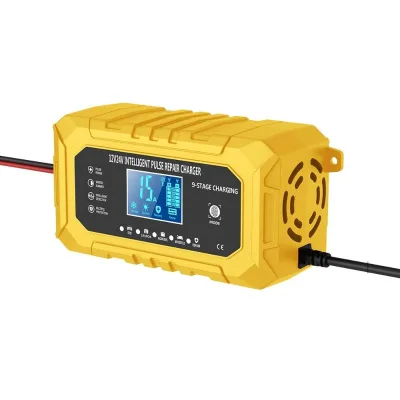
High Quality Auto Charger 12V Car Battery Charger Multi Motorcycle Charger
$1.00 - $10.00
MOQ: 500 Pieces


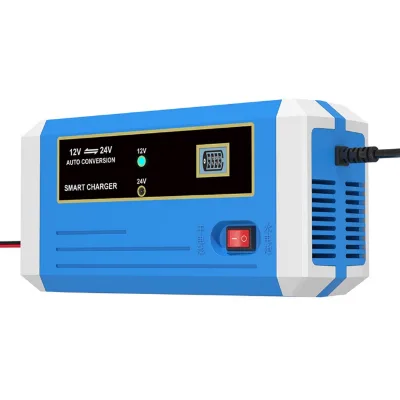
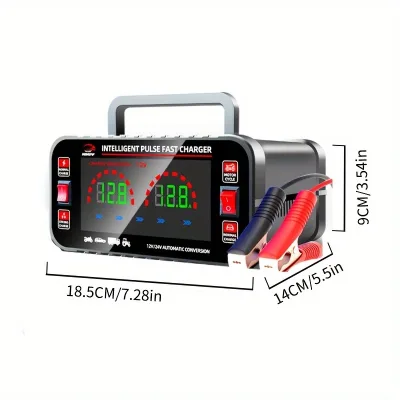
DC 12V & 24V Automatic Battery Charger - 12V, Car, Motorcycle (48230016)
$10.00 - $25.00
MOQ: 100 Pieces


Comprehensive Sourcing Guide
Strategic Sourcing Guide for Automatic 12V Motorcycle Battery Chargers
Understanding Technical Specifications and Performance Profiles
When sourcing an Automatic 12V Motorcycle Battery Charger, the primary objective is to identify units that align precisely with the electrical requirements of the target vehicle fleet. The market presents a variety of configurations, and buyers must distinguish between general-purpose units and those optimized for specific battery chemistries. Based on observed product data, the core technical specification for these devices centers on a nominal voltage of 12V, designed to accommodate 12-volt battery systems commonly found in motorcycles, cars, and light trucks.
The charging mechanism is a critical differentiator. Suppliers offer distinct charger styles, including "Intelligent Charger" and "Pulse Charger" variants. Intelligent chargers typically employ microprocessor control to manage the charging cycle, automatically switching from bulk charging to absorption and float stages to prevent overcharging. Pulse chargers, conversely, utilize high-frequency pulses to break down sulfate crystals on battery plates, a feature often beneficial for maintaining older lead-acid batteries. The observed product range includes models with specific output capabilities, such as a rated output of 12V at 10A and 24V at 5A, or higher capacity units delivering 12V at 20A and 24V at 10A. These variations directly impact the charging speed and suitability for different battery capacities.
Input voltage flexibility is another essential technical parameter. To ensure global usability, many units support an input voltage range of 100-240VAC at 50-60Hz, allowing operation across diverse electrical grids without the need for external transformers. The physical output connection type is typically specified as DC/AC, indicating the interface between the mains power source and the battery terminals. Buyers should verify that the output power matches the battery's needs; observed specifications include output powers ranging from 140W to 240W. Selecting a unit with insufficient amperage will result in impractically long charging times, while excessive amperage may risk damaging sensitive motorcycle electronics if the charger lacks appropriate regulation.
Compliance and Certification Verification
Navigating the regulatory landscape is a non-negotiable aspect of B2B procurement for electrical equipment. The safety and marketability of an Automatic 12V Motorcycle Battery Charger depend heavily on the certifications held by the manufacturer. In the observed product listings, specific certifications such as CE (Conformité Européenne) and RoHS (Restriction of Hazardous Substances) appear frequently. These certifications indicate that the product meets European safety, health, and environmental protection requirements. Some listings also reference PSE (Product Safety of Electrical Appliances & Materials) certification, which is mandatory for electrical products sold in Japan.
Buyers must treat these certifications as observations of specific listings rather than universal guarantees for all products in the category. When evaluating a potential supplier, it is imperative to request valid, up-to-date certification documents rather than relying on marketing claims. The presence of CE and RoHS suggests compliance with standards regarding electrical safety and the restriction of lead, mercury, cadmium, and other hazardous materials. However, the absence of these marks in a specific listing does not necessarily imply non-compliance, but it does require a deeper audit of the supplier's quality management system.
Furthermore, the product origin plays a role in compliance verification. A significant portion of the observed data indicates production in China, with specific mentions of Anhui as an origin point. While China is a major manufacturing hub, the regulatory environment varies by region. Buyers should verify if the supplier adheres to international standards beyond the basic CE mark, such as ISO 9001 for quality management. Additionally, the material composition, often listed as ABS (Acrylonitrile Butadiene Styrene) plastic, should be verified against RoHS requirements to ensure no restricted substances are present in the casing or internal components. The recyclability status of the product, noted as either "Recyclable" or "Non-Recyclable" in various listings, is also becoming a critical factor for buyers with sustainability mandates.
Cost Drivers and Pricing Dynamics
The pricing of automatic 12V motorcycle battery chargers is influenced by a complex interplay of technical specifications, material costs, and certification requirements. The observed price range in the market spans from $0.50 to $120.00 USD. This wide disparity is not indicative of quality alone but reflects differences in capacity, build quality, and feature sets. A unit priced at the lower end of the spectrum likely represents a basic model with minimal protection features, lower amperage output, and simpler casing materials. Conversely, units at the higher end typically feature intelligent charging algorithms, higher current outputs (e.g., 20A vs. 5A), robust protection circuits, and comprehensive certifications.
Material costs are a significant driver. The use of ABS plastic for the housing is standard, but the thickness and flame-retardant properties of the material can vary. Units with advanced protection features, such as Short Circuit Protection, Over-Voltage Protection (OVP), Over-Temperature Protection (OTP), Over-Load Protection (OLP), and Over-Current Protection (OCP), require more sophisticated internal circuitry, which increases the manufacturing cost. The weight of the unit is also a proxy for internal component quality; observed weights range from 0.63kg to 1.1kg. Heavier units often contain larger transformers and more substantial heat sinks, contributing to better thermal management and longevity.
Minimum Order Quantity (MOQ) is another critical cost factor. The observed MOQ range extends from 0 to 1000 units. Suppliers offering an MOQ of 0 or very low quantities may charge a premium per unit to cover setup and handling costs. For large-scale procurement, negotiating an MOQ between 100 and 1000 units can significantly reduce the unit price. Customization options, such as private molding or specific branding, are noted as available but will invariably increase the cost due to tooling and setup fees. Buyers should calculate the total cost of ownership, including shipping and potential duties, rather than focusing solely on the unit price.
Typical Applications and Compatibility
The versatility of the Automatic 12V Motorcycle Battery Charger is a key selling point, yet it requires careful matching to the end-use scenario. The primary application is for motorcycles, but the observed data indicates a broader compatibility with cars, trucks, tricycles, and general vehicles. The charger is explicitly designed for lead-acid batteries, which are the standard for most two-wheeled and light four-wheeled vehicles. However, buyers must verify the specific battery type compatibility before deployment, as the technology for lithium-ion batteries differs significantly.
The "Use for" attributes in the product data highlight applications ranging from standard battery charging to power supply adapters and car chargers. This suggests that some units may be dual-purpose, capable of charging a motorcycle battery while also serving as a stable power source for other equipment. The application scope also includes commercial fleets, where the ability to charge multiple vehicles efficiently is crucial. For instance, a unit with a 240W output power and 20A capacity is suitable for larger motorcycle batteries or small car batteries, whereas a 140W unit might be better suited for smaller motorcycle batteries or maintenance charging.
The physical design also influences application suitability. The color options observed, such as Dark Grey, Yellow/Red, and Orange/Yellow, often correlate with industrial or safety-conscious environments. Units with "Intelligent Charger" styles are ideal for unattended charging in workshops or garages, as they prevent damage from overcharging. In contrast, "Pulse Charger" models might be preferred for restoring deeply discharged batteries in vintage motorcycles. Buyers should assess the environment in which the charger will be used; outdoor applications may require additional protection against moisture and dust, which is not explicitly detailed in the standard specifications but should be verified with the supplier.
Supplier Evaluation and Production Capabilities
Evaluating a supplier for automatic 12V motorcycle battery chargers requires a focus on production capacity, customization capabilities, and logistical reliability. The observed data indicates that private molding is available, suggesting that suppliers have the capacity for OEM (Original Equipment Manufacturer) and ODM (Original Design Manufacturer) services. This is a significant advantage for buyers looking to brand the product or modify the design for specific market needs. However, the availability of private molding often comes with higher MOQs and longer lead times.
The packaging specifications provide insight into the supplier's logistical maturity. Standard packaging is listed as "Carton" or "Carton Packing," with specific dimensions such as 453645cm or 35.00cm * 25.00cm * 15.00cm. These variations suggest that packaging is tailored to the specific model and size of the charger. Buyers should verify if the packaging meets international shipping standards, including stacking strength and moisture protection, to prevent damage during transit. The "Selling Units" are typically listed as "Single Item," but bulk packaging options should be confirmed for large orders.
Origin location is a critical factor in supplier evaluation. The data points to China, with specific mentions of Anhui as a production hub. While this region is known for its manufacturing ecosystem, buyers should conduct due diligence on the specific factory's location and capacity. A supplier with a physical presence in a manufacturing cluster like Anhui may have better access to raw materials and a more skilled workforce. However, the distance from the buyer's location will impact shipping costs and lead times. It is advisable to request a factory audit or video tour to verify production capabilities, quality control processes, and the actual scale of operations.
Quality Control and Long-Term Procurement Considerations
Ensuring consistent quality in the procurement of automatic 12V motorcycle battery chargers requires a robust quality control (QC) framework. The presence of multiple protection features, such as short circuit protection and over-charging protection, indicates a design focus on safety. However, the reliability of these features depends on the manufacturing process. Buyers should implement incoming quality inspections that test for electrical safety, insulation resistance, and the functionality of protection circuits. The weight of the unit can serve as a quick QC check; significant deviations from the standard weight (e.g., 0.74kg vs. 1.1kg) may indicate missing components or substandard materials.
Long-term procurement considerations extend beyond the initial purchase to include after-sales support, warranty terms, and the availability of spare parts. The "Customization: Available" attribute suggests that suppliers are open to long-term partnerships, but buyers must clarify the terms of customization, including who owns the tooling and the minimum quantities required for future re-orders. The recyclability status of the product is also a growing concern for global buyers. Units marked as "Non-Recyclable" may face regulatory hurdles in certain markets, whereas "Recyclable" units align better with circular economy initiatives.
Lead times and supply chain resilience are other critical factors. While specific lead times are not provided in the data, the complexity of the product (e.g., intelligent charging circuits) suggests that production may take longer than for simple resistive chargers. Buyers should establish clear communication channels with suppliers to monitor production progress and mitigate risks of delays. Additionally, the "Selling Units" being single items implies that the supply chain is geared towards individual sales, which may require consolidation for bulk orders. Establishing a reliable inventory buffer or a just-in-time delivery schedule is essential to maintain operational continuity.
Comparative Analysis of Product Attributes
To facilitate informed decision-making, the following table summarizes the key attributes observed in the market for automatic 12V motorcycle battery chargers. This comparison highlights the diversity in specifications and helps buyers identify the most suitable options for their specific needs.
| Attribute Category | Observed Variations | Key Considerations for Buyers |
|---|---|---|
| Nominal Voltage | 12V, 24V (Dual Voltage) | Ensure compatibility with the target battery system (12V vs. 24V). |
| Charger Style | Intelligent, Pulse | Intelligent for automated safety; Pulse for battery restoration. |
| Output Capacity | 10A (12V), 20A (12V) | Higher amperage reduces charging time but requires robust heat management. |
| Protection Features | Short Circuit, OVP, OTP, OLP, OCP | Essential for safety; verify all listed protections are functional. |
| Certifications | CE, RoHS, PSE | Mandatory for market entry; request valid certificates for verification. |
| Material | ABS Plastic | Check for flame retardancy and durability in the specific environment. |
| Weight | 0.63kg to 1.1kg | Heavier units often indicate better internal components and cooling. |
| Packaging | Carton (Various Dimensions) | Verify packaging strength for international shipping and storage. |
| Origin | China (e.g., Anhui) | Assess supplier proximity and logistics capabilities. |
| Customization | Available (Private Mold) | Confirm MOQ and tooling costs for branded orders. |
By systematically evaluating these attributes against the specific requirements of the procurement project, buyers can mitigate risks and secure high-quality automatic 12V motorcycle battery chargers that meet both technical and regulatory standards. The diversity in the market offers flexibility, but it demands a disciplined approach to specification matching and supplier verification.
FAQs
What certifications are available for automatic 12v motorcycle battery chargers?
Many units hold CE, RoHS, and PSE certifications to ensure safety and compliance. These marks indicate adherence to European and Japanese standards for hazardous substances and electrical safety. Buyers should verify specific documents for each listing as certifications vary by model.
Which charger style is best for maintaining older lead acid batteries?
Pulse chargers are often preferred for maintaining older lead acid batteries by breaking down sulfate crystals. Intelligent chargers offer automated bulk, absorption, and float stages to prevent overcharging. The choice depends on whether restoration or standard maintenance is the primary goal.
Can these chargers operate on different input voltage ranges globally?
Yes, many models support an input voltage range of 100-240VAC at 50-60Hz for global use. This flexibility allows operation across diverse electrical grids without external transformers. Always check the specific input specification before purchasing for international deployment.
What output capacity options exist for different battery sizes?
Available output capacities include 12V 10A with 24V 5A or higher options like 12V 20A with 24V 10A. Output power ranges from 140W to 240W depending on the model. Selecting the correct amperage ensures efficient charging without damaging sensitive electronics.
How does customization affect the minimum order quantity requirements?
Customization options like private molding are available but typically increase the minimum order quantity. Suppliers may require higher volumes to cover tooling and setup fees for branded or modified designs. Standard units often have lower MOQs ranging from zero to one thousand units.
What materials are used for the charger housing and protection?
Housings are commonly made from ABS plastic, which is durable and lightweight. Protection features include short circuit, over-charging, over-voltage, over-temperature, and over-current safeguards. These internal circuits enhance safety but may increase the unit weight compared to basic models.