Source Automatic Pneumatic Rivet Nut Gun for Assembly
Find 30 Automatic Pneumatic Rivet Nut Gun options from verified suppliers. Compare specifications like pull force, stroke length, and air consumption to select the right tool for industrial assembly, automotive repair, and metal fabrication tasks.
Key considerations
Products List


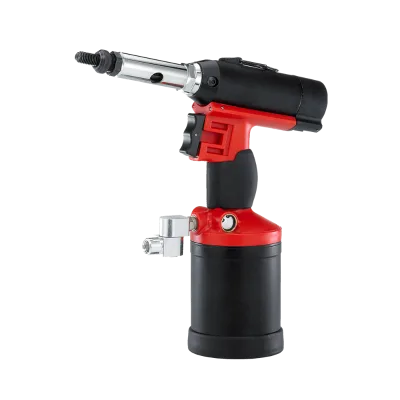
Automatic Electric Hydraulic Riveting Gun for Efficient and Accurate Riveting
$2490.00 - $2720.00
MOQ: 1 Pieces

Automated and Efficient Electro-Hydraulic Riveting Gun Riveting Tool
$2490.00 - $2720.00
MOQ: 1 Pieces


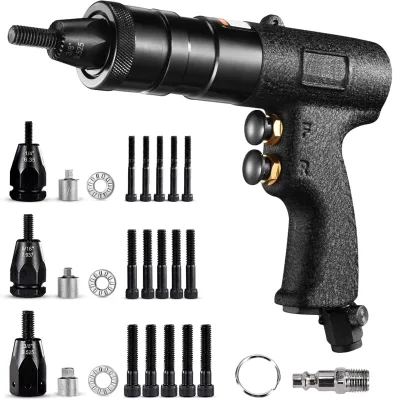
Heavy Duty Pneumatic Rivet Nut Gun for Thread Rivet Nuts, Insert Nuts Tool M3-M12
$238.00 - $255.00
MOQ: 5 Pieces


Air Rivet Gun 1/4 Inch Rivet Gun Heavy Duty Pneumatic Hydraulic Rivet Tool
$179.00 - $198.00
MOQ: 2 Pieces




Comprehensive Sourcing Guide
Strategic Sourcing Guide for Automatic Pneumatic Rivet Nut Guns
Understanding Core Technical Specifications and Performance Metrics
When sourcing an Automatic Pneumatic Rivet Nut Gun, buyers must first distinguish between the various operational parameters that define tool capability. The market presents a range of specifications, and accurate interpretation is vital for matching the tool to specific production requirements. Based on observed product data, the pull force capabilities vary significantly across models, with specific units demonstrating a pull force of 24,150 Newtons, while others operate at 4,890 Newtons. A third category of equipment in the observed dataset indicates a force output exceeding 19.1 kilonewtons. These variations dictate the tool's suitability for different fastener sizes and material thicknesses.
The physical dimensions and stroke length are equally critical for integration into automated assembly lines or handheld operations. Observed models show a tool stroke ranging from 7mm to 26mm, with specific units featuring a 18mm stroke. The overall height of these tools can range from approximately 247.5mm to 322mm, and lengths vary between 242mm and 286mm. For buyers integrating these tools into tight workspaces, verifying the exact footprint is essential. The weight of the units also varies, with net weights observed at 1.24kg, 2.1kg, 2.30kg, and 2.52kg. Lighter units, such as those around 1.24kg, may reduce operator fatigue during prolonged use, while heavier units might offer increased stability for high-force applications.
Air consumption and pressure requirements are fundamental to the pneumatic system's efficiency. The data indicates an average air consumption of 3 cubic feet per minute (cfm) for certain models, while others list a consumption rate of 70 liters per minute. The operating air pressure is typically specified within a range of 5 to 7 bar, or approximately 6.3 kilograms per square centimeter. Ensuring the facility's compressed air supply can maintain this pressure consistently is necessary to prevent performance degradation. Furthermore, the rotation capability of the tool is a key differentiator; some models offer a 360-degree rotation, which is advantageous for accessing rivet nuts in complex geometries or awkward angles. The startup mode is generally manual, requiring a hand press to initiate the cycle, which allows the operator to control the timing of the riveting action.
Compliance, Certification, and Regulatory Standards
In the global B2B market, verifying that a pneumatic rivet nut gun meets international safety and quality standards is a non-negotiable step. The observed product listings frequently cite CE certification, indicating compliance with European health, safety, and environmental protection standards. Some suppliers also provide ISO certification, which validates that the manufacturer adheres to specific quality management systems. However, buyers must not assume that every listed product automatically possesses these certifications; verification of the specific certificate for the model being purchased is required.
Beyond the product itself, the manufacturing origin plays a role in regulatory compliance. The majority of the observed products originate from China or the China Mainland. While this is a common manufacturing hub for industrial tools, it necessitates a rigorous due diligence process regarding the supplier's ability to maintain consistent quality control and adherence to export regulations. Buyers should request valid certification documents directly from the supplier rather than relying solely on marketing claims. The absence of specific certification data in a listing should be treated as a gap that requires immediate clarification before any procurement decision is made.
Cost Drivers and Pricing Structure Analysis
The pricing landscape for automatic pneumatic rivet nut guns is broad, reflecting the diversity in specifications, build quality, and brand positioning. The observed price range spans from approximately 5.8 USD to 4,000 USD. This vast disparity suggests that the lower end of the spectrum likely corresponds to basic, single-function units or smaller components, while the higher end may include fully automated systems, specialized high-force models, or complete kits with extensive accessories.
Several factors drive these costs. First, the pull force capability is a primary cost driver; tools capable of generating forces over 19.1 kN or 24,150 N typically command higher prices due to the robust internal components required. Second, the degree of automation and the complexity of the air consumption system influence the price. Tools with precise air regulation and lower noise levels, such as those operating below 75 decibels, often involve more advanced engineering. Third, the motor speed, with observed models reaching 3,500 rpm, adds to the manufacturing cost. Finally, packaging and branding play a role; products shipped in export cartons or branded boxes may carry a premium compared to bulk packaging. Buyers should analyze the total cost of ownership, including maintenance and air consumption, rather than focusing solely on the initial purchase price.
Typical Applications and Material Compatibility
The versatility of pneumatic rivet nut guns allows them to serve a wide array of industrial applications. The primary usage identified in the market data is for grinding and riveting operations, specifically targeting rivet nuts within the M3 to M12 size range. Some models are explicitly designed for M3-M10 fasteners, while others accommodate a broader spectrum. The tool's ability to handle various materials is another critical factor; the observed data indicates that the rivet nut material can be "All Material," suggesting compatibility with steel, aluminum, stainless steel, and other common metals used in manufacturing.
These tools are particularly effective in industries requiring high-volume fastening, such as automotive assembly, HVAC manufacturing, and general metal fabrication. The rotary type working style and the ability to rotate 360 degrees make them ideal for applications where the rivet nut needs to be installed in confined spaces or on curved surfaces. The air-powered nature of the tool ensures consistent force application, which is crucial for maintaining the integrity of the rivet nut connection. Whether the application involves small-scale prototyping or large-scale production lines, the selection of the correct tool model based on the specific nut specification and required force is paramount.
Supplier Evaluation and Quality Assurance Protocols
Evaluating a supplier for pneumatic rivet nut guns requires a multi-faceted approach that goes beyond simple price comparison. Buyers should prioritize suppliers who provide transparent technical data and are willing to share detailed specifications. The presence of a specific model number, such as SAT6664V, SAT6640, or RL-5312K, indicates a level of standardization that can simplify the procurement process. However, buyers must verify that the model number corresponds to the exact specifications required, as slight variations in model numbering can denote different internal components or performance capabilities.
Quality assurance should be a central component of the supplier evaluation. Buyers should inquire about the supplier's internal testing procedures, particularly regarding the pull force consistency and air pressure stability. The observed noise levels, such as those under 75 decibels, are a key quality indicator; suppliers should be able to provide test results or data sheets confirming these performance metrics. Additionally, the packaging standards, such as "1 Piece in One Export Carton" or "Box / Plastic Box," reflect the supplier's attention to protecting the product during transit. A supplier that invests in robust packaging is more likely to maintain product integrity and quality throughout the supply chain.
Long-Term Procurement Considerations and Operational Efficiency
For long-term procurement success, buyers must consider the operational efficiency and maintenance requirements of the pneumatic rivet nut gun. The degree of automation, described as "Air Power," suggests that the tool relies heavily on the facility's compressed air infrastructure. Ensuring that the air supply system is clean, dry, and capable of delivering the required pressure (5-7 bar) is essential for the tool's longevity. Inconsistent air quality can lead to premature wear of internal seals and valves, increasing downtime and maintenance costs.
The lead time and minimum order quantity (MOQ) are also critical factors. The observed MOQ range spans from 1 to 100 units, offering flexibility for both small workshops and large manufacturers. Buyers should negotiate terms that align with their production schedules and inventory management strategies. Furthermore, the availability of spare parts and technical support should be verified before finalizing a purchase. A supplier with a strong support network can significantly reduce the total cost of ownership by minimizing downtime during repairs or maintenance.
| Feature Category | Observed Range/Values | Procurement Verification Point |
|---|---|---|
| Pull Force | 4,890 N to >19.1 kN | Verify required force for specific fastener size |
| Air Pressure | 5-7 bar (approx. 6.3 kg/cm²) | Confirm facility air supply compatibility |
| Air Consumption | 3 cfm or 70 L/Min | Calculate operational cost impact |
| Dimensions | Length: 242-286mm; Height: 247.5-322mm | Check workspace clearance requirements |
| Weight | 1.24 kg to 2.52 kg | Assess operator fatigue potential |
| Certification | CE, ISO (varies by model) | Request valid certificate copies |
| Noise Level | <75 dB | Ensure compliance with workplace safety |
| Rotation | 360 Degree | Confirm access to complex geometries |
Finalizing the Procurement Strategy
In conclusion, sourcing an Automatic Pneumatic Rivet Nut Gun requires a disciplined approach that balances technical specifications, compliance, and cost. The market offers a diverse range of options, from lightweight, low-force units to heavy-duty, high-performance models. By carefully analyzing the observed data regarding pull force, dimensions, air consumption, and certification, buyers can make informed decisions that align with their specific production needs. It is imperative to verify all claims, particularly regarding certifications and performance metrics, to ensure the selected tool delivers the expected results. With a clear understanding of the cost drivers and long-term operational requirements, buyers can establish a reliable supply chain that supports efficient and high-quality manufacturing processes.
FAQs
What is the pull force range for these tools?
The pull force ranges from 4,890 Newtons to over 19.1 kilonewtons depending on the model. Specific units like the SAT6664V offer 24,150 Newtons, while others provide 4,890 Newtons. Buyers must select a model matching their specific fastener requirements.
Which certifications are available for these pneumatic guns?
Many models carry CE certification, and some include ISO certification for quality management. These certifications indicate compliance with European safety standards. Buyers should verify specific certificate copies for the exact model before purchasing.
How much does the tool weigh?
Net weights vary between 1.24 kg and 2.52 kg across different models. Lighter units around 1.24 kg reduce operator fatigue, while heavier ones offer stability. The specific weight depends on the model selected, such as SAT6640 or RL-5312K.
What air pressure is required for operation?
The operating air pressure typically ranges from 5 to 7 bar, equivalent to 6.3 kilograms per square centimeter. Consistent pressure is necessary to prevent performance degradation. Facilities must ensure their compressed air supply meets this requirement.
Can the tool rotate 360 degrees?
Yes, certain models offer 360-degree rotation to access complex geometries. This feature is advantageous for installing rivet nuts in awkward angles. Buyers should confirm this capability if working in confined spaces.
What is the noise level of these tools?
Noise levels are observed to be below 75 decibels for compliant models. This ensures better compliance with workplace safety standards. Buyers should request test results to verify the specific noise output of the chosen unit.
What is the minimum order quantity for purchase?
The minimum order quantity ranges from 1 to 100 units depending on the supplier. This flexibility supports both small workshops and large manufacturers. Buyers should negotiate terms that align with their production schedules.