Source Automatic Pressure Backflush Filter for Irrigation, Industrial, and Environmental Protection
Find and compare 30 Automatic Pressure Backflush Filter options from Chinese manufacturers. Evaluate specifications such as flow rates up to 4000m3/H, filtration precision, and housing materials to select the right solution for irrigation, industrial processing, and environmental protection applications.
Key considerations
Products List


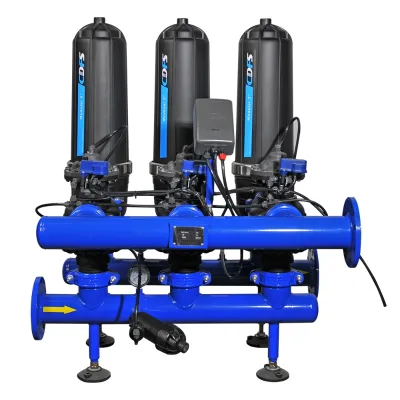


Industrial Water Filter Automatic Backwash Used for Circulating Water Purifier
$300.00 - $10000.00
MOQ: 1 Pieces


4" Automatic Backwash 3-Way & Double Chamber Valve for Filter Systems
$152.00 - $160.00
MOQ: 30 Pieces


Comprehensive Sourcing Guide
Automatic Pressure Backflush Filter Sourcing Guide
Sourcing automatic pressure backflush filters requires a careful balance between hydraulic performance, material durability, and intelligent control systems. These filtration units are designed to remove suspended solids from water streams without manual intervention, making them critical for continuous industrial processes and large-scale irrigation networks. Buyers must prioritize systems that offer reliable differential pressure control and automated backwash cycles to minimize downtime and labor costs. The selection process involves evaluating the filter’s ability to handle specific flow rates, pressure variations, and chemical environments while maintaining consistent filtration precision.
The market offers a diverse range of configurations, from compact vertical units to large multi-tank systems capable of handling massive flow volumes. Key differentiators include the housing material, such as carbon steel or stainless steel variants, and the filtration media, which can range from disc stacks to sand beds. Understanding the operational parameters, including working pressure ranges, pH tolerance, and power requirements, is essential for matching the equipment to the specific site conditions. This guide provides a structured approach to evaluating these systems based on observed market data and technical best practices.
Product Scope and Observed Listing Signals
The current market for automatic pressure backflush filters exhibits a wide variance in pricing and minimum order quantities, reflecting the diversity of available configurations. Observed listing prices range from approximately $53 to $180,000, indicating that buyers can find solutions for both small-scale agricultural applications and large industrial plants. Minimum order quantities (MOQ) typically span from 1 to 100 units, suggesting that suppliers are flexible enough to accommodate single-unit pilot projects as well as bulk procurement for extensive infrastructure. This price dispersion is largely driven by the scale of the filtration capacity, the complexity of the control systems, and the grade of materials used in construction.
Product attributes observed in listings highlight several common technical features that buyers should verify against their specific needs. Many units are designed with vertical styles and utilize pressure as the motive force for operation, which simplifies integration into existing pressurized pipelines. Filtration precision is a critical variable, with observed standards ranging from 130 microns to higher tolerances, and some systems offering adjustable precision between 50 and 2000 microns. Flow rates are equally diverse, with observed capacities ranging from 90 m³/h to as high as 4000 m³/h, allowing for scalability from small irrigation plots to major industrial water treatment facilities.
Technical Specifications to Verify
When evaluating technical specifications, the working pressure range is a primary consideration for system integrity. Observed data indicates that many units operate within a minimum working pressure of 2 bar and a maximum of up to 10 bar, with some specific models rated for 8 bar. Buyers must ensure that the selected filter can withstand the peak pressures of their supply line while maintaining efficient filtration at lower flow conditions. Additionally, the pressure loss across the filter, typically observed between 0.2 and 0.5 bar, is a key efficiency metric; lower pressure loss translates to reduced energy consumption for pumps and improved overall system efficiency.
The control mechanism and power requirements are equally vital for ensuring automated operation. Most modern units support control via differential pressure, time intervals, or manual override, providing flexibility in how the backwash cycle is triggered. Power sources are generally electricity-based, compatible with standard 220V or 110V supplies, and often integrated with PLCs for precise management. Buyers should also verify the pH valve range, which in observed models spans from 4 to 13, ensuring compatibility with the chemical properties of the water being treated. The housing material, whether carbon steel or stainless steel (SS304/SS316), must be selected based on corrosion resistance requirements and the specific environmental conditions of the installation site.
Compliance and Safety Documentation
Certification and safety compliance are non-negotiable aspects of procurement, particularly for equipment used in regulated industries. CE certification is a common requirement for products sold in many international markets, ensuring that the filter meets essential health, safety, and environmental protection standards. Some listings also indicate RoHS compliance, which restricts the use of specific hazardous materials in the manufacturing process. Buyers should request valid certification documents from suppliers to verify that the equipment conforms to the relevant directives and standards applicable in their region.
Documentation regarding machinery test reports and core component warranties provides additional assurance of product reliability. Suppliers are often required to provide machinery test reports that validate the performance of critical components such as pumps, engines, and PLCs. A standard warranty period of one year is commonly observed, covering defects in materials and workmanship. Buyers should clarify the scope of the warranty, including whether it covers labor costs for repairs and the availability of spare parts, to mitigate long-term operational risks.
Cost Drivers and Commercial Terms
Several factors influence the total cost of ownership for automatic pressure backflush filters, beyond the initial purchase price. The size of the filter tanks, which can range from 16 to 96 inches in diameter, directly impacts material costs and manufacturing complexity. Systems with multiple tanks, ranging from 1 to 10 units, offer continuous filtration during backwash cycles but come at a higher capital cost. The choice of filtration media, such as quartz sand or disc stacks, also affects pricing, as does the level of customization available for specific flow rates or pressure requirements.
Packaging and logistics are significant components of the commercial terms, especially for international procurement. Products are typically packed in wooden cases or corrugated paper plus plastic film to protect against transit damage. Buyers should account for shipping costs, which vary based on the weight and dimensions of the packaged units. Additionally, the origin of the product, often China or specific regions like Changsha, Hunan, can influence lead times and supply chain reliability. Clear communication regarding Incoterms and delivery schedules is essential to avoid unexpected delays or costs.
Supplier Qualification and Quality Control
Verifying supplier qualifications is crucial for ensuring the long-term reliability of the filtration system. Buyers should assess the supplier’s ability to provide detailed machinery test reports and verify the quality of core components like pumps and PLCs. The availability of customization services indicates a supplier’s flexibility to adapt the standard product to specific site requirements, such as unique flow rates or pressure constraints. It is advisable to request references or case studies from previous projects to gauge the supplier’s experience and the performance of their equipment in real-world applications.
Quality control processes should be transparent and rigorous. Suppliers should demonstrate adherence to relevant standards, such as those for pressure vessel construction or electrical safety. Buyers may consider implementing pre-shipment inspections to verify that the delivered units match the agreed-upon specifications, including material grades, filtration precision, and control system functionality. Establishing a clear communication channel for technical support and after-sales service is also important, as it ensures that any operational issues can be resolved promptly.
Long-Term Procurement Checks
Long-term procurement success depends on the availability of spare parts and the ease of maintenance. Buyers should confirm that the supplier offers a comprehensive range of spare parts, including filters, seals, and control modules, to minimize downtime during repairs. The design of the filter, such as the backwash time ranging from 20 to 200 seconds, should facilitate easy maintenance and cleaning. Understanding the lifecycle costs, including energy consumption and replacement parts, is essential for budgeting and operational planning.
Regular performance monitoring and periodic reviews of the supplier’s service quality are necessary to maintain optimal system performance. Buyers should establish key performance indicators (KPIs) related to filtration efficiency, pressure loss, and backwash frequency to track the system’s health over time. Maintaining a strong relationship with the supplier can lead to better support, potential upgrades, and favorable terms for future purchases. By focusing on these long-term checks, buyers can ensure that their investment in automatic pressure backflush filters delivers consistent value and reliability.
FAQs
What is the working pressure range for this filter?
The working pressure ranges from 2 to 10 Bar depending on the specific model configuration. Some units operate between 2 and 8 Bar while others support up to 10 Bar maximum pressure for industrial applications.
Can the filter be customized for specific needs?
Yes, customization is available for this Automatic Pressure Backflush Filter to meet unique operational requirements. Buyers can request specific modifications to fit their particular industrial or irrigation system setups.
Which certifications does the product hold?
The product holds CE and RoHS certifications ensuring compliance with international safety and environmental standards. These certifications verify the filter meets necessary regulatory requirements for global distribution and use.
How is the filtration precision defined?
Filtration precision ranges from 50 to 2000 microns depending on the selected model and media configuration. Specific models offer a filtration range of 130 microns for standard applications.
What materials are used for the housing?
Housing materials include Carbon Steel, Stainless Steel 304, and Stainless Steel 316 for durability. Pipe materials are typically carbon steel to ensure structural integrity under high pressure conditions.
What is the flow rate capacity?
Flow rates vary from 90 cubic meters per hour up to 4000 cubic meters per hour based on the model. Specific units like the DMF series offer capacities between 6 and 4000 cubic meters per hour.
Where is the product manufactured?
The product originates from Changsha, Hunan, China, ensuring consistent manufacturing quality. All units are produced in this specific location before being shipped to international buyers.
What is the warranty period?
A standard one-year warranty is provided for the Automatic Pressure Backflush Filter. This warranty covers manufacturing defects and ensures reliability for the initial year of operation.