Source Automatic Protein Bar Production Line for Candy, Chocolate, Dairy
Compare 30 automatic protein bar production lines from verified Chinese manufacturers. These electric machines feature stainless steel construction, servo motors, and customizable capacities ranging from 200kg to 4 tons per 8 hours for candy, chocolate, and dairy applications.
Key considerations
Products List


Automatic Cereal Bar Energy Bar Peanut Bar Making Machine Protein Bar Production Line
$1000.00 - $500000.00
MOQ: 1 Pieces


Automatic Forming Machinery Protein Bar Machine Nutritional Cereal Bar Production Line
$5000.00 - $16000.00
MOQ: 1 Pieces

Multiple Protein Bar Machine /Snickers Bar with Nuts Inside Production Line
$5000.00 - $16000.00
MOQ: 1 Pieces

Energy Nougat Muesli Protein Bar Production Line with The Factory Price
$5000.00 - $16000.00
MOQ: 1 Pieces


Fully Automatic Cereal Bar Making Production Line Protein Bar Production Line
$26500.00 - $117650.00
MOQ: 1 Pieces


Gusu Automatic Protein Chocolate Bar Machine Chocolate Bar Production Line
$10000.99 - $150000.99
MOQ: 1 Pieces

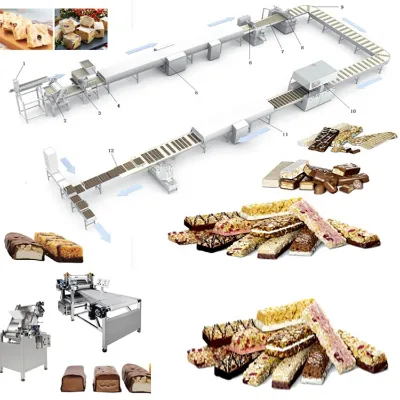


High Efficiency Cereal Energy Bar Production Line Protein Bar Making Machine
$10000.00 - $20000.00
MOQ: 1 Sets

Comprehensive Sourcing Guide
Strategic Sourcing Guide for Automatic Protein Bar Production Lines
The global demand for high-protein snack solutions has driven a significant shift in food manufacturing infrastructure, making the acquisition of an Automatic Protein Bar Production Line a critical strategic decision for industrial buyers. Sourcing such complex machinery requires a disciplined approach that balances technical capability with regulatory compliance and total cost of ownership. This guide synthesizes observed market data and technical attributes to provide a framework for evaluating potential suppliers and selecting equipment that aligns with specific production goals. Buyers must navigate a landscape where specifications vary widely, ranging from compact forming units to full-scale candy and chocolate production lines. The following sections detail the essential technical parameters, certification requirements, cost factors, and evaluation criteria necessary for a successful procurement process.
Technical Specifications and Production Capabilities
When evaluating an Automatic Protein Bar Production Line, the primary focus must be on the machine's ability to handle specific raw materials and achieve target output rates. The observed market data indicates that these systems are often categorized by their specific function, such as "Forming Flatting Cooling Cutting Machine" or "Candy Bar Production Line." A critical technical attribute to verify is the automatic grade; the supply data confirms that "Automatic" is a standard classification for these units, ensuring minimal manual intervention during the production cycle.
Capacity is a variable that requires careful alignment with business forecasts. The observed capacity ranges are substantial, with some units listed at 3-4 tons per 8 hours, while others operate at 200kg per hour or 400-700kg per hour. Buyers should not assume a single standard output; rather, they must identify a model where the output, such as 500kg/h or 800kg/h, matches their volume requirements. The raw material compatibility is equally vital. The machinery is designed to process natural ingredients, including granola, nuts, syrup, and glucose, which are typical for protein and cereal bar formulations.
The physical dimensions and power requirements of the equipment are significant logistical considerations. Observed standard dimensions include large footprints such as 580012001200mm and 12000X1100X1200mm, while other models may be more compact. The weight of the machinery can reach 300kg to 1500kg, influencing floor loading requirements and foundation needs. Power consumption is typically electric, with specific models noting a power rating of 4kw or voltage requirements of 308V. The driving mechanism often utilizes a servo motor for precision control, which is essential for consistent bar formation and cutting. Furthermore, the cooling process is a distinct phase; some lines utilize water cooling, while others employ thermal processing or frozen and chilled methods. The cooling tunnel length is often a selective specification, meaning buyers must confirm the exact length required for their specific product viscosity and ambient conditions.
Material Construction and Durability Standards
The longevity and food safety of the production line are directly tied to the materials used in its construction. High-confidence facts from the market indicate that 304 Stainless Steel is the predominant material for the main body and contact surfaces. This material choice is non-negotiable for food-grade applications as it offers superior corrosion resistance and ease of cleaning. The raw material specification for the machine itself is consistently listed as stainless steel, ensuring that the equipment can withstand the harsh environments of food processing, including exposure to moisture, sugars, and cleaning agents.
The structural integrity of the machine is also reflected in its packaging and standard specifications. While the machine itself is robust, the shipping method varies; some units are packed in wooden cases or wooden boxes, while others may be shipped in cartons or naked. This variation impacts the logistics planning and the condition of the equipment upon arrival. Buyers must verify that the internal components, such as rollers, are constructed from compatible materials. The roller width is a customizable specification, with observed ranges of 340mm and 540mm, allowing the machine to be adapted for different bar widths. This modularity is a key feature for facilities that plan to produce a variety of bar sizes without purchasing multiple dedicated lines.
Compliance, Certification, and Regulatory Standards
Navigating the regulatory landscape is a paramount concern for any food manufacturing procurement. The observed data highlights several certifications and standards that serve as indicators of quality and safety. The CE mark is a recurring certification, signifying compliance with European health, safety, and environmental protection standards. Additionally, the ISOCE certification is noted, which suggests adherence to specific international organizational standards. However, buyers must treat these as observations of specific listings rather than universal guarantees for every product. It is essential to verify that the specific model being purchased holds valid, current certification for the target market of operation.
Beyond certifications, the production standards of the machinery itself must be scrutinized. The observed product standards include specific dimensional codes and model numbers such as TZ, BG-800, BG-500, DR-BAR, KFD558, and GY-1, GY-2, GY-3. These model identifiers often correlate with specific production capabilities and compliance levels. For instance, the application of the machine is frequently listed as suitable for candy, chocolate, dairy, and cereal products. This versatility implies that the machine is designed to meet the hygiene and processing standards required for these diverse food categories. Buyers should request documentation proving that the machine's design meets the local food safety regulations of their country, as the "CE" or "ISOCE" labels observed in listings may not automatically equate to compliance with local standards like FDA or local equivalents.
Cost Drivers and Financial Considerations
The financial investment in an Automatic Protein Bar Production Line is influenced by several dynamic factors. The observed price range in the market is broad, spanning from $1,000 to $500,000. This vast disparity suggests that the cost is heavily dependent on the level of automation, the capacity of the line, the complexity of the cooling and forming systems, and the extent of customization. A basic forming and cutting unit will sit at the lower end of this spectrum, while a fully integrated line with advanced servo controls, extensive cooling tunnels, and custom packaging integration will command prices at the higher end.
Customization is a significant cost driver. The data confirms that customization is available for various attributes, including capacity (500kgh to 800kgh), roller width, and product size. Each customization request adds to the engineering time and material costs. Additionally, the lead time is a critical financial factor. The observed lead time for these machines is 90 days, which impacts cash flow and production planning. Buyers must account for this duration when calculating the return on investment. Shipping and installation costs are also variables; the origin of the machines is primarily China, with specific locations noted as Ningbo and Shanghai. These locations influence freight costs and import duties, which can significantly alter the total landed cost. The packaging type, whether wooden case or carton, also affects shipping volume and weight, further influencing logistics expenses.
Typical Applications and Product Versatility
Understanding the application scope of the machinery is essential for ensuring it meets production needs. The observed applications for these lines are diverse, covering candy, chocolate, dairy, and cereal products. This versatility makes the equipment suitable for manufacturers looking to expand their product portfolio beyond a single item. The process types identified include thermal processing and frozen and chilled methods, indicating that the machines can handle a wide range of bar textures, from hard chocolate-coated bars to soft, chewy protein bars.
The specific application of the machine is often tied to its model and configuration. For example, some models are explicitly labeled as "Candy Bar Production Line" or "Machinery: Candy Bar Production Line," while others are described as "Cereal Bar Making Machine." This distinction is crucial for buyers targeting specific market segments. The ability to process natural ingredients like granola and nuts alongside syrups and glucose allows for the creation of complex, multi-ingredient bars. The cooling mechanism, whether water-based or thermal, plays a vital role in the final product quality, affecting the texture and shelf life of the protein bar. Buyers should ensure that the cooling and forming capabilities of the selected machine align with the specific physical properties of their intended recipe.
Supplier Evaluation and Quality Control Protocols
Selecting the right supplier requires a rigorous evaluation process that goes beyond the listed specifications. The observed data indicates a concentration of suppliers in China, specifically in Ningbo and Shanghai. While this provides access to a robust manufacturing base, it necessitates a thorough vetting process to ensure quality and reliability. Buyers should verify the supplier's track record in producing similar automatic lines and request references from existing clients. The presence of certifications like CE and ISOCE is a positive indicator, but it should be cross-referenced with the supplier's ability to provide valid documentation.
Quality control should be integrated into the procurement process. This includes verifying the material specifications, ensuring that 304 stainless steel is used for all food-contact surfaces, and confirming that the servo motors and other critical components are from reputable manufacturers. The customization options available, such as the cooling tunnel length and roller width, should be validated through detailed engineering drawings before production begins. The lead time of 90 days should be treated as a baseline, with contractual clauses in place for delays. Furthermore, the packing method, whether wooden case or carton, should be agreed upon to ensure the machine arrives without damage. Buyers must also consider the after-sales support, including the availability of spare parts and technical assistance, which is critical for maintaining continuous production.
Long-Term Procurement and Operational Sustainability
The decision to purchase an Automatic Protein Bar Production Line is a long-term commitment that extends beyond the initial acquisition. Operational sustainability depends on the machine's ability to maintain efficiency over time and adapt to changing market demands. The availability of customization suggests that the line can be modified for future product variations, extending its useful life. However, the energy consumption, indicated by the 4kw power rating and 308V voltage, should be factored into ongoing operational costs.
Maintenance is another critical aspect of long-term procurement. The complexity of the machine, with its servo motors, cooling tunnels, and thermal processing units, requires a dedicated maintenance schedule. Buyers should ensure that the supplier provides comprehensive training and maintenance manuals. The standard dimensions and weight of the machine also influence the facility layout and long-term operational efficiency. A well-planned layout that accounts for the machine's footprint and the flow of raw materials and finished goods will minimize downtime and maximize throughput. Ultimately, the success of the procurement depends on a holistic approach that balances technical specifications, regulatory compliance, cost, and long-term operational strategy.
FAQs
What certifications are available for automatic protein bar production lines?
CE and ISOCE certifications are observed on specific listings for these machines. Buyers must verify that the specific model holds valid, current certification for their target market, as these labels are observations of individual products rather than universal guarantees.
How much does an Automatic Protein Bar Production Line cost?
The observed price range spans from 1000 to 500000 USD depending on automation and capacity. Costs vary significantly based on customization levels, cooling systems, and whether the unit is a basic forming machine or a fully integrated production line.
Which raw materials can the machine process for protein bars?
The machinery is designed to process natural ingredients including granola, nuts, syrup, and glucose. It supports thermal processing and frozen chilled methods suitable for creating diverse bar textures from hard chocolate-coated to soft chewy protein bars.
Can the production capacity be customized for specific output needs?
Yes, customization is available for output rates ranging from 200kg per hour to 3-4 tons per 8 hours. Buyers should select a model where the output, such as 500kg/h or 800kg/h, matches their specific volume requirements.
What is the typical lead time for manufacturing these production lines?
The observed lead time for these machines is 90 days. Buyers must account for this duration when calculating return on investment and planning production schedules, as this is a baseline that may impact cash flow.
Which materials are used to construct the machine body?
304 Stainless Steel is the predominant material used for the main body and food-contact surfaces. This material ensures superior corrosion resistance and ease of cleaning, which is essential for maintaining hygiene in food processing environments.