Find Automatic Straight and Beveling Edgebander for Panel Furniture, Woodworking, and Edge Banding
Source 28 Automatic Straight and Beveling Edgebander units for panel furniture making, woodworking, and edge banding applications. Compare specifications like power, speed, and trimming functions from verified Chinese manufacturers to find the right machine for your production needs.
Key considerations
Products List

Woodworking Automatic Curve and Straight Edge Banding Machine Edge Bander
$7700.00 - $8600.00
MOQ: 1 Pieces


Automatic Feeding Curve Straight Edge Banding Machine Automatic Edge Bander
$5200.00 - $6500.00
MOQ: 1 Pieces


Affordable Customized Precision Edgebander for Straight and Beveling Edges
$29500.00 - $31000.00
MOQ: 1 Sets

High-Precision Automatic Edge Banding Machine for Straight and Beveling
$29500.00 - $31000.00
MOQ: 1 Sets


Straight and Beveling Bander Automatic Woodworking Edge Banding Machine with Good Price
$29500.00 - $31000.00
MOQ: 1 Sets


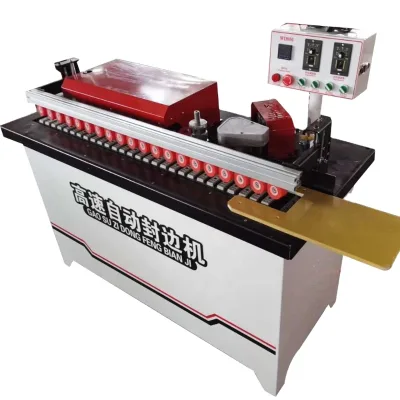
Full Automatic Edge Banding Machine with End Trimming Price for Sale Edgebander
$3300.00 - $4500.00
MOQ: 1 Pieces


Comprehensive Sourcing Guide
Strategic Sourcing Guide for Automatic Straight and Beveling Edgebanders
Selecting the right automated edgebanding equipment is a critical decision for manufacturers aiming to optimize panel furniture production lines. The core keyword "Automatic Straight and Beveling Edgebander" points to a sophisticated class of machinery designed to apply edge banding to flat panels with high precision, including complex beveling and contour tracking capabilities. This guide synthesizes observed market data and technical specifications to help procurement professionals navigate the selection process without relying on unverified claims. The focus remains on understanding the tangible attributes of available units, such as power consumption, dimensional standards, and functional capabilities, to ensure alignment with specific production requirements.
Technical Specifications and Functional Capabilities
When evaluating automatic straight and beveling edgebanders, the primary differentiator lies in the machine's functional suite and its ability to handle various edge profiles. The market presents distinct configurations, ranging from basic straight-line units to advanced systems capable of contour tracking and multi-stage processing. For instance, specific models identified in current listings feature a comprehensive function set that includes pre-milling, gluing, edge banding, end trimming, rough trimming, fine trimming, contour tracking, scraping, buffing, and slotting. This level of integration allows for a single-pass operation that significantly reduces cycle times compared to semi-automated or multi-station setups.
Power consumption is a vital metric for operational cost analysis. Observed data indicates a wide variance in total power requirements depending on the machine's complexity. Basic automatic curve edge banding units may operate with a total power of 3.4kw, while more robust straight-line beveling machines can require up to 36.56kw. This disparity suggests that buyers must carefully match the machine's power rating to their available facility infrastructure. Furthermore, the motor configuration varies significantly; high-end models may utilize multiple motors for specific tasks, such as 1.8kw straight edge milling motors, 6kw beveled edge milling motors, and dedicated motors for chamfering and polishing. Understanding these specific motor allocations helps in estimating energy efficiency and maintenance needs.
The physical dimensions and operational parameters are equally critical. Standard production models often adhere to specific footprint standards, with one observed configuration measuring 59108301450mm, while others may follow different standard dimensions like 280190160cm. The feeding speed is another key performance indicator, with observed ranges between 10-16 meters per minute for certain straight-line models and up to 16m/min for others. Buyers should verify that the conveying speed aligns with their line's bottleneck to prevent workflow interruptions. Additionally, the machine's ability to handle specific edge thicknesses is paramount; observed specifications cover ranges from 0.5mm to 3mm for general edge banding and specific ranges like 15-35mm for beveled straight edge plates, ensuring versatility in material processing.
Compliance, Certification, and Safety Standards
In the global procurement of industrial machinery, compliance with international safety and quality standards is non-negotiable. While specific certification statuses can vary by manufacturer and batch, the market data highlights that CE and ISO certifications are common attributes associated with these machines. These certifications indicate that the equipment meets specific European safety directives and international management system standards, which is essential for exporting products or operating in regulated environments. However, buyers must treat these as observations of specific listings rather than universal guarantees for every unit in the category.
Safety features are often embedded in the machine's design principles. For example, the location of the glue tank is a significant safety and operational consideration. Some models utilize a "Glue Tank Overhead" principle, while others employ a "Glue Tank Underneath" design. The overhead configuration may offer different maintenance access points compared to the underneath layout, impacting the operator's workflow and safety protocols. Furthermore, the air pressure requirements, observed in the range of 0.5-0.8MPa, must be compatible with the facility's compressed air supply to ensure consistent pneumatic operation.
Buyers should also verify the material standards and packaging requirements. Products are frequently shipped in wooden packages, which are standard for protecting heavy machinery during transit. The origin of the machinery is predominantly China, which is a major hub for this equipment. While this provides access to a wide range of suppliers, it necessitates rigorous due diligence regarding the specific factory's adherence to the claimed standards. The absence of specific test results or third-party audit reports in general listings means that procurement teams must request these documents directly from the supplier before finalizing a purchase to ensure the machine meets the required safety and quality benchmarks.
Cost Drivers and Pricing Structures
The pricing for automatic straight and beveling edgebanders is influenced by a complex array of factors, including automation level, power capacity, and functional complexity. The observed price range in the market is exceptionally broad, spanning from $1 to $198,544. This vast disparity underscores the importance of defining the exact scope of requirements before engaging with suppliers. A unit priced at the lower end of the spectrum likely represents a semi-automatic or basic configuration with limited functions, whereas the higher-end figures correspond to fully automatic systems with advanced features like contour tracking, multiple milling stations, and high-speed conveying capabilities.
Total power consumption is a primary driver of cost. Machines with a total power of 36.56kw, featuring multiple high-wattage motors for milling and polishing, will naturally command a higher price than those with a 3.4kw rating. Similarly, the customization options available significantly impact the final cost. While many suppliers offer "Customized" or "Customized" options, the extent of these modifications—such as specific glue tank capacities, unique edge banding widths, or tailored control systems—will alter the base price. The minimum order quantity (MOQ) is another cost factor, with observed ranges between 1 and 10 units. For smaller workshops, an MOQ of 1 allows for single-unit acquisition, while larger manufacturers might leverage bulk ordering to negotiate better terms, though the specific pricing per unit for bulk orders is not explicitly detailed in general listings.
Buyers must also consider the long-term cost of ownership, which includes energy consumption, maintenance, and spare parts availability. The specific motor configurations, such as the 600W slotted motors or 0.37kw end cutting motors, imply specific maintenance schedules and replacement part costs. Additionally, the type of hot melt adhesive supported, such as PUR or EVA, can influence operational costs. PUR adhesive systems often require more precise temperature control and higher initial investment but offer superior bond strength, which may justify the higher upfront cost for high-end furniture applications.
Typical Applications and Material Compatibility
The versatility of automatic straight and beveling edgebanders makes them suitable for a wide range of woodworking applications, particularly in panel furniture manufacturing. The primary application is the finishing of wooden panels, where the machine applies edge banding to protect the core material and enhance aesthetic appeal. The observed specifications indicate that these machines can handle edge banding widths ranging from 8mm to 70mm, accommodating everything from thin veneers to thick solid wood edges. This flexibility allows manufacturers to produce a diverse product portfolio, from simple office furniture to complex kitchen cabinets.
The ability to process different edge thicknesses is crucial for material compatibility. Machines observed in the market support edge thicknesses from 0.5mm to 3mm, with specific models capable of handling beveled straight edge plates up to 35mm thick. This capability is essential for producing high-end furniture that requires substantial edge profiles. The inclusion of functions like pre-milling and end trimming ensures that the edge banding is applied smoothly and precisely, even on panels with irregular shapes or varying thicknesses. The contour tracking feature further expands the application scope, allowing for the processing of curved edges and complex geometries that standard straight-line machines cannot handle.
Furthermore, the glue tank temperature range, observed between 110°C and 210°C, indicates the machine's ability to process various types of adhesives, including PUR and EVA. This thermal flexibility is vital for ensuring strong bonds across different materials, from particle board to MDF and solid wood. The plastic pot capacitance of 2600ml or tank volumes of 2L also suggest the machine's capacity for continuous operation without frequent refilling, which is beneficial for high-volume production environments. Buyers should verify that the machine's specific adhesive handling capabilities align with their chosen edge banding materials to avoid production delays or bond failures.
Supplier Evaluation and Quality Assurance
Evaluating suppliers for automatic straight and beveling edgebanders requires a methodical approach that goes beyond the basic product listings. Since specific supplier names and detailed performance claims are not provided in general market data, buyers must rely on verifying the tangible attributes listed in product descriptions. The presence of certifications like CE and ISO is a positive indicator, but it should be confirmed through direct communication with the supplier. Buyers should request valid certification documents and verify their authenticity with the issuing bodies to ensure compliance.
Quality assurance should be a central part of the supplier evaluation process. This involves reviewing the machine's construction details, such as the motor power ratings and the precision of the trimming angles. For example, the edge rotation angle of -70 to +35 degrees and the trimming rotation angle of positive and negative 45 degrees are specific technical parameters that demonstrate the machine's capability to handle complex edge profiles. Buyers should ask for detailed technical drawings and operational manuals to confirm that these specifications are accurate and achievable. Additionally, the standard dimensions and packing methods, such as wooden packaging, should be verified to ensure the machine can be safely transported and installed in the buyer's facility.
The customization options available from suppliers are another key evaluation point. While "Customization" is listed as an attribute, the extent of this customization varies. Buyers should clarify what specific modifications are possible, such as adjusting the glue tank capacity, changing the motor configurations, or altering the machine's footprint. The ability to customize the machine to fit specific production lines is a significant advantage, but it requires clear communication and detailed specifications to avoid misunderstandings. Finally, buyers should assess the supplier's support infrastructure, including after-sales service, spare parts availability, and technical training, to ensure long-term operational reliability.
Long-Term Procurement and Operational Considerations
Procuring an Automatic Straight and Beveling Edgebander is a long-term investment that requires careful planning for future scalability and maintenance. The observed data suggests that while some machines are designed for specific applications, others offer a broader range of capabilities that can adapt to changing production needs. For instance, the ability to switch between different types of hot melt adhesives and handle various edge thicknesses provides a degree of flexibility that can extend the machine's useful life. However, buyers must consider the potential for future upgrades, such as adding new motor configurations or expanding the functional suite to include additional trimming or polishing stations.
Maintenance and operational efficiency are critical for minimizing downtime and maximizing return on investment. The total power consumption and motor configurations observed in the market highlight the importance of energy management. Machines with higher power ratings, such as the 36.56kw models, will incur higher energy costs, which must be factored into the overall operational budget. Regular maintenance schedules should be established to ensure that components like the glue tank, motors, and trimming units remain in optimal condition. The specific motor types, such as the 1.1kw polishing motor or 2.2kw chamfering motor, may require specialized maintenance procedures that should be documented and followed strictly.
Finally, the procurement process should include a thorough review of the machine's compatibility with existing production lines. The dimensions and standard configurations, such as the 59108301450mm footprint, must align with the available floor space and workflow layout. Buyers should also consider the lead times and delivery conditions, which can vary significantly depending on the supplier and the level of customization required. By focusing on these long-term considerations, buyers can ensure that their investment in an Automatic Straight and Beveling Edgebander delivers sustained value and supports the growth of their woodworking operations.
FAQs
What functions does the automatic straight edgebander perform?
The machine performs pre-milling, gluing, edge banding, end trimming, rough trimming, fine trimming, contour tracking, scraping, buffing, and slotting. This comprehensive suite allows for single-pass processing to reduce cycle times compared to multi-station setups.
Which edge banding widths can the machine handle?
The equipment supports edge banding widths ranging from 8mm to 70mm depending on the specific model configuration. This flexibility accommodates materials from thin veneers to thick solid wood edges for diverse furniture applications.
How much total power does the straight line model require?
The robust straight-line beveling machine requires a total power of 36.56kw to operate its multiple high-wattage motors. Buyers must match this power rating to their facility infrastructure to ensure stable operation.
Can the machine process PUR and EVA adhesives?
Yes, the system is designed to handle both PUR and EVA hot melt adhesives effectively. The glue pan temperature ranges from 110°C to 210°C to ensure strong bonds across various panel materials.
What is the minimum order quantity for these machines?
The observed minimum order quantity ranges from 1 to 10 units depending on the supplier and configuration. Smaller workshops can acquire single units while larger manufacturers may leverage bulk ordering for better terms.
Which certifications are commonly associated with these machines?
CE and ISO certifications are common attributes observed in current market listings for this equipment. These indicate compliance with European safety directives and international management system standards for regulated environments.