Source Bare Copper Stranded Automotive Cable for Heating, Overhead, Underground
Compare 30 listings for Bare Copper Stranded Automotive Cable suitable for heating, overhead, and underground applications. Buyers can evaluate conductor types, insulation materials, and customization options from verified suppliers in China.
Key considerations
Products List
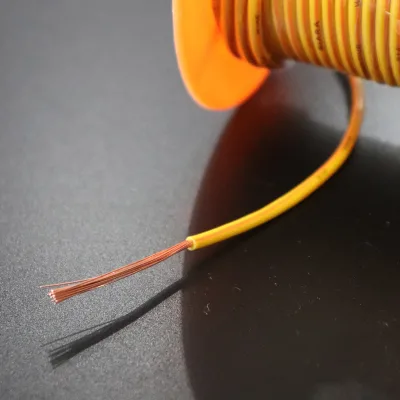


Aex Low Voltage Primary Wire Stranded Copper Conductor Automotive Wire Cable
$0.04 - $0.91
MOQ: 1000 Meters


Premium 1g Shielded Bare Copper Automotive Ethernet Cable for Car Cameras
$0.10 - $10.00
MOQ: 1000 Meters

High Performance Automotive Bare Copper Sensor Cable with XLPE Insulation
$0.10 - $10.00
MOQ: 1000 Meters

High Durable Automotive Flexible Tinned Copper Cable for Reliable Connection
$0.10 - $10.00
MOQ: 1000 Meters


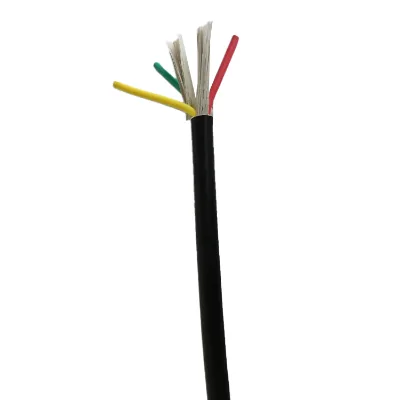
Factory Supply Copper Automotive Cable Car Cable Automotive Wires and Cables
$0.30 - $0.83
MOQ: 500 meters
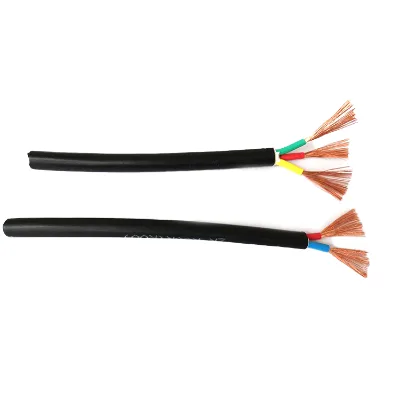


Heavy Duty Copper Stranded Cable for Underground Power Lines Conductor
$12000.00 - $12222.00
MOQ: 1000

Comprehensive Sourcing Guide
Strategic Sourcing Guide for Bare Copper Stranded Automotive Cable
Procuring Bare Copper Stranded Automotive Cable requires a precise understanding of material science, application-specific mechanical demands, and the rigorous verification of supplier capabilities. In the B2B market, the term "Bare Copper Stranded Automotive Cable" often serves as a foundational component for various electrical systems, ranging from internal vehicle wiring harnesses to external power transmission links. Buyers must navigate a landscape where product attributes vary significantly between "insulated" and "bare" configurations, and where the distinction between solid and stranded conductors dictates the final utility of the wire. This guide synthesizes observed market data and technical specifications to provide a disciplined framework for evaluating potential suppliers and defining procurement requirements.
Technical Specifications and Conductor Architecture
The fundamental architecture of the cable begins with the conductor material and its physical configuration. High-confidence market observations confirm that the primary conductor material for these products is copper. This is a non-negotiable baseline for automotive applications due to copper's superior electrical conductivity and thermal stability. The specific configuration observed in the market is "stranded," which offers distinct advantages over solid conductors, particularly in automotive environments where vibration and flexing are constant. Stranded conductors are composed of multiple smaller wires twisted together, providing the necessary flexibility to withstand the dynamic stresses of vehicle movement without fatigue failure.
A critical distinction in the current market data is the presence of both "Solid" and "Stranded" conductor types listed under general automotive wire categories. When sourcing specifically for "bare copper stranded" applications, buyers must explicitly verify that the supplier's product model aligns with the stranded configuration. The market data indicates specific model identifiers such as "Stranded Copper Wire" and "Stranded Tinned Copper Wire," though the target keyword specifies "bare." This implies a need to distinguish between tinned and bare variants. While tinned copper offers corrosion resistance, bare copper is often selected for specific grounding applications or where the insulation layer itself provides the necessary environmental protection.
The physical dimensions of the conductor are equally critical. The observed product standards indicate a range of cross-sectional areas from 0.25 to 500 square meters, although this specific range likely refers to broader industrial cable categories rather than standard automotive wire gauges. For automotive applications, the standard observed range for wire diameter is typically between 0.07mm and 3mm. Buyers must verify the exact cross-sectional area (measured in square millimeters or American Wire Gauge) required for their specific current-carrying capacity. The shape of the conductor is consistently observed as "Round Wire," which is standard for stranded assemblies. The mechanical status of the wire can vary, with options including "Annealed and Hard Drawn." Annealed wire offers higher flexibility, while hard-drawn wire provides greater tensile strength. The selection depends on whether the application prioritizes ease of routing through tight harnesses or resistance to mechanical tension.
Compliance, Certification, and Material Standards
In the automotive sector, compliance is not merely a regulatory formality but a prerequisite for market access and safety. The observed market data lists several key certifications that reputable suppliers should possess, including ISO9001, RoHS, SGS, and Reach. These certifications indicate adherence to international quality management systems and restrictions on hazardous substances. ISO9001 ensures that the manufacturing process is consistent and controlled, which is vital for maintaining the uniformity of the copper strands. RoHS (Restriction of Hazardous Substances) and Reach compliance are essential for ensuring the cable does not contain lead, mercury, or other restricted materials that could violate environmental regulations in major markets like the European Union and China.
The "Products Status" observed in the market includes classifications such as "Soft," "Semihard," and "Hard." These terms relate to the mechanical properties of the copper, which are directly influenced by the drawing and annealing processes. A buyer must ensure that the mechanical status of the supplied wire matches the application requirements. For instance, a "Soft" or "Annealed" status is typically preferred for intricate wiring harnesses that require frequent bending, whereas "Hard" status might be suitable for fixed installations or structural components.
Furthermore, the surface treatment and coating methods are critical compliance factors. While the target keyword specifies "bare" copper, the market data frequently mentions "Silver Plated" and "Tinned" options with coating thicknesses ranging from 0.2 to 10 micrometers. If the procurement requirement is strictly for bare copper, the buyer must verify that the supplier does not inadvertently apply a plating layer that alters the electrical resistance or solderability characteristics. The "Coating Way" observed includes "Hot Dipped" and "Electroplating." For bare copper applications, the absence of these coatings is the primary specification, but the supplier must demonstrate that the copper surface is free from oxidation or contaminants that could impede conductivity. The "Surface Treatment" of "Silver-Plated" is a specific variant that offers enhanced conductivity and solderability but deviates from the "bare" specification. Buyers must clearly distinguish between bare copper and plated variants to avoid specification errors.
Cost Drivers and Pricing Dynamics
The pricing of Bare Copper Stranded Automotive Cable is influenced by a complex interplay of raw material costs, manufacturing complexity, and order volume. The observed market data indicates a wide price range, from $0.01 to $12,222, which reflects the diversity of product sizes, lengths, and packaging configurations. This broad range underscores the importance of defining precise specifications before requesting quotes. The "Selling Units" are listed as "Single item," but the "MOQ" (Minimum Order Quantity) ranges from 1 to 10,000 meters. For large-scale automotive procurement, the MOQ of 10,000 meters is a significant threshold that buyers must plan for.
The primary cost driver is the copper content. As a commodity metal, the price of copper fluctuates based on global market conditions. Suppliers often adjust their pricing to reflect these fluctuations, making it essential for buyers to understand whether the quoted price is fixed or variable. The "Customization" availability is another cost factor. The market data confirms that "Customized Size," "Customized Length" (100m, 200m, or customized), and "Jacket" customization are available. Customization typically incurs additional tooling and setup costs, which will be reflected in the unit price.
Packaging also impacts the final cost. The observed "prod_packing" options include "Plastic Bobbin," "Iron Bobbin," and "Iron Wood Bobbin," as well as "Plastic Reel Packaging and Carton Vacuum Packaging." The choice of packaging affects shipping efficiency and handling costs. Vacuum packaging, for example, may offer better protection against moisture and corrosion during transit but could increase the unit cost. Buyers should evaluate the total landed cost, including packaging and shipping, rather than focusing solely on the per-meter price. The "Place of Origin" is listed as Zhejiang and Jiangsu, China, which are major manufacturing hubs. Proximity to these regions may influence logistics costs and lead times, though the specific lead times are not provided in the data.
Typical Applications and Performance Requirements
The versatility of Bare Copper Stranded Automotive Cable is evident in the observed "Range of Application," which includes "Transmission and Distribution," "Railway," and "Heating." In the automotive context, these cables are often utilized for grounding systems, battery connections, and high-current distribution paths where the insulation layer is either unnecessary or provided by a separate sheath. The "Application" field also lists "Overhead," "Heating," and "Underground," suggesting that these cables are robust enough for diverse environmental conditions.
For automotive use, the "Heating" application is particularly relevant. Stranded copper conductors are excellent for heating elements due to their ability to handle high currents and their flexibility in forming complex heating patterns. The "Product Name" variations, such as "PVC Insulation Electric Wire Automotive Cable Wire," indicate that while the core keyword is "bare," the broader product line often includes insulated variants. Buyers must ensure they are sourcing the bare variant specifically if the design requires an external insulation layer or if the cable is intended for direct contact with components that do not require insulation.
The "Mechanical Status" of "Annealed and Hard Drawn" suggests that these cables are designed to withstand both the mechanical stress of installation and the thermal stress of operation. The "Shape" being "Round" ensures uniform current distribution and ease of termination. The "Number of Cores" is consistently "1-core," which is standard for single-conductor applications. However, buyers should verify if multi-core stranded cables are available if their specific application requires bundled conductors. The "Keyword" "car cable" reinforces the automotive focus, but the "Range of Application" extending to "Railway" indicates that these cables meet high-performance standards suitable for heavy-duty transportation sectors.
Supplier Evaluation and Quality Control
Evaluating suppliers for Bare Copper Stranded Automotive Cable requires a rigorous assessment of their manufacturing capabilities and quality control processes. The "Producing Experience" of "10 Years" is a positive indicator of supplier stability and expertise. Buyers should prioritize suppliers with a proven track record in the automotive sector, as this experience often correlates with a deeper understanding of industry-specific standards and requirements.
Quality control should focus on verifying the "Conductor Material" and "Conductor Type." Buyers must request test reports that confirm the copper purity and the stranded structure. The "Sample" availability is noted as "Conventional Sample Free," which is a valuable resource for buyers to physically inspect the wire before committing to a large order. Inspecting the sample allows for verification of the "Mechanical Status," "Shape," and "Surface Treatment."
The "Certification" list, including ISO9001, RoHS, SGS, and Reach, should be validated with current certificates. Buyers should also verify the "Standard" compliance, noting the observed range of 0.25-500 Square Meters and 0.07mm-3mm. While these ranges are broad, they provide a benchmark for the supplier's capability to produce wires of various sizes. The "Coating Way" of "Hot Dipped" or "Electroplating" should be scrutinized to ensure it does not contradict the "bare" requirement. If the supplier offers tinned or silver-plated options, they must be able to clearly distinguish these from bare copper products in their documentation.
Long-Term Procurement and Supply Chain Considerations
Long-term procurement of Bare Copper Stranded Automotive Cable involves more than just the initial purchase; it requires a strategic approach to supply chain management. The "Customization" capability is a key factor for long-term partnerships. Suppliers who offer "OEM & ODM Custom" services can adapt to changing design requirements, which is common in the automotive industry where vehicle platforms evolve frequently. The "Brand Name" listed as "HOLDEN/OEM" suggests that suppliers are accustomed to working with original equipment manufacturers and private label clients.
The "Packing" options, such as "Roll" and various bobbin types, should be evaluated for compatibility with the buyer's automated assembly lines. Efficient packaging reduces handling time and minimizes the risk of damage during transport. The "Length" options of 100m, 200m, or customized allow for flexibility in inventory management. Buyers should consider whether standard lengths or custom lengths better suit their production schedule and storage capacity.
Finally, the "Products Status" of "Soft, Semihard, Hard" offers opportunities for long-term optimization. As vehicle designs change, the mechanical requirements for wiring may shift. A supplier capable of producing all three statuses provides the flexibility to adapt to future needs without changing vendors. The "Place of Origin" in Zhejiang and Jiangsu, China, indicates a robust manufacturing ecosystem, but buyers should also consider the geopolitical and logistical risks associated with international shipping. Establishing a relationship with a supplier who has a strong track record of on-time delivery and consistent quality will be essential for maintaining production continuity. By focusing on these long-term factors, buyers can secure a reliable supply of high-quality Bare Copper Stranded Automotive Cable that meets both current and future demands.
FAQs
What conductor types are available for this cable?
The available conductor types include solid and stranded configurations. Stranded copper wire is specifically noted for automotive applications requiring flexibility, while solid options exist for fixed installations. Buyers must verify the specific model number to ensure the correct strand count.
Which certifications do these copper wires typically hold?
These products commonly hold ISO9001, RoHS, SGS, and Reach certifications. These standards ensure compliance with international quality management and hazardous substance restrictions. Buyers should request specific certification documents to verify that the supplier meets regulatory requirements for their target market.
How is the minimum order quantity determined for this wire?
The minimum order quantity typically ranges from 1 to 10,000 meters depending on the supplier and customization level. Some listings specify an MOQ of 10,000 meters for standard configurations. Buyers should confirm the exact MOQ before placing an order to ensure it aligns with their procurement volume.
Can the wire size and length be customized?
Yes, customized sizes and lengths such as 100m or 200m are available upon request. The product specifications allow for tailored dimensions to fit specific automotive harness requirements. Buyers must provide exact measurements to the manufacturer to initiate the customization process.
What surface treatments are applied to the copper conductor?
Surface treatments include silver plating, tinning, or bare finishes depending on the specific product model. Coating methods like electroplating or hot dipping may be used for plated variants. Buyers seeking bare copper must explicitly specify the absence of plating to avoid unintended surface treatments.
Where are these automotive cables manufactured?
These cables are manufactured in Zhejiang and Jiangsu provinces in China. These regions are major hubs for wire and cable production. Buyers should consider the logistics implications of sourcing from these specific locations when planning their supply chain.