Source Barista Quality Canned Coffee for Retail, Cafe, and Events
Compare 22 listings for Barista Quality Canned Coffee from Chinese manufacturers. Options include aluminum cans, various flavors, and custom OEM branding. Verify specifications like shelf life and packaging details to find suitable suppliers for your business needs; compare the available evidence and request quotations based on your requirements.
Key considerations
Products List


Factory Direct Chai Latte Flavor Packaging Aluminum Canned Coffee Export
$5.00 - $8.20
MOQ: 1500 Boxes

Export Aluminum Canned Coffee with Custom Flavor and Packaging Low Price
$5.00 - $8.20
MOQ: 1500 Boxes


Private Label Irish Coffee Flavor Packaging Aluminum Canned Coffee Export
$5.00 - $8.20
MOQ: 1500 Boxes

Cold Foam Cappuccino Canned Coffee – Creamy & Convenient Coffee Drinks
$5.00 - $8.20
MOQ: 1500 Boxes

Wholesale Americano Flavor Packaging Aluminum Canned Coffee Export Custom
$5.00 - $8.20
MOQ: 1500 Boxes




Comprehensive Sourcing Guide
Barista Quality Canned Coffee Sourcing Guide
Procuring barista-quality canned coffee requires navigating a market where product definitions often vary significantly between listings. Buyers must distinguish between standard carbonated sodas and specialized coffee beverages, as observed data indicates a mix of product names including "Sodas" and "Coffee Drink" within the same search results. This ambiguity necessitates rigorous filtering to ensure the final selection aligns with the specific flavor profile and caffeine content required for professional or retail distribution.
The supply chain for these beverages is heavily concentrated in China, with origins noted in Shandong Province and Henan. Sourcing strategies should prioritize suppliers who explicitly define their coffee bean varieties, such as Arabica, and roast types like Italian Roast, to guarantee the "barista" standard. Without verifying these specific agricultural inputs, buyers risk receiving generic mass-market products that fail to meet the nuanced taste expectations of high-end consumers or hospitality clients.
Product Scope and Observed Listing Signals
The observed product landscape reveals a wide disparity in packaging formats, ranging from aluminum cans to cartons and palletized shipments. Listings frequently cite standard volumes such as 250ml, 300ml, 330ml, 355ml, and 500ml, alongside custom sizing options. Buyers must carefully cross-reference the physical packaging description with the intended retail format, as some entries list "Aluminum Can" while others specify "Carton" or "Pallet" as the primary unit, which directly impacts logistics planning and shelf presentation.
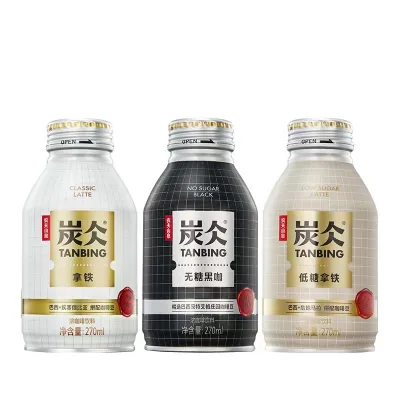
Flavor profiles and ingredient compositions vary from sugar-free lattes to charcoal-infused options, with some listings claiming "OEM Customize" capabilities. However, the presence of ingredients like sodium bicarbonate and potassium chloride in some entries suggests a broader category that includes carbonated beverages rather than pure coffee. Procurement teams must verify that the specific SKU selected contains the intended coffee base and flavor notes, ensuring the product matches the "barista quality" promise rather than a generic flavored soda.
Technical Specifications to Verify
Shelf life and storage requirements are critical technical parameters that differ across available listings, with some products guaranteeing over 12 months while others specify a range of 6 to 12 months. Buyers must confirm the exact expiration timeline relative to their distribution channels, as storage conditions are often listed as "Normal" or "Room Temperature" but may require specific dry place maintenance. Verifying the precise shelf life ensures that the product remains viable throughout the supply chain without premature degradation or quality loss.
Packaging integrity and single-unit dimensions are equally vital for logistics efficiency, with observed single package sizes around 25x15x10 cm and gross weights near 8 kg per carton. The model numbers, such as "LZ-Coffee" or "ZX-Coffee," often correspond to specific production lines that dictate the final can size and volume. Procurement specialists should request detailed technical data sheets for each model to confirm that the physical dimensions and weight align with their shipping constraints and retail shelving requirements.
Compliance and Safety Documentation
While specific certification names are not explicitly detailed in the provided data, the presence of "100% Nice Quality" claims and standard production origins implies a need for rigorous third-party verification. Buyers should demand evidence of food safety management systems and compliance with international standards for canned beverages, particularly given the diverse origins in China. Without explicit certification data in the listing, the burden of proof shifts to the buyer to validate that the supplier adheres to strict hygiene and manufacturing protocols.
Ingredient transparency is a key compliance area, especially when products list complex mixtures including water, sodium bicarbonate, and potassium chloride. For coffee-specific items, verifying the absence of unauthorized additives and confirming the source of the coffee beans is essential for regulatory compliance in target markets. Buyers must ensure that the supplier provides full ingredient declarations and allergen statements to meet the labeling requirements of the destination country, preventing potential legal or customs issues.
Cost Drivers and Commercial Terms
Minimum Order Quantities (MOQ) represent a significant barrier to entry, with observed ranges spanning from 1 to 100,000 units, though specific coffee listings often cite an MOQ of 200,000 pieces. This high volume requirement suggests that the market is geared toward large-scale distributors rather than small retailers. Buyers must assess their inventory capacity and cash flow before committing to orders, as the high MOQs may necessitate significant upfront capital or the formation of buying consortia to meet the threshold.
Pricing structures are influenced by customization levels, with "OEM Customize" options likely commanding different rates than standard SKUs. The supply ability of 1,000 boxes per month for certain items indicates potential capacity constraints that could affect lead times and unit costs. Procurement teams should negotiate based on volume tiers and lead time flexibility, understanding that the observed price range of $0.01 to $4,200 reflects a vast difference between single-unit samples and bulk container shipments.
Supplier Qualification and Quality Control
Supplier location and address details, such as those in Shandong Province or Henan, provide a baseline for logistical planning but do not guarantee quality consistency. Buyers must conduct on-site audits or request detailed quality control reports to verify that the "Italian Roast" and "Arabica" claims are substantiated by actual production practices. Relying solely on the listed brand names like "Zhenxi" or "Nongfu Spring" without independent verification can lead to inconsistencies in the final product quality.
Quality control protocols should extend beyond the final product to include the entire production cycle, from bean sourcing to canning. The instruction to "serve as soon as possible after opening" highlights the importance of preserving freshness, which requires robust sealing and packaging technology. Buyers should insist on pre-shipment inspections that test for seal integrity, flavor consistency, and adherence to the specified roast type to ensure the product meets the barista quality standard before it leaves the factory.
Long-Term Procurement Checks
Sustaining a supply of barista-quality coffee requires establishing a framework for continuous quality monitoring and supplier performance evaluation. Buyers should implement regular sampling and taste tests to ensure that the flavor profile remains consistent over time, particularly when dealing with custom orders that may vary between production batches. Long-term contracts should include clauses that mandate immediate notification of any changes in ingredients, sourcing, or manufacturing processes that could alter the product characteristics.
Market trends and consumer preferences for coffee flavors, such as sugar-free or low-sugar options, evolve rapidly, requiring suppliers to maintain flexibility in their production lines. Procurement strategies must account for the ability to scale production up or down based on demand fluctuations, given the high MOQs observed in the market. Building a resilient supply chain involves diversifying suppliers and maintaining open communication channels to adapt to changing market dynamics and ensure a steady flow of high-quality canned coffee.
FAQs
What packaging materials are used for these canned coffees?
The products utilize aluminum cans for primary packaging, ensuring durability and freshness preservation. Secondary packaging options include cartons and pallets for efficient shipping. Some listings specify standard packaging details suitable for sea freight. This combination supports both retail display and bulk industrial distribution needs effectively.
Can I customize the flavor and branding of the coffee?
Yes, customization is available for both flavor and branding purposes. Buyers can select from options like sugar-free latte, black coffee, or low-sugar variants. The brand can be set to OEM or specific names like Zhenxi. This flexibility allows businesses to create unique product identities tailored to their target market requirements.
What is the typical shelf life of the canned coffee?
The shelf life generally ranges from six months to over twelve months depending on the specific product variant. Storage should be maintained in normal conditions at room temperature, ideally between zero and twenty-five degrees Celsius in dry places. This ensures the beverage remains stable and safe for consumption throughout the designated period.
What are the minimum order quantities for these coffee drinks?
Minimum order quantities vary significantly across different suppliers and product lines. Observed ranges start from one piece up to one hundred thousand pieces. Specific listings indicate MOQs such as two hundred thousand pieces for certain OEM models. Buyers should verify exact MOQ requirements with individual suppliers to align with their procurement volume and budget constraints.
Where are these canned coffees manufactured and shipped from?
Manufacturing origins include locations such as Shandong Province and Henan in China. The port of dispatch is typically Shanghai, China, facilitating international logistics. Products are sourced from verified Chinese suppliers who handle production and export. This geographic concentration supports efficient supply chain management and consistent quality control for global buyers seeking reliable sourcing partners.
What coffee beans are used in these beverages?
Some products specifically utilize Arabica coffee beans for their superior taste profile. The roast type may vary, with Italian roast being one option mentioned. Ingredients typically include water, sodium bicarbonate, and potassium chloride. These components contribute to the mellow taste and caffeine content, ensuring a consistent and enjoyable drinking experience for consumers seeking quality canned coffee options.