Source Black Leaf Spring for Trucks, Trailers, and SUVs
Find 30 Black Leaf Spring options for medium and heavy-duty trucks, trailers, and SUVs. Compare steel materials like 65Mn and 60Si2Mn, check CE and ISO certifications, and review specifications for rear suspension applications; compare the available evidence and request quotations based on your requirements.
Key considerations
Products List


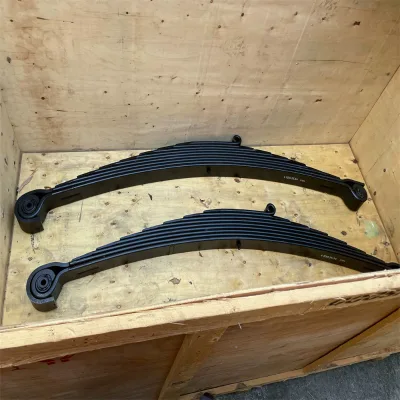


$50.00 - $56.00
MOQ: 50 Pieces


Comprehensive Sourcing Guide
Black Leaf Spring Sourcing Guide
Procuring black leaf springs requires distinguishing between standard inventory and custom-manufactured units, as the supply chain offers both pre-finished grey options and bespoke black coatings tailored to specific OEM requirements. Buyers must verify whether the "black" designation refers to a standard powder-coated finish or a specialized treatment for heavy-duty environments, noting that some listings explicitly offer color customization while others default to grey or black based on stock availability.
The market signals indicate a diverse range of applications spanning medium-duty trucks, heavy trucks, and various passenger car brands including Toyota, BMW, and Volkswagen. Sourcing strategies should account for the fact that while some suppliers list generic models like "leaf spring," others provide specific part numbers such as WG9725520289 or XC18-100-12, necessitating a precise match between the buyer's vehicle specifications and the supplier's catalog to ensure compatibility.
Product Scope and Observed Listing Signals
Buyers should analyze the observed price range of 0.01 to 700 USD to understand the variance between basic replacement units and complex, high-load capacity assemblies. This wide spectrum suggests that cost is heavily influenced by material grade, such as 65Mn or 60Si2Mn, and the specific load capacity required, which can range from 10 tons to heavy-duty configurations, requiring a clear definition of the intended vehicle class before requesting quotes.
Listing signals reveal that minimum order quantities vary significantly from 1 unit to 5000 units, allowing flexibility for small repair shops or large fleet operators. However, the presence of Ocean Freight and Export Standard Packing indicates that logistics costs and shipping methods are critical variables; buyers must confirm whether the quoted price includes palletized steel packaging or if additional freight charges apply for international delivery from origins like Jinan or Zibo.
Technical Specifications to Verify
Technical due diligence must begin with verifying the material grade, as listings cite specific alloys like 65Mn, 60Si2Mn, Sup9, and 50crva that directly impact durability and fatigue resistance. Buyers should request mill certificates or material test reports to confirm that the steel composition matches the intended application, whether it is for a medium-duty truck or a heavy-duty trailer, ensuring the spring can withstand the specific stress cycles of the vehicle.
Dimensional accuracy is equally critical, with observed specifications including cross-sections like 1875, 2090, and 20*120, alongside specific model numbers like XC15-90-8. Procurement teams must cross-reference these physical dimensions with the vehicle's suspension geometry to prevent installation failures, noting that some suppliers offer customization based on customer needs while others adhere to fixed standard sizes that may not fit all chassis configurations.
Compliance and Safety Documentation
Compliance verification requires confirming the presence of recognized certifications such as CE, ISO, and ISO/TS16949, which indicate adherence to international quality management and automotive safety standards. Buyers should explicitly request copies of these certificates to ensure the supplier maintains a certified quality system, as the absence of such documentation could signal a lack of rigorous testing protocols for critical suspension components.
Safety documentation must also address the specific load capacity and installation requirements, particularly for applications involving airbag kits or heavy-load trailers. While some listings mention a load capacity of 10 tons, buyers must verify if this rating applies to the specific spring configuration being purchased and ensure that the supplier provides clear installation guidelines to prevent structural failure under operational stress.
Cost Drivers and Commercial Terms
Cost drivers are heavily influenced by the customization level, with ODM capabilities and custom color options often commanding higher prices than standard inventory. Buyers should anticipate that requests for specific black finishes, custom dimensions, or unique load capacities will increase the unit cost and potentially extend the lead time, which is typically listed as 7-15 working days but may vary based on order volume and material availability.
Commercial terms require careful negotiation regarding payment methods, with T/T and LC being the standard options observed in the market. Procurement teams must clarify the Incoterms, specifically whether the price includes Ocean Freight or if the buyer is responsible for logistics from the delivery port in Qingdao, as these factors significantly impact the total landed cost and cash flow planning for the project.
Supplier Qualification and Quality Control
Supplier qualification should focus on verifying the production origin, with major hubs identified in Jinan, Zibo, and general China locations, each potentially offering different levels of manufacturing maturity. Buyers must assess the supplier's capacity to handle large orders, given the observed MOQ range up to 5000 units, and ensure they have the infrastructure to maintain consistent quality across high-volume production runs.
Quality control processes must be validated through on-site audits or third-party inspection reports, focusing on the consistency of the black coating and the structural integrity of the leaf springs. Since some listings mention "New" condition and specific certifications, buyers should demand sample testing results to confirm that the finished product meets the required standards for fatigue life and load-bearing capacity before committing to a bulk purchase.
Long-Term Procurement Checks
Long-term procurement strategies should include regular performance reviews of the supplied leaf springs to monitor for premature wear or coating degradation, especially in harsh operating environments. Buyers should establish a feedback loop with the supplier to address any field failures, ensuring that the material grade and manufacturing process remain consistent over time to maintain fleet reliability and safety standards.
It is also essential to maintain a relationship with suppliers who offer ODM services and customization, allowing for future product evolution as vehicle models change. By keeping a close watch on the supplier's ability to adapt to new standards and maintain certification status, buyers can secure a stable supply chain that supports both current operational needs and future expansion into new vehicle segments or markets.
FAQs
What materials are used for black leaf springs?
Black leaf springs are typically manufactured from high-grade steel alloys such as 65Mn, 60Si2Mn, Sup9, 50CrVA, and 51CrV4. These materials provide the necessary elasticity and durability for heavy-duty applications. The black finish is often a protective coating applied to prevent corrosion and enhance longevity in demanding operational environments.
Can black leaf springs be customized for specific trucks?
Yes, customization is available for black leaf springs to meet specific customer needs. Manufacturers offer ODM services and can adjust specifications like dimensions, load capacity, and material grade. This ensures the suspension components fit various medium and heavy-duty trucks, including models from brands like Volvo, Toyota, and Ford, providing tailored performance solutions.
What certifications do Black Leaf Spring manufacturers hold?
Reputable manufacturers of black leaf springs typically hold ISO9001, CE, and ISO/TS16949 certifications. These standards ensure quality management systems and automotive industry compliance. Such certifications verify that the production processes meet international requirements for safety, reliability, and consistency, which is critical for sourcing suspension parts for commercial vehicles and trailers.
How are black leaf springs packaged for shipping?
Black leaf springs are packaged using export-standard methods, often involving steel pallets or standard packing for ocean shipment. This ensures protection against damage during transit. The packaging is designed to secure the heavy steel components, preventing movement and potential deformation, which is essential for maintaining product integrity when shipping from origins like Jinan or Zibo, China.
What is the typical lead time for black leaf springs?
The typical delivery time for black leaf springs ranges from 7 to 15 working days. This lead time allows for production, quality inspection, and preparation for shipment. Factors such as order volume, customization requirements, and shipping logistics can influence the exact timeline, but standard orders are generally processed efficiently to meet buyer schedules.
Which truck brands are compatible with black leaf springs?
Black leaf springs are compatible with a wide range of truck brands, including Kia, Mazda, Volvo, Lexus, Peugeot, Audi, Roewe, Geely, Cadillac, Chevrolet, Chery, Buick, Ford, Nissan, Jeep, Toyota, Honda, Hyundai, BMW, Benz, WuLing, and Volkswagen. This broad compatibility makes them suitable for various medium and heavy-duty truck applications globally.