Source Black Oxide Hinge Drill Bit for Wood Boring, Mortising, and Edge Banding
Explore 30 listings for Black Oxide Hinge Drill Bit options suitable for wood boring machines, mortising machines, and edge banding applications. Compare specifications like shank diameter, material grade, and surface finish to find the right tool for industrial or DIY projects.
Key considerations
Products List


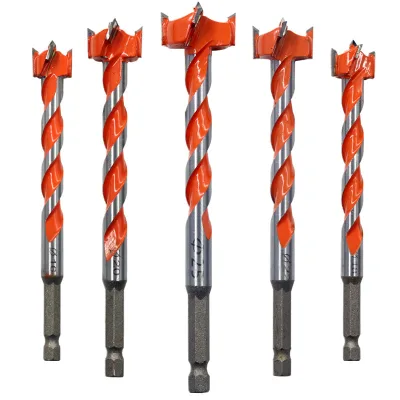


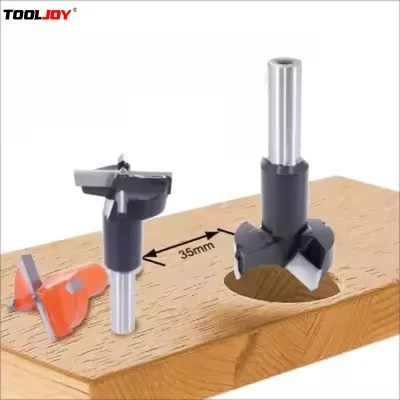
Diamond Four Blades and Four Grooves Door Lock Lengthening Reaming Drill Hole Opening
$0.05 - $1.20
MOQ: 1000 Pieces




Comprehensive Sourcing Guide
Strategic Sourcing Guide for Black Oxide Hinge Drill Bits
Understanding the Technical Landscape of Hinge Drill Bits
When sourcing black oxide hinge drill bits, buyers must first distinguish between the specific geometry and material composition required for precision woodworking applications. The core keyword "Black Oxide Hinge Drill Bit" implies a tool designed for creating precise mortise and tenon joints or hinge recesses in wood, often requiring a specific shank configuration to fit standard mortising machines or drill presses. Based on observed market data, these tools frequently appear under designations such as "Chisel Drill Bit" or "Wood Working Bit," indicating a hybrid functionality that combines drilling with chiseling action.
The material composition is a critical differentiator. While some listings specify "High Speed Steel" (HSS) for general durability, others indicate "Alloy" or "Solid Carbide" bodies, particularly for bits intended for high-volume industrial environments. The HRC (Rockwell Hardness) values observed in the market range from 45 to 68, suggesting that buyers must verify the hardness rating against their specific material hardness requirements. A bit with an HRC of 65 or 68 is generally preferred for abrasive hardwoods, whereas lower hardness ratings might suffice for softwoods or DIY applications. The surface finish is consistently noted as "Black Oxide," which serves not only an aesthetic purpose but also provides a degree of corrosion resistance and reduces friction during the drilling process.
Shank diameter specifications vary significantly, with common offerings including 1/4", 1/2", 3mm, 6mm, 8mm, and 12mm. This variance necessitates that buyers cross-reference their existing machinery specifications before placing orders. The overall length of these bits typically ranges from 165mm to 210mm, though specific models like the "35*70" variant exist with distinct dimensional profiles. The presence of positioning slots is a notable advantage found in certain models, aiding in the alignment of the bit for consistent hinge placement. Buyers should also note the distinction between "Jobber-length" and "Stub-length" variants, as the latter offers greater rigidity for heavy-duty mortising tasks.
Compliance Verification and Certification Standards
In the B2B procurement of industrial cutting tools, verifying compliance with international standards is essential for ensuring safety and interoperability. The supply chain for these drill bits often references a matrix of established standards, including API, AISI, JIS, and DIN. These standards govern the metallurgical properties, dimensional tolerances, and safety requirements of the tool. For instance, the AISI standard is frequently cited regarding the alloy composition, while DIN standards often dictate the dimensional accuracy required for European machinery compatibility.
Certification status is another layer of verification that buyers must scrutinize. The most common certification observed in the market is ISO 9001, which indicates that the manufacturer has a quality management system in place. Some suppliers also list certifications such as ISO, RoHS, and CE, which are crucial for exporting to the European Union and other regulated markets. RoHS compliance ensures the absence of restricted hazardous substances, while CE marking confirms conformity with health, safety, and environmental protection standards.
However, buyers must exercise caution regarding the term "customized" regarding standards. While some listings state that the product standard is "customized" or "metric and inch," this often implies that the manufacturer can tailor the tool to specific client requirements rather than adhering strictly to a single universal standard. In such cases, the buyer must explicitly define the required standard in the purchase order to avoid receiving a non-compliant product. The warranty periods observed, ranging from one to two years, also serve as an indirect indicator of the manufacturer's confidence in their compliance and quality control processes.
Cost Drivers and Pricing Dynamics
The pricing structure for black oxide hinge drill bits is influenced by a complex interplay of material costs, manufacturing processes, and order volume. The observed price range in the market is extensive, spanning from $0.01 to $2,500. This wide disparity is not indicative of a single product type but rather reflects the difference between individual bits and bulk sets, or between basic HSS models and premium solid carbide variants. The "Golden" color appearance mentioned in some listings often correlates with specialized coatings or higher-grade alloys, which can drive the unit price upward.
Material grade is a primary cost driver. Bits categorized for "DIY" use are typically less expensive than those rated for "Industrial" applications. Industrial-grade bits often utilize higher-grade alloys and undergo more rigorous heat treatment processes, resulting in higher hardness and longer tool life. The manufacturing process also impacts cost; "Forging" is a common process listed, which generally offers better grain structure and strength compared to casting, but it is more labor-intensive and costly. Conversely, "Polishing" as a surface treatment adds value by improving the finish and reducing friction, which can justify a higher price point.
Packaging and logistics also contribute to the final cost. Options range from simple "Box" packaging to more robust "Carbon Box" or "Carton" solutions. The choice of packaging affects the unit price, especially for international shipments where damage prevention is critical. Furthermore, the Minimum Order Quantity (MOQ) plays a significant role in pricing. The observed MOQ range is 1 to 1000 units. Suppliers often offer tiered pricing, where the unit cost decreases as the order volume increases. Buyers seeking to minimize inventory costs might opt for lower MOQs, accepting a higher per-unit price, while those with steady demand should aim for higher volumes to leverage economies of scale.
Typical Applications and Machine Compatibility
Black oxide hinge drill bits are specialized tools designed for a specific subset of woodworking machinery. The primary application is for use in "Wood Boring Machines," "Wood Drilling Machines," and "Wood Edge Banding Machines." These bits are also compatible with "Wood Lathes," "Wood Pellet Mills," "Wood Planers," "Wood Presses," "Wood Routers," "Wood Sanders," and "Wood Saw Machines." The versatility of these tools makes them suitable for a wide array of woodworking operations, from small-scale furniture making to large-scale industrial production.
A critical factor in application is the compatibility with specific machine types. The observed data highlights suitability for "Mortising Machines" and "Drill Presses with Mortising" capabilities. This indicates that the bits are engineered to handle the unique stresses of mortising, which involves removing a rectangular section of wood. The "Chisel Drill Bit" designation further supports this, suggesting a design that combines a drill bit with a chisel edge to clear waste material efficiently.
The "with Positioning Slots" feature is particularly valuable in hinge boring applications, where precise alignment is paramount. This feature allows the operator to align the bit accurately with the hinge plate, ensuring a clean and professional finish. The "Solid Carbide" body mentioned in some specifications is ideal for high-speed operations and abrasive materials, making these bits suitable for heavy-duty industrial environments. Buyers should ensure that the shank type, such as the "1/4 Hex shank," matches the chuck or holder of their specific machinery to prevent slippage and ensure safety during operation.
Supplier Evaluation and Origin Considerations
When evaluating potential suppliers for black oxide hinge drill bits, the origin of the product is a significant factor. The majority of the observed listings indicate a place of origin in "Zhejiang, China," a region known for its robust manufacturing base in tools and hardware. While this location offers competitive pricing and a wide variety of options, buyers must conduct thorough due diligence to ensure the supplier meets their quality and ethical standards.
The "brand_name" observed in the market, such as "Chevalierous," suggests that some suppliers operate under their own branding, while others may offer OEM (Original Equipment Manufacturer) and ODM (Original Design Manufacturer) services. The availability of "Customization" and "OEM, ODM" support indicates that suppliers are willing to tailor products to specific client needs, which is a valuable capability for buyers looking to differentiate their product lines. However, buyers should verify the supplier's capacity to maintain consistency across custom orders.
Supplier reliability can be assessed through their lead times and delivery capabilities. The observed delivery time ranges from 7 to 15 days, which is a reasonable timeframe for international shipping and production. Buyers should also check the "Condition" of the products, which is consistently listed as "New," ensuring that they are receiving factory-fresh inventory. The "Warranty" period, typically 1 or 2 years, is another metric of supplier confidence. A longer warranty period often correlates with higher quality control standards and better after-sales support.
Quality Control and Long-Term Procurement Strategy
Implementing a robust quality control (QC) strategy is essential for mitigating risks associated with the procurement of black oxide hinge drill bits. Buyers should verify the "Surface Treatment" and "Finish" of the products upon receipt. The "Black Oxide" finish should be uniform and free of flaking, which could indicate poor application or substandard material. The "HRC" hardness should be verified through spot checks or by requesting test reports from the supplier, ensuring that the hardness falls within the specified range of 45 to 68.
Long-term procurement considerations involve building a sustainable relationship with suppliers who can consistently deliver high-quality products. Buyers should prioritize suppliers who offer "Customized" support and have a proven track record of meeting "ISO 9001" standards. The ability to provide "OEM, ODM" services allows buyers to adapt the product to their specific market needs, fostering a more strategic partnership. Additionally, buyers should monitor the "Standard" compliance of each shipment, ensuring that the products meet the agreed-upon "API, AISI, JIS, DIN" specifications.
Finally, buyers should consider the total cost of ownership, not just the initial purchase price. A bit with a higher initial cost but superior hardness and durability may offer better value over time due to reduced replacement frequency and lower downtime. The "Advantage" of features like "Positioning Slots" can also contribute to long-term efficiency by reducing setup time and improving product quality. By focusing on these factors, buyers can ensure a reliable supply chain for black oxide hinge drill bits that supports their operational goals and maintains high standards of quality and safety.
Comparative Analysis of Product Variants
To assist buyers in making informed decisions, the following table compares key attributes of the observed product variants. This comparison highlights the differences in material, specifications, and intended use cases.
| Feature | Variant A (Industrial) | Variant B (General Purpose) | Variant C (Specialized) |
|---|---|---|---|
| Material | Solid Carbide / Alloy | High Speed Steel (HSS) | Alloy |
| HRC Hardness | 65 - 68 | 45 - 55 | 60 - 65 |
| Shank Type | 1/4 Hex shank | 1/2", 1/4" | 3mm, 6mm, 8mm |
| Length | 165mm - 210mm | Jobber-length | Stub-length |
| Finish | Black Oxide | Black Oxide | Black Oxide / Plain |
| Primary Use | Mortising Machines | Wood Drilling | Wood Edge Banding |
| Packaging | Carton | Carbon Box | Box |
| Warranty | 2 Years | 1 Year | 1 Year |
This table illustrates that while all variants share the "Black Oxide" finish, they differ significantly in material composition and intended application. Industrial users requiring high durability should prioritize the Solid Carbide variants with higher HRC ratings, while general woodworking tasks may be adequately served by HSS options. The shank type and length must align with the specific machinery to ensure optimal performance and safety.
FAQs
What material is used for black oxide hinge drill bits?
These bits are commonly made from High Speed Steel or Alloy materials. Some industrial variants feature a Solid Carbide body for enhanced durability during heavy-duty woodworking operations.
Which certifications should I verify for these drill bits?
Look for ISO 9001 certification to ensure quality management standards are met. Some suppliers also provide RoHS and CE certifications, which are crucial for compliance in regulated international markets.
How long is the typical delivery time for these items?
The standard delivery time ranges from 7 to 15 days from the time of order placement. This lead time applies to orders originating from manufacturing hubs in Zhejiang, China.
What is the minimum order quantity for purchasing these bits?
The minimum order quantity typically starts at 100 pieces for standard models. However, some suppliers may accept orders as low as one unit depending on the specific product configuration and stock availability.
Can these bits be customized for specific machinery requirements?
Yes, customization is available with support for OEM and ODM services. Buyers can request specific shank diameters, lengths, and standards like metric or inch to match their existing equipment.
What is the hardness rating for these drill bits?
The Rockwell Hardness (HRC) values typically range from 45 to 68 depending on the grade. Higher hardness ratings like 65 or 68 are preferred for abrasive hardwoods and industrial applications.