Source Black Oxide Steel Shaft Collar for Conveyer, Mining, Textile
Compare 30 Black Oxide Steel Shaft Collar options from verified Chinese manufacturers. These standard single or double split collars feature zinc plating or black oxide finishes for use in conveyer equipment, mining machinery, and textile applications.
Key considerations
Products List
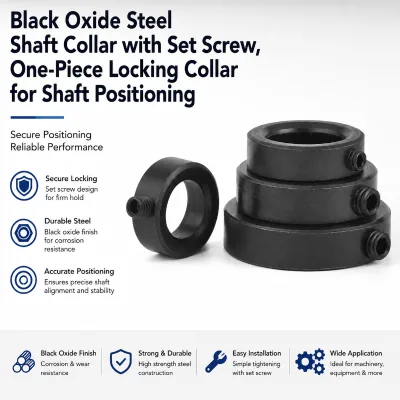


Hot Sale Galvanized Black Oxide Split Shaft Collar with Locking Hex Screw
$1.00 - $10.00
MOQ: 1 Pieces


Comprehensive Sourcing Guide
Strategic Sourcing Guide for Black Oxide Steel Shaft Collars
Understanding the Product and Core Technical Specifications
The Black Oxide Steel Shaft Collar is a critical mechanical fastener designed to secure components to a shaft, preventing axial movement while allowing for rotational freedom. In the context of industrial procurement, this component serves as a versatile positioning device found in conveyer equipment, agricultural machinery, and various automated systems. The core material composition typically involves carbon steel or stainless steel, with the specific grade often determined by the environmental demands of the application. For instance, standard carbon steel variants offer high tensile strength suitable for general industrial use, while stainless steel options provide enhanced resistance to corrosive environments.
The surface finish known as black oxide is a conversion coating applied to the steel substrate. This process not only provides a distinct aesthetic appearance but also offers a degree of corrosion resistance and reduces light reflection, which can be beneficial in optical or precision environments. The coating is distinct from zinc plating, another common finish observed in the market, and the choice between black oxide and zinc plating often depends on the specific chemical exposure and lubrication requirements of the machinery. The structural design of these collars varies significantly, with the most common configurations being single split and double split. Single split collars are tightened via a set screw, offering a secure hold on the shaft, while double split designs allow for installation without removing the collar from the shaft, facilitating easier maintenance and assembly in tight spaces.
Dimensions are a primary consideration in sourcing. While standard sizes exist, the market heavily favors customization to meet specific bore and outer diameter requirements. The bore size typically ranges from 3mm to 80mm, accommodating a wide spectrum of shaft diameters. The outer diameter generally spans from 16mm to 108mm, ensuring compatibility with various hub and bearing assemblies. Weight is another variable, ranging from approximately 14 grams to 620 grams depending on the size and material density. Buyers must verify the exact bore size and outer diameter against their machinery specifications, as the tolerance levels for these dimensions are critical for proper fit and function.
Compliance, Certification, and Quality Assurance Standards
When sourcing industrial hardware, verifying the manufacturer's adherence to quality management systems is paramount. The supply chain for shaft collars often includes suppliers holding ISO 9001 certification, specifically versions such as ISO 9001:2008 or the more recent ISO 9001:2015. These certifications indicate that the supplier has established processes for consistent quality control, though they do not guarantee that every individual product batch meets specific performance thresholds without further testing. Buyers should request current certification documents to confirm the validity and scope of the supplier's quality management system.
Quality control protocols are integral to the manufacturing process. Reputable suppliers often implement a 100% inspection regime for finished goods, ensuring that every shaft collar meets the specified dimensional and surface finish requirements before packaging. This level of scrutiny is particularly important for applications in high-stress environments, such as mining equipment or marine applications, where failure could lead to significant downtime or safety hazards. The manufacturing process itself frequently involves CNC machining, which allows for high precision in the creation of the split and the threading for set screws. This precision ensures that the collar maintains its structural integrity under load and that the set screws engage correctly with the shaft.
Standards compliance extends beyond general quality management to specific product standards. While the market offers both standard and non-standard products, the majority of shaft collars are manufactured to standard specifications. However, buyers must be cautious, as "standard" can vary by region or industry. It is essential to verify that the product meets the specific mechanical standards required by the end-user's industry, such as those for automotive or food machinery. The material standards, such as C45 steel or specific stainless steel grades, must also be clearly defined in the purchase order to ensure the material properties align with the application's mechanical and environmental needs.
Cost Drivers and Procurement Economics
The pricing of black oxide steel shaft collars is influenced by a complex interplay of factors, including material costs, manufacturing complexity, and order volume. The base price for these components can vary significantly, with observed market ranges spanning from low-cost units to premium custom-engineered parts. The material choice is a primary cost driver; stainless steel variants generally command a higher price point than carbon steel due to the raw material cost and the additional processing required to maintain corrosion resistance. Furthermore, the surface treatment adds to the cost, with black oxide and zinc plating involving different chemical processes and environmental compliance measures.
Order volume plays a decisive role in the final unit cost. Minimum Order Quantities (MOQs) in this sector can vary widely, ranging from small batches of 20 pieces to larger industrial orders of 500 pieces or more. Suppliers often structure their pricing tiers to incentivize larger orders, offering lower per-unit costs for bulk purchases. However, buyers must balance the economic benefits of bulk ordering against inventory holding costs and the risk of obsolescence. For projects requiring custom sizes or specific surface treatments, the MOQ may be higher to justify the setup costs associated with non-standard production runs.
Packaging and logistics also contribute to the overall procurement cost. Standard export cases and wooden cases with pallets are common packaging methods designed to protect the collars during transit. The choice of packaging can impact shipping costs, particularly for heavy or bulky orders. Additionally, the lead time for delivery, typically ranging from 15 to 30 days, can influence the total cost of ownership. Rush orders or expedited shipping may incur additional fees, so planning procurement cycles to align with standard lead times is a key strategy for cost optimization. Buyers should also consider the warranty period, which is often around six months, as a factor in the long-term value proposition of the supplier.
Typical Applications and Performance Requirements
Black oxide steel shaft collars are ubiquitous in a diverse array of industrial sectors, each imposing unique performance requirements on the component. In the conveyer equipment industry, these collars are used to secure rollers and pulleys, where resistance to wear and the ability to withstand continuous vibration are critical. The oil-resistant and acid-resistant features of the black oxide finish make them suitable for environments where lubricants or chemical agents are present. Similarly, in agricultural machinery, the collars must withstand exposure to moisture, soil, and varying temperatures, necessitating the cold-resistant and heat-resistant properties often highlighted in product specifications.
The automotive and motorcycle sectors utilize shaft collars for precise positioning in engine and transmission assemblies. Here, the high-temperature resistance is a vital attribute, as these components are often exposed to significant thermal loads. In the marine industry, corrosion resistance is the primary concern, and while black oxide offers some protection, stainless steel variants with zinc plating may be preferred for harsh saltwater environments. Food machinery applications require materials and finishes that do not contaminate the product, making stainless steel and compliant surface treatments essential.
Other applications include mining equipment, where the collars must endure extreme mechanical stress and abrasive conditions, and packaging machinery, which demands high precision and reliability for automated operations. The flexible structure of some collar designs allows for slight misalignment compensation, making them ideal for complex machinery setups. Buyers should evaluate the specific environmental and mechanical stresses of their application to select the appropriate material and finish. For instance, a collar used in a food processing line might require a stainless steel body with a specific surface treatment to meet hygiene standards, whereas a collar in a textile machine might prioritize oil resistance and high-temperature stability.
Supplier Evaluation and Selection Criteria
Selecting the right supplier for black oxide steel shaft collars requires a rigorous evaluation process that goes beyond price comparison. The geographic origin of the supplier is a relevant factor, with major manufacturing hubs in China, such as Zhejiang and Sichuan, producing a significant volume of these components. Buyers should verify the supplier's location to assess logistics capabilities and potential trade barriers. A supplier with a strong presence in a specialized industrial region may offer better access to raw materials and skilled labor, resulting in higher quality output.
The supplier's production capabilities are another critical evaluation metric. The use of CNC processing indicates a commitment to precision and consistency, which is essential for maintaining tight tolerances on bore sizes and outer diameters. Buyers should inquire about the supplier's capacity for customization, as many applications require non-standard sizes or specific surface treatments. The availability of customization services, including custom bore sizes and surface finishes, is a strong indicator of a supplier's flexibility and technical competence.
Quality control practices should be thoroughly vetted. A supplier that claims 100% inspection for all products demonstrates a high level of commitment to quality. Buyers should request evidence of this process, such as inspection reports or quality control protocols, to ensure that the supplier's claims are substantiated. Additionally, the supplier's warranty terms, typically around six months, provide a layer of protection against manufacturing defects. A supplier willing to offer a warranty indicates confidence in their product quality and a commitment to customer satisfaction.
Long-Term Procurement and Supply Chain Resilience
Long-term procurement of black oxide steel shaft collars requires a strategic approach that prioritizes supply chain resilience and relationship building. Lead times, typically ranging from 15 to 30 days, should be factored into production planning to avoid bottlenecks. Buyers should establish clear communication channels with suppliers to monitor production status and address any potential delays proactively. Building a relationship with a reliable supplier can lead to better pricing, priority treatment during peak demand periods, and more flexible terms for custom orders.
Sustainability and environmental compliance are increasingly important in global supply chains. The surface treatment processes, such as black oxide and zinc plating, involve chemical treatments that must be managed responsibly. Buyers should inquire about the supplier's environmental practices and compliance with relevant regulations to ensure that their supply chain aligns with corporate sustainability goals. This includes verifying that the supplier adheres to standards for waste disposal and emissions control associated with their manufacturing processes.
Inventory management is another key consideration. Given the variability in MOQs and the potential for customization, buyers should develop a strategy that balances inventory levels with demand forecasts. Maintaining a buffer stock of standard sizes can mitigate the risk of stockouts, while a flexible relationship with the supplier can accommodate the need for custom orders. Regular audits of the supplier's performance, including delivery reliability, quality consistency, and responsiveness, are essential for maintaining a robust supply chain. By focusing on these long-term considerations, buyers can ensure a steady supply of high-quality black oxide steel shaft collars that meet their operational needs.
FAQs
What materials are used for black oxide steel shaft collars?
These collars are typically made from carbon steel or stainless steel. The material choice depends on the application, with carbon steel offering high strength and stainless steel providing enhanced corrosion resistance for harsh environments.
Can I order custom sizes for these shaft collars?
Yes, customization is available for bore and outer diameter dimensions. Buyers can specify custom sizes to fit specific machinery requirements, with bore sizes ranging from 3mm to 80mm and outer diameters from 16mm to 108mm.
What certifications do manufacturers of these collars hold?
Reputable suppliers often hold ISO 9001:2008 or ISO 9001:2015 certifications. These standards indicate that the manufacturer has established quality management systems to ensure consistent product quality and reliable manufacturing processes.
How long does it take to receive an order?
Delivery time is typically within 15 to 30 days after order confirmation. This lead time allows for manufacturing, quality inspection, and packaging, though rush orders may require expedited logistics arrangements.
What is the minimum order quantity for these products?
Minimum order quantities vary by supplier, ranging from 20 pieces to 500 pieces. Buyers should check specific supplier requirements, as custom orders or bulk purchases often have different MOQ thresholds.
Which surface treatments are available for these collars?
Available surface treatments include black oxide and zinc plating. The choice depends on the required corrosion resistance and environmental conditions, with black oxide offering a distinct finish and zinc plating providing additional protection.