Source Brushed Gold Induction Basin Faucet for Hotels, Homes, and Spas
Compare 30 Brushed Gold Induction Basin Faucet options featuring single-handle designs, brushed gold finishes, and OEM services. Buyers can evaluate specifications like ceramic valve cores, CE certifications, and deck-mounted installations for bathroom applications.
Key considerations
Products List


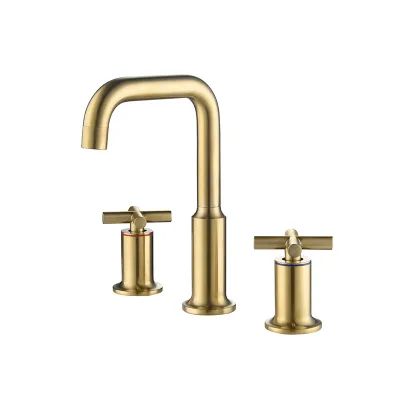


Bathroom Sink Contemporary White Gold Sanitary Designed Wash Basin Faucet
$25.00 - $30.00
MOQ: 200 Pieces


Comprehensive Sourcing Guide
Strategic Sourcing Guide for Brushed Gold Induction Basin Faucets
The global market for sanitary ware has witnessed a significant shift toward touchless technology, driven by heightened hygiene awareness and the demand for modern aesthetics in both residential and commercial sectors. For procurement professionals targeting brushed gold induction basin faucets, the sourcing landscape requires a nuanced understanding of material integrity, sensor reliability, and finish durability. This guide synthesizes available product attributes and industry standards to provide a structured approach for evaluating suppliers and specifications. The focus remains on verifying observed product data against general industry expectations to mitigate procurement risks.
Technical Specifications and Functional Architecture
When evaluating brushed gold induction basin faucets, the core technical differentiator lies in the sensor technology integrated into the fixture. Unlike traditional manual faucets, induction models rely on infrared sensors to detect hand presence, triggering water flow automatically. This functionality is often categorized under "Two Functions" or "Thermostatic Faucets" in product listings, indicating a blend of automated control and temperature regulation. Buyers must verify that the sensor response time aligns with commercial usage standards, ensuring minimal delay between detection and water release.
The structural configuration of these faucets is equally critical. The observed data indicates a prevalence of "Single Handle" designs with a "Single Hole" installation requirement. This streamlined architecture is typical for contemporary bathroom settings where space optimization is key. The valve core material is a primary determinant of longevity; "Ceramic" valve cores are the industry standard for their durability and resistance to wear, preventing leaks and ensuring smooth operation over time. In contrast, brass bodies are frequently cited as the standard for the main structure, offering superior corrosion resistance compared to other metals.
Surface treatment plays a dual role in aesthetics and function. The "Brushed" finish is a specific process that not only provides the desired "Brushed Gold" or "Gold" color but also offers practical benefits. Brushed surfaces are generally more resistant to fingerprints and water spots than polished chrome or high-gloss finishes, making them ideal for high-traffic environments. The product data notes that some units utilize "Brass" for surface finishing, while others specify "Stainless Steel" bodies. Procurement teams must clarify whether the gold appearance is a plating over brass or a specific alloy treatment, as this impacts the longevity of the finish.
Compliance, Certification, and Safety Standards
Navigating the regulatory landscape is non-negotiable for B2B procurement, particularly for products entering the European and North American markets. The observed product attributes list "CE" and "RoHS" certifications as standard compliance markers. The CE mark indicates conformity with health, safety, and environmental protection standards for products sold within the European Economic Area. RoHS compliance ensures that the product does not contain restricted hazardous substances, which is critical for electronic components like the induction sensors and wiring.
Water safety is another paramount concern. The attribute "Low Lead Compliant: Yes" is a specific verification point that buyers must prioritize. Lead content in faucets can leach into drinking water, posing significant health risks. While the observed data confirms compliance for specific models, buyers should not assume this applies to all listed units without explicit documentation. It is essential to request third-party test reports that verify lead levels meet local regulations, such as NSF/ANSI 61 in the United States or WRAS in the United Kingdom.
Furthermore, the "Stainless steel body" and "Brass" standards mentioned in the product data suggest adherence to specific material quality benchmarks. Buyers should verify that the brass used is lead-free or low-lead, as not all brass alloys meet the stringent requirements for potable water applications. The "40mm" standard referenced in the product data likely pertains to the installation hole diameter or a specific dimensional tolerance, which must be cross-referenced with the site's plumbing infrastructure to ensure compatibility.
Cost Drivers and Pricing Dynamics
The pricing of brushed gold induction basin faucets is influenced by a complex interplay of material costs, technological complexity, and finishing processes. The observed price range of $0.5 to $152 USD reflects a vast disparity in product tiers, likely spanning from basic commercial units to high-end residential fixtures with advanced features. Several factors drive these costs. First, the material composition is a primary driver; faucets with solid brass bodies and ceramic valves command higher prices than those with plastic internal components or lower-grade metals.
The induction sensor technology itself adds a significant cost layer. High-quality sensors with consistent detection ranges and low power consumption require advanced engineering and quality control, which increases the unit price. Additionally, the "Brushed Gold" finish involves a multi-step plating process. Achieving a durable, corrosion-resistant gold layer over a brass base requires precise electroplating techniques, often involving multiple layers of nickel and gold to prevent peeling or tarnishing. This finishing process is more expensive than standard chrome plating.
Minimum Order Quantities (MOQ) also impact the effective cost per unit. The observed MOQ range of 1 to 5000 units suggests that suppliers offer flexibility for sample orders but may require substantial volume commitments for bulk pricing. Buyers should note that while some suppliers list an MOQ of 200 pieces, others may have higher thresholds. Negotiating based on volume can significantly reduce the unit cost, but the initial investment in tooling or custom branding (OEM/ODM) must be factored into the total cost of ownership.
Typical Applications and Installation Requirements
The versatility of brushed gold induction basin faucets makes them suitable for a wide range of applications, from luxury residential bathrooms to high-traffic commercial facilities. The "Bathroom" application is the primary use case, but the "Common Basin" specification indicates suitability for standard residential sinks. However, the "Project Solution Capability" and "Cross Categories Consolidation" attributes suggest that these products are also targeted at large-scale projects, such as hotels, hospitals, and office buildings, where total solutions for projects are required.
Installation requirements are generally straightforward, with "Deck Mounted" and "Single Hole" configurations being the most common. This simplicity reduces labor costs during installation, as it does not require complex plumbing modifications. The "Mark: 1PC Cold and Hot Mark" indicates standard labeling for water temperature control, which is essential for user safety and comfort. In commercial settings, the "Rain" spray pattern observed in some models offers a more luxurious experience, while other models may focus on water conservation.
The "After-sale Service" attributes, including "Free Spare Parts" and "Onsite Inspection," are particularly relevant for large projects. These services ensure that any potential issues with the induction sensors or finishes can be addressed quickly, minimizing downtime. The "5 year" warranty observed in the product data is a strong indicator of manufacturer confidence in product durability, providing buyers with long-term security.
Supplier Evaluation and Service Capabilities
Selecting the right supplier involves more than just comparing product specifications; it requires a thorough evaluation of their service capabilities and operational stability. The "OEM/ODM" service availability is a critical factor for buyers seeking custom branding or specific design modifications. Suppliers offering "OEM" and "ODM" services can tailor the faucet's appearance, sensor logic, and packaging to meet specific project requirements. The "Service: OEM/ODM" and "Service: OEM" attributes confirm that many suppliers in this category are flexible enough to accommodate custom orders.
Geographic location is another consideration. The product data lists origins in "Zhejiang, China" and "Guangdong, China," both of which are major manufacturing hubs for sanitary ware. These regions offer a mature supply chain ecosystem, ensuring access to high-quality components and efficient production. However, buyers should verify the specific factory capabilities and audit their quality management systems to ensure consistency.
Payment terms and logistics are also part of the supplier evaluation. The "T/T L/C" payment methods observed indicate standard financial practices, offering flexibility for both small and large transactions. The "Packing" details, such as "1PCS/Inner Box, 12PCS/Ctns" or "Cloth Bag+ Then Color Box+ Export Carton," highlight the importance of secure packaging to prevent damage during transit. Buyers should ensure that the packaging meets export standards, especially for international shipments, to avoid losses due to handling.
Quality Control and Long-Term Procurement Considerations
Ensuring the long-term reliability of brushed gold induction basin faucets requires a robust quality control strategy. The "Ceramic" valve core and "Brass" body are standard indicators of quality, but buyers must verify these attributes through sample testing. Functional testing should include repeated sensor activation cycles to ensure the induction mechanism does not fail over time. Additionally, the "Brushed Gold" finish should be tested for corrosion resistance and scratch durability, as these are common failure points in high-use environments.
The "Warranty: 5 year" attribute suggests a commitment to product longevity, but buyers should clarify the terms of the warranty. Does it cover the sensor electronics, the finish, or the mechanical components? Understanding the scope of the warranty is essential for risk management. Furthermore, the "After-sale Service" of "Onsite Inspection" can be a valuable resource for troubleshooting complex issues in large installations.
Long-term procurement considerations also involve supply chain resilience. Suppliers with "Project Solution Capability" and "Cross Categories Consolidation" are better positioned to handle large orders and provide consistent supply over time. Buyers should assess the supplier's ability to scale production and manage inventory to prevent delays. The "Sample Order Is Available" attribute allows buyers to test products before committing to large orders, reducing the risk of mismatched expectations.
In conclusion, sourcing brushed gold induction basin faucets requires a balanced approach that considers technical specifications, compliance, cost, and supplier reliability. By leveraging the observed product attributes and adhering to strict quality control measures, buyers can secure high-performance fixtures that meet the demands of modern sanitary environments. The key is to verify every claim against independent testing and to prioritize suppliers with proven track records in delivering durable, compliant, and aesthetically pleasing products.
FAQs
What certifications do brushed gold induction basin faucets have?
These faucets typically hold CE and RoHS certifications to ensure safety and environmental compliance. Some models also meet low lead compliance standards for potable water. Buyers should verify specific test reports for each unit before large orders.
Can I customize the Brushed Gold Induction Basin Faucet design?
Yes, customization is available through OEM and ODM services for branding and design modifications. Suppliers can adjust finishes, sensor logic, and packaging to meet specific project requirements. Sample orders are often available to test custom specifications before bulk production.
Which material is used for the Brushed Gold Induction Basin Faucet body?
The faucet bodies are commonly made from brass or stainless steel for durability and corrosion resistance. Ceramic valve cores are standard to ensure smooth operation and prevent leaks. The gold finish is applied via brushing or plating processes on these metal bases.
How is the Brushed Gold Induction Basin Faucet installed?
Installation is typically deck-mounted with a single-hole configuration for streamlined bathroom setups. The units require standard plumbing connections and often include cold and hot water markings. Buyers should confirm the 40mm standard hole size matches their sink infrastructure.
What warranty covers the Brushed Gold Induction Basin Faucet?
A five-year warranty is commonly provided to cover defects in materials and workmanship. This warranty often includes free spare parts and onsite inspection services for large projects. Buyers should clarify if the warranty covers the induction sensor electronics specifically.
What is the minimum order quantity for brushed gold induction basin faucets?
Minimum order quantities range from one piece for samples to 5000 units for bulk production. Some suppliers require a minimum of 200 pieces for standard orders while others offer flexible terms. Pricing per unit often decreases as the order volume increases significantly.
Where are brushed gold induction basin faucets manufactured?
These faucets are primarily manufactured in Zhejiang and Guangdong provinces in China. These regions offer mature supply chains and access to high-quality sanitary ware components. Buyers should verify specific factory locations to ensure consistent quality and logistics planning.