Source Built-in Heater Outdoor Catering Trailer for Popcorn, Ice Cream, and Sausage
Explore 30 options for a built-in heater outdoor catering trailer designed for popcorn, ice cream, and sausage production. Buyers can compare features like thermal processing, CE certification, and customizable functions across various models from Chinese manufacturers.
Key considerations
Products List


Ce High Quality Mobile Food Trailer Food Truck Tith Full Cooking Equipment
$2000.00 - $3000.00
MOQ: 1 Vehicle

Street Mobile Food Warmer Cart/Crepe Food Truck/Concession Food Trailer for Sale
$3000.00 - $4800.00
MOQ: 1 Vehicle


Customized Black Outside Fast Food Convenient Food Trailer BBQ Truck
$5000.00 - $12999.00
MOQ: 1 Pieces

Ce Type Approval Catering Trailers Burger Vans Coffee Bar Food Truck Trailers
$1800.00 - $4000.00
MOQ: 1 Vehicle

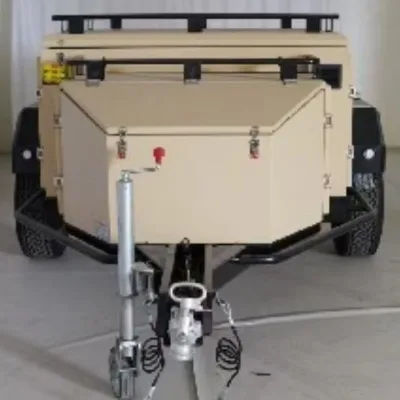
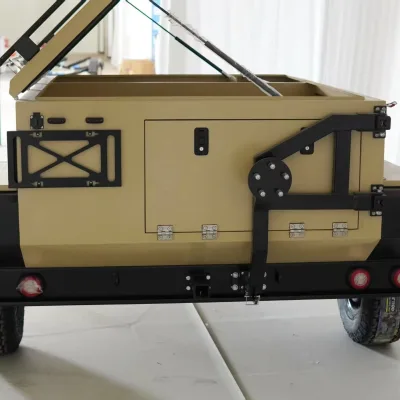
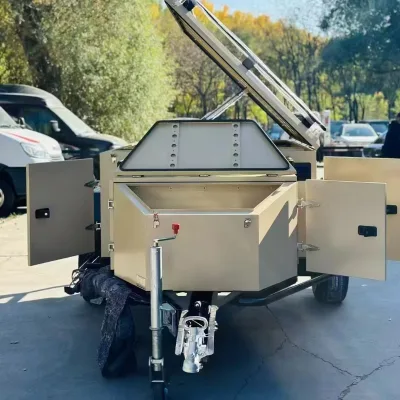
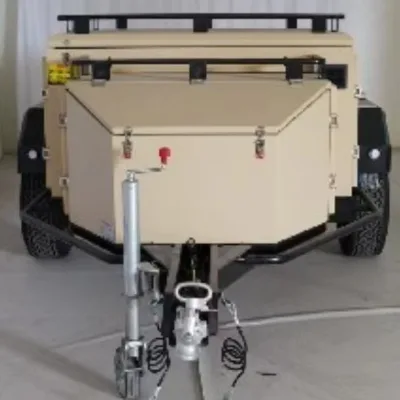


Portable Camper Trailer for Family Camping Cooking and Outdoor Events
$3200.00 - $4500.00
MOQ: 1 Pieces


Comprehensive Sourcing Guide
Sourcing Guide for Built-in Heater Outdoor Catering Trailers
Procuring a built-in heater outdoor catering trailer represents a significant investment for mobile food operators seeking to expand their service capabilities into cooler climates or extended operating hours. The market offers a diverse array of units ranging from simple towable carts to complex, fully equipped food trucks. For the buyer, the primary challenge lies in navigating a landscape where product attributes, technical specifications, and compliance standards vary widely between suppliers. This guide provides a structured approach to evaluating potential units, focusing on the integration of heating systems, material durability, and regulatory adherence without relying on unverified marketing claims.
Technical Specifications and Heating System Integration
The core of any outdoor catering trailer is its ability to maintain operational temperature and food safety standards regardless of external weather conditions. When sourcing a unit with a built-in heater, the buyer must first distinguish between the heating system used for the operator's comfort and the heating elements required for food preparation. The supplied product data indicates that "Functions" can include "Griddle, BBQ Grill, Fryer, Boiler, etc," suggesting that the heating infrastructure is often modular and adaptable to specific culinary needs.
A critical technical parameter is the voltage compatibility. The observed data lists voltage options of "220V/110V/380V," which is a crucial consideration for international buyers. A unit designed for a 220V grid may require significant electrical modifications if deployed in a region utilizing 110V, potentially affecting the performance of the built-in heater and cooking appliances. Furthermore, the "Electric System" is described as having "Built-in Cables, Lights, Universal Sockets," implying that the electrical architecture is pre-integrated. Buyers must verify that the built-in heater's power draw is compatible with the trailer's total electrical capacity and the generator or shore power source available at the intended operating site.
The physical dimensions of the trailer also dictate the feasibility of installing a robust heating system. The observed specifications include sizes such as "550200230" and "280210215cm." These varying dimensions suggest that the internal volume available for heating ducts, fuel tanks, or electric heating elements differs significantly between models. A smaller "Food Cart" may rely on compact electric heaters, whereas a larger "Type: Towable Food Trailer" might accommodate a more powerful propane or diesel heating unit. The "Automatic Grade" varies between "Semi-Automatic" and "Manual," which influences how the heating system is controlled. Operators must determine if they require automated temperature regulation or if manual controls suffice for their specific menu and service volume.
Compliance and Certification Verification
In the mobile food industry, compliance is not merely a formality but a prerequisite for legal operation and insurance coverage. The supplied facts highlight "CE" as a recurring certification, with some entries listing additional standards such as "ISO," "DOT," "CCC," and "ISO/Ts16949." While "CE" appears frequently in the product attributes, buyers must exercise caution and verify the scope of this certification. The "CE" mark generally indicates conformity with health, safety, and environmental protection standards for products sold within the European Economic Area, but it does not automatically guarantee compliance with local regulations in North America, Asia, or other regions.
The "prod_standard" field shows entries like "Standard or Customized" and specific dimension-based standards (e.g., "550200230"). This ambiguity requires the buyer to explicitly request the specific technical standard documents associated with the heating system. For a built-in heater, relevant standards might include those related to fire safety, gas pressure regulation, or electrical insulation. The presence of "DOT" (Department of Transportation) certification in the data suggests that some units may meet roadworthiness standards for towing, which is essential for mobile operations. However, the buyer should not assume that every unit with a "CE" label meets DOT or local fire codes.
Additionally, the "Certification" list includes "ISO" and "ISO/Ts16949," which are quality management and automotive industry standards, respectively. While these indicate a manufacturer's commitment to quality control processes, they do not certify the specific performance of the heater or the trailer's safety in a food service context. Buyers should request third-party test reports specifically for the heating component, verifying that the system has been tested for overheating protection, flame failure devices, and proper ventilation to prevent carbon monoxide buildup.
Cost Drivers and Pricing Structure
The pricing for built-in heater outdoor catering trailers is influenced by a complex interplay of materials, customization, and functional complexity. The observed price range spans from 500 to 28,000 USD, a wide disparity that reflects the difference between basic "Mobile Food Caravan" units and fully equipped "Food Truck" models. The lower end of the spectrum likely corresponds to simple "Cart Types" with minimal electrical integration and basic heating solutions, while the higher end encompasses units with advanced "Electric System" features, custom "External Stickers," and comprehensive "Functions" like fryers and boilers.
Material selection is a primary cost driver. The data lists "Fibre Glass, Color Plate, Stainless Steel" as available materials. Stainless steel is generally more expensive than fibre glass or color plate but offers superior durability and hygiene, which is critical for food preparation areas. The "prod_packing" varies from "Simple Package" to "Wood Case or Container," which can impact the final landed cost due to shipping and handling fees. A unit packed in a robust "Wood Case" for international shipping will incur higher logistics costs compared to a unit in a simple package.
Customization is another significant factor. The "Customized" attribute and "Customization: Available" notes indicate that buyers can tailor the unit to their specific needs. However, customization invariably increases the price. The "External Stickers: Customized From Customers" and "Color: Different According to Requirement" options allow for branding but add to the manufacturing time and cost. Buyers should be aware that the "Warranty" of "5 Years" mentioned in the data is a strong value proposition, but it may be contingent on the specific configuration and the use of original parts. Understanding the breakdown of these costs is essential for budgeting, as the base price of the trailer may not include the cost of the heating system installation or the electrical upgrades required for its operation.
Typical Applications and Operational Versatility
The versatility of a built-in heater outdoor catering trailer makes it suitable for a wide range of applications. The "Application" field lists "Popcorn, Chocolate, Candy, Donut, Biscuit, Ice Cream, Chips," indicating that these units are designed for high-volume, fast-food style operations. The "Food Type" is specified as "Outdoor Snack," and the "Keywords" include "Customized Food Snack Truck," suggesting a focus on street food and event catering.
The "Functions" such as "Griddle, BBQ Grill, Fryer, Boiler" allow for diverse menu offerings, from hot beverages to cooked meals. The presence of a built-in heater is particularly valuable for "Leisure Fast Food Equipment" used in "Outdoor Street Food" environments where ambient temperatures can drop significantly. This capability extends the operating season for vendors, allowing them to serve hot food and beverages during winter months or in cooler climates. The "Type: Towable Food Trailer" and "Style: Modern Towable Carting Trailer" imply that these units are designed for mobility, enabling vendors to move between locations, events, and festivals.
The "Facility: Individuation" and "Function: Marketing" attributes highlight that these trailers are not just cooking stations but also mobile marketing tools. The ability to customize the "Color" and "External Stickers" allows businesses to align the trailer's appearance with their brand identity. This versatility makes the built-in heater trailer an ideal solution for businesses looking to maximize their revenue potential by operating in varied weather conditions and locations.
Supplier Evaluation and Quality Control
Evaluating suppliers for these specialized units requires a rigorous approach to quality control and verification of claims. The "prod_origin" is listed as "China" and "Shanghai Chian," indicating that the majority of these units are manufactured in China. While this offers competitive pricing, it necessitates careful due diligence regarding the supplier's track record and quality assurance processes. Buyers should verify the "After-Sales Service Provided," specifically the availability of "Engineers Available to Service," which is crucial for maintaining the heating system and other complex components.
Quality control should extend beyond the visual inspection of the "Fibre Glass, Color Plate, Stainless Steel" construction. Buyers must assess the integrity of the "Electric System" and the safety of the built-in heater. The "Automatic Grade" of "Semi-Automatic" or "Manual" should be tested to ensure that the controls are responsive and reliable. The "Warranty" of "5 Years" is a significant indicator of supplier confidence, but it is essential to understand the terms and conditions of this warranty, including what components are covered and the process for claiming service.
When evaluating suppliers, buyers should request detailed documentation on the "Certification" status, ensuring that the "CE," "ISO," and other marks are valid and applicable to the specific model being purchased. The "Standard or Customized" nature of the "prod_standard" means that each unit may have unique specifications, making it vital to review the technical drawings and safety certifications for the specific configuration. Suppliers who provide comprehensive "English Manual" documentation demonstrate a commitment to user support and clarity, which is essential for the safe operation of complex equipment.
Long-Term Procurement Considerations
Long-term success with a built-in heater outdoor catering trailer depends on factors beyond the initial purchase price. The "After-Sales Service" and "Warranty" are critical components of the total cost of ownership. A supplier that offers "Engineers Available to Service" provides a safety net for potential breakdowns, which can be costly and disruptive to business operations. Buyers should inquire about the availability of spare parts, particularly for the heating system and electrical components, to ensure that repairs can be performed quickly and efficiently.
The "Customized" nature of these units means that the buyer should consider the scalability of their operation. As the business grows, the need for additional heating capacity or expanded cooking functions may arise. The "Functions" and "Application" flexibility of the trailer allows for menu expansion, but the physical constraints of the "Size" and "Electric System" must be considered. Buyers should plan for potential upgrades or modifications that may be required to accommodate new equipment or increased power demands.
Furthermore, the "prod_packing" and logistics considerations should be factored into the long-term strategy. A unit shipped in a "Wood Case or Container" may require specialized handling and storage upon arrival. Buyers should ensure that they have the necessary infrastructure to store and maintain the trailer when not in use, protecting the "Fibre Glass, Color Plate, Stainless Steel" exterior from the elements. By focusing on these long-term aspects, buyers can ensure that their investment in a built-in heater outdoor catering trailer remains a profitable and reliable asset for years to come.
FAQs
What materials are used for the trailer body?
The trailer body is constructed from Fibre Glass, Color Plate, and Stainless Steel. These materials are selected for durability and hygiene, with the specific combination depending on the customized requirements of the buyer.
Which certifications are available for these units?
Common certifications include CE, ISO, DOT, CCC, and ISO/Ts16949. Buyers must verify that the specific certification scope matches their local regulatory requirements, as not every unit automatically satisfies all listed standards.
Can the trailer operate on different voltage systems?
Yes, the electric system supports 220V, 110V, and 380V voltage options. This flexibility allows for international deployment, but buyers must ensure the chosen voltage matches the local power grid to avoid equipment damage.
What is the warranty period for the equipment?
The standard warranty period provided is 5 years. This coverage typically applies to the main structure and components, though specific terms may vary based on the configuration and usage conditions of the customized unit.
How is the trailer packed for shipping?
Packing options range from Simple Package to Wood Case or Container. The choice of packaging affects shipping costs and protection levels, with robust wooden cases often required for international transport to prevent damage.
What functions can be integrated into the trailer?
Functions include Griddle, BBQ Grill, Fryer, and Boiler capabilities. These modules allow for diverse food preparation, such as making ice cream, juice, or sausages, tailored to the specific menu requirements of the operator.