Source Car Window Solar Power Fan for Microbus, Truck, and Office
Compare 30 listings for Car Window Solar Power Fan featuring electric and solar options with varying power sources and mounting types. Buyers can review specifications for microbus, truck, and office applications with customizable designs.
Key considerations
Products List


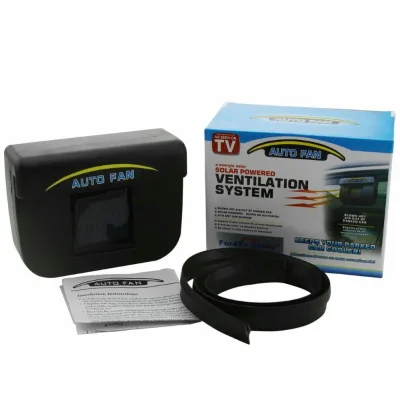

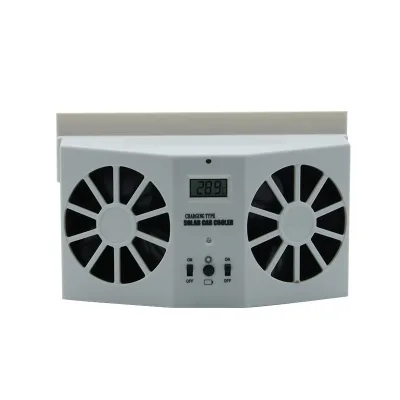


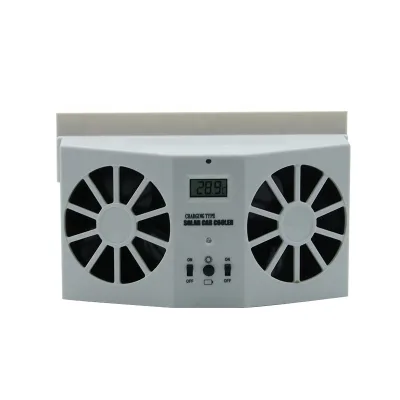


Professional Design Long Use Life Hot Selling Auto Cool Solar Power Car Fan
$3.28 - $3.60
MOQ: 2000 Pieces

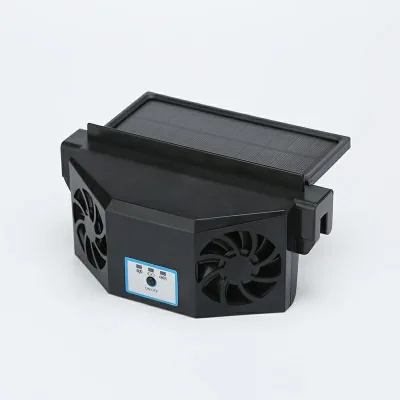
Solar Wireless Charging Fan 5 Blades Solar Power Stand Fan with Solar Panel
$1.00 - $22.00
MOQ: 1 Pieces


Comprehensive Sourcing Guide
Strategic Sourcing Guide for Car Window Solar Power Fans
The global demand for automotive accessories powered by renewable energy has surged, with the Car Window Solar Power Fan emerging as a critical solution for interior climate management. For B2B procurement professionals, navigating this market requires a disciplined approach that distinguishes between verified product attributes and generalized market claims. This guide synthesizes observed product data and industry standards to provide a framework for sourcing high-quality solar-powered ventilation units. Buyers must understand that while the core concept is uniform, the technical execution varies significantly across suppliers, necessitating rigorous verification of specifications before committing to volume orders.
Technical Specifications and Performance Metrics
When evaluating car window solar power fans, the primary focus must be on the convergence of power generation, airflow efficiency, and mechanical durability. The supplied product data indicates a diverse range of configurations, from small 0.3W units to more robust 2.5W electric models. A critical observation in the current market is the variance in solar panel specifications. Some units are listed with a solar panel size of 55*55mm and a power output of 3V/100mA (0.3W), which suggests these are designed for low-speed, continuous ventilation in mild conditions. In contrast, other listings reference a rated speed of 5000rpm or 6000r/min, indicating higher-performance motors capable of moving significant air volumes, with some units boasting an air volume of 2400cfm.
The power source is a defining characteristic. While the core keyword specifies "solar power," the observed data reveals a hybrid reality where "Electric" is listed as a primary power source alongside solar capabilities. This suggests that many units may include battery storage or dual-mode operation to ensure functionality during low-light conditions. The battery quality is explicitly noted as "Good Quality" in several listings, yet the specific capacity or chemistry (e.g., Lithium-ion vs. Ni-MH) remains a variable that requires direct supplier confirmation.
The physical construction also dictates longevity. The blade material is frequently identified as Aluminum, which offers a balance of weight and durability, while the shell is predominantly made of ABS plastic. This combination is standard for automotive accessories due to its resistance to heat and UV degradation. However, buyers must verify the specific grade of ABS, as lower-quality variants may become brittle under prolonged sun exposure. The bearing type is another crucial technical metric; Ball Bearing is the standard observed, which generally offers a longer lifespan and quieter operation compared to sleeve bearings, especially at the high RPMs observed in the market.
Compliance, Certification, and Safety Standards
Navigating the regulatory landscape is essential for international procurement. The observed product attributes consistently list CE, ROHS, and CCC certifications. These are not merely marketing terms but represent specific compliance requirements for the European Union, environmental restrictions on hazardous substances, and the Chinese Compulsory Certification, respectively. The presence of these certifications implies that the manufacturer has undergone testing for electrical safety and material toxicity.
However, the absence of specific test reports in the provided data means buyers cannot assume every listed unit meets these standards without verification. The "Low-confidence background" section mentions ISO 27001, but this is an information security standard and is irrelevant to the physical safety or electrical performance of a car fan. Buyers should not rely on this for product validation. Instead, the focus must remain on the CE and ROHS marks, which are directly applicable to electrical appliances.
For automotive applications, the mounting and fixing mechanism is a safety-critical specification. The data indicates "Sucker Fixing" as a primary mode, which is standard for window-mounted fans. However, the "Free Standing" mounting type is also listed, suggesting versatility in placement. Procurement teams must verify that the suction cups or mounting brackets are tested for vibration resistance and temperature extremes, as a failure in a car window could lead to the fan detaching while the vehicle is in motion. The product standard dimensions, such as 32.51411.5cm or 436620cm, vary widely, indicating that packaging and unit size are not uniform. Buyers must ensure that the physical dimensions of the fan do not obstruct the driver's view or interfere with vehicle controls.
Cost Drivers and Pricing Structures
The pricing landscape for car window solar power fans is highly fragmented, with observed listed prices ranging from $1 to $181 USD. This wide disparity is driven by several factors, including the power output, the quality of the solar panel, the complexity of the motor, and the inclusion of battery storage. A unit priced at the lower end of the spectrum likely utilizes a smaller solar panel and a basic motor with lower RPM, suitable for light ventilation. Conversely, the higher-priced units likely feature larger panels, more efficient motors, and potentially higher-capacity batteries for extended operation.
The Minimum Order Quantity (MOQ) is another significant cost driver. The observed MOQ range spans from 1 to 2000 units. Suppliers with an MOQ of 100PCS or higher often offer better per-unit pricing due to economies of scale. However, for buyers testing the market or requiring smaller batches, the higher per-unit cost must be factored into the total cost of ownership. The "Selling Units" are typically listed as "Single item," but bulk packaging often involves "Cartons" or "Paper Box" configurations. The single gross weight of 23.0 kg for a single package suggests that shipping costs can be substantial, particularly for heavier models. Buyers should calculate the landed cost, including freight and duties, rather than focusing solely on the FOB price.
Customization is a key variable in cost. The attribute "Customization: Available" and "Customized Support: OEM ODM" indicates that buyers can request branding, color changes (White or Black are observed), or specific technical modifications. These customizations invariably increase the unit cost and may extend the lead time. The "Capacity" of 800,000 listed in the data suggests that some suppliers have significant production capabilities, which can stabilize pricing for large orders, but buyers must verify if this capacity is dedicated to their specific order or if it represents a general factory output.
Typical Applications and Market Segmentation
The versatility of car window solar power fans allows them to serve multiple market segments. The primary application is clearly defined as "Microbus, Mini Car, Car, Truck, Lorry," indicating a broad appeal across light and heavy-duty vehicles. The "Sucker Fixing" method makes these units particularly suitable for vehicles where permanent installation is not feasible or desired.
Beyond automotive use, the data lists "Restaurant, Office, Home, Factory" as application areas. This suggests that the same technology is being repurposed for general ventilation in small indoor spaces or for cooling in industrial settings. The "Car Fan" and "Floor Fan" designations highlight this dual utility. For B2B buyers, this implies that a single product line can address multiple customer needs, potentially simplifying inventory management. However, the specific requirements for automotive use (vibration resistance, safety) differ from those for indoor use (noise levels, aesthetics). Buyers must ensure that the product selected for a specific application meets the environmental demands of that sector.
The "Wind Speed: One" attribute suggests that some models are single-speed, which may be a limitation for users requiring variable airflow. In contrast, models with "Rated Speed: 5000rpm" offer higher performance. Understanding the specific use case is vital; a fan for a delivery truck parked in a hot lot may require different specifications than a fan for an office conference room.
Supplier Evaluation and Geographic Considerations
Geographic origin is a critical factor in supplier evaluation. The data points to "Guangdong" and "Zhejiang, China" as the primary places of origin. These regions are established manufacturing hubs for electronics and automotive accessories, offering a mature supply chain and competitive labor costs. The "Place of Origin: Guangdong, China" is repeated frequently, reinforcing the concentration of production in this area.
When evaluating suppliers, buyers should look for evidence of "OEM ODM" capabilities, as this indicates the supplier's ability to adapt products to specific brand requirements. The "Brand Name: OEM" attribute suggests that many suppliers operate as white-label manufacturers. Buyers should verify the supplier's production capacity, quality control processes, and history of compliance with CE and ROHS standards. The "Capacity: 800,000" figure is a strong indicator of scale, but it must be corroborated with on-site audits or third-party verification to ensure it reflects actual output rather than theoretical maximums.
Lead times and shipping logistics are also part of the evaluation. While specific lead times are not provided in the data, the complexity of the product (solar panels, batteries, motors) suggests that production cycles may vary. The "Single package size" of 49X38X52 cm and the "Single gross weight" of 23.0 kg highlight the logistical challenges of shipping these items. Buyers should negotiate shipping terms carefully, as the weight and dimensions can significantly impact freight costs.
Quality Control and Long-Term Procurement
Quality control is paramount for solar-powered fans, as the integration of solar panels and batteries introduces potential failure points. The "Blade Material: Aluminum" and "Shell: ABS" are positive indicators, but buyers must verify the manufacturing tolerances and the quality of the soldering on the solar panels. The "Battery: Good Quality" claim is generic; specific testing for cycle life and discharge rates is necessary to ensure long-term reliability.
For long-term procurement, buyers should establish clear specifications for the "Solar Panels: Customizable" aspect. Standardizing the panel size and power output across the product line can simplify maintenance and replacement. The "Fixed Mode: Sucker Fixing" should be tested for adhesion strength under various temperature conditions to prevent detachment. Additionally, the "Air Volume: 2400cfm" and "Moter RPM: 6000r/min" should be verified through independent testing to ensure they match the supplier's claims.
Buyers should also consider the "prod_packing" options, such as "Box," "Packing Box," or "Cartons," as these affect the product's protection during transit and its presentation to end-users. A robust packaging solution reduces the risk of damage and enhances the brand image. Finally, the "Customization: Available" feature should be leveraged to create a unique value proposition, whether through branding, color, or specific technical enhancements that differentiate the product in a crowded market.
In conclusion, sourcing car window solar power fans requires a meticulous approach that balances technical performance, regulatory compliance, and cost efficiency. By focusing on verified attributes such as certifications, material quality, and production capacity, buyers can mitigate risks and secure a reliable supply chain. The diversity in specifications and applications offers significant opportunities for market segmentation, but success depends on rigorous due diligence and clear communication with suppliers.
FAQs
What certifications do car window solar power fans have?
These units typically carry CE, ROHS, and CCC certifications. Buyers must verify specific test reports for each batch, as these marks indicate compliance with EU safety, environmental restrictions, and Chinese compulsory standards respectively.
How is the power source configured for these fans?
The power source is listed as Electric, often combined with solar capabilities. Some models include a battery for operation in low-light conditions, though specific capacity and chemistry require direct supplier confirmation.
Which mounting types are available for car window fans?
Sucker Fixing is the primary mode for window mounting, while Free Standing is also observed. Procurement teams must verify that suction cups withstand vibration and temperature extremes to prevent detachment during vehicle motion.
Can buyers customize the solar panels on these units?
Yes, customization is available with OEM and ODM support. Buyers can request specific solar panel sizes or power outputs, though such modifications will increase the unit cost and may extend the production lead time.
What is the observed price range for these fans?
Listed prices range from 1 to 181 USD depending on specifications. Lower prices often correspond to smaller solar panels and basic motors, while higher prices reflect larger panels, efficient motors, and higher-capacity batteries.
Where are these fans typically manufactured?
The primary places of origin are Guangdong and Zhejiang in China. These regions offer mature supply chains for electronics and automotive accessories, ensuring competitive labor costs and established production capabilities.