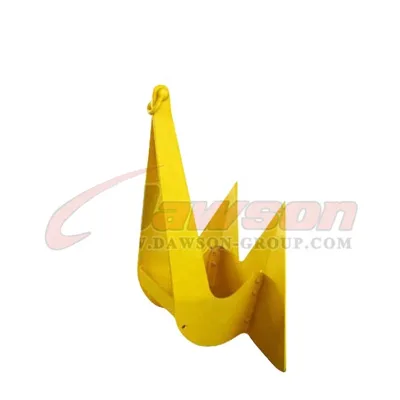
Source Cast Steel Stingray Anchor for Ships, Yachts, and Boats
Find and compare 30 Cast Steel Stingray Anchor options from verified Chinese suppliers. Buyers can review specifications, certifications, and delivery times for marine mooring and inland boat applications.
Key considerations
Products List


Good Quality Carbon Steel Wedge Anchor for Building Construction Accessories
$0.01 - $2.00
MOQ: 1000 Pieces




Comprehensive Sourcing Guide
Strategic Sourcing Guide for Cast Steel Stingray Anchors
The global maritime and marine infrastructure sectors rely heavily on reliable anchoring solutions to ensure vessel stability and safety. Among the diverse array of anchoring hardware, the Cast Steel Stingray Anchor represents a specialized category designed for specific holding conditions. Sourcing this equipment requires a disciplined approach that balances technical performance, regulatory compliance, and supply chain reliability. This guide synthesizes available market data to assist procurement professionals in navigating the complexities of acquiring cast steel stingray anchors, focusing on verified attributes, standard specifications, and critical evaluation metrics.
Technical Specifications and Material Composition
The foundational element of any anchoring system is its material composition and physical dimensions. In the current market, cast steel anchors are predominantly manufactured from carbon steel or standard steel alloys, selected for their high tensile strength and durability in corrosive marine environments. The supply chain data indicates that material specifications can vary, with some listings explicitly citing carbon steel as the primary constituent, while others refer broadly to steel. Buyers must verify the specific grade of steel used, as this directly influences the anchor's resistance to fatigue and corrosion.
Surface treatment is another critical technical variable. The observed market data highlights two primary finishing options: black paint and galvanization. These treatments serve as the first line of defense against saltwater corrosion. Additionally, some suppliers offer high-polished surfaces, though this is less common for heavy-duty mooring applications where a protective coating is essential. The weight of the anchor is a defining characteristic, with observed ranges extending from units under 1000kg to specific models weighing 100kg. The standard capacity for these units spans a vast spectrum, from 10kg up to 10,000kg, necessitating precise calculation based on the vessel's displacement and the environmental conditions of the mooring site.
Dimensions also vary significantly depending on the intended application. While some models are customized to specific requirements, standard sizes such as 8 × 90mm and 8 × 115mm are noted in the market. The connection mechanism typically involves common bolts, which must be compatible with the anchor's shank and the vessel's chain or rope. Procurement teams should request detailed engineering drawings that confirm the weight, dimensions, and connection points before finalizing an order, as these parameters dictate the anchor's holding power and compatibility with existing deck fittings.
Compliance and Certification Verification
In the maritime industry, certification is not merely a formality but a mandatory requirement for insurance and operational safety. The supply data reveals a diverse landscape of certifications, including GL, KR, LR, RS, CE, and ISO9001. These acronyms represent major classification societies and quality management standards. For instance, GL (Germanischer Lloyd), KR (Korean Register), LR (Lloyd's Register), and RS (Russian Maritime Register of Shipping) are critical for vessels operating in international waters or specific regional jurisdictions. The presence of ABS, DNV, BV, and CCS certifications further indicates compliance with stringent international marine standards.
Buyers must exercise caution when interpreting certification claims. The market data lists various standards, including DIN, GB, and ABS, alongside general "Customized" standard designations. It is imperative to verify that the specific anchor model being purchased holds the relevant classification society approval for the vessel's flag state and operational area. A product listed with "ISO9001" certification confirms the manufacturer's quality management system, but it does not automatically certify the individual anchor's structural integrity. Procurement protocols should mandate the submission of valid, up-to-date certificates for every batch of anchors purchased. Furthermore, the "Proof Load Test" is a standard verification method mentioned in the data, ensuring that the anchor can withstand loads exceeding its working load limit without permanent deformation.
Cost Drivers and Pricing Dynamics
The pricing of cast steel stingray anchors is influenced by a complex interplay of factors, including material costs, manufacturing complexity, certification requirements, and order volume. The observed price range in the market is exceptionally broad, spanning from $0.01 to $14,000. This wide variance reflects the difference between small-scale components, such as specific bolts or miniature anchors, and large, heavy-duty units weighing several tons. A unit priced at the lower end of this spectrum is likely a small accessory or a lightweight model, whereas the upper end corresponds to heavy marine-grade anchors.
Order Volume (MOQ) is a significant driver of unit cost. The market data indicates MOQs ranging from a single unit to 7,500 pieces, with specific listings citing thresholds of 500 or 1,000 pieces. Buyers purchasing in smaller quantities may face higher per-unit costs due to the fixed overheads of casting and finishing. Conversely, large-volume orders can leverage economies of scale. The delivery time, typically ranging from 15 to 60 days, also impacts cost, as expedited shipping or rush production often incurs premium charges. Additionally, the choice of packaging—ranging from nude packing with reinforced wrapping to wooden cases or polybag/carton combinations—affects the final landed cost. Buyers should request a detailed breakdown of costs, separating the base material price, finishing charges, certification fees, and logistics expenses to ensure transparency.
Typical Applications and Operational Context
The versatility of cast steel stingray anchors makes them suitable for a wide array of applications, from small recreational vessels to large industrial marine farms. The primary application noted in the market data is ship mooring and marine farming mooring. In these contexts, the anchor must provide reliable holding power in various seabed conditions, including sand, mud, and rock. The data also highlights usage in ship docking, inland and coastal boat operations, and for small boats and yachts.
Beyond maritime applications, the data suggests that similar anchoring technology is utilized in terrestrial settings, such as for tents and swings. This indicates that the design principles of the stingray anchor, which rely on a wide fluke to penetrate the substrate, are adaptable to different environments. The "Earth Anchor" classification further supports this versatility, suggesting use in construction or temporary infrastructure projects. However, the primary focus for buyers should remain on marine applications, where the consequences of anchor failure are severe. The specific model number, such as DY0505013 or 15 119 xxx, often correlates with specific application profiles, and buyers should cross-reference these models with their operational requirements to ensure the anchor is rated for the intended load and seabed type.
Supplier Evaluation and Logistics Management
Selecting a reliable supplier is as critical as the technical specifications of the anchor itself. The supply chain data indicates that the majority of these products originate from China, with some listings noting "Chia" as a potential origin, which likely refers to a specific region or is a typographical variation. Buyers should prioritize suppliers who demonstrate a clear track record in marine hardware manufacturing. Key evaluation criteria include the supplier's ability to provide consistent certification, their capacity to meet MOQs, and their logistical capabilities.
Logistics options are diverse, with suppliers offering Express, Sea Freight, Land Freight, and Air Freight. For heavy anchors, sea freight is typically the most cost-effective and practical method, while air freight may be reserved for urgent, lightweight replacements. The delivery time is a crucial factor, with standard lead times ranging from 30 days to 60 days. Buyers must account for potential delays in production or shipping, especially when dealing with customized orders. Payment terms, such as L/C (Letter of Credit) and T/T (Telegraphic Transfer), are standard in the industry, offering varying levels of security for both parties. It is advisable to establish clear communication channels regarding production milestones and shipping schedules to mitigate risks associated with delays.
Quality Control and Long-Term Procurement Considerations
Ensuring the long-term reliability of cast steel stingray anchors requires a robust quality control (QC) framework. The market data mentions "Surface Treatment" and "Proof Load Test" as key quality indicators. Buyers should insist on third-party inspection reports that verify the surface finish, weld integrity, and load-bearing capacity of the anchors. The "Nude Packing+Reinforced Wrapping" or "Wooden Case" options suggest that packaging plays a role in protecting the product during transit, preventing damage that could compromise the anchor's structural integrity.
For long-term procurement, buyers should consider the availability of spare parts and the supplier's ability to provide consistent product batches. Customization options for logos and bolting configurations are available, which can be beneficial for branding and integration with existing vessel systems. However, customization should not come at the expense of standard compliance. Buyers must ensure that any custom modifications adhere to the relevant classification society standards. Finally, maintaining a relationship with a supplier who offers flexible payment options and reliable logistics will facilitate smoother operations and reduce the administrative burden of managing multiple vendors. By adhering to these rigorous sourcing principles, buyers can secure high-quality cast steel stingray anchors that meet the demanding requirements of modern maritime operations.
FAQs
What certifications are available for cast steel stingray anchors?
Certifications include GL, KR, LR, RS, CE, ISO9001, ABS, DNV, BV, and CCS. These standards verify compliance with international marine regulations and quality management systems required for vessel safety.
How is the surface treatment applied to these anchors?
Surface treatment options include black paint, galvanization, or high polishing. These finishes protect the carbon steel material from corrosion in marine environments and ensure long-term durability during use.
What is the typical delivery time for these anchors?
Delivery times typically range from 15 to 60 days depending on order specifics. Standard production lead times are often around 30 days, though expedited options may vary based on manufacturer capacity.
Can the anchors be customized for specific vessel requirements?
Yes, customization is available for logos, bolts, and specific dimensions. Buyers can request tailored specifications such as weight, size, or connection types to match their particular mooring or docking needs.
What is the minimum order quantity for purchasing anchors?
Minimum order quantities range from 1 to 7500 pieces depending on the supplier. Specific listings may require thresholds of 500 or 1000 pieces, with smaller orders potentially incurring higher per-unit costs.
Which materials are used to manufacture these anchors?
Anchors are primarily manufactured from carbon steel or standard steel alloys. These materials are selected for their high tensile strength and ability to withstand the harsh conditions of marine operations.