Source CE RoHS Portable Power Bank for Mobile, EV, and Home
Find 30 verified options for CE RoHS Portable Power Bank solutions tailored for mobile devices, electric vehicle charging, and home backup needs. Buyers can compare specifications like capacity, charging speed, and certifications to select the right supplier for their requirements.
Key considerations
Products List


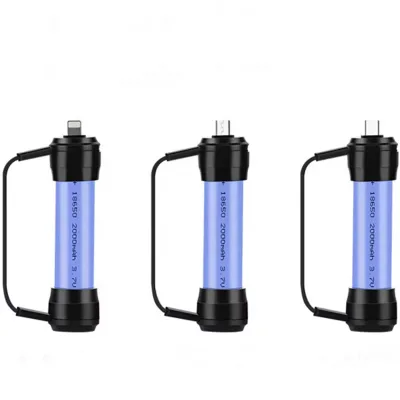


High Quality Fast Charger Portable Slim Power Outdoor Travel Power Bank
$10.00 - $15.00
MOQ: 500 Pieces


Comprehensive Sourcing Guide
CE RoHS Portable Power Bank Sourcing Guide
Buyers must first distinguish between consumer-grade portable power banks and industrial EV charging stations, as the market data reveals a wide spectrum of product capabilities under this keyword. The observed listings include compact units with 18650 Lithium-ion cells designed for mobile phones, featuring clip-style carrying and digital displays, alongside heavy-duty Level 3 DC Fast Charger stations capable of 60kw to 360kw output for electric vehicles. This divergence requires precise definition of the intended application before engaging with suppliers, as the technical requirements for a 12000mAh phone charger differ fundamentally from those of a stationary EV charging station.
Procurement teams should verify the specific product model and capacity range to ensure alignment with the intended use case, noting that observed capacities span from 8001 to 12000mAh for portable units while industrial chargers list output power in kilowatts. The presence of CE and RoHS certifications across both categories suggests a baseline compliance expectation, yet the physical form factors vary significantly, with some units described as slim and others as large stationary installations. Clarifying whether the need is for a personal device or a commercial charging infrastructure solution is the critical first step in filtering the available inventory effectively.
Product Scope and Observed Listing Signals
The product scope encompasses a diverse array of items ranging from small, non-recyclable power banks with one charging interface to complex EV charging systems supporting multiple connector types like Chademo, CCS, and GB/T. Buyers should observe that while some units are designed for private use with standard packing, others are engineered for commercial deployment with options for RFID billing systems and OCPP communication protocols. This variation indicates that the keyword covers both B2C consumer electronics and B2B industrial equipment, necessitating a clear distinction in the initial sourcing request to avoid receiving irrelevant quotations.
Listing signals such as "Fast Charging," "Quick Charge," and "Digital Display" are common attributes for the smaller mobile units, whereas terms like "Mode 4 Ultra DC Rapid EV Charger" and "Stationary Installation" point toward the larger infrastructure products. The observed price range of 2.2 to 20000 USD reflects this disparity, with the lower end likely corresponding to basic portable chargers and the higher end to full-scale charging stations. Sourcing teams must carefully parse these signals to identify the correct product tier, ensuring that the requested specifications match the actual operational needs of the project rather than generic marketing terms.
Technical Specifications to Verify
Technical verification must begin with the battery chemistry and capacity, as the data confirms the use of 18650 Lithium-ion cells and LFP cathode materials in different product lines. Buyers should confirm the specific voltage and ampere-hour ratings, such as the 3.2V 314ah specification observed for larger units, to ensure the energy storage meets the required runtime for the intended application. It is essential to validate whether the battery is removable or integrated, as the observed listings indicate a mix of non-removable designs for consumer devices and potentially serviceable configurations for industrial stations.
The charging interface and output capabilities require rigorous scrutiny, particularly regarding the number of charging interfaces and the supported plug types. For mobile applications, the focus is on compatibility with brands like iPhone and the presence of LED lighting or digital displays, while EV charging solutions demand verification of output power ranging from 60kw to 360kw and support for protocols like OCPP. Buyers must also check the physical dimensions and weight, noting that some units are compact while others, such as the BC220 model, have substantial dimensions and weigh over 10kg, which impacts logistics and installation planning.
Compliance and Safety Documentation
Compliance verification is paramount, with CE and RoHS certifications appearing as high-confidence facts across the observed product range. Buyers should request valid test reports and certificates of conformity to confirm that the specific batch of products meets these safety and environmental standards, rather than relying solely on the supplier's claim. The presence of these certifications is a baseline requirement, but the documentation must be current and issued by accredited bodies to ensure legal market access in target regions like Europe and the USA.
Safety documentation must also address the specific risks associated with the product type, such as thermal management for high-capacity batteries or electrical safety for high-voltage EV chargers. While the observed data lists certifications, it does not provide specific test results or failure rates, so buyers must insist on detailed safety data sheets and risk assessments. For industrial units, additional compliance with local grid standards and installation regulations is necessary, as the observed suitability for Europe and USA markets implies adherence to regional electrical codes beyond the general CE and RoHS marks.
Cost Drivers and Commercial Terms
Cost drivers are heavily influenced by the product category, with the observed price range spanning from 2.2 USD for basic units to 20000 USD for advanced charging stations. The primary cost factors include battery capacity, the complexity of the charging technology, and the inclusion of optional features like digital displays, RFID billing systems, or advertisement modules. Buyers should analyze the unit price against the total cost of ownership, considering that higher-capacity or faster-charging models will inherently command a premium due to the advanced components and manufacturing processes involved.
Commercial terms such as Minimum Order Quantity (MOQ) and lead times vary significantly, with observed MOQs ranging from 2 to 2000 units depending on the product type. Customization is available for many items, which can impact both the unit price and the production timeline, requiring careful negotiation to balance cost with specific branding or functional requirements. Buyers must clarify the payment terms and shipping conditions, as the large size and weight of some industrial units may incur additional logistics costs that are not reflected in the base product price.
Supplier Qualification and Quality Control
Supplier qualification should focus on the ability to provide consistent quality for both consumer and industrial products, given the wide range of specifications observed. Buyers must verify the supplier's manufacturing capabilities, including their experience with Lithium-ion battery assembly and high-power EV charging station production. It is crucial to assess whether the supplier can handle the customization requests noted in the data, such as specific packing dimensions or branding, without compromising the structural integrity or safety of the product.
Quality control processes must be robust, especially for products with high energy density or high output power. Buyers should request evidence of in-house testing procedures and quality assurance protocols that align with the observed certifications. For industrial units, the warranty period of 12 months observed in the data is a baseline, but suppliers should be evaluated on their after-sales support and ability to handle potential failures or maintenance issues. Establishing a clear quality agreement that defines acceptable defect rates and response times is essential for mitigating supply chain risks.
Long-Term Procurement Checks
Long-term procurement checks should include regular audits of the supplier's quality management systems and supply chain stability to ensure consistent product availability. Buyers must monitor the supplier's ability to maintain the observed certifications and standards over time, as regulatory requirements can evolve and impact product compliance. Establishing a schedule for periodic product testing and performance reviews will help identify any degradation in quality or deviations from the initial specifications before they become critical issues.
Sustainability and end-of-life management are also critical considerations, particularly given the observation that some products are marked as non-recyclable. Buyers should engage suppliers on their plans for battery disposal and recycling to ensure compliance with future environmental regulations. Additionally, tracking the performance of the products in the field, such as battery cycle life and charging efficiency, will provide valuable data for future procurement decisions and help refine the technical specifications for subsequent orders.
FAQs
What certifications do these portable power banks have?
These portable power banks hold CE and RoHS certifications, ensuring compliance with European safety and environmental standards. This makes them suitable for international distribution and retail in regulated markets. Buyers can verify these credentials to meet local import requirements and ensure product safety for end-users.
Can I customize the design of the power bank?
Yes, customization is available for these units, allowing buyers to tailor features or branding. This service supports private labeling and specific functional adjustments. Buyers should contact suppliers directly to discuss design parameters and minimum order quantities for customized production runs.
What is the battery capacity range for these devices?
The capacity ranges from 8001 to 12000mAh, providing substantial power for mobile devices. This range supports extended usage for smartphones and tablets. Buyers seeking higher or lower capacities should verify specific model specifications with suppliers to ensure compatibility with their target market needs.
How is the power bank charged and displayed?
The device uses electric charging and features a digital display for status monitoring. This allows users to track battery levels accurately. The display enhances user experience by providing real-time data, which is a key selling point for tech-savvy consumers in competitive retail environments.
What is the typical packaging and origin for these items?
These power banks originate from China and use standard packaging for shipping. The standard packing ensures safe transit and easy handling for bulk orders. Buyers should confirm packaging dimensions and weight with suppliers to optimize logistics costs and ensure efficient warehouse storage upon arrival.