Source CE Towel Paper Making Machine for Tissue, Toilet, and Napkin Production
Explore 30 verified listings for the CE Towel Paper Making Machine designed for household paper production. Buyers can compare specifications like production speed, automation levels, and paper thickness capabilities to find the right equipment for their facility.
Key considerations
Products List


Best Toilet Paper Machine Tissue Paper Making Machine Manufacturers
$50000.00 - $350000.00
MOQ: 1 Pieces
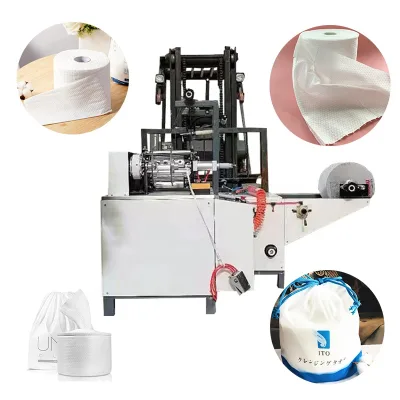
Face Hand Towel Tissue Paper Making Machine Cotton Bath Towel Making Machines
$3875.62 - $4028.61
MOQ: 1 sets


Three Lanes Automatic Facial Tissue Machine Hand Towel Making Machine
$9500.00 - $12000.00
MOQ: 1 Sets


Comprehensive Sourcing Guide
Strategic Sourcing Guide for CE-Certified Towel Paper Making Machines
Understanding the Technical Landscape of Towel Paper Production
The procurement of a CE Towel Paper Making Machine requires a deep understanding of the specific technical configurations available in the current market. These machines are not monolithic units but rather complex systems designed to convert jumbo rolls of raw paper into finished household products like toilet paper, facial tissue, and paper towels. The core functionality revolves around the transformation of raw material into a usable form through a series of mechanical processes including creping, embossing, slitting, and folding.
When evaluating the technical specifications of these machines, buyers must look beyond the basic "paper machine" label. The production process often begins with the processing of jumbo roll paper, which comes in specific widths such as 460mm, 690mm, 920mm, and 1150mm. The inner core diameter of these jumbo rolls is typically standardized at 76.2mm, though availability of other sizes should be confirmed. The machine's ability to handle these varying dimensions is critical for operational flexibility.
A key technical differentiator is the sheet former type. Many high-capacity units utilize a cylinder mould system, which is essential for creating the structural integrity required for tissue products. The automation level is another significant factor; modern units are predominantly automatic, utilizing programmable logic controllers (PLC) for precise operation. This automation extends to the transmission unit, where timing belts and flat belts are commonly employed to ensure smooth material flow.
The folding mechanism is particularly vital for towel paper production. The industry standard often involves a vacuum suction "N" fold, which creates the characteristic accordion-like pleats found in commercial and household paper towels. The unfolded size of the finished product is a critical specification, with common dimensions around 230mm x 230mm, though manufacturers often offer customization for other sizes. Similarly, the folded size, typically around 76.6mm x 230mm, must align with the specific packaging requirements of the end user.
Production speed varies significantly based on the machine model. Some configurations operate at speeds ranging from 0 to 100 meters per minute, while high-speed variants can reach 200 to 230 meters per minute. The output capacity is also a major consideration, with some units capable of producing 10 tons per day (10t/D) and others scaling up to 15 tons per day. The paper weight range supported by these machines generally spans from 10 to 60 grams per square meter (GSM), allowing for the production of both thin and normal specification papers.
Compliance and Certification Verification Protocols
In the global B2B market, compliance with international safety and quality standards is non-negotiable, particularly for machinery exported to or operating within the European Union. The core keyword "CE" refers to the Conformité Européenne, a mandatory certification indicating that a product meets EU safety, health, and environmental protection requirements. For a towel paper making machine, the presence of the CE mark is a primary indicator of compliance.
Buyers must verify that the CE certification is not merely a claim on a brochure but is supported by the necessary technical documentation. The provided data confirms that CE certification is a high-confidence attribute for these machines. However, the verification process should extend beyond the label. Buyers should request the Declaration of Conformity and ensure that the machine's electrical components, safety guards, and emergency stop mechanisms adhere to the relevant EU Directives.
While the CE mark is the primary focus, other certifications may be relevant depending on the target market. Background information suggests that RoHS (Restriction of Hazardous Substances) compliance is often associated with such machinery, indicating that the equipment does not contain specific hazardous materials. Additionally, ISO 9001 standards, such as versions 2000 and 2008, are frequently cited in the industry as indicators of a manufacturer's quality management system. While these standards relate to the manufacturer's processes rather than the machine's direct safety, they provide assurance regarding the consistency of production and quality control.
It is crucial to distinguish between certifications that apply to the machine itself and those that apply to the manufacturer. A machine may carry a CE mark because it was designed to meet specific safety directives, whereas an ISO certification applies to the company's management systems. Buyers should not assume that a CE mark implies ISO certification or vice versa. The verification process should involve a direct request for the specific certificates relevant to the machine model being purchased.
Furthermore, the "standard" attribute of the machine can vary. Some units may adhere to a "depend on the model" standard, while others might offer "customize service" standards. This variability underscores the need for buyers to explicitly define their compliance requirements in the purchase order. If the machine is intended for a specific region with unique regulatory frameworks, the buyer must ensure that the CE certification covers those specific regional nuances.
Cost Drivers and Pricing Structure Analysis
The pricing of towel paper making machines is influenced by a complex array of factors, ranging from the level of automation to the specific production capacity required. The observed price range in the market spans from approximately $2,567 to $1,500,000. This vast disparity indicates that the cost is not linear but rather exponential based on the machine's capabilities and complexity.
The primary cost driver is the production capacity. Machines capable of producing 15 tons per day will naturally command a higher price than those limited to 10 tons per day. The speed of operation is another significant factor; high-speed machines operating at 200-230 meters per minute require more robust engineering and advanced control systems, which increases the manufacturing cost. The inclusion of advanced features such as frequency conversion speed regulators and PLC computer controllers also adds to the overall price.
Customization is a major variable in the pricing structure. While the base price might be lower for standard models, the cost increases when buyers request specific modifications. Attributes such as "Can Be Custom" for color printing and "Customized" for the machine itself suggest that bespoke solutions are available. These customizations often involve unique folding patterns, specific dimensions for the finished product, or specialized packing configurations. The "Standard Export Packing Wooden Case" is a common requirement, but if a buyer requires a specific packing standard, this could incur additional costs.
The material grade of the machine is another consideration. The "Automatic Grade" and the use of high-quality components like pneumatic DOT slitting units contribute to the durability and efficiency of the machine, which is reflected in the price. Machines with "New" condition status and "Polishing" surface treatments are generally priced higher than refurbished or standard finish units.
It is important to note that the Minimum Order Quantity (MOQ) for these machines is typically 1 unit. This means that buyers can purchase a single machine without needing to commit to a bulk order, which is beneficial for small to medium-sized enterprises. However, the high-end of the price range suggests that these are capital-intensive assets. Buyers should budget not only for the machine cost but also for installation, training, and potential spare parts, which are often included in the "Best Selling" competitive price packages but should be explicitly confirmed.
Typical Applications and Product Versatility
Towel paper making machines are designed with versatility in mind, capable of producing a wide range of household and commercial paper products. The primary applications include the manufacturing of toilet paper, facial tissue, and paper towels. The specific output depends on the configuration of the machine, particularly the folding and embossing units.
The "Tissue Type" attribute often specifies "Pull Out" tissue, which is a common format for commercial dispensers and household use. The "Embossing Type" is typically "Full-Embossing," which enhances the softness and bulk of the final product. This embossing process is critical for creating the texture that consumers expect from high-quality paper towels and toilet paper. The "Tissue Packaging" is usually done in bags, which requires the machine to integrate seamlessly with packaging lines or to produce rolls that are easily bagged.
The "Usage" of these machines is explicitly defined as "Household Paper Machine," indicating their primary role in the consumer goods sector. However, the capacity to produce 10 to 15 tons per day suggests that these machines can also serve larger commercial needs, such as supplying hotels, hospitals, and office buildings. The "Output Paper" specification confirms that the machines can produce both tissue paper and toilet paper, making them highly adaptable for different product lines.
The ability to handle different paper thicknesses, from "Thin Paper" to "Normal Specification Paper," allows manufacturers to produce a variety of product grades. This flexibility is essential for businesses that need to cater to different market segments, from budget-friendly options to premium, multi-ply products. The "Folding Type" of "Vacuum Suction N Fold" is particularly suited for creating the pleated structure of paper towels, which is a key selling point in the market.
Furthermore, the "Unfold Size" and "Folded Size" specifications allow for the production of various product dimensions. For instance, the standard 230mm x 230mm unfolded size can be adjusted to meet specific customer requirements. This adaptability ensures that the machine can remain relevant even as market trends shift towards different product sizes or shapes.
Supplier Evaluation and Selection Criteria
Selecting the right supplier for a CE Towel Paper Making Machine is a critical step that goes beyond simply comparing prices. Buyers must evaluate suppliers based on their technical expertise, manufacturing capabilities, and after-sales support. The "prod_origin" of Fujian, China, is a common location for these machines, indicating a concentration of manufacturing expertise in this region. However, the specific origin should be verified for each supplier to ensure it matches the buyer's expectations regarding logistics and quality.
One of the key evaluation criteria is the supplier's ability to provide customization. The "Customization" and "Customized" attributes suggest that suppliers should be willing to tailor the machine to the buyer's specific needs. This includes adjusting the folding mechanism, modifying the dimensions, or integrating specific control systems. Buyers should ask for case studies or examples of previous customizations to gauge the supplier's flexibility.
The "Condition" of the machine is another important factor. Most suppliers offer "New" machines, but buyers should verify the warranty terms and the availability of spare parts. The "Surface Treatment" of "Polishing" indicates a focus on quality and finish, which can be a proxy for the overall build quality of the machine.
Suppliers should also demonstrate a commitment to quality control. The "Standard" attribute, which can be "Depend on the model" or "Customize service," highlights the need for clear communication regarding the standards that will be applied to the machine. Buyers should request a detailed quality assurance plan that outlines the testing procedures and inspection protocols used during the manufacturing process.
The "Packing" method is also a consideration. Whether the machine is packed in a "Wooden Case," "Wooden Pallet," or "Standard Export Packing Wooden Case" can impact the safety of the shipment. Buyers should ensure that the packing is robust enough to protect the machine during transit, especially for international shipments.
Finally, the supplier's reputation and track record should be assessed. While specific supplier names should not be recommended, buyers can look for indicators of reliability such as the number of years in business, the range of models offered, and the availability of technical support. The "Best Selling" attribute suggests that some models are more popular, which can be an indicator of market acceptance and reliability.
Quality Control and Long-Term Procurement Considerations
Ensuring the quality of a towel paper making machine is essential for maintaining operational efficiency and minimizing downtime. Quality control should begin at the supplier level, where the manufacturing process is rigorously monitored. The "Process" of the machine, often described as a "Paper Machine," involves multiple stages of assembly and testing. Buyers should request a comprehensive quality control report that details the results of these tests.
The "Power" system, which often includes a "Frequency Conversion Speed Regulator," is a critical component that affects the machine's performance. Buyers should verify that the power system is designed to handle the specific load requirements of the production line. The "Programmable Controller" (PLC) is another key component that ensures precise control over the machine's operations. Buyers should ensure that the PLC is user-friendly and capable of being programmed to meet specific production needs.
Long-term procurement considerations include the availability of spare parts and the supplier's ability to provide maintenance support. The "Transmission Unit," which uses timing belts and flat belts, is subject to wear and tear. Buyers should inquire about the expected lifespan of these components and the cost of replacements. The "Slitting Unit," which is often pneumatic, also requires regular maintenance to ensure accurate cutting.
The "Capacity" of the machine, whether 10t/D or 15t/D, should be matched to the buyer's production needs. Overloading a machine can lead to premature wear and increased maintenance costs. Buyers should also consider the "Paper Weight" range, ensuring that the machine can handle the specific weights of the paper they intend to use.
Finally, the "Standard" of the machine should be aligned with the buyer's long-term goals. If the buyer plans to expand their product line or increase production capacity, they should choose a machine that offers scalability. The "Customize service" attribute suggests that suppliers may be able to upgrade the machine in the future, which is a valuable consideration for long-term procurement.
Comparative Analysis of Machine Specifications
To facilitate a clearer understanding of the differences between various towel paper making machines, the following table summarizes the key specifications observed in the market. This comparison highlights the variability in capacity, speed, and customization options.
| Feature | Specification A | Specification B | Specification C |
|---|---|---|---|
| Model | 300x300 | JORI-400 | Xy-Bt-288n |
| Capacity | 10t/D | 15t/D | Variable |
| Production Speed | 0-100m/Min | 200-230m/Min | 400 Sheets/Line/Min |
| Paper Thickness | Thin Paper | Normal Specification | 10-60GSM |
| Folding Type | Vacuum Suction "N" Fold | Vacuum Suction "N" Fold | Vacuum Suction "N" Fold |
| Automation | Automatic | Automatic | Automatic |
| Control System | PLC Computer Controller | PLC Computer Controller | PLC Computer Controller |
| Packing | Wooden Case | Wooden Pallet | Standard Export Packing |
| Origin | Fujian, China | China | China |
| Customization | Available | Available | Customized |
This table illustrates that while the core technology (PLC control, automatic operation, vacuum suction folding) remains consistent across different models, the capacity and speed vary significantly. Buyers should use this information to select a machine that best fits their production requirements and budget constraints. The "Model" variations indicate that there are multiple configurations available, each tailored to specific needs. The "Packing" differences highlight the importance of logistics planning, as different models may require different shipping arrangements.
In conclusion, sourcing a CE Towel Paper Making Machine requires a comprehensive approach that balances technical specifications, compliance requirements, cost considerations, and long-term operational needs. By carefully evaluating these factors, buyers can make informed decisions that ensure the successful integration of the machine into their production line.
FAQs
What certifications do CE towel paper making machines have?
These machines carry CE certification, indicating compliance with EU safety standards. Some models may also reference ISO 9001 standards for quality management, though the CE mark is the primary safety indicator for the equipment itself.
How fast can these automatic paper machines operate?
Production speeds vary by model, ranging from 0 to 100 meters per minute for standard units. High-speed variants can reach 200 to 230 meters per minute, with some lines producing up to 400 sheets per minute depending on the configuration.
Which paper thicknesses are supported by these machines?
The machines handle paper weights from 10 to 60 grams per square meter. They are capable of processing both thin paper and normal specification paper, allowing for versatile production of different tissue grades.
Can the machine dimensions be customized for specific needs?
Yes, customization is available for various product dimensions and folding types. Buyers can request specific unfolded sizes like 230 by 230 millimeters or other variations, along with custom packing solutions such as wooden cases.
What is the typical daily output capacity of these units?
Daily output capacity ranges from 10 tons per day to 15 tons per day depending on the model. This capacity allows the machines to serve both small household paper production needs and larger commercial requirements.
How are these machines packed for shipping from China?
Machines are typically packed in wooden cases or on wooden pallets with plastic film. Standard export packing is used, but specific packing requirements can often be customized to meet the buyer's logistical needs.