Source Edible Rice Straw Making Machine for Snacks, Pasta, and Starch
Source the Edible Rice Straw Making Machine from 30 verified listings. Compare twin-screw extruder models with capacities up to 350kg/h, CE certifications, and stainless steel construction to find the right supplier for your production needs; compare the available evidence and request quotations based on your requirements.
Key considerations
Products List


Edible Rice Straws Extruder Machine Natural Rice Drinking Straw Making Machine
$22000.00 - $24000.00
MOQ: 1 Sets


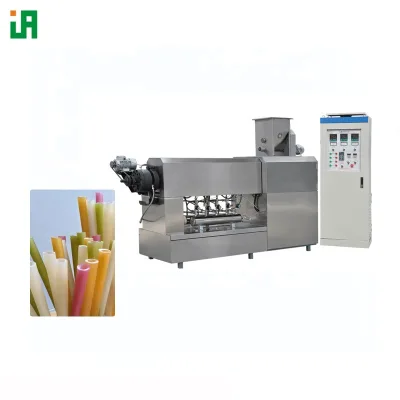
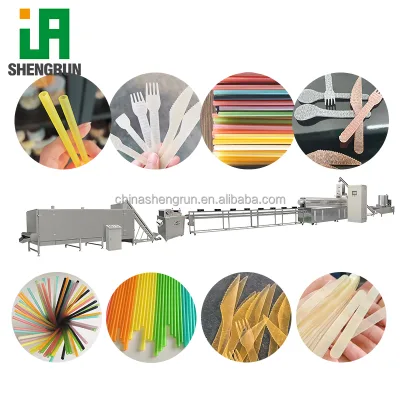
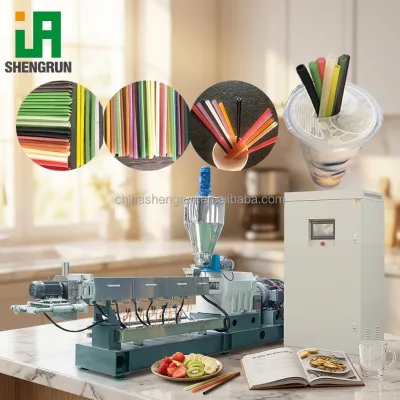


Natural Biodegradable Edible Rice Drinking Straws Eco-Friendly Rice Straw Machine
$7000.00 - $30000.00
MOQ: 1 Pieces


$20000.00 - $50000.00
MOQ: 1 Sets


Automatic Edible Rice Straws Drinking Making Production Line Machinery
$10000.00 - $34000.00
MOQ: 1 Pieces
Comprehensive Sourcing Guide
Edible Rice Straw Making Machine Sourcing Guide
Buyers evaluating edible rice straw making machines must first distinguish between extrusion technologies designed for starch-based snacks versus those intended for agricultural byproduct processing. The observed listings indicate a focus on twin-screw extruders capable of handling raw materials like rice flour, tapioca starch, corn starch, and wheat starch. This distinction is critical because the mechanical shear and thermal conditions required to transform starch into a porous, straw-like texture differ significantly from standard feed pellet production. Procurement teams should verify that the specific model selected aligns with the intended final product texture and density requirements before committing to a purchase order.
The market data reveals a wide variance in output capacity, ranging from 100 kg/h to 350 kg/h, which directly influences the scale of production lines and facility footprint. While some listings suggest capacities up to 350 kg/h, others specify narrower ranges like 100-200 kg/h or 300-400 kg/h, necessitating a precise match between supplier claims and actual production needs. Buyers should carefully cross-reference the stated output with the installed power consumption, as higher capacity units often require significantly more energy, typically ranging from 60 kW/h to 80 kW/h or higher depending on the specific configuration.
Product Scope and Observed Listing Signals
When reviewing product listings, buyers should prioritize machines that explicitly list the screw material as 38CrMoA or similar high-grade alloy steel, as this directly impacts the durability and wear resistance of the extrusion process. The observed data confirms that many units utilize stainless steel for contact parts, which is essential for maintaining food safety standards during the manufacturing of edible rice straw products. It is vital to confirm that the raw material compatibility includes the specific starches available in your supply chain, such as corn or wheat starch, to ensure the machine can process your ingredients without clogging or excessive wear.
The automation level and operator requirements are significant factors in your operational planning, with listings indicating a need for one to two operators per machine. This labor requirement must be factored into your total cost of ownership calculations alongside the electricity, gas, or fuel energy sources required for operation. Additionally, the availability of customization options for voltage and mold configurations, such as the six-pan options mentioned in some listings, allows for greater flexibility in adapting the machine to specific product shapes and local electrical infrastructure standards.
Technical Specifications to Verify
Technical due diligence must begin with a rigorous verification of the extruder type and screw design, as the twin-screw configuration is standard for achieving the necessary mixing and cooking of starch-based raw materials. Buyers should request detailed dimensional drawings to confirm the physical footprint, as observed dimensions can vary significantly from 2000050002200mm to smaller configurations like 26001900900mm. Ensuring the machine fits within your existing facility layout is a prerequisite for installation, and the weight of approximately 3 tons per unit must be accounted for in your floor loading calculations and foundation requirements.
The electrical system specifications require close attention, particularly regarding the brand of electric parts and motors, with ABB, Omron, and Siemens being common high-reliability brands observed in the market. Buyers must verify that the installed power rating matches the grid capacity of their facility and that the voltage can be customized to local standards if the machine is imported. Furthermore, the energy consumption rates, which may range from 60 kW/h to 80 kW/h, should be validated against actual production runs to ensure the machine operates efficiently without excessive utility costs during peak production periods.
Compliance and Safety Documentation
Compliance verification is paramount when sourcing food processing equipment, and buyers should demand a complete set of certifications including CE, ISO, and potentially SGS or CCC depending on the target market. The presence of multiple certifications such as CE, ISO9001, and RoHS in the observed data suggests a higher standard of manufacturing, but these documents must be current and applicable to the specific model being purchased. It is essential to request the original inspection reports and machine test reports to confirm that the equipment has been validated for safety and performance before it leaves the factory.
Safety documentation must also include clear instructions for the installation and operation of the machinery, particularly regarding the high temperatures and pressures involved in the extrusion process. Buyers should verify that the supplier provides a comprehensive manual detailing the maintenance schedule for critical components like the screws and barrels, which are subject to significant wear. Ensuring that the machine meets all relevant food safety standards is non-negotiable, and the absence of valid certification documents should be treated as a critical red flag that halts the procurement process immediately.
Cost Drivers and Commercial Terms
The pricing structure for edible rice straw making machines is influenced heavily by the capacity, material quality, and level of automation, with observed ranges spanning from $500 to $80,000 USD. This wide variance indicates that buyers must clearly define their budget constraints and production volume needs to avoid overpaying for unnecessary features or underestimating the cost of a robust, high-capacity unit. The minimum order quantity (MOQ) appears to be flexible, often starting at a single unit, which allows for smaller-scale operations to enter the market without significant capital commitment.
Commercial terms should explicitly address the warranty period, which is typically one year for these types of industrial extruders, and the scope of after-sales service provided. Buyers should negotiate for on-site service at the customer factory and ensure that engineers are available to service machinery overseas if the equipment is imported. The packaging method, often a standard wooden case or plywood case, is also a cost factor that affects shipping and handling, and it must be sufficient to protect the heavy machinery during international transit.
Supplier Qualification and Quality Control
Supplier qualification requires a thorough assessment of their production capacity and track record, with some manufacturers reporting a monthly production of 35 sets per month. This capacity figure helps buyers gauge the supplier's ability to meet delivery timelines and scale up production if your order volume increases. It is advisable to request a factory online show or video consultation to verify the manufacturing environment and the quality of the assembly process, as visual inspection of the production line provides insights that written specifications cannot convey.
Quality control protocols should be verified through the supplier's patent portfolio and their history of providing inspection reports for their machinery. A supplier with 17 items in their patent portfolio may indicate a higher level of innovation and technical expertise, which can translate to better machine performance and longevity. Buyers should also check if the supplier has established show rooms in key markets like India, Turkey, or Iran, as this demonstrates a commitment to international sales and the ability to support clients in different regions.
Long-Term Procurement Checks
Long-term procurement success depends on establishing a reliable supply chain for spare parts and ensuring that the machine remains operational for years of continuous use. Buyers should verify the availability of critical components like screws and molds, which are subject to wear and tear, and confirm that the supplier can provide replacements quickly to minimize downtime. The warranty period of one year is a starting point, but buyers should negotiate extended service agreements or maintenance contracts to cover the long-term lifecycle of the equipment.
Finally, buyers must plan for the ongoing training and support required to keep their operators proficient in using the machinery. The requirement for one to two operators per machine means that staff turnover or training gaps can significantly impact production efficiency. Establishing a clear communication channel with the supplier for technical support and troubleshooting is essential, especially given the complexity of twin-screw extrusion processes and the need for precise parameter adjustments to maintain product quality over time.
FAQs
What certifications do these machines have?
These machines hold CE, ISO, and SGS certifications. Some models also include RoHS and CCC marks. This ensures compliance with international safety and quality standards for industrial food processing equipment used in starch extrusion.
What is the production capacity range?
The output capacity ranges from 100kg/H to 350kg/H depending on the specific model selected. Options include 100-200kg/H or 200-300kg/H configurations. This allows buyers to match production volume with their operational scale.
Can the machine handle different raw materials?
Yes, the extruder processes various starches including rice flour, tapioca starch, corn starch, and wheat starch. The twin-screw design ensures consistent extrusion for diverse raw material inputs, making it versatile for different edible product formulations.
What is the warranty and after-sales service?
The machine comes with a 1-year warranty. After-sales support includes customer factory on-site service and engineers available to service machinery overseas. This ensures long-term operational reliability and technical assistance for international buyers.
How many operators are needed for automation?
The system requires only 1-2 operators for full automation. This low labor requirement reduces operational costs. The control system utilizes high-quality electric parts from brands like ABB, Omron, and Siemens for precise management.
What is the standard packaging method?
The machine is packed in standard wooden cases or plywood cases. This robust packaging protects the equipment during international shipping. The standard dimensions are approximately 2600*1900*900mm or larger depending on the specific model configuration.