Source CNC Bridge Stone Cutting Machine for Marble, Granite, and Concrete
Explore 30 listings for the CNC Bridge Stone Cutting Machine designed for marble, granite, and concrete curb processing. Buyers can compare specifications like cutting thickness, spindle power, and automation levels to find suitable machinery for stone industry applications.
Key considerations
Products List


CNC Stone Bridge Cutting Machine Automatic 5 Axis Stone Cutting Machine
$15000.00 - $40000.00
MOQ: 1 set

Bridge Type Middle Block Cutting Machine Low Noise High Efficiency Stone Cutting Machine
$16000.00 - $20000.00
MOQ: 1 set


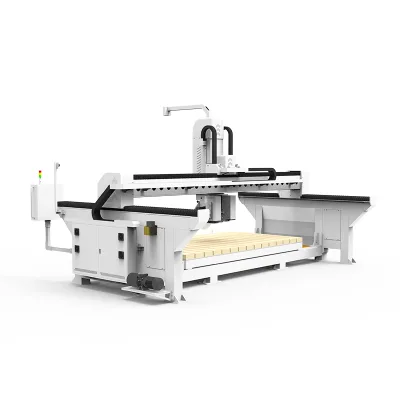
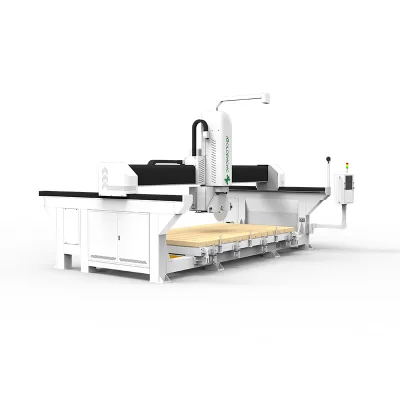
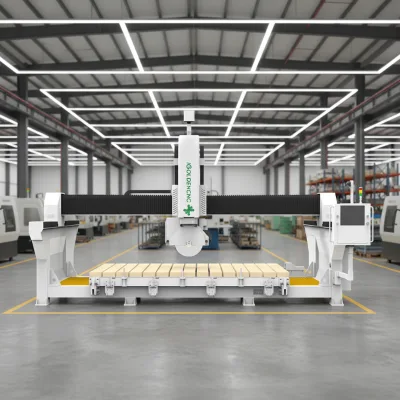


$13000.00 - $17000.00
MOQ: 1 Pieces

$13000.00 - $17000.00
MOQ: 1 Pieces

$13000.00 - $17000.00
MOQ: 1 Pieces

$13000.00 - $15000.00
MOQ: 1 Pieces

$13000.00 - $15000.00
MOQ: 1 Pieces
Comprehensive Sourcing Guide
Strategic Sourcing Guide for CNC Bridge Stone Cutting Machines
The global demand for precision stone processing has elevated the CNC Bridge Stone Cutting Machine from a niche tool to a central asset in modern construction and stone industry operations. For procurement professionals, navigating the market requires a disciplined approach that separates marketing narratives from verifiable technical realities. This guide synthesizes observed market data and established industry standards to provide a framework for evaluating potential suppliers and selecting machinery that aligns with specific production requirements. The focus remains strictly on factual attributes, observable specifications, and compliance verification protocols rather than unverified claims.
Technical Specifications and Operational Capabilities
When evaluating a CNC Bridge Stone Cutting Machine, the primary objective is to match the machine's physical capabilities with the intended material profile. The market presents a diverse range of specifications, particularly regarding cutting thickness and table dimensions. Buyers must distinguish between models designed for standard slab processing and those built for heavy-duty curb or brick production. Observed data indicates that cutting thickness capabilities vary significantly, with some configurations supporting a range of 0 to 60 mm, while others are engineered to handle materials up to 210 mm in thickness. This variance dictates the machine's suitability for specific tasks, such as thin tile fabrication versus deep cutting for concrete curbs or fire bricks.
The worktable size is another critical dimension that influences production throughput. A standard large-format worktable observed in the market measures 3200 by 2000 mm, providing ample space for processing large stone slabs without the need for frequent repositioning. In contrast, smaller or specialized units may have different footprint requirements. The motion system also plays a pivotal role in efficiency; high-speed models are capable of running at 25 meters per minute, a figure that directly impacts the cost-per-unit in high-volume environments.
Spindle power is a fundamental driver of cutting performance. The market offers units with spindle power ranging from 11 to 15 kW for lighter applications, while heavy-duty models utilize spindles between 18.5 and 30 kW to maintain cutting speed and precision in harder materials like granite or jadestone. Furthermore, the control system is predominantly CNC-based, often supported by advanced software solutions such as CAD/CAM integration, which allows for complex design execution. Some advanced configurations feature multi-axis capabilities, including head tilting from 0 to 90 degrees and head rotation up to 360 degrees, enabling intricate 3D carving and angled cuts. The guide rail system, typically utilizing linear guides, ensures the stability and accuracy required for these complex operations.
Compliance, Certification, and Material Standards
Navigating the regulatory landscape is essential for international procurement. While specific certification statuses can vary by manufacturer, the market frequently references compliance with major international standards. Buyers should verify that the machinery carries recognized certifications such as CE and ISO, which are common indicators of adherence to safety and quality protocols. Some suppliers may also list compliance with RoHS standards, indicating restrictions on hazardous substances, or specific ISO standards like ISO9001 for quality management systems.
In addition to machine certifications, the materials processed often dictate the need for adherence to specific industry standards. The machinery is designed to handle materials that must meet various national and international benchmarks, including BS, ANSI, JIS, GB, GOST, ASTM, and DIN. When sourcing equipment for metal processing parts or specific stone applications, verifying that the machine's output tolerances align with these standards is crucial. For instance, precision machining of steel alloy parts may require tolerances as tight as 0.01 mm, a capability that must be validated through the machine's technical documentation rather than assumed.
It is important to note that while some background information suggests ISO 9001:2015, procurement teams should treat this as a verification target rather than a guaranteed attribute of every listing. The buyer's responsibility is to request current, valid certificates from the supplier and cross-reference them with the issuing body. Similarly, while electrical components from reputable brands like Siemens are often cited as a standard feature, this should be confirmed in the specific bill of materials for the order, as component sourcing can vary.
Cost Drivers and Economic Factors
The price of a CNC Bridge Stone Cutting Machine is influenced by a complex interplay of factors, resulting in a wide observed market range from approximately 2.3 USD to 135,000 USD. This disparity is not indicative of quality tiers alone but reflects differences in machine size, automation level, spindle power, and the inclusion of advanced features like camera systems for photoing functions or Italy-based programming software. The minimum order quantity (MOQ) also varies, with some suppliers offering units at an MOQ of 1, while others may require orders of 100 units, though single-unit purchases are common for industrial machinery.
Water consumption is a significant operational cost driver that buyers must account for. Certain high-performance models are observed to consume approximately 3 cubic meters of water per hour, which impacts long-term utility costs and requires adequate water recycling or disposal infrastructure at the facility. Additionally, the transportation method, typically via truck or container, adds logistical costs that vary based on the machine's dimensions and weight. The origin of the machine, whether from Quanzhou, Qingdao, or other manufacturing hubs in Shandong China, can influence shipping times and freight costs.
The customization level is another major cost variable. While many machines are available in standard configurations with a blue and grey color scheme, the availability of customizations allows buyers to tailor the machine to specific workflow needs. However, custom orders often incur higher costs and potentially longer lead times. Buyers should carefully evaluate whether the premium for customization provides a tangible return on investment through increased efficiency or reduced material waste.
Typical Applications and Material Versatility
The versatility of the CNC Bridge Stone Cutting Machine is one of its most compelling attributes, allowing it to serve multiple sectors within the stone and construction industries. The primary application areas include the stone industry, general construction, and machinery & hardware sectors. The machine's ability to process a wide array of materials makes it a versatile asset for workshops that handle diverse orders.
Observed usage data confirms that these machines can effectively cut marble, granite, concrete curbs, cement bricks, jadestone, red bricks, fire bricks, and ceramics. Some advanced models extend this capability to include glass, further broadening their utility. The specific application often dictates the required configuration; for example, cutting concrete curbs and cement bricks may require the higher spindle power and thicker cutting capacity found in the 0-210 mm range models, whereas processing thin ceramic tiles or marble slabs might be better suited to the 0-60 mm range with high-speed capabilities.
The machine's application in metal processing machinery parts also highlights its precision capabilities. While primarily designed for stone, the high tolerance levels and CNC control allow for the processing of metal components, provided the tooling is appropriate. This multi-material capability reduces the need for multiple specialized machines, consolidating production lines and reducing floor space requirements.
Supplier Evaluation and Quality Assurance
Selecting a reliable supplier is as critical as selecting the right machine. Buyers should prioritize suppliers who provide transparent technical documentation and are willing to undergo a rigorous verification process. Key evaluation criteria include the supplier's ability to provide proof of certifications, the origin of the machine, and the specific standards they adhere to. For instance, a supplier claiming compliance with ISO9001 should be able to produce a valid certificate, and a claim regarding the use of Siemens electrical parts should be verifiable in the product specifications.
Quality control measures should be embedded in the procurement process. Buyers must verify the condition of the machine, which is typically listed as "New," and ensure that the packaging meets international shipping standards, such as waterproof film or Europe Standard Packing, to prevent damage during transit. The presence of a camera system for photoing functions and support for CAD/CAM software are indicators of a modern, quality-focused machine, but these features must be tested or verified before finalizing the purchase.
Furthermore, the standard of the machine, often referenced as meeting ISO9001 or other specific standards, should be a point of discussion during negotiations. Buyers should also consider the supplier's location, with origins in Quanzhou, Qingdao, or Shandong China being common, and assess how these locations impact lead times and after-sales support. The ability to customize the machine and the availability of spare parts are also vital factors in ensuring long-term operational continuity.
Long-Term Procurement and Operational Considerations
Beyond the initial purchase, long-term procurement considerations focus on the machine's lifecycle, maintenance, and adaptability. The automation level, typically "Automatic," reduces labor costs but requires skilled operators for programming and maintenance. The support for Italy-based programming and CAD/CAM integration suggests a high level of software compatibility, which is essential for maintaining production flexibility as design trends evolve.
Maintenance costs are influenced by the machine's water consumption and the wear on components like the spindle and guide rails. Buyers should plan for regular maintenance schedules and ensure that the supplier provides adequate technical support and training. The condition of the machine upon arrival, typically "New," should be verified against the shipping documentation to ensure no transit damage occurred.
Finally, the transportation method, whether by truck or container, and the specific packing requirements, such as plywood packages or waterproof film, must be coordinated with the logistics team to ensure safe delivery. The lead time, while not explicitly defined in the provided data, is a critical factor in project planning and should be confirmed with the supplier. By focusing on these long-term operational aspects, buyers can ensure that their investment in a CNC Bridge Stone Cutting Machine yields sustained value and productivity in their stone processing operations.
FAQs
What certifications do these machines typically have?
Most units carry CE and ISO certifications, while some models also include ISOGS, RoHS, and CE. Buyers should verify specific certificates from the supplier to ensure compliance with safety and quality protocols before purchasing.
How thick can the machine cut materials?
Cutting thickness capabilities vary by model, ranging from 0 to 60 mm for standard slabs up to 0 to 210 mm for heavy-duty applications. The specific range depends on whether the machine is configured for thin tile fabrication or deep curb cutting.
Which materials can the CNC bridge stone cutter process?
The machine effectively processes marble, granite, concrete curb, cement brick, jadestone, red brick, fire brick, ceramics, and glass. This versatility allows it to serve the stone industry, construction, and machinery hardware sectors simultaneously.
Can the machine be customized for specific needs?
Yes, customization is available to tailor the machine to specific workflow requirements. Buyers should note that custom orders may incur higher costs and potentially longer lead times compared to standard blue and grey configurations.
What is the typical spindle power for these units?
Spindle power ranges from 11 to 15 kW for lighter applications and 18.5 to 30 kW for heavy-duty models. Higher power is required to maintain cutting speed and precision in harder materials like granite or jadestone.
How fast can the machine run during operation?
High-speed models are capable of running at 25 meters per minute, which directly impacts production efficiency. This speed is a key factor in determining the cost-per-unit for high-volume manufacturing environments.
Where are these machines typically manufactured?
Common origins include Quanzhou, Qingdao, and Shandong China. The specific location influences shipping times, freight costs, and the availability of after-sales support for the buyer.