Source CNC Machined Planetary Gears and Gear Rack Set for Agriculture, Machinery, and Marine
Explore 30 listings for CNC Machined Planetary Gears and Gear Rack Set available from suppliers in China. Buyers can compare specifications including material, module, and application across cast steel, stainless steel, and plastic options.
Key considerations
Products List


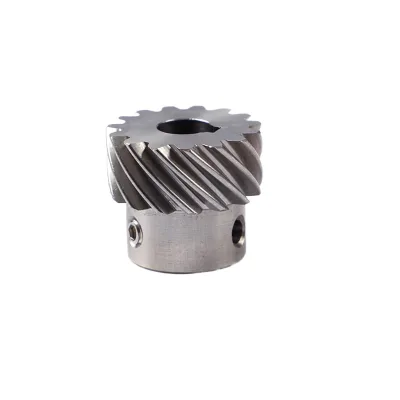
High-Performance Mkl205 Planetary Gear Sets for Industrial Applications
$149.00 - $745.00
MOQ: 1 Pieces




Comprehensive Sourcing Guide
Strategic Sourcing Guide for CNC Machined Planetary Gears and Gear Rack Sets
Procuring a CNC Machined Planetary Gears and Gear Rack Set requires a rigorous approach that balances technical precision with supply chain reliability. The market for these components is diverse, ranging from standard agricultural machinery parts to highly customized solutions for automotive and marine applications. Buyers must navigate a landscape where material composition, manufacturing methods, and geometric tolerances vary significantly between suppliers. This guide provides a structured framework for evaluating potential vendors, ensuring that the final procurement aligns with operational requirements without relying on unverified marketing claims.
Technical Specifications and Material Selection
The foundation of a successful procurement lies in defining precise technical specifications. When sourcing planetary gears and gear racks, the material selection is a primary differentiator. Available options in the current market include cast steel, stainless steel, and plastic. Cast steel is frequently utilized for applications requiring high durability, such as in agricultural machinery and general industrial equipment. In contrast, stainless steel offers superior corrosion resistance, making it suitable for marine environments or food processing machinery. Plastic gears are often selected for lighter loads, such as in toys or specific electric motor applications, where noise reduction is a priority.
The manufacturing method also dictates the performance characteristics of the final product. While some suppliers offer cast gears, others specialize in cut gears or CNC machining processes. For a "CNC machined" requirement, the buyer must verify that the supplier utilizes precision cutting techniques rather than casting alone, as machining ensures tighter tolerances and better surface finishes. The hardness of the gear teeth is another critical parameter. Products may feature hardened tooth surfaces for high-wear applications or soft tooth surfaces for lower-load scenarios. The pressure angle is typically standardized at 20 degrees, but this must be confirmed for every specific order.
Geometric properties are equally vital. The module, which defines the size of the gear teeth, can range from M1 to M10, with maximum modules reaching up to 6 in certain heavy-duty contexts. The number of teeth is often capped at 100 for specific designs, though custom configurations are available. For gear racks, the length is a variable specification, with standard offerings including 500mm, 1000mm, and 2000mm lengths. The face width for these components can extend up to 190mm, influencing the load-bearing capacity. Buyers should also consider the gear position, which can be external or internal, and the overall shape, ranging from spur gears to bevel gears and conical-cylindrical configurations.
Compliance, Certification, and Standard Verification
Navigating compliance and certification is essential for B2B procurement, particularly when components are destined for regulated industries. While general background knowledge suggests the existence of ISO 9001, specific certification status for individual suppliers or products cannot be assumed without direct verification. Buyers must explicitly request proof of quality management systems and material certifications from the vendor.
Standards for these components vary based on the application. Precision grades for gears are often aligned with DIN standards, with observed grades including 5, 6, 7, 8, and 10. A DIN 5 grade indicates high precision suitable for critical machinery, whereas a DIN 10 grade may suffice for general industrial use. For gear racks, the standard may be customized or based on specific client drawings. Some suppliers may offer products compliant with CE standards, which is a crucial requirement for machinery entering the European market. However, the presence of a CE mark must be validated against the specific product batch, as it is not a universal attribute for all listed items.
When evaluating a supplier, the buyer should verify if the product standard is "as per drawing" or "customized." This distinction is vital for ensuring that the final product meets the exact engineering requirements of the buyer's assembly. Additionally, the origin of the product, often listed as China or specifically Shandong, should be factored into compliance checks regarding trade regulations and import duties. The buyer must ensure that the supplier's declared standards match the regulatory requirements of the destination country.
Cost Drivers and Pricing Structures
Understanding the cost drivers for planetary gears and gear rack sets is crucial for budgeting and negotiation. The price range in the market is extensive, spanning from $0.01 to $999 USD, reflecting the vast differences in material, size, and complexity. Several factors influence where a specific product falls within this range.
Material cost is a primary driver. Stainless steel and high-grade cast steel are significantly more expensive than plastic or standard carbon steel. The manufacturing method also impacts cost; CNC machining and cutting gears generally incur higher labor and machine time costs compared to casting. The precision grade is another significant factor; achieving a DIN 5 or DIN 6 grade requires more rigorous quality control and machining time than lower grades, directly increasing the unit price.
Customization is a major cost variable. While many suppliers offer standard packages, the ability to customize based on client drawings or specific OEM requirements adds to the complexity and cost. The volume of the order, defined by the Minimum Order Quantity (MOQ), also affects the final price. MOQs in this sector range from 1 to 100 units. Smaller orders often carry a higher per-unit cost due to setup fees and lower economies of scale. Packaging requirements, such as plywood cases versus standard cartons, can also add to the overall landed cost. Buyers should request detailed breakdowns of costs to understand the value proposition of each supplier.
Typical Applications and Industry Alignment
The versatility of planetary gears and gear rack sets allows them to serve a wide array of industries. Identifying the correct application ensures that the selected components meet the operational demands of the machinery. Agricultural machinery is a dominant application sector, requiring robust gears capable of withstanding heavy loads and harsh environmental conditions. In this context, cast steel gears with hardened tooth surfaces are often the preferred choice.
The automotive and electric vehicle sectors also rely heavily on these components. For car applications, precision and reliability are paramount. Suppliers may offer specific models designed for electric cars, motorcycles, and general motor applications. The layout of the gear system, such as coaxial configurations, is often critical in these compact and high-performance environments. Marine applications demand materials that resist corrosion, making stainless steel a frequent selection. Similarly, toy manufacturing utilizes plastic gears to reduce noise and weight, while still maintaining functional integrity.
Industrial machinery represents another broad category, encompassing everything from general manufacturing equipment to specialized engineering machinery. The "Engineering machinery gears" model is specifically noted for these applications. Buyers must match the gear type to the machine's function; for instance, a planetary gear reducer with a coaxial layout and vertical installation type is suitable for specific conveyor systems, while a spur gear might be better for linear motion applications involving gear racks. The manipulation way, such as forced manipulation, and the changes way, such as stepless adjustments, further define the suitability of the gear set for specific mechanical systems.
Supplier Evaluation and Capability Assessment
Evaluating a supplier requires a multi-faceted approach that goes beyond price comparison. The ability to provide customization is a key indicator of a supplier's technical capability. Most suppliers in this market offer customization services, allowing buyers to specify dimensions, materials, and tooth profiles. The acceptance of OEM orders is another positive signal, indicating that the supplier is accustomed to working with private label requirements and specific client branding.
The manufacturing method and precision capabilities should be scrutinized. A supplier claiming to produce CNC machined gears must demonstrate the necessary equipment and expertise. Buyers should inquire about the specific machining processes used, such as cutting versus casting, and how these methods affect the final product's accuracy. The availability of different gear positions, such as internal or external gears, and various shapes like bevel or conical-cylindrical gears, demonstrates a supplier's versatility.
Packaging and logistics capabilities are also important. Standard packaging often includes cartons and wooden pallets, but specialized needs may require plywood cases or custom wooden boxes. The supplier's ability to adapt packaging to the client's request can prevent damage during transit. Furthermore, the origin of the product, whether from China generally or specific regions like Shandong, can influence lead times and shipping costs. Buyers should verify the supplier's track record in delivering on time and maintaining consistent quality across different batches.
Quality Control and Long-Term Procurement Considerations
Implementing a robust quality control (QC) strategy is essential for mitigating risks in the procurement of planetary gears and gear rack sets. Given the wide range of observed specifications, such as maximum modules of 6 and maximum teeth of 100, buyers must establish clear acceptance criteria. The precision grade, whether DIN 5 through 10, must be verified through third-party testing or in-house inspection upon receipt. Torque specifications, including nominal output torque ranging from 6-9 and maximum output torque from 12-18, should be validated to ensure the gears can handle the intended loads without failure.
Long-term procurement considerations involve building a sustainable relationship with suppliers who can scale with the buyer's needs. The ability to handle emergency stop torque requirements, which may range from 30-35 in high-stress scenarios, is a critical safety factor. Buyers should assess the supplier's capacity to maintain consistent quality over time, especially when ordering large volumes. The flexibility to accommodate changes in design, such as stepless changes in gear ratios or forced manipulation requirements, is also valuable for product evolution.
Finally, buyers should consider the total cost of ownership, which includes maintenance, replacement frequency, and potential downtime. High-quality materials like stainless steel or hardened cast steel may have a higher upfront cost but offer longer service life and reduced maintenance needs. By focusing on technical alignment, verified compliance, and supplier reliability, buyers can secure a supply chain that supports their operational goals without compromising on quality or safety.
FAQs
What materials are available for CNC Machined Planetary Gears and Gear Rack Set?
Available materials include cast steel, stainless steel, and plastic. Cast steel suits agricultural machinery, stainless steel resists corrosion for marine use, and plastic is ideal for toys and electric motors.
Which gear positions can be found in CNC Machined Planetary Gears and Gear Rack Set?
Products offer both external and internal gear positions. External gears are common for general machinery, while internal gears provide specific configurations for compact mechanical assemblies and specialized industrial applications.
Can CNC Machined Planetary Gears and Gear Rack Set be customized to drawings?
Yes, customization is available and accepted as per client drawings. Suppliers can adjust dimensions and specifications, including module and tooth count, to meet specific engineering requirements for unique machinery setups.
What is the maximum module for CNC Machined Planetary Gears and Gear Rack Set?
The maximum module observed is 6 for certain heavy-duty applications. Other products may range from M1 to M10, allowing selection based on the specific load and size requirements of the target machinery.
How is the hardness of CNC Machined Planetary Gears and Gear Rack Set defined?
Hardness varies between hardened and soft tooth surfaces depending on the application. Hardened surfaces are used for high-wear scenarios, while soft surfaces suit lower-load operations in agricultural or general machinery.
What packaging options exist for CNC Machined Planetary Gears and Gear Rack Set?
Standard packaging includes cartons, wooden pallets, and plywood cases. Specialized requests can be met with wooden boxes or custom carton cases to ensure safe transport and protection during international shipping.