Source Cold Drawn Hydraulic Cylinder Boring and Honing Machine for Engines, Brakes, Cylinders
Find 30 cold drawn hydraulic cylinder boring and honing machines with options for horizontal structures, CNC controlling modes, and servo motors. Compare specifications like workpiece length ranges, hole diameters, and voltage requirements from suppliers in China.
Key considerations
Products List


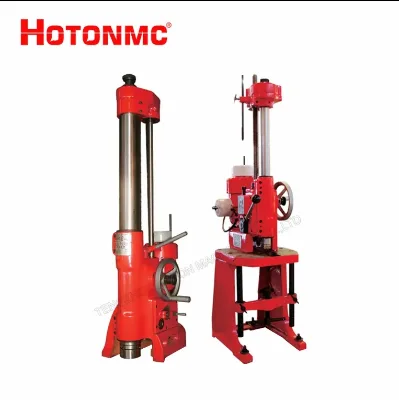
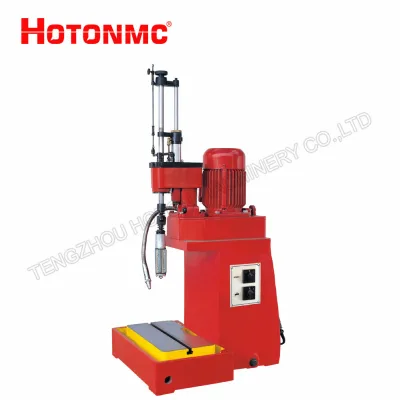
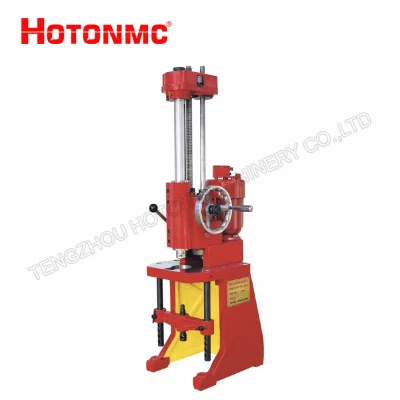


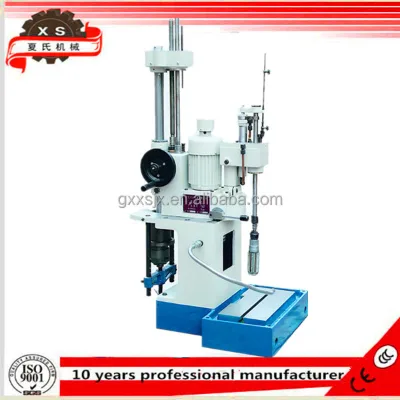
Auto Maintenance Equipment Cylinder Boring Machine M807A, Cylinder Honing Machine
$900.00 - $1000.00
MOQ: 1 Pieces

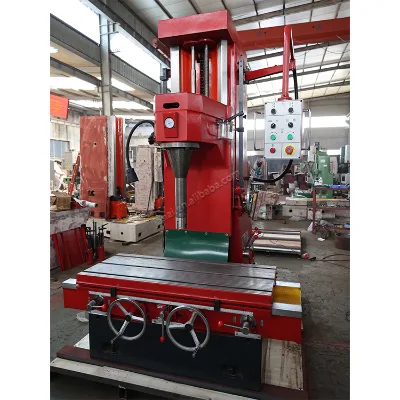


Comprehensive Sourcing Guide
Strategic Sourcing Guide for Cold Drawn Hydraulic Cylinder Boring and Honing Machines
The global demand for high-precision hydraulic cylinders has driven the need for specialized manufacturing equipment capable of handling cold drawn materials with exacting tolerances. Buyers researching cold drawn hydraulic cylinder boring and honing machines must navigate a complex landscape of technical specifications, certification requirements, and supplier capabilities. This guide provides a disciplined approach to evaluating these machines, focusing on the specific attributes observed in the current market while adhering to verified data points. The objective is to equip procurement professionals with the knowledge to select equipment that ensures operational efficiency, compliance, and long-term reliability without relying on unverified marketing claims.
Technical Architecture and Operational Specifications
Understanding the mechanical architecture of a boring and honing machine is the first step in the procurement process. The market offers a variety of configurations, but the most relevant for hydraulic cylinder applications are horizontal boring machines designed for high-precision work. Based on observed product attributes, the industry standard for these units often involves a horizontal structure, which facilitates the machining of long workpieces typical of hydraulic cylinders. The coordinate boring machine type is frequently identified as "Horizontal Type," allowing for stable support of the workpiece during the cutting process.
The controlling mode is a critical differentiator. While some units operate on manual or semi-automatic principles, the trend toward automation is evident. The observed data indicates the availability of CNC (Computer Numerical Control) controlling modes, which are essential for maintaining the tight tolerances required for hydraulic seals and piston fits. However, buyers must also note the presence of semi-automatic and fully automatic grades in the market. The "Automatic Grade" is listed variably as "Semiautomatic," "Semi-Automatic," and "Automatic," suggesting that the level of automation is a specific customization option rather than a universal standard.
Power and motion are governed by the motor specifications. The market data highlights the availability of Servo Motor options, which provide superior control over spindle speed and torque compared to traditional induction motors. The voltage requirements are typically flexible, with observed ranges of 220V and 380V, allowing for adaptation to different regional power grids. The spindle speed range is a vital parameter; one observed specification lists a range of 380 r.p.m., which must be verified against the specific material hardness of the cold drawn cylinder being processed.
| Feature Category | Observed Market Attributes | Procurement Verification Point |
|---|---|---|
| Structure | Horizontal Boring Machine, Horizontal | Verify stability for long workpieces (1m-15m range). |
| Controlling Mode | CNC, Semi-Automatic, Automatic | Confirm if CNC is standard or an upgrade option. |
| Motor Type | Servo Motor Option, Motor | Check if servo is included or an add-on cost. |
| Workpiece Length | 1m-15m, 3m, 2m, 4m | Ensure the machine capacity matches your cylinder lengths. |
| Hole Diameter | <500mm | Confirm maximum bore capacity for your specific applications. |
| Weight | 5.1t, 5.1 Ton, 85t | Verify foundation requirements based on machine mass. |
Precision Capabilities and Customization Potential
The core value proposition of a hydraulic cylinder boring and honing machine lies in its ability to achieve high precision. The observed product attributes explicitly state "High Precision" as a standard capability. This is achieved through the use of fine knife tool types, which are designed to produce smooth surface finishes essential for hydraulic performance. The tool type is listed as "Fine Knife," indicating a focus on finishing operations rather than rough cutting alone.
Customization is a significant factor in this sector. The market data confirms that "Customization" is available, allowing buyers to tailor the machine to specific production needs. This may include modifications to the table travel, spindle configurations, or the integration of specific automation features. The "table travel (y)" is noted as 0 in some listings, which may indicate a specific configuration or a data entry variance; buyers must physically verify the Y-axis travel range to ensure it accommodates the stroke length of the cylinders being machined.
The condition of the equipment is consistently listed as "New," suggesting that the primary market is for fresh manufacturing units rather than refurbished machinery. However, the weight of the machines varies significantly, with observations ranging from 5.1 tons to 85 tons. This disparity suggests a wide spectrum of machine sizes, from compact units for smaller cylinders to massive industrial machines for heavy-duty applications. The "Product name" varies, including references to "Cylinder Boring Bar" and "Brake Lathe machine," indicating that some suppliers may offer multi-functional units or specialized variants. Buyers must carefully distinguish between a dedicated boring/honing unit and a general-purpose lathe that includes boring capabilities.
Compliance, Certification, and Origin Verification
Navigating the regulatory landscape is essential for international procurement. The observed data points to specific certifications, with "ISO CE" appearing as a high-confidence fact. This indicates that the machines are manufactured to meet European safety and quality standards, which is a crucial requirement for many global markets. However, buyers should not assume that every listed product automatically satisfies all standards without verification. The presence of ISO CE certification should be confirmed via official documentation for the specific serial number of the machine being purchased.
The origin of the machinery is predominantly China, with specific locations mentioned such as Dezhou, Shandong Province, and Shanghai. These regions are known hubs for heavy machinery manufacturing. The "prod_origin" is listed as China in multiple instances, while "place of origin" is also noted as Shandong, China. This geographic concentration allows for economies of scale but requires rigorous due diligence regarding the specific factory's quality control systems.
Packaging standards are also critical for safe international transport. The observed data lists "Container," "Iron Case," and "Wooden Case" as packing methods. The choice of packaging depends on the machine's weight and the destination's import regulations. For heavy units, such as those weighing 85 tons, a specialized container or flat rack solution is likely required. The "prod_standard" varies, with mentions of 2m, 3m, and 4m, which may refer to standard workpiece lengths the machine is calibrated for, rather than a manufacturing standard code. Buyers must clarify what these numerical values represent to avoid confusion regarding machine capacity.
Cost Drivers and Pricing Dynamics
The pricing for cold drawn hydraulic cylinder boring and honing machines is highly variable, reflecting the complexity of the equipment and the level of customization. The observed listed price range spans from $500 to $45,000 USD. This wide range likely encompasses different tiers of machinery, from smaller benchtop units or honing attachments to large-scale industrial CNC boring machines. The Minimum Order Quantity (MOQ) is consistently observed as 1, indicating that these machines are typically sold as individual units rather than in bulk batches.
Several factors drive the cost of these machines. First, the level of automation is a primary cost driver. Units with CNC controlling modes and servo motors command a premium over semi-automatic or manual versions. Second, the precision capabilities and the weight of the machine influence the price; a 85-ton machine with high-precision capabilities will naturally cost significantly more than a 5.1-ton unit. Third, the inclusion of core components like the motor and the availability of a machinery test report can affect the final price. The "warranty" period, observed as 1 Year in the data, is a standard baseline, but buyers should negotiate extended terms for high-value equipment.
Buyers should be cautious of prices that seem unusually low, as they may indicate a lack of essential features or lower build quality. Conversely, the upper end of the price range ($45,000) suggests a fully equipped, high-precision industrial solution. The "brand name" HOTONMC is observed in the data, but buyers should not limit their search to a single brand. Instead, they should evaluate the price-to-performance ratio of various suppliers offering similar specifications.
Supplier Evaluation and Quality Assurance
Evaluating suppliers requires a focus on tangible evidence rather than marketing claims. The "machinery test report" is listed as "Provided," which is a positive indicator of quality assurance. Buyers should request these reports to verify the machine's performance under load and its ability to maintain tolerances. The "core components" are identified as the motor, which is the heart of the machine's operation. Verifying the brand and quality of the motor is essential, as it dictates the machine's longevity and efficiency.
The "condition" of the product is listed as "New," but buyers must ensure this refers to the specific unit being shipped and not a general category description. The "warranty" of 1 Year is a standard offering, but the scope of coverage (parts, labor, on-site support) must be clearly defined in the contract. Additionally, the "cnc or not" attribute is listed as "Normal" in some contexts, which may imply a non-CNC or standard configuration. Buyers must explicitly confirm whether the machine includes CNC capabilities if precision and repeatability are required.
Supplier location is another critical factor. With origins in Shandong and Shanghai, buyers should consider the logistics of shipping heavy machinery from these regions. The "prod_packing" methods (Container, Iron Case, Wooden Case) should be discussed in detail to ensure the machine arrives without damage. The "no. of spindles" is noted as "Single Phase" in some listings, which may refer to the electrical phase rather than the number of spindles, or it could indicate a single-spindle configuration. Clarifying this terminology is necessary to avoid mismatches in production requirements.
Long-Term Procurement and Operational Integration
Procuring a boring and honing machine is a long-term investment that requires consideration of future operational needs. The "Workpiece Length Range" of 1m-15m suggests that these machines are designed for versatility, capable of handling both short hydraulic cylinders and long, extended units. However, the "table size (mm)" is listed as 0 in some data points, which is likely a placeholder or a specific configuration detail. Buyers must verify the actual table dimensions to ensure they can accommodate the largest workpieces they intend to process.
The "Voltage" requirements of 220V/380V indicate that the machine can be adapted to different power systems, but the specific configuration must match the facility's electrical infrastructure. The "Motor" being a "Servo Motor Option" implies that the base model might use a different motor type, and upgrading to a servo motor may be an additional cost. This customization aspect allows buyers to balance initial investment against long-term operational efficiency.
Finally, the "Product name" variations, such as "Brake Lathe machine" or "Cylinder Boring Bar," highlight the need for precise communication with suppliers. Buyers should use the specific technical specifications, such as the "prod_model" (e.g., TK2150, 2MK50, TM806, T8016A), to ensure they are discussing the exact machine configuration. The "Automatic Grade" ranging from Semi-Automatic to Automatic allows for a phased approach to automation, where a buyer might start with a semi-automatic unit and upgrade later. Understanding these nuances ensures that the procurement process aligns with the buyer's strategic goals for production scalability and efficiency.
FAQs
What certifications do these machines typically hold?
The machines typically hold ISO and CE certifications. This indicates compliance with European safety and quality standards, which is crucial for international procurement and regulatory approval in many global markets.
Can I customize the automation level of the machine?
Yes, customization is available for the automation grade. Buyers can select between semi-automatic, semi-automated, or fully automatic configurations depending on their specific production requirements and budget constraints.
What is the maximum workpiece length the machine can handle?
The machine can handle workpiece lengths ranging from 1 meter to 15 meters. This wide range allows the equipment to process both short hydraulic cylinders and long extended units effectively.
How is the machine packed for international shipping?
The machine is packed in containers, iron cases, or wooden cases. The specific packaging method depends on the machine's weight and the destination country's import regulations to ensure safe transport.
Where are these machines primarily manufactured?
These machines are primarily manufactured in China, specifically in regions like Dezhou, Shandong Province, and Shanghai. This geographic concentration offers economies of scale but requires verification of specific factory quality control.
What is the warranty period for the equipment?
The standard warranty period is one year. Buyers should verify the specific scope of coverage, including parts and labor, to ensure adequate protection for their investment.