Source Cold Rolling Involute Spline Shaft for Extruders, Pelltizers, and Machinery
Find 30 verified listings for the Cold Rolling Involute Spline Shaft suitable for extruders, pelltizers, and general machinery parts. Buyers can compare specifications including material grades, tolerances, and customization options from suppliers in China.
Key considerations
Products List

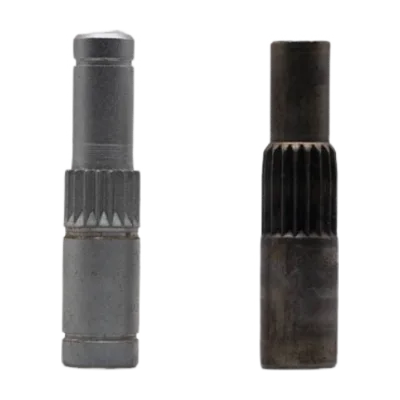
Involute Spline Shaft Cold Rolling Shaft as Spare Parts for Twin Screw Extruder
$300.00 - $2000.00
MOQ: 10 Pieces




Comprehensive Sourcing Guide
Strategic Sourcing Guide for Cold Rolling Involute Spline Shafts
Understanding Technical Specifications and Material Variability
When sourcing cold rolling involute spline shafts, buyers must first navigate a complex landscape of technical attributes that define the product's performance and compatibility. The core keyword implies a specific manufacturing process—cold rolling—which is distinct from hot forging or casting, yet the market data reveals a diverse array of related product types that buyers must distinguish. The provided facts indicate that "COLD ROLLING SHAFT" is a specific model designation available in the supply chain, alongside other variants such as "Germany 92," "177," and generic dimensional models like "Dia: 10-130mm" or "20mm-350mm." This variation suggests that while the core technology is cold rolling, the specific involute spline geometry and dimensions are highly customizable to meet distinct mechanical requirements.
Material selection is a critical first step in this evaluation. The supply data highlights "Stainless Steel" and "Alloy" as primary material categories, with specific alloy grades such as "G25crmo4," "G35," and "Wcb" explicitly mentioned for steel casting applications. While cold rolling typically utilizes high-toughness steel to achieve work hardening, the presence of cast steel attributes like "G25crmo4" in the same dataset indicates that buyers must verify whether the specific shaft they are procuring is a cold-rolled product or a cast product that may be marketed under similar industrial terms. The "High Toughness" attribute is listed as "High Resistant," a crucial performance indicator for spline shafts that must withstand high torque and cyclic loading without fatigue failure. Furthermore, the "Type" is identified as "Spring Steel" in some contexts, which implies a specific heat treatment profile necessary for elasticity and strength.
Dimensional precision is equally vital. The data provides specific ranges for diameter, noting "10mm-130mm" and "20mm-350mm" as observed specifications. For involute splines, the journal diameter and relative position accuracy are paramount. The supply facts mention a "Journal Diameter Dimensional Accuracy" of "IT6-IT" and a "Journal Relative Position Accuracy" of "0.01-0.03mm." These figures represent high-precision tolerances that are essential for the smooth engagement of spline couplings. Buyers should verify that the supplier can consistently maintain these tolerances, as deviations can lead to premature wear or mechanical binding in the final assembly. The "Machining Tolerance" is also cited as "up to It7," and surface roughness is specified as "Ra 0.8~3.2" for general machining, with specific journal surface roughness requirements of "0.63-0.16μm" for high-performance applications.
Compliance, Standards, and Certification Verification
Navigating the regulatory and standards landscape is essential for ensuring that sourced components meet international quality expectations. The provided facts list a wide array of standards, including "GB," "AISI," "ASTM," "BS," "DIN," and "JIS." This indicates that suppliers operating in this sector are capable of adhering to multiple international frameworks, but it also places the onus on the buyer to specify the exact standard required for their application. For instance, the standard "GB/T3077-1999" is explicitly mentioned, which pertains to alloy structural steel in China. If a buyer requires compliance with European or American standards, they must confirm that the supplier's production line is certified to produce to "DIN" or "AISI/ASTM" specifications rather than relying solely on the generic "GB" label.
Certification status serves as a proxy for the supplier's quality management systems. The data confirms the availability of "ISO 9001," "RoHS," and "CE" certifications. These are critical for buyers operating in regulated industries such as automotive, aerospace, or medical machinery. The presence of "ISO 9001" suggests a baseline commitment to quality control processes, while "RoHS" compliance is necessary for electronics and machinery where hazardous substances are restricted. However, buyers must treat these as available attributes rather than universal guarantees for every listed product. It is imperative to request current certification documents for the specific batch or production run, as certification status can vary between different manufacturing facilities or product lines within the same supplier group.
Furthermore, the "Standard" attribute is listed as "Customized" in several instances, indicating that many suppliers operate on a make-to-order basis. This flexibility is advantageous for specialized applications but requires rigorous verification of the custom specifications against the relevant industry standards. For example, if a buyer requires a shaft compliant with "DIN" standards, they must ensure that the "Customized" production process includes the necessary testing and documentation to prove that the final product meets those specific DIN requirements. The "Casting Tolerance" of "CT4-8 for Steel Casting" is another specific metric that buyers should be aware of, particularly if the supply chain involves cast components that are subsequently machined. Ensuring that the casting tolerance aligns with the final machining tolerance is a key step in maintaining overall dimensional integrity.
Cost Drivers and Economic Factors in Procurement
The economic landscape for sourcing cold rolling involute spline shafts is influenced by several dynamic factors, including material costs, manufacturing complexity, and logistical considerations. The observed price range in the market spans from $0.01 to $10,000, a vast disparity that reflects the diversity of product sizes, material grades, and customization levels. A shaft with a diameter of 10mm made from standard alloy steel will naturally cost significantly less than a 350mm shaft made from high-grade stainless steel with complex involute spline geometry and tight tolerances. Buyers must understand that the unit price is not a linear function of size; the complexity of the cold rolling process and the precision of the machining operations play a substantial role in the final cost.
Material composition is a primary cost driver. The use of "Stainless Steel" or specific alloys like "G25crmo4" will incur higher raw material costs compared to standard carbon steels. Additionally, the "Forging" and "Cold Rolling" processes themselves add value but also increase production time and energy consumption. The "Investment Casting" and "Lost Wax Casting" options mentioned in the data represent alternative manufacturing routes that may be more cost-effective for certain complex geometries but could introduce different cost structures regarding tooling and lead times. The "Coating" process, such as "Zinc oxide," adds another layer of cost, particularly if corrosion resistance is a requirement for the application environment.
Logistics and packaging also contribute to the total cost of ownership. The supply data indicates various packaging methods, including "Wood," "Plywood Case," and "Packing with Plastic Bar." For international shipments, the choice of packaging can significantly impact freight costs and the risk of damage. "Multiplayer Wood Box with Big Plastic Bag Inside" is a robust option for heavy or high-value shafts, but it adds weight and volume to the shipment. Buyers should evaluate whether the cost of premium packaging is justified by the value and fragility of the product. Furthermore, the "MOQ" (Minimum Order Quantity) ranges from 1 to 2000 units. High-volume buyers can leverage economies of scale to reduce unit costs, while small-batch buyers may face higher per-unit prices due to setup costs and the lack of production line optimization.
Typical Applications and Functional Requirements
Cold rolling involute spline shafts are integral components in a wide range of industrial machinery, where their primary function is to transmit torque while allowing for axial movement or precise alignment. The "Application" field in the data explicitly lists "Machinery Parts," which encompasses a broad spectrum of industries. The specific mention of "Extruder Shaft" and "Pelltizer Shaft" highlights their critical role in polymer processing and plastic extrusion machinery. In these applications, the shafts must withstand high torsional loads and abrasive environments, making the "High Toughness" and "Degradable" or "Recycle" attributes relevant for sustainability and operational longevity.
The "Spring Steel" designation suggests applications where elasticity and fatigue resistance are paramount, such as in suspension systems, valve trains, or high-speed rotating machinery. The "Straight Spline Shaft" type is particularly suited for applications requiring precise rotational alignment and the ability to slide axially while maintaining torque transmission. The "Journal Surface Roughness" of "0.63-0.16μm" indicates that these shafts are designed for high-precision bearings and seals, minimizing friction and wear in critical interfaces.
In the context of the "COLD ROLLING SHAFT" model, the manufacturing process imparts a work-hardened surface layer that enhances wear resistance and fatigue life. This makes the component ideal for heavy-duty applications such as construction equipment, automotive transmissions, and industrial gearboxes. The "Customized" nature of many of these shafts allows them to be tailored for specific machine designs, ensuring optimal fit and function. Whether used in an extruder, a pump, or a general power transmission system, the involute spline geometry ensures a uniform distribution of stress across the teeth, reducing the risk of tooth shear and failure under load.
Supplier Evaluation and Manufacturing Capability Assessment
Selecting the right supplier for cold rolling involute spline shafts requires a thorough evaluation of their manufacturing capabilities, quality control systems, and track record. The data indicates that suppliers are located in various regions, including "Sichuan," "Nanjing, China," and "China Shanghai," suggesting a concentration of manufacturing hubs in eastern and southwestern China. Buyers should verify the specific location of the production facility, as regional differences in infrastructure and labor costs can impact delivery reliability and communication efficiency.
The "Service" attributes of "OEM" and "ODM" for steel casting shafts indicate that suppliers are capable of custom manufacturing and design support. This is a crucial capability for buyers with unique requirements that cannot be met by off-the-shelf products. Buyers should assess the supplier's ability to handle "Custom As Customer's Request" orders, including their capacity for design engineering, prototyping, and rapid iteration. The "Lead Time" of "45 Days for Steel Casting Shaft" provides a benchmark for production scheduling, but buyers must confirm whether this lead time applies to cold rolling processes or if it varies based on order volume and complexity.
Quality control is another critical factor. The "Machining Process" includes "CNC Machining," "Lathing," "Milling," "Turning," and "Boring," which are advanced capabilities that ensure high precision. Buyers should request evidence of the supplier's investment in modern CNC equipment and their proficiency in operating it. The "Casting Tolerance" and "Machining Tolerance" specifications provide a baseline for quality expectations, but buyers should also inquire about the supplier's internal quality control procedures, such as in-process inspections and final acceptance testing. The "Certification" status, including "ISO 9001," should be verified through current documentation to ensure that the supplier maintains a robust quality management system.
Quality Control Protocols and Long-Term Procurement Strategy
Implementing a robust quality control protocol is essential for mitigating risks associated with sourcing cold rolling involute spline shafts. Buyers should establish clear acceptance criteria based on the technical specifications provided, including dimensional accuracy, surface roughness, and material properties. The "Journal Diameter Dimensional Accuracy" of "IT6-IT" and "Journal Relative Position Accuracy" of "0.01-0.03mm" should be verified through third-party inspection or in-house testing upon receipt of the goods. The "Machining Tolerance" of "up to It7" and "Ra 0.8~3.2" should also be validated to ensure that the components meet the required performance standards.
Long-term procurement strategies should focus on building strong relationships with reliable suppliers who can consistently deliver high-quality products. The "Customized" nature of many shafts means that buyers and suppliers will need to collaborate closely to refine designs and optimize production processes. Establishing a framework for continuous improvement, such as regular quality audits and feedback loops, can help ensure that the supply chain remains resilient and responsive to changing market demands. Buyers should also consider the sustainability aspects of their procurement, given the "Degradable" and "Recycle" attributes mentioned in the data. Selecting suppliers who prioritize environmental responsibility and resource efficiency can contribute to a more sustainable supply chain.
Finally, buyers should develop a contingency plan for supply chain disruptions. The "Lead Time" of 45 days and the "MOQ" ranges suggest that production schedules can be tight, and any delays could impact downstream operations. Maintaining a buffer stock of critical components or identifying alternative suppliers can help mitigate these risks. By combining rigorous technical evaluation, comprehensive supplier assessment, and a proactive quality control strategy, buyers can successfully navigate the complex market for cold rolling involute spline shafts and secure a reliable supply of high-performance components.
Comparative Analysis of Product Attributes
To facilitate a clearer understanding of the diverse product offerings in the market, the following table summarizes key attributes observed in the supply data. This comparison highlights the variations in standards, materials, and specifications that buyers must consider when making procurement decisions.
| Attribute Category | Observed Variations | Key Considerations for Buyers |
|---|---|---|
| Product Model | COLD ROLLING SHAFT, Germany 92, 177, Dia: 10-130mm, 20mm-350mm | Verify the exact model number against application requirements; "Cold Rolling" is specific but other models may exist. |
| Material | Stainless Steel, Alloy, G25crmo4, G35, Wcb, Spring Steel | Confirm material grade for corrosion resistance and strength; "Stainless Steel" vs. "Alloy" impacts cost and performance. |
| Standards | GB, AISI, ASTM, BS, DIN, JIS, GB/T3077-1999 | Specify the required standard (e.g., DIN vs. GB) to ensure compliance with local regulations and industry norms. |
| Dimensions | Dia: 10mm-130mm, 20mm-350mm, Customized Size | Check diameter ranges; "Customized" options allow for non-standard sizes but may increase lead time. |
| Tolerances | IT6-IT, 0.01-0.03mm, IT7, Ra 0.8~3.2, 0.63-0.16μm | High precision is critical; verify "Journal Relative Position Accuracy" and surface roughness for mating parts. |
| Process | Forging, Cold Rolling, CNC Machining, Investment Casting | Distinguish between "Cold Rolling" and "Casting" processes; "Forging" and "Casting" may have different properties. |
| Packaging | Wood, Plywood Case, Plastic Bar, Multiplayer Wood Box | Assess packaging for shipping safety; "Plywood Case" is common for heavy industrial parts. |
| Certification | ISO 9001, RoHS, CE | Verify current certification status; "ISO 9001" indicates quality management, "RoHS" for environmental compliance. |
| Origin | Sichuan, Nanjing, China, China Shanghai | Location impacts logistics and communication; "Nanjing" and "Shanghai" are major industrial hubs. |
| Lead Time | 45 Days (for Steel Casting Shaft) | Confirm lead time for specific product type; "45 Days" may vary for cold rolling vs. casting. |
This comparative overview underscores the importance of detailed specification review. Buyers must not assume that all products labeled as "shaft" or "spline" share the same attributes. The diversity in materials, standards, and manufacturing processes requires a tailored approach to sourcing, ensuring that the selected components meet the exact technical and operational needs of the application. By carefully evaluating these factors, buyers can optimize their procurement strategy and secure high-quality cold rolling involute spline shafts that deliver reliable performance in demanding industrial environments.
FAQs
What materials are used for cold rolling involute spline shafts?
Stainless steel and alloy grades like G25crmo4 are common materials. Specific applications may also utilize spring steel or cast steel depending on the required toughness and resistance properties.
Which standards do these shafts typically comply with?
Products often comply with GB, AISI, ASTM, BS, DIN, and JIS standards. Specific models may also adhere to GB/T3077-1999 or offer customized standard options based on client requests.
Can buyers request custom dimensions for these shafts?
Yes, customization is available for dimensions ranging from 10mm to 350mm. Buyers can specify journal diameters and relative position accuracies tailored to their specific machinery requirements.
How are these shafts packaged for international shipping?
Packaging options include wood cases, plywood cases, or plastic bars. Heavy shafts often use multi-layer wood boxes with internal plastic bags to ensure safety during transit.
What is the typical lead time for steel casting shafts?
The lead time for steel casting shafts is approximately 45 days. This duration accounts for the investment casting, lost wax casting, and subsequent CNC machining processes involved.
Which certifications are available for these industrial components?
Suppliers may provide ISO 9001, RoHS, and CE certifications. These certifications indicate adherence to quality management systems and restrictions on hazardous substances in the manufacturing process.