Source Convertible Cotton Lining Crochet Bag for travel, shopping, and events
Find 30 options for the Convertible Cotton Lining Crochet Bag suitable for daily use, holidays, and storage. Buyers can compare styles, materials, and customization features across suppliers in China to find the right fit.
Key considerations
Products List


Crochet Cotton Thread Shoulder Bag for Women Large Urban Tote Shopping Bag
$0.88 - $1.98
MOQ: 1000 Pieces


New Style Personalized Fashion New Arrivals Knitted Crochet Pouch Tote Bag
$0.88 - $1.98
MOQ: 1000 Pieces


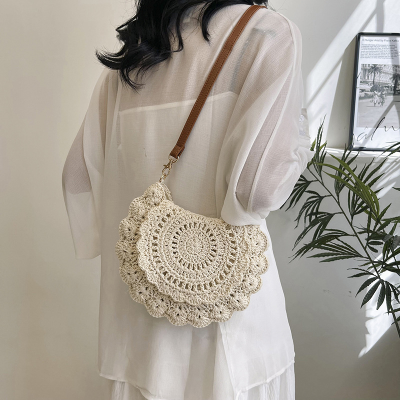


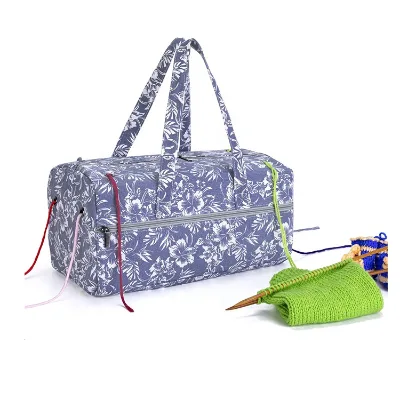


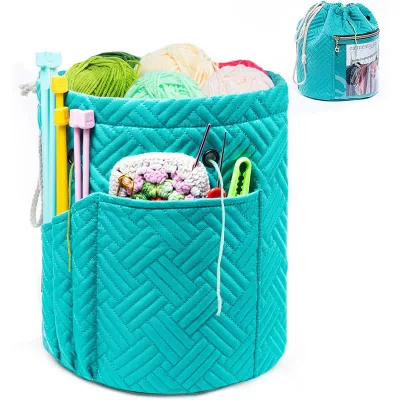


New Style Personalized Fashion New Arrivals Straw Bag Tote, Straw Crochet Bag Handmade
$10.20 - $11.00
MOQ: 50 Pieces

New Style Personalized Fashion New Arrivals Straw Bag Tote, Straw Crochet Bag Handmade
$10.20 - $11.00
MOQ: 50 Pieces

Comprehensive Sourcing Guide
Strategic Sourcing Guide for Convertible Cotton Lining Crochet Bags
Understanding Product Attributes and Material Composition
When sourcing a Convertible Cotton Lining Crochet Bag, buyers must first distinguish between the primary aesthetic material and the functional lining. The core keyword implies a specific construction where crochet work forms the exterior structure, while cotton provides the interior lining. However, analysis of available market data reveals a diverse range of materials often associated with similar product categories. While the target keyword specifies cotton lining, observed product listings frequently feature polyester linings, nylon exteriors, or combinations thereof. For instance, specific models in the current market data indicate an inside material of polyester, while other entries list nylon as the primary material. This discrepancy highlights a critical verification step: buyers must explicitly confirm the fiber content of the lining during the supplier inquiry phase. The presence of a cotton lining is not a universal standard for all crochet-style bags; it is a specific attribute that requires direct confirmation to ensure the product matches the procurement specification.
The structural integrity of these bags often relies on the hardness and shape attributes. Market observations show a spectrum ranging from "Soft" to "Partial Hard" and "Box Type" configurations. A convertible bag typically requires a balance of flexibility for folding and rigidity for shape retention. The data indicates that some products feature a "Folding" style with a "Soft" hardness, while others are described as "Retro" with a "Box Type" shape. Buyers should verify that the crochet pattern and the lining material work in tandem to support the bag's convertible nature. If the bag is designed to fold flat for storage, the lining must be durable enough to withstand repeated flexing without tearing. Furthermore, the "Weight Limit" observed in similar categories ranges from 5 to 10 kg, which serves as a baseline for capacity planning. Buyers must ensure that the specific crochet density and lining strength can support the intended load without deformation, especially when the bag is converted from a folded state to an open carry state.
Technical Specifications and Dimensional Standards
Technical specifications for convertible crochet bags vary significantly based on the intended style and usage. The market data presents a wide array of dimensional standards, with some products listed with specific measurements such as 38232CM or 21226cm. Other entries provide single package sizes like 25X19X2 cm or general size descriptions like 28*16cm. These variations suggest that there is no single industry standard for the dimensions of a convertible bag; rather, the size is often dictated by the specific model number, such as HM-KSB-030 or YWOY-002. When sourcing, buyers must request detailed dimension sheets for the specific model they intend to purchase. Relying on general descriptions can lead to discrepancies in packaging volume and shipping costs.
The closure mechanism is another critical technical specification. The observed data includes "Zipper" as a closed way, which is essential for security and functionality in a convertible design. A zipper allows the bag to transition between open and closed states while maintaining the integrity of the contents. Additionally, the "Sealing & Handle" attribute often points to a "Hand Length Handle," which is crucial for the convertible aspect, allowing the bag to be carried by hand or potentially converted for shoulder wear depending on the strap attachment. Buyers should verify the durability of the zipper and the strength of the handle attachment points, as these are common failure points in lightweight, fashion-oriented bags. The "Shape" is also a defining characteristic, with "Box Type" and "Holiday Style" being common descriptors. The shape directly influences the internal volume and the ease of converting the bag's form.
Compliance, Certification, and Safety Verification
In the realm of B2B procurement, compliance and certification are non-negotiable elements that protect the buyer from liability and ensure market access. The provided data explicitly mentions "Test Report" as a certification attribute for certain products. This indicates that suppliers in this category may possess third-party verification of their product safety and quality. However, the presence of a test report in one listing does not guarantee that all convertible cotton lining crochet bags meet the same standards. Buyers must treat certification as a variable attribute that requires specific inquiry. It is essential to request the actual test report documents to verify the scope of testing, including chemical safety, flammability, and mechanical durability.
Furthermore, the "Standard" attribute in the data is listed as "standard" for some items, while other entries provide specific dimensional standards. This ambiguity underscores the need for buyers to define their own quality standards or adhere to international norms such as ISO or specific regional regulations. For products originating from China or Fuhzou, as noted in the location data, buyers should be aware of local manufacturing practices and ensure that the supplier adheres to international export standards. The "Feature" of being "Recyclable" is also a significant compliance and sustainability indicator. If a buyer's brand strategy emphasizes eco-friendliness, verifying the recyclability of the crochet material and the lining is crucial. This verification should extend to the packaging, as the data shows variations like "Box," "OPP Bag," and "PP/Box." Sustainable packaging is increasingly becoming a requirement for market entry in many regions.
Cost Drivers and Pricing Dynamics
The pricing of convertible cotton lining crochet bags is influenced by several dynamic factors, including material costs, labor intensity, and customization requirements. The observed price range in the market spans from 0.05 to 30 USD, a wide variance that reflects differences in quality, complexity, and order volume. The lower end of the spectrum likely corresponds to basic, mass-produced items with minimal customization, while the higher end may reflect premium materials, intricate crochet patterns, or extensive branding services. The "Customization" attribute is listed as "Available" for many products, which is a significant cost driver. Adding a custom logo, altering the color to a specific "Candy Color," or modifying the shape to a specific "Retro" style will inevitably increase the unit cost.
Minimum Order Quantity (MOQ) is another critical cost factor. The observed MOQ range is 1 to 1000 units. For buyers testing the market, a low MOQ of 1 allows for sample evaluation, but the unit price will be significantly higher. As the order volume increases towards the upper limit of 1000, the unit price typically decreases due to economies of scale. However, buyers must balance the cost savings of larger orders against the risk of inventory holding. The "Production Time" is noted as "Around 25 days" for some items, which impacts cash flow and supply chain planning. Longer lead times may require higher safety stock levels, increasing the overall cost of ownership. Additionally, the "Payment" terms, which include T/T, Western Union, Paypal, or Trade Insurance, affect the financial risk and liquidity for the buyer. Secure payment methods like Trade Insurance may come with associated fees but offer protection against non-delivery or quality disputes.
Supplier Evaluation and Operational Capabilities
Evaluating a supplier for convertible cotton lining crochet bags requires a holistic approach that goes beyond price and product specifications. The location data indicates origins in China and Fuhzou, which are major manufacturing hubs. Buyers should verify the supplier's actual production capacity and facility conditions. While the data mentions "Sample: Support," confirming the quality and turnaround time of samples is vital. A supplier that offers samples demonstrates confidence in their product but also provides an opportunity to assess the actual craftsmanship of the crochet work and the quality of the lining.
The "Style" attributes observed, such as "Fashion, Lady, Vintage, Bohemian," suggest that the supplier has a diverse portfolio. Buyers should assess whether the supplier has specific expertise in the "Holiday Style crochet woven bag" or similar niche categories. A supplier with a broad range of styles may be less specialized, whereas one with a focused portfolio might offer higher quality control for specific designs. The "Logo Printing" and "Logo: Can Be Customized" attributes indicate that the supplier offers branding services. Buyers should evaluate the supplier's capability to execute high-quality logo printing without compromising the integrity of the crochet material. This often requires specialized equipment and skilled labor.
Furthermore, the "Usage" attributes, which include "Dry Goods, Wet Goods, Sub-Humid Goods," suggest that some products are designed for versatility. Buyers should verify if the supplier has tested the bag's performance in these different environments. A supplier that can provide data on how the bag performs with wet goods is more reliable than one that only claims general usage. The "Gender" attribute, ranging from "Unisex" to "Female," also indicates the target market segmentation. A supplier that understands the specific needs of the target gender demographic can provide better design insights and product recommendations.
Quality Control and Long-Term Procurement Strategy
Quality control (QC) is paramount when sourcing handmade or semi-handmade items like crochet bags. The "Hardness" and "Shape" attributes must be consistent across all units in an order. Inconsistent hardness can lead to bags that do not hold their shape or are too floppy for the intended use. Buyers should implement a rigorous QC plan that includes pre-production sample approval, in-process inspections, and final random inspections. The "Test Report" mentioned in the data should be part of the QC documentation, but on-site inspections are necessary to verify that the production matches the certified samples.
Long-term procurement considerations involve building a sustainable relationship with the supplier. The "Production Time" of around 25 days suggests a need for careful planning. Buyers should establish clear communication channels and agree on lead times that accommodate potential delays. The "Feature" of being "Recyclable" is a long-term trend that buyers should leverage for brand differentiation. Ensuring that the supplier can maintain this feature over time, even as production scales, is crucial. Additionally, the "Waterproof" attribute varies between "Waterproof" and "Non-Waterproof." Buyers must clearly define their requirements and ensure the supplier can consistently meet these standards. If waterproofing is a requirement, the supplier must have the necessary treatment processes in place.
Finally, the "Single package size" and "prod_packing" attributes affect logistics and storage. A supplier that offers efficient packaging solutions can reduce shipping costs and minimize damage during transit. Buyers should negotiate packaging standards that align with their distribution requirements. By focusing on these technical, compliance, and operational aspects, buyers can successfully source high-quality convertible cotton lining crochet bags that meet their specific business needs while mitigating risks associated with international trade.
| Attribute Category | Observed Variations in Market Data | Verification Requirement for Buyer |
|---|---|---|
| Lining Material | Polyester, Cotton (implied by keyword) | Confirm specific fiber content of lining. |
| Exterior Material | Nylon, Polyester, Crochet (implied) | Verify material composition and durability. |
| Dimensions | 38232CM, 21226cm, 28*16cm | Request detailed dimension sheets for specific models. |
| Certification | Test Report (listed), Standard (generic) | Request actual test report documents and scope. |
| Customization | Logo Printing, Color, Style | Confirm feasibility and cost of specific customizations. |
| Packaging | Box, OPP Bag, PP/Box, Aira | Define packaging requirements to reduce damage/cost. |
| Origin | China, Fuhzou | Verify factory location and export compliance. |
| Lead Time | Around 25 days | Confirm production schedule and flexibility. |
FAQs
Can I get a custom logo on the Convertible Cotton Lining Crochet Bag?
Yes, logo printing is available with customization options for this product. The supplier supports adding a custom logo to the bag, allowing for brand personalization. Buyers should verify the specific printing method and any additional costs associated with the custom design before placing an order.
What is the typical production time for this bag?
The production time is around 25 days for standard orders. This lead time applies to the manufacturing process after the order is confirmed. Buyers planning large shipments should account for this duration in their supply chain schedule to avoid delays.
Which certifications are available for the Convertible Cotton Lining Crochet Bag?
A test report is listed as a certification for this product. This document verifies that the item meets specific safety and quality standards. Buyers should request the actual test report to confirm the scope of testing before finalizing procurement agreements.
How much is the minimum order quantity for this bag?
The minimum order quantity ranges from 1 to 1000 units depending on the supplier. A low MOQ of 1 allows for sample evaluation, while larger orders may reduce unit costs. Buyers should confirm the specific MOQ with the vendor to align with their budget.
What materials are used for the lining and exterior of the bag?
The inside material is polyester, while the exterior can be made of nylon or crochet materials. Some listings specify a polyester lining, so buyers must confirm the exact fiber content. The material choice affects durability and the bag's ability to hold wet or dry goods.
Is the bag waterproof or water-resistant?
Waterproof status varies, with some models listed as waterproof and others as non-waterproof. Buyers must specify their requirement as the attribute is not universal across all listings. Verify the specific model's water resistance before purchasing for wet goods usage.
What is the weight limit for this Convertible Cotton Lining Crochet Bag?
The weight limit is between 5 and 10 kg for the product. This capacity ensures the bag can hold dry goods, wet goods, or sub-humid goods safely. Buyers should ensure the intended load does not exceed this limit to prevent damage to the structure.