Source Corrosion Resistant Hose Clip for Pipe, Automotive, Supermarket
Find 30 verified options for Corrosion Resistant Hose Clip suitable for pipe connections, automotive clamps, and supermarket applications. Compare specifications including material, surface treatment, and model numbers from Tianjin suppliers.
Key considerations
Products List


$0.01 - $0.50
MOQ: 10000 Pieces


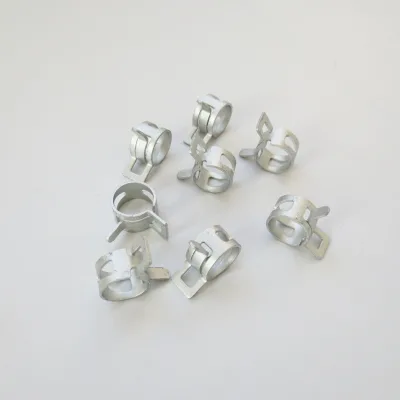


Strong Double Wire Hose Clamps Clips Wire Type Spring Action Hose Clamp
$0.02 - $0.12
MOQ: 1000 Pieces


Comprehensive Sourcing Guide
Strategic Sourcing Guide for Corrosion Resistant Hose Clips
Understanding Product Variants and Material Composition
When sourcing corrosion-resistant hose clips, buyers must first navigate the diverse landscape of product definitions found in the current market. The core keyword often encompasses several distinct product names, including "Mini Hose Clamp Galvanized Hose Clip," "American Type Clamp," "Spring Hose Clamp," and "Spring Hose Clip." These variations are not merely semantic; they indicate different mechanical designs and intended performance characteristics. The primary material composition is a critical determinant of corrosion resistance. The available data indicates a split between "Metal" as a general category and specific alloys like "Stainless Steel" and "Steel." For applications requiring high corrosion resistance, the "Stainless Steel" variant is the most logical starting point, whereas "Galvanized" surface treatments on steel bodies offer a cost-effective alternative for moderate environments.
The physical construction varies significantly across these variants. Some products are defined by their "Head Type," which is observed as "Round" in specific listings, while others are categorized by their specific application, such as "Car Tube" or "Pipe Clamp." The "Body Material" is explicitly listed as "Steel" in some contexts, while the "Surface Treatment" plays a pivotal role in durability. Buyers will encounter options with "Galvanized" finishes and others with "Painted" coatings. The "Galvanized" treatment is particularly relevant for the "corrosion resistant" requirement, as it provides a sacrificial zinc layer that protects the underlying steel. Conversely, "Painted" finishes may offer aesthetic benefits or specific chemical resistance but require verification of the paint quality for long-term corrosion protection.
Technical Specifications and Dimensional Standards
Technical specifications are the backbone of any successful procurement process for hose clips. The market data reveals a lack of uniformity in model numbering, with identifiers ranging from "P-0300" and "a-10341" to "R-C-001" and "spring hose clip." This diversity necessitates that buyers do not rely solely on model numbers but must verify the physical dimensions and bandwidth requirements. The "Bandwidth" is a critical specification, with observed values of "9mm" and "12mm." These dimensions dictate the size of the hose or pipe the clip can securely fasten.
Furthermore, the "Standard" and "prod_standard" fields indicate that products are available in "Standard," "Nonstandard," and "Full sizes" configurations. Some listings specify exact dimensions such as "880.8mm," which suggests a specific gauge or cross-sectional profile. Buyers must confirm whether the "Measurement" system required is "Inch" or "Metric System," as this affects compatibility with existing infrastructure. The "Model Number" often correlates with the "prod_model," which can be described as "full size," "tube clip," or "hose clamps machine" (though the latter likely refers to the manufacturing equipment rather than the clip itself).
The following table summarizes the observed technical attributes to assist in specification verification:
| Attribute Category | Observed Values | Procurement Verification Requirement |
|---|---|---|
| Material | Metal, Stainless Steel, Steel | Confirm alloy grade for corrosion resistance |
| Surface Treatment | Galvanized, Painted | Verify coating thickness and adhesion |
| Bandwidth | 9mm, 12mm | Match to hose outer diameter |
| Head Type | Round | Ensure compatibility with fastening tools |
| Measurement System | Inch, Metric System | Align with existing piping standards |
| Standard Type | Standard, Nonstandard, Full sizes | Confirm if custom sizing is required |
| Condition | New | Ensure no refurbished or used stock |
Compliance, Certification, and Quality Assurance
Compliance with international standards and certifications is essential for ensuring the reliability of corrosion-resistant hose clips, particularly in automotive and industrial applications. The supply chain data highlights a robust set of certifications, including "CCC," "COP," "ISOCE," "E-Mark," "RoHS," and "TS16949." The presence of "TS16949" (now IATF 16949) is particularly significant, as it indicates that the manufacturer adheres to strict quality management systems specific to the automotive industry. This certification is a strong indicator of a supplier's capability to produce consistent, high-quality components that meet rigorous safety and performance criteria.
Additionally, "RoHS" compliance ensures that the product does not contain restricted hazardous substances, which is a legal requirement in many markets. "E-Mark" certification suggests compliance with European vehicle regulations, while "CCC" indicates conformity with Chinese compulsory certification standards. Buyers should verify that the specific batch of products they intend to purchase carries these certifications, as they are not automatically guaranteed for all listings under the same brand. The "Standard" field also lists "Standard" and "Nonstandard" options, implying that while many products meet general industry norms, custom specifications may require specific validation.
The "Quality" attribute is explicitly described as "High Quality" in several listings, but this is a subjective claim. To substantiate this, buyers should request evidence of the "Standard" compliance, such as mill test reports or third-party inspection certificates. The "Condition" is listed as "New," which is a baseline requirement, but the "Surface Treatment" quality (Galvanized vs. Painted) must be visually and chemically verified. The "Brand Name" "Tjks" and "Snw" appear in the data, but buyers should treat these as observations rather than endorsements, focusing instead on the supplier's ability to provide the listed certifications for the specific order.
Cost Drivers and Commercial Terms
Understanding the cost structure of hose clips is vital for budgeting and negotiation. The observed price range in the market is extremely broad, spanning from $0 to $850,000 USD. This wide variance likely reflects the difference between individual unit costs and bulk procurement of machinery or large-scale production lines, rather than the price of a single clip. For actual component procurement, buyers should focus on unit pricing models that account for volume. The "MOQ" (Minimum Order Quantity) ranges from 1 to 10,000 units, offering flexibility for both small prototype runs and large-scale manufacturing needs.
Payment terms are a significant factor in the commercial agreement. The standard terms observed are "30% Deposit, 70% Before Delivery." This structure requires buyers to have sufficient liquidity to cover the initial deposit and the bulk of the payment prior to shipment. The "Sample" availability is a crucial cost-saving measure, allowing buyers to verify quality and fit before committing to a large order. The "Production Scope" is noted as "Product Line," suggesting that suppliers may offer a range of related items, which could lead to bundling discounts.
The "prod_packing" methods, including "Plastic Bag+Export Cardboard Box," "Poly Bag+Carton," and "PP Bag in Carton," also influence logistics costs. Proper packaging is essential to prevent damage during transit, which could negate the value of the corrosion-resistant properties. Buyers should ensure that the packaging is robust enough to protect the "Galvanized" or "Stainless Steel" surfaces from moisture and physical abrasion. The "Location" of the supplier, primarily "Tianjin, China" or generally "China," impacts shipping times and freight costs. While lead times are not explicitly quantified in the data, the "30% Deposit" term implies a production cycle that must be coordinated with the buyer's timeline.
Typical Applications and Usage Scenarios
The versatility of hose clips is evident in the diverse range of applications listed. The "Usage" categories include "Pipe Clamp," "Connection," "Car Tube," "Car Cooling System," "Assembly Line," and general "Furniture" or "Automotive Clamp" applications. The "Pipe, Waterproof, Supermarket" tag suggests that these clips are used in environments where moisture resistance is critical, reinforcing the need for corrosion-resistant materials. The "American Type Clamp" and "Spring Hose Clamp" are specifically noted for their suitability in "Car Cooling Systems," where thermal cycling and exposure to coolant fluids demand high durability.
The "Application" field further clarifies the functional role, ranging from simple "Connection" tasks to complex "Assembly Line" integration. The "Suit for" attribute explicitly mentions the "Car Cooling System," indicating that these clips are engineered to withstand the thermal expansion and contraction inherent in automotive engines. For industrial applications, the "Usage" as "Pipe Clamp" suggests a role in fluid transport systems where leaks must be prevented. The "Surface Treatment" of "Galvanized" is particularly advantageous for outdoor or wet environments, while "Painted" options might be preferred for indoor or aesthetic-sensitive applications.
Buyers must match the specific product variant to the application environment. For instance, a "Spring Hose Clip" with "Stainless Steel" body material is ideal for high-corrosion automotive cooling systems, whereas a "Mini Hose Clamp" with "Galvanized" steel might suffice for general plumbing or industrial piping. The "Measurement" system (Inch vs. Metric) must align with the regional standards of the application site to ensure proper fit and function.
Supplier Evaluation and Long-Term Procurement Strategy
Evaluating suppliers for corrosion-resistant hose clips requires a focus on customization capabilities and production consistency. The "Customization" attribute is marked as "Yes," indicating that suppliers are willing to adapt products to specific buyer requirements. This is a valuable feature for buyers with unique dimensional or material needs. The "Brand Name" and "Model Number" diversity suggests a competitive market with multiple players, but buyers should prioritize suppliers who can demonstrate the "High Quality" claim through verifiable data.
Long-term procurement considerations include the stability of the supply chain and the consistency of the "Surface Treatment." Since the "Galvanized" and "Painted" finishes are critical for corrosion resistance, buyers should establish quality control protocols that include regular sampling and testing. The "Standard" and "Nonstandard" options allow for flexibility, but buyers must ensure that any non-standard product is backed by the same rigorous certification standards as the standard items.
The "Location" of the supplier, primarily in Tianjin, China, offers access to a mature manufacturing hub, but buyers should also consider the logistics of importing. The "Payment" terms of "30% Deposit, 70% Before Delivery" are standard but require careful financial planning. The "Sample" availability is a key tool for risk mitigation, allowing buyers to test the "Corrosion Resistant" claims in real-world conditions before scaling up. By focusing on suppliers who provide comprehensive certification data, offer customization, and maintain transparent communication regarding lead times and packaging, buyers can secure a reliable supply of high-performance hose clips.
In conclusion, sourcing corrosion-resistant hose clips involves a careful balance of technical verification, compliance checks, and commercial negotiation. By leveraging the observed data on materials, certifications, and applications, buyers can make informed decisions that ensure the longevity and reliability of their fluid and piping systems. The market offers a wide array of options, from "Stainless Steel" to "Galvanized Steel," each with specific advantages depending on the intended use. Success in this procurement category depends on a disciplined approach to specification matching and supplier validation.
FAQs
What materials are used for corrosion resistant hose clips?
Corrosion resistant hose clips are typically made from stainless steel or galvanized steel. Some listings also mention general metal construction. Buyers should verify the specific alloy grade to ensure adequate protection against rust in their application environment.
Which certifications should I look for in a hose clip supplier?
Reputable suppliers often provide certifications such as CCC, RoHS, and TS16949. TS16949 indicates adherence to automotive quality standards, while RoHS ensures compliance with hazardous substance restrictions. Verify that these certifications apply to the specific batch you intend to purchase.
How can I customize the size of a hose clip?
Suppliers generally offer customization options for hose clips to meet specific dimensional needs. The product data confirms that customization is available. Buyers should communicate their required bandwidth, such as 9mm or 12mm, and measurement system preferences like inch or metric during the inquiry.
Can I get samples before placing a large order?
Yes, samples are available for most Corrosion Resistant Hose Clip listings. This allows buyers to verify quality, fit, and surface treatment before committing to bulk production. Requesting a sample is a recommended step to ensure the product meets your specific application requirements.
What payment terms are standard for ordering these clips?
The standard payment terms observed are a 30% deposit followed by 70% before delivery. This structure requires buyers to have sufficient liquidity to cover the initial deposit and the majority of the payment prior to shipment. Confirm these terms with the specific supplier before finalizing the order.
Where are these hose clips typically manufactured?
Most listed products originate from Tianjin, China, or generally within China. This location provides access to a mature manufacturing hub for hardware tools. Buyers should factor in shipping times and logistics costs associated with importing from this region when planning their procurement strategy.
What surface treatments are available for these clips?
Common surface treatments include galvanized and painted finishes. Galvanized coatings provide a sacrificial zinc layer for enhanced corrosion resistance, making them suitable for wet environments. Painted options may offer aesthetic benefits but require verification of coating quality for long-term durability.