Source Corrugated Galvanized Steel Coil for Boiler, Ship, and Flange Plates
Compare 30 listings of Corrugated Galvanized Steel Coil from Chinese manufacturers. Buyers can evaluate grades like CGCC and SGCC, thickness ranges from 0.12mm to 3.0mm, and certifications including ISO and SGS for boiler, ship, and flange plate applications.
Key considerations
Products List


Zinc Coated Galvanized Steel Coil for Corrugated Metal Roofing Iron Steel Sheet
$400.00 - $850.00
MOQ: 25 Tons
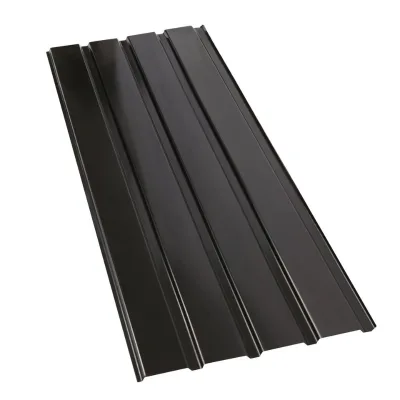


Hot Sale Zinc Coated Galvanized Steel Coil for Corrugated with Fast Delivery
$535.00 - $625.00
MOQ: 5 Tons


Comprehensive Sourcing Guide
Corrugated Galvanized Steel Coil Sourcing Guide
Product Scope and Observed Listing Signals
The market for Corrugated Galvanized Steel Coil presents a diverse array of listings that often blend distinct product categories, requiring buyers to carefully distinguish between flat plates, coils, and specialized structural forms. Observed data indicates a significant overlap in terminology, where suppliers list "Steel Plate," "Steel Coil," and even "Structural Steel Bar" under similar search parameters. This convergence suggests that many vendors offer a broad portfolio of steel products, ranging from hot-rolled boiler plates to cold-rolled galvanized coils. Buyers must scrutinize the specific product type listed, as the physical form—whether a flat sheet, a continuous coil, or a pre-formed corrugated sheet—dictates entirely different handling, storage, and processing requirements. The presence of attributes like "Hot Rolled" and "Cold Rolled" in the same dataset highlights the variability in manufacturing processes available, with cold-rolled options typically offering tighter tolerances and smoother surfaces suitable for precision applications, while hot-rolled variants may be preferred for structural integrity in heavy-duty contexts.
Price and minimum order quantity (MOQ) signals further illustrate the fragmented nature of this supply market. The observed price range spans from approximately $398 to $900 USD, a variance that likely reflects differences in thickness, width, coating weight, and order volume rather than a uniform market rate. Similarly, MOQs range from 1 to 50 units, indicating that some suppliers cater to small-scale or trial orders while others operate on a bulk industrial model. This disparity necessitates a clear definition of procurement volume before engaging with suppliers, as the unit economics will shift dramatically based on whether the buyer is purchasing a single coil for immediate fabrication or a container load for long-term production. Additionally, stock availability varies, with some listings explicitly marked as "Stock" while others are "Not Stock," implying that lead times can vary from immediate dispatch to weeks of production time, a critical factor for just-in-time manufacturing environments.
Technical Specifications to Verify
Thickness and dimensional tolerances are the most critical technical parameters to verify, as the supplied data reveals a wide spectrum of available gauges that do not necessarily align with a single product definition. Listings indicate thickness ranges from as thin as 0.12mm to as thick as 6mm, with specific models citing ranges like 0.14mm-0.8mm or 0.3mm-3.0mm. For corrugated applications, which often require specific gauge-to-strength ratios to maintain rigidity without excessive weight, buyers must confirm the exact thickness tolerance and whether the measurement refers to the base metal or the total coated thickness. Width specifications also vary significantly, with observed values including 665mm, 800mm, 825mm, 900mm, and broader ranges from 750mm to 1250mm. Verifying the exact width capability is essential, as standard widths may not accommodate custom corrugation profiles, and non-standard widths can incur significant slitting or processing surcharges.
The steel grade and surface treatment specifications must be cross-referenced with the intended application to ensure material compatibility. Common grades observed include Q235B, CGCC, SGCC, Sgch, and Dx51d, each offering different mechanical properties and corrosion resistance levels. CGCC and SGCC are typically cold-rolled galvanized coils, suitable for applications requiring good formability and surface finish, while Q235B is a carbon structural steel often used in construction. The surface treatment is frequently listed as "Galvanized," but buyers should verify the coating type and weight, as these directly impact longevity and weldability. Furthermore, the distinction between "Plate" and "Coil" is vital; while some listings mention "Corrugated" in the keyword context, the actual product attributes often list "Plate" or "Coil" as the primary shape. Buyers must clarify if the supplier provides pre-corrugated sheets or if the raw coil needs to be processed through a roll-forming machine, as this decision impacts capital expenditure and production workflow.
Compliance and Safety Documentation
Certification requirements form the backbone of quality assurance in steel procurement, and the observed data highlights a reliance on international standards such as ISO, ASTM, GB, JIS, BS, and DIN. Buyers should verify which specific standard applies to their order, as "ASTM" and "GB" represent vastly different regional and performance benchmarks. For instance, ASTM standards are prevalent in North American and global markets, while GB standards are specific to China. The presence of ISO certification, often cited as ISO9001 or ISO14001 in background knowledge, indicates a supplier’s adherence to quality management and environmental systems, but it does not guarantee that the specific steel batch meets the mechanical property requirements of a project specification. Buyers must request mill test certificates (MTCs) that explicitly reference the applicable standard and confirm that the chemical composition and mechanical properties of the delivered material match the ordered grade, such as Q235B or Dx51d.
Safety and regulatory compliance extend beyond material certifications to include packaging and handling standards, which are crucial for preventing damage during transit. The observed packing methods include "Sea Worthy Packing," "Export Standard Packing," and "Pallet Packing," each offering different levels of protection against moisture and physical impact. Galvanized steel is susceptible to white rust if exposed to condensation during shipping, so verifying that the packing includes desiccants and waterproof wrapping is essential. Additionally, while CE marking is mentioned in background knowledge, its applicability depends on the destination market and the specific end-use of the steel. Buyers in regulated industries, such as construction or pressure vessel manufacturing, must ensure that the supplier can provide documentation proving compliance with local building codes or safety regulations, which may require third-party testing beyond the supplier’s internal quality control.
Cost Drivers and Commercial Terms
The cost structure of Corrugated Galvanized Steel Coil is influenced by multiple variables, including raw material prices, processing complexity, and commercial terms. The observed price range of $398 to $900 USD suggests that factors such as thickness, width, and coating weight significantly impact the final price. Thicker gauges and wider coils generally command higher prices due to increased material usage and processing difficulty. Additionally, the choice between hot-rolled and cold-rolled processes affects cost, with cold-rolled coils typically being more expensive due to the additional processing steps required to achieve tighter tolerances and smoother surfaces. Buyers should also consider the impact of customization, which is listed as "Available" in the product attributes. Custom dimensions, specific surface treatments, or unique packaging requirements can introduce additional fees, so it is crucial to obtain a detailed breakdown of costs before finalizing the order.
Commercial terms, including minimum order quantities and payment conditions, play a significant role in the overall procurement strategy. The observed MOQ range of 1 to 50 units indicates flexibility, but buyers should be aware that smaller orders may incur higher per-unit costs or additional handling fees. Payment terms should be negotiated to mitigate risk, with options such as letters of credit or escrow services providing security for both parties. Shipping and logistics costs are another critical component, especially for international buyers. The "Sea Worthy Packing" and "Export Standard Packing" mentioned in the listings suggest that suppliers are experienced in international trade, but buyers should clarify who is responsible for freight, insurance, and customs clearance. Incoterms such as FOB, CIF, or DDP will determine the point at which risk and cost transfer from the supplier to the buyer, impacting the total landed cost of the material.
Supplier Qualification and Quality Control
Supplier qualification is a multi-step process that begins with verifying the company’s operational capabilities and geographic location. The observed data indicates that many suppliers are located in China, with specific mentions of Shandong as a production hub. This region is known for its steel industry, but buyers should conduct due diligence to ensure that the supplier is a legitimate manufacturer or an authorized distributor rather than a trading company with limited control over quality. Requesting factory audits or video tours can provide insight into the production facilities, including the condition of rolling mills, galvanizing lines, and quality control laboratories. Additionally, verifying the supplier’s business license and export rights is essential to ensure they are legally authorized to conduct international trade and can provide the necessary documentation for customs clearance.
Quality control measures should be established before production begins, with clear specifications for inspection points and acceptance criteria. Buyers should define the acceptable tolerance levels for thickness, width, and surface finish, and specify the testing methods to be used, such as ultrasonic testing for internal defects or coating weight measurements for corrosion resistance. The presence of SGS certification in some listings suggests that third-party inspection services are available, which can provide an unbiased assessment of the product’s quality. Buyers should consider engaging independent inspection agencies to conduct pre-shipment inspections, particularly for large orders or new supplier relationships. Establishing a clear protocol for handling non-conforming products, including return policies and compensation mechanisms, is also crucial to mitigate the risk of receiving substandard materials.
Long-Term Procurement Checks
Long-term procurement success depends on establishing a robust supplier relationship management system that includes regular performance reviews and continuous improvement initiatives. Buyers should track key performance indicators such as on-time delivery rates, defect rates, and responsiveness to issues. Consistent performance in these areas indicates a reliable supplier, while recurring problems may signal underlying operational issues that need to be addressed. Regular communication with the supplier, including periodic business reviews, can help align expectations and identify opportunities for cost savings or process improvements. Building a strong relationship with the supplier can also provide access to new product developments or market insights that can benefit the buyer’s procurement strategy.
Market monitoring and risk management are essential components of long-term procurement planning. Buyers should stay informed about trends in raw material prices, such as iron ore and zinc, which can impact the cost of steel coils. Diversifying the supplier base can mitigate the risk of supply disruptions due to geopolitical events, natural disasters, or production issues. Additionally, buyers should regularly review their inventory management practices to ensure that they are maintaining optimal stock levels without tying up excessive capital. Implementing a system for tracking material usage and forecasting future needs can help optimize ordering cycles and reduce the risk of stockouts or overstocking. By combining strategic supplier management with proactive market analysis, buyers can secure a stable and cost-effective supply of Corrugated Galvanized Steel Coil for their operations.
FAQs
What certifications do the steel coils have?
The steel coils hold ISO and SGS certifications. These standards ensure quality management and product reliability for industrial applications like boiler plates and ship plates.
Which thickness ranges are available for these coils?
Available thickness ranges span from 0.12mm to 3.0mm depending on the specific grade. Buyers can select options like 0.13-0.80mm or 0.14-2mm for various structural needs.
Can I request customization for these steel products?
Yes, customization is available for these steel products. Buyers can specify dimensions and surface treatments like galvanizing to meet unique project requirements for containers or flanges.
What is the minimum order quantity for these coils?
The minimum order quantity ranges from 1 to 50 units. This flexibility allows buyers to source small batches or larger volumes depending on their immediate inventory needs.
How are these steel coils packed for shipping?
These steel coils are packed in export standard seaworthy packaging. Options include pallet packing or 3-4 tons per coil to ensure safe transport during international logistics.
Which steel grades are offered for these products?
Offered steel grades include Q235B, CGCC, SGCC, Sgch, and Dx51d. These materials support diverse applications ranging from structural bars to specialized silicon steel uses.