Source Corrugated Highway Crash Barrier for Road Safety
Find and compare 30 Corrugated Highway Crash Barrier options for roadway safety, central isolation, and curve roads. These steel guardrails feature galvanized surfaces for corrosion resistance and easy installation, helping buyers evaluate specifications and supplier capabilities.
Key considerations
Products List


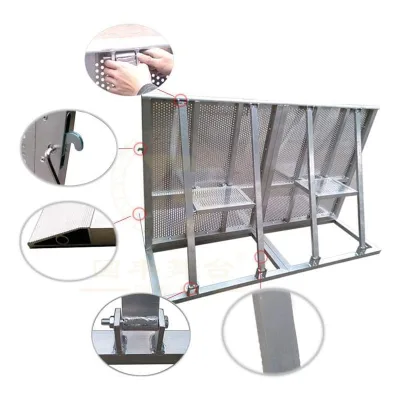
Welded Crash Barrier Crowd Control Barrier Highway Customized Metal Barricade
$20.00 - $30.00
MOQ: 100 Pieces



Comprehensive Sourcing Guide
Corrugated Highway Crash Barrier Sourcing Guide
Procuring corrugated highway crash barriers requires a disciplined approach that balances structural integrity, regulatory compliance, and logistical efficiency. These systems serve as critical safety infrastructure, designed to absorb and redirect kinetic energy during vehicle impacts to prevent severe injuries and secondary collisions. Buyers must navigate a market characterized by diverse material specifications, varying surface treatments, and distinct installation requirements. This guide provides evidence-based procurement strategies to help sourcing professionals evaluate suppliers, verify technical claims, and mitigate risks associated with large-scale infrastructure projects.
The following sections outline the essential considerations for sourcing these barriers, from initial product scope analysis to long-term maintenance planning. By focusing on verified attributes such as material thickness, galvanization quality, and certification standards, buyers can make informed decisions that align with project safety goals and budgetary constraints. The guidance herein is derived from observed market data and trusted industry knowledge, ensuring that recommendations are practical, actionable, and grounded in real-world procurement challenges.
Product Scope and Observed Listing Signals
The market for corrugated highway crash barriers presents a wide range of product variations, primarily distinguished by their dimensions, material composition, and intended application zones. Observed listings indicate a price range of $9.25 to $1,500 USD, reflecting significant differences in product type, such as standard W-beam guardrails versus more complex roller barriers or central isolation systems. The minimum order quantity (MOQ) typically spans from 1 to 500 units, offering flexibility for both small-scale repairs and large highway construction projects. Buyers should note that "Highway Guardrail" and "Road Barrier" are common identifiers, but specific model numbers like 4318310832.67mm or 4320505832.75mm denote precise dimensional standards that must be matched to local engineering requirements.
Material and surface treatment are primary differentiators in product listings, with steel and iron being the predominant materials used. Most observed products feature galvanized surfaces, which are critical for corrosion resistance in outdoor environments, and some listings specify powder-coated finishes in colors such as silver, traffic yellow, or orange. The position of installation is another key variable, with products categorized for "Road Side" placement or "Central Isolation Barrier" use. Buyers must carefully review these attributes to ensure the selected barrier aligns with the specific roadway geometry, such as curve roads or straight sections, and meets the aesthetic or visibility requirements of the project.
Technical Specifications to Verify
Verifying technical specifications is paramount to ensuring the structural performance of the crash barrier system. Key dimensions to confirm include the length, width, height, and thickness of the corrugated beam, with observed thicknesses ranging from 2.67mm to 4mm. The standard model 432031083*2.75mm is frequently cited, but buyers must verify if the supplier can accommodate custom lengths or thicknesses, as customization is often available. Additionally, the post specifications, such as galvanized S235 steel round posts, must be compatible with the beam dimensions to ensure proper load distribution and impact resistance.
The connection hardware and assembly details are equally critical and often overlooked in initial sourcing. Buyers should verify the type of bolts, splice plates, and blockouts used to connect the corrugated beam to the posts. The surface treatment process, whether hot-dip galvanized or coated, directly impacts the lifespan of the barrier in corrosive environments. It is essential to confirm that the galvanization thickness meets industry standards to prevent premature rusting, especially in coastal or high-humidity regions. Furthermore, the weight of individual components, such as the 70kg weight observed for certain models, should be considered for logistics and installation planning.
Compliance and Safety Documentation
Compliance with international and local safety standards is non-negotiable for highway crash barriers. Buyers must request and verify certifications such as CE, ISO, ASTM, and RoHS, which indicate that the product has undergone rigorous testing for performance and environmental safety. The presence of CE marking is particularly important for projects in Europe, while ASTM standards are often required for North American infrastructure. These certifications provide assurance that the barrier has been tested for impact resistance, energy absorption, and structural integrity under controlled conditions.
In addition to product certifications, buyers should inquire about the testing protocols used by the supplier. While specific test results may not be publicly listed, reputable suppliers should be able to provide documentation showing that their products meet relevant national or international crash test standards. This includes verifying that the barrier system, including posts and foundations, performs as expected in simulated impact scenarios. Buyers should also check for quality grade certifications, such as "Top Quality Oriented," which may indicate adherence to stricter internal quality control measures. Ensuring that all documentation is up-to-date and valid is crucial for project approval and liability protection.
Cost Drivers and Commercial Terms
Several factors influence the final cost of corrugated highway crash barriers, including material prices, surface treatment complexity, and order volume. The observed price range of $9.25 to $1,500 USD reflects these variations, with higher costs associated with thicker materials, specialized coatings, or custom dimensions. Buyers should consider the total cost of ownership, which includes not only the unit price but also shipping, installation, and maintenance costs. Shipping by sea is a common method for bulk orders, and buyers should clarify whether the quoted price includes freight and insurance.
Commercial terms such as MOQ, payment terms, and lead times are critical for project planning. While MOQs can be as low as 1 unit, larger orders may qualify for better pricing or more flexible shipping arrangements. Buyers should negotiate clear terms regarding packaging, with options for standard export packing, woven bags, or containers, to ensure safe transit. It is also important to confirm the supplier's ability to handle split packing or customized bundling, which can optimize container space and reduce shipping costs. Understanding these commercial dynamics helps buyers budget accurately and avoid unexpected expenses during the procurement process.
Supplier Qualification and Quality Control
Selecting a qualified supplier is essential for ensuring the reliability and consistency of the crash barrier supply. Buyers should prioritize suppliers with a proven track record in producing road safety products, particularly those originating from established manufacturing hubs like Hebei, China. Verification of the supplier's production capabilities, including their ability to handle customization requests and maintain consistent quality across batches, is crucial. Buyers should request samples or conduct factory audits to assess the supplier's quality control processes, including material inspection, galvanization quality, and dimensional accuracy.
Quality control should extend to the packaging and shipping process, as improper handling can damage the barriers before installation. Buyers should verify that the supplier uses appropriate packaging methods, such as standard export bundles or containers, to protect the galvanized surfaces from scratches and corrosion during transit. Additionally, suppliers should provide clear documentation regarding the origin of raw materials and the manufacturing process, ensuring transparency and traceability. Establishing a strong relationship with a qualified supplier can lead to better support, faster response times, and improved product quality over the long term.
Long-Term Procurement Checks
Long-term procurement success depends on regular monitoring of supplier performance and product durability. Buyers should establish a schedule for periodic quality checks, including visual inspections of delivered goods for signs of corrosion, damage, or dimensional deviations. It is also important to track the performance of installed barriers in the field, noting any issues related to installation difficulty, structural failure, or premature wear. This feedback loop can help identify potential problems early and allow for corrective actions, such as adjusting specifications or switching suppliers if necessary.
Maintenance and replacement planning should be integrated into the procurement strategy to ensure the longevity of the road safety infrastructure. Buyers should consider the warranty terms offered by the supplier and the availability of spare parts for future repairs. Additionally, staying informed about updates to safety standards and technological advancements in barrier design can help buyers make informed decisions about future upgrades or replacements. By maintaining a proactive approach to procurement and quality management, buyers can ensure that their highway crash barriers continue to provide effective protection for road users over their intended lifespan.
FAQs
What certifications do the highway guardrails have?
The highway guardrails carry CE, ISOASTM, and RoHS certifications. These standards ensure the steel products meet international safety and quality requirements for roadway safety applications.
How thick are the steel guardrail sections?
The steel guardrail sections have a thickness ranging from 2.67mm to 4mm. Specific models like the 4320*310*83*2.75mm variant utilize 2.75mm thickness for optimal structural integrity.
Can the guardrails be customized for specific roads?
Yes, customization is available for these highway guardrails. Buyers can request specific dimensions or finishes to suit curve roads, bend roads, or central isolation barrier needs.
What is the typical weight of a guardrail unit?
A standard highway guardrail unit weighs approximately 70kgs. This weight supports the galvanized steel construction designed for great corrosion resistance and easy installation on road sides.
Which colors are available for the traffic barriers?
The traffic barriers are available in Silver, Traffic Yellow, Orange, and Yellow. These colors ensure high visibility for roadway safety while maintaining the galvanized steel surface treatment.
How are the guardrails packaged for shipping?
The guardrails are shipped using standard export packing, woven bags, or standard cartons. Options include whole or split packing, with shipping primarily conducted by sea from Hebei, China.