Source Custom Precision Goose Decoys for Hunting, Wildlife Control, and Photography
Find and compare 30 listings for Custom Precision Goose Decoys made from materials like PP board and metal. Buyers can review specifications, certifications, and pricing to select suitable options for outdoor hunting and wildlife management applications.
Key considerations
Products List



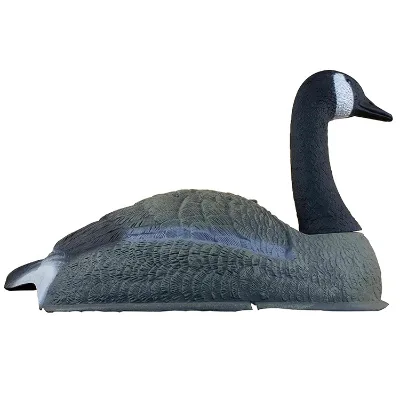
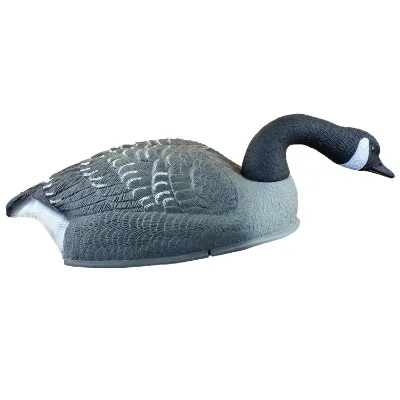
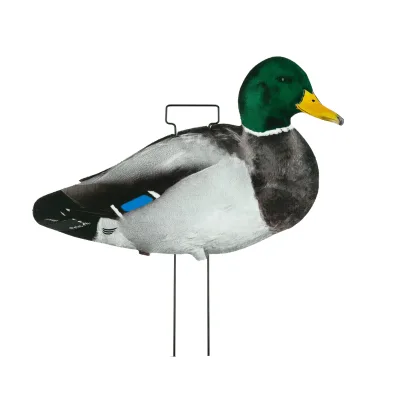
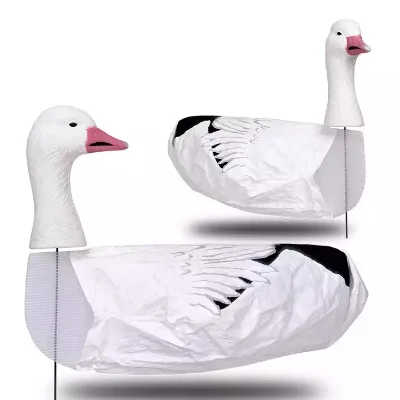


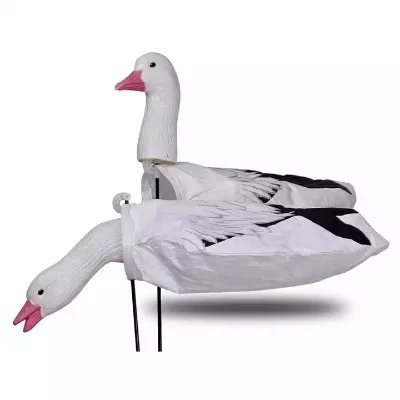
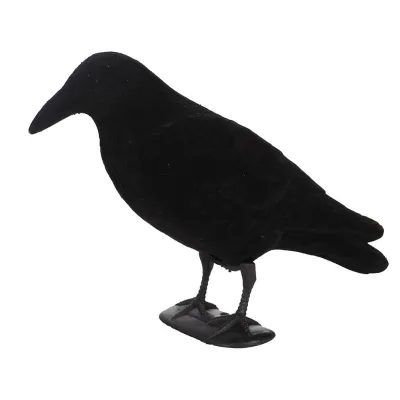




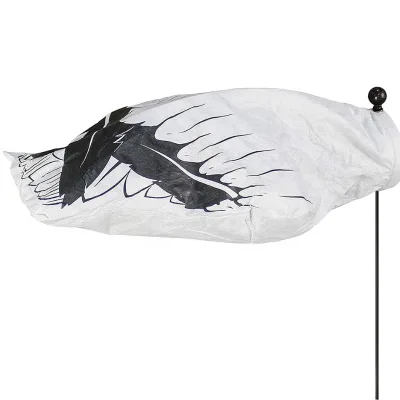
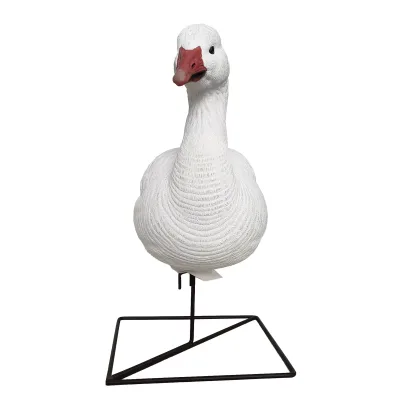
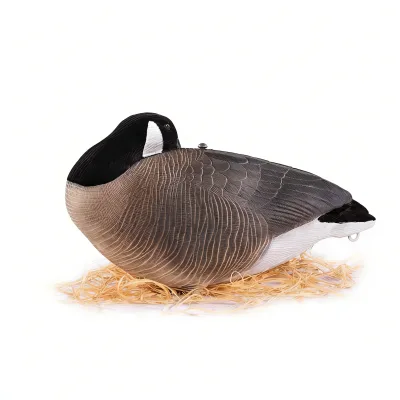
Comprehensive Sourcing Guide
Strategic Sourcing Guide for Custom Precision Goose Decoys
The procurement of Custom Precision Goose Decoys represents a specialized intersection of hunting equipment manufacturing and industrial customization. Buyers entering this market must navigate a landscape defined by diverse material compositions, varying dimensional standards, and specific certification requirements. Unlike generic hunting gear, "precision" implies a focus on mechanical accuracy, material durability, and specific functional attributes that mimic real wildlife behavior. This guide synthesizes available product data to provide a structured approach for evaluating suppliers, understanding technical specifications, and ensuring compliance without relying on unverified market claims.
Understanding Material Composition and Structural Integrity
The foundation of any high-quality goose decoy lies in its material selection. Current market data indicates a bifurcation in material types, with Polypropylene (PP) Board and Metal serving as the primary options. PP Board is frequently cited for its balance of weight and durability, making it suitable for floating decoys that require resistance to water damage. The attribute "Waterproof" is a critical observation for any product intended for outdoor hunting environments, ensuring that the decoy maintains its structural integrity and visual appeal despite exposure to moisture.
Conversely, metal-based decoys or components are often associated with "Metal Casting Machinery" and "Metal Processing Machinery Parts." While less common for the decoy body itself, metal is utilized for internal mechanisms, mounting hardware, or specific precision parts such as "Tungsten Carbide Rods" used in mechanical processing. When sourcing, buyers must verify the specific application of the material. A decoy described as "Metal" may be a heavy-duty, stationary model, whereas a "PP Board" model is likely designed for buoyancy and portability. The "Folded" attribute suggests that some units are designed for compact storage and transport, a feature that requires precise engineering in the folding mechanism to ensure the decoy returns to its intended shape without warping.
Technical Specifications and Dimensional Standards
Precision in hunting decoys is largely defined by dimensions and model numbers. The supply chain presents a wide array of standard sizes, which buyers must match to their specific hunting requirements. Observed specifications include a range of dimensions such as 46x34CM, 48x17CM, and 62x63CM. These variations are not arbitrary; they correspond to specific model identifiers like H01017, H01021, and H01008. For instance, the H01017 model is associated with the 46x34CM standard, while the H01016 model encompasses a broader range including 47x14.5CM and 42x22CM.
Buyers should note that some specifications are provided in imperial units, such as 13.78x 25.6 inches or 15"H x 25.6"W. The diversity in sizing, ranging from small 12.40"x 26" units to larger 61x77CM models, indicates that the market caters to different species sizes and hunting scenarios. When requesting customizations, the "prod_standard" field often lists multiple dimension sets, suggesting that a single model number may support various size configurations. It is imperative for procurement teams to cross-reference the requested dimensions with the specific model number to ensure the supplier can deliver the exact physical profile required. The "Carton" packing standard further implies that these units are shipped in protective packaging designed to maintain these precise dimensions during transit.
Compliance, Certification, and Regulatory Adherence
In the B2B procurement of hunting equipment, compliance with international standards is a non-negotiable factor for many buyers. The available data highlights a mix of certifications and standards that suppliers may claim. Notable certifications observed include ISOGS, RoHS, and CE. These certifications suggest adherence to environmental, safety, and quality management protocols. RoHS compliance, for example, indicates that the product limits the use of specific hazardous materials, which is crucial for products intended for outdoor use and potential contact with the environment.
Furthermore, the data references a broad spectrum of industrial standards including BS, ANSI, JIS, GB, GOST, ASTM, and DIN. While these are typically associated with metal processing and machinery, their presence in the product attributes suggests that the manufacturing process for these decoys, particularly those with metal components or precision-machined parts, adheres to rigorous engineering norms. Buyers must verify that the specific supplier for their order holds the relevant certifications for the specific model being purchased. The "Customized" attribute implies that the customization process itself must also adhere to these standards to ensure the final product remains compliant. For instance, a custom metal part for a decoy mechanism must meet the same DIN or ASTM standards as the base product.
Cost Drivers and Minimum Order Quantities
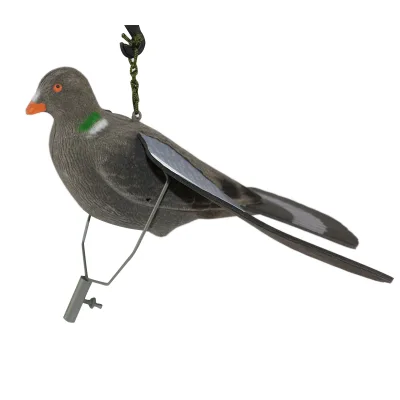
The economics of sourcing Custom Precision Goose Decoys are influenced by several key variables, primarily material costs, customization complexity, and order volume. The observed Minimum Order Quantity (MOQ) ranges from 1 to 10,000 units, indicating a market that accommodates both small-scale buyers and large industrial distributors. However, specific models like the "Hunting Pigeon Decoys" (Model D002) list an MOQ of 1000pcs, suggesting that certain customizations or specific production lines may require higher volume commitments to be economically viable.
Price variability is significant, with observed ranges spanning from $0.20 to $250.00. This wide disparity is driven by the material type (PP Board vs. Metal), the complexity of the "Milling Precision" or "Mechanical Processing" involved, and the level of customization. Products with "Eco-friendly" features or those requiring specific "Mechanical Parts" like "Tungsten Carbide Rods" will naturally command a higher price point. Buyers should understand that the "Selling Units" being "Single item" does not necessarily reflect the transactional MOQ. The "Customization" availability is a major cost driver; while the base product may be affordable, the engineering and tooling required for custom dimensions or branding will increase the unit cost and potentially the lead time.
Supplier Evaluation and Geographic Origins
Geographic origin plays a pivotal role in the logistics and quality assurance of sourcing these products. The data identifies multiple production hubs in China, specifically Huizhou, Guangdong, and Zhejiang. Each of these locations may have different specializations. Huizhou and Guangdong are noted for producing models with specific dimensional standards and metal components, while Zhejiang is also a recognized origin for these types of manufacturing. The "Port of dispatch" is frequently listed as Shanghai or Ningbo, which are major logistics hubs facilitating international trade.
When evaluating suppliers, buyers should look for evidence of the "Brand Name" and "Condition" (New). Brands like "BR" and "Demarui" appear in the data, serving as indicators of established manufacturing entities. However, the presence of a brand name does not guarantee quality without verification of the supplier's capacity to meet the specific "prod_model" requirements. Buyers must assess the supplier's ability to handle the "Mechanical Processing" and "Milling Precision" aspects if the order involves custom metal parts. The "Function" of the product, listed as "Ourdoor Hunting," confirms the intended use, but the supplier must demonstrate that their specific model meets the durability and precision required for this function.
Quality Control and Long-Term Procurement Strategy
Ensuring consistent quality in Custom Precision Goose Decoys requires a robust quality control (QC) framework. The "Condition: New" attribute is a baseline, but buyers must verify the physical integrity of the "Folded" mechanisms and the "Waterproof" seals. For metal components, the "Metal Casting" and "Metal Drawing" processes must be inspected for defects that could compromise the "Milling Precision." The "DIN Enclosure for Electronics" attribute, while seemingly unrelated to hunting, highlights the potential for integrated electronic components in advanced decoys, which necessitates rigorous testing for functionality and durability.
Long-term procurement considerations should focus on the stability of the supply chain and the consistency of the "prod_standard." Given the variety of dimensions and models, a supplier's ability to maintain consistency across batches is critical. The "Carton" and "Bubble Bags, Cardboard Boxes" packing standards indicate that packaging is a key part of the quality assurance process, protecting the decoys from damage during shipping. Buyers should establish clear communication channels regarding the "Customization" process to ensure that any changes to the "prod_model" or dimensions are accurately reflected in the final product. Regular audits of the supplier's production facilities, particularly those in Huizhou, Guangdong, and Zhejiang, can help maintain the high standards required for precision hunting equipment.
Application Scenarios and Functional Versatility
The versatility of Custom Precision Goose Decoys extends beyond simple hunting. The data lists applications ranging from "Metal Casting Machinery" to "Metal Spinning Machinery," suggesting that the manufacturing techniques used for these decoys are shared with broader industrial sectors. This cross-industry application highlights the precision engineering involved. For the end-user, the "Function: Ourdoor Hunting" is the primary application, but the "Goose Decoy" and "Duck" classifications indicate that these products are part of a larger ecosystem of hunting decoys.
The "Mechanical Parts" and "Shaft for Shredder" attributes suggest that some decoys may incorporate moving parts or mechanical elements to enhance realism, such as head movement or wing flapping. This level of complexity requires a supplier with expertise in "Metal Processing Machinery Parts" and "Metal Straightening Machinery." Buyers looking for high-end, realistic decoys should prioritize suppliers who can demonstrate experience in these mechanical applications. The "Dental Implant" mention in the data, while likely a data artifact or a specific niche component, underscores the precision required in manufacturing small, intricate parts that may be integrated into the decoy system.
Conclusion
Sourcing Custom Precision Goose Decoys requires a meticulous approach that balances technical specifications, material integrity, and regulatory compliance. By leveraging the observed data on model numbers, dimensions, and certifications, buyers can make informed decisions that align with their specific hunting needs and operational requirements. The diversity in origins, from Huizhou to Zhejiang, and the wide range of MOQs and price points offer flexibility, but success depends on rigorous supplier evaluation and clear communication regarding customization. As the market continues to evolve, maintaining a focus on quality control and adherence to international standards will ensure the procurement of reliable, high-performance hunting equipment.
FAQs
What materials are used for Custom Precision Goose Decoys?
The primary materials observed are PP Board and Metal. PP Board offers waterproof durability for floating models, while metal components support mechanical processing parts like tungsten carbide rods for precision mechanisms.
Which certifications apply to these hunting decoys?
Products may carry ISOGS, RoHS, and CE certifications. These indicate adherence to environmental and safety standards, particularly for metal processing parts and components intended for outdoor hunting applications.
How do dimensions vary across different models?
Dimensions vary significantly by model number, such as H01017 at 46x34CM or H01008 at 62x63CM. Some models also list imperial sizes like 13.78x 25.6 inches, requiring specific cross-referencing for accurate procurement.
Can buyers customize the minimum order quantity?
MOQ ranges from 1 to 10000 units depending on the supplier and product type. Specific models like the Hunting Pigeon Decoys may require a fixed MOQ of 1000pcs, while others allow smaller single-item orders.
Where are these decoys typically manufactured?
Production origins include Huizhou, Guangdong, and Zhejiang in China. Major ports for dispatch are often Shanghai or Ningbo, facilitating international logistics for both PP Board and metal-based decoy models.
What is the price range for these products?
Observed prices range from 0.2 to 250 USD per unit. This variation depends on material type, customization complexity, and whether the item includes mechanical parts or specialized milling precision features.