Source High Precision Sheet Metal Mould for Car, Appliance, and Hardware
Compare 30 High Precision Sheet Metal Mould options from Qingdao suppliers. These tools support progressive die stamping, EDM milling, and hot or cold rolled techniques for automotive, appliance, and hardware applications; compare the available evidence and request quotations based on your requirements.
Key considerations
Products List


Metal Stamping Mould Custom Designs for Any Material Stamping Parts Tooling
$899.00 - $999.00
MOQ: 1 Sets


Customized Precision Progressive Die Stamping Mould for Metal for Metal Stamping Parts
$1500.00 - $5000.00
MOQ: 1 Pieces


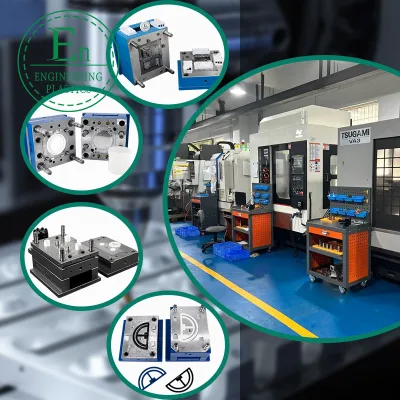


Comprehensive Sourcing Guide
High Precision Sheet Metal Mould Sourcing Guide
Procuring high precision sheet metal moulds requires a strategic approach that balances technical rigor with commercial viability. Buyers must recognize that these components are not off-the-shelf items but engineered solutions tailored to specific production needs. The sourcing process begins with a clear definition of the end-use application, whether it involves automotive parts, household appliances, or electronic hardware. Understanding the operational environment of the final product helps in selecting the appropriate material and manufacturing technique, ensuring that the mould can withstand the required stresses and tolerances throughout its lifecycle.
This guide provides a structured framework for evaluating suppliers and validating product claims. It focuses on verifying technical specifications, understanding cost drivers, and establishing robust quality control measures. By adhering to these principles, procurement teams can mitigate risks associated with tooling failures, production delays, and non-compliant outputs. The following sections detail the critical steps for sourcing high precision sheet metal moulds, emphasizing evidence-based decision-making and rigorous supplier qualification processes.
Product Scope and Observed Listing Signals
The market for high precision sheet metal moulds encompasses a wide range of applications, including automotive components, electronic housings, and hardware fixtures. Listings often highlight capabilities such as progressive die stamping, which allows for high-volume production of complex parts with consistent quality. Buyers should observe that many suppliers offer customization services, accepting 2D PDF/CAD or 3D IGES/STEP drawings to create bespoke solutions. This flexibility is crucial for industries requiring unique geometries or specific functional requirements that standard moulds cannot fulfill.
Observed listing signals indicate a strong emphasis on advanced manufacturing technologies, including computer-aided design and EDM milling for cavity creation. Suppliers frequently advertise advantages such as wear resistance and high-speed milling capabilities, which are essential for maintaining precision over long production runs. Additionally, the use of materials like SKD11 for mould textures suggests a focus on durability and performance. Buyers should verify these claims by requesting detailed technical datasheets and case studies that demonstrate the supplier’s ability to meet specific industry standards and performance benchmarks.
Technical Specifications to Verify
Verifying technical specifications is paramount to ensuring the mould meets production requirements. Key attributes to confirm include tolerance levels, which are often specified as +/-0.01mm for high-precision applications. Buyers must also assess the manufacturing techniques employed, such as hot rolled or cold rolled processes, and the type of driving motor, whether permanent magnet or hybrid, which impacts energy efficiency and control. The mould’s life expectancy, often cited as more than 2,000,000 shots, is a critical metric that influences long-term cost-effectiveness and production continuity.
Additionally, the processing method, such as punching and shearing moulds, and the use of progressive dies for part combination, should be evaluated against the production volume and complexity. Buyers should inquire about the cavity design, including multi-cavity options, and the shaping mode, which may involve die casting or other forming techniques. It is essential to confirm that the supplier can provide geometric detection methods to ensure parts meet dimensional accuracy. These technical details must be aligned with the buyer’s specific production goals to avoid costly rework or inefficiencies.
Compliance and Safety Documentation
Compliance with international standards is a non-negotiable aspect of sourcing high precision sheet metal moulds. Buyers should verify that suppliers adhere to recognized standards such as ASME, TEMA, JIS Code, China GB Code, EN, and GB. These standards ensure that the moulds are designed and manufactured with safety, reliability, and interoperability in mind. Documentation should include certificates of conformity and detailed test reports that validate the mould’s performance under specified conditions. This verification process helps mitigate risks associated with non-compliant products that may fail in the field or during production.
Furthermore, buyers should request evidence of quality management systems, such as ISO 9001 certification, which indicates a commitment to consistent quality and continuous improvement. While specific certification status should be confirmed with the supplier, the presence of such frameworks is a strong indicator of a supplier’s operational maturity. Safety documentation should also cover the handling of hazardous materials, if any, and the implementation of safety protocols during the manufacturing process. Ensuring compliance with these standards protects the buyer from legal liabilities and enhances the overall reliability of the supply chain.
Cost Drivers and Commercial Terms
Understanding the cost drivers associated with high precision sheet metal moulds is essential for effective budgeting and negotiation. Key factors include the complexity of the design, the materials used, and the manufacturing techniques employed. Customization options, such as specific tolerances or unique geometries, can significantly impact the final price. Buyers should also consider the lead time, which typically ranges from 15 to 45 days, as expedited services often incur additional costs. The minimum order quantity (MOQ) is another critical commercial term, with many suppliers offering low MOQs to accommodate smaller production runs.
Negotiating favorable commercial terms requires a clear understanding of these cost drivers and the supplier’s pricing structure. Buyers should request detailed quotations that break down costs for design, material, manufacturing, and testing. It is also important to clarify payment terms, warranty policies, and after-sales support services. By establishing transparent communication regarding these terms, buyers can avoid hidden costs and ensure that the total cost of ownership aligns with their financial objectives. This approach fosters a collaborative relationship with suppliers and promotes long-term value creation.
Supplier Qualification and Quality Control
Supplier qualification is a critical step in ensuring the reliability and quality of high precision sheet metal moulds. Buyers should conduct thorough due diligence, including site visits and audits, to assess the supplier’s manufacturing capabilities and quality control processes. Key areas to evaluate include the precision of their machinery, the expertise of their engineering team, and the robustness of their quality management systems. Suppliers should demonstrate a commitment to continuous improvement and have a track record of delivering high-quality products on time.
Quality control measures should be integrated into every stage of the manufacturing process, from design validation to final inspection. Buyers should request detailed quality plans that outline the testing methods, inspection criteria, and acceptance standards for each mould. Geometric detection and other advanced testing techniques should be employed to verify dimensional accuracy and functional performance. By establishing rigorous quality control protocols, buyers can minimize the risk of defects and ensure that the moulds meet their specific production requirements. This proactive approach enhances supply chain resilience and product reliability.
Long-Term Procurement Checks
Long-term procurement checks are essential for maintaining the performance and reliability of high precision sheet metal moulds over time. Buyers should establish regular maintenance schedules and monitor the mould’s performance metrics, such as cycle time and defect rates. Any deviations from expected performance should be investigated promptly to identify and address underlying issues. Suppliers should provide comprehensive maintenance guidelines and support services to help buyers extend the mould’s lifespan and optimize its efficiency.
Additionally, buyers should foster ongoing communication with suppliers to stay informed about technological advancements and industry best practices. This collaboration can lead to continuous improvements in mould design and manufacturing processes, enhancing overall production efficiency. By implementing long-term procurement checks, buyers can ensure that their investment in high precision sheet metal moulds yields sustained value and supports their competitive advantage in the market. This strategic approach to procurement management promotes sustainability and operational excellence.
FAQs
What standards do the sheet metal moulds meet?
The moulds comply with ASME, TEMA, JIS Code, China GB Code, EN, and GB standards. Customized standards are also available to match specific project requirements. This ensures the products meet diverse international and regional regulatory needs for industrial applications.
Can I request custom dimensions for the moulds?
Yes, customization is available for thickness, color, and product models. The manufacturing process supports precise machining to meet specific design requests. Buyers can provide 2D or 3D drawings to ensure the final parts match their exact engineering specifications.
What is the typical lead time for delivery?
Delivery times range from 15 to 20 days or up to 45 days depending on order complexity. The manufacturing technology utilizes computer systems to optimize production speed. Buyers should confirm specific timelines based on their order volume and customization level.
Which industries use these precision metal stamping parts?
These parts are applied in the car, household appliances, electronic, hardware, and catering sectors. Specific products include door hinges, shovels, and aluminum foil containers. The versatility allows them to serve various commercial and industrial manufacturing needs effectively.
How is the quality of the moulds detected?
Quality is ensured through geometric detection methods during the manufacturing process. The moulds feature high-speed milling and EDM cavity technology for precision. This rigorous detection ensures the final stamped parts meet the required tolerance of plus or minus 0.01 millimeters.
What is the minimum order quantity for these parts?
Low MOQ options are available, with observed ranges starting from one unit up to 100 units. This flexibility supports both prototype development and small batch production runs. Buyers can negotiate specific quantities based on their project scale and budget constraints.
Where are these sheet metal moulds manufactured?
The products originate from Qingdao and Shandong regions in China. This location provides access to established manufacturing hubs for sheet metal fabrication. Buyers can expect efficient logistics and established supply chains for sourcing these precision components.