Source Customized FRP Fishing Luxury Yacht for sport fishing, runabout, and megayacht use
Find and compare 28 Customized FRP Fishing Luxury Yacht options ranging from 6m to over 18m. Evaluate specifications including fiberglass hulls, outboard and inboard engine configurations, and seating capacities for runabout, sport fisherman, and megayacht applications.
Key considerations
Products List

CE Certified 14m 46FT FRP Fishing Boat Walkaround Tourist Luxury Yacht for Sale
$225000.00 - $320000.00
MOQ: 1 Pieces

FRP Boat Supplier Open Cabin Fishing Boat Small Luxury Yacht with Competitive Price
$19600.00 - $21100.00
MOQ: 1 Pieces

36FT/11m Customized Luxury Yacht Perfect for Fishing & Leisure Cruises
$128000.00 - $129000.00
MOQ: 1 Pieces

Chines Luxury Yacht Manufacturers 46FT/14m Fiberglass Boat Fishing Yacht/Boat
$295000.00 - $320000.00
MOQ: 1 Pieces


20FT FRP Fishing Yacht Fiberglass Speed Sport Cuddy Motor Yacht with Favorable Price
$16300.00 - $17730.00
MOQ: 1 Pieces


CE Certificated Luxury Speed Boat Fiberglass Fishing Yachts with High Quality for Hot Sale
$13000.00 - $17000.00
MOQ: 1 Pieces

Popular Leisure Fiberglass Speed Fishing Boat Luxury Yacht with Cabin Cruiser
$13000.00 - $17000.00
MOQ: 1 Pieces

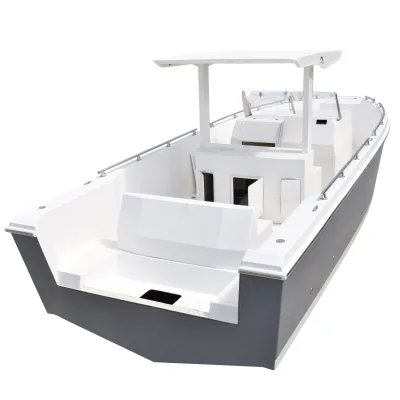

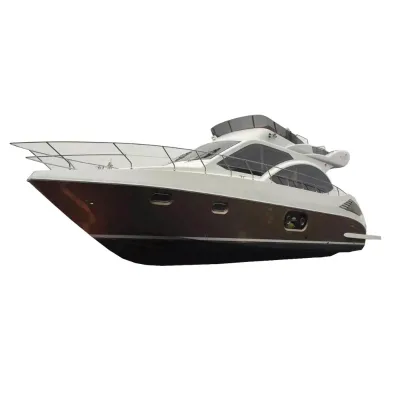
Customization New Style Precise Fishing Yachts for Luxury Cruising
$50000.00 - $80000.00
MOQ: 1 Pieces



Comprehensive Sourcing Guide
Customized FRP Fishing Luxury Yacht Sourcing Guide
Sourcing a customized fiberglass (FRP) fishing luxury yacht requires a disciplined approach that balances technical precision with commercial pragmatism. The market for these vessels is characterized by a wide variance in specifications, ranging from compact runabouts to expansive megayachts, all sharing a common hull material of fiberglass. Buyers must navigate this diversity by focusing on verified attributes rather than marketing claims. The observed product landscape includes models with lengths spanning from 6 meters to over 18 meters, indicating that "customization" often involves selecting a base hull size and then tailoring interior layouts, engine configurations, and deck features to specific operational needs.
This guide provides evidence-based procurement advice for buyers seeking to acquire these specialized watercraft. It emphasizes the verification of technical specifications, compliance documentation, and supplier capabilities. By adhering to the structured verification steps outlined below, procurement teams can mitigate risks associated with offshore manufacturing, particularly when dealing with suppliers originating from regions with established boat-building industries. The focus remains on actionable due diligence, ensuring that the final vessel meets both performance expectations and regulatory standards for its intended usage, whether for sport fishing, leisure cruising, or commercial charter operations.
Product Scope and Observed Listing Signals
The current market listings reveal a broad spectrum of vessel types, including luxury yachts, runabouts, sport fishermen, and trawlers, all constructed primarily from fiberglass. Observed data indicates that hull materials are consistently reported as fiberglass, with some listings noting composite constructions involving steel, aluminum, and FRP for specific models. The color palette is predominantly white, a standard choice for marine vessels due to its thermal reflectivity and ease of maintenance. Buyers should note that while "luxury" is a common descriptor, the actual interior finish and equipment quality vary significantly between models, necessitating a detailed review of the specific model’s feature set rather than relying on general category tags.
Length specifications observed in the market range from approximately 6 meters to over 18 meters, with specific models cited at 10.5-18m, 6-10.5m, and 21.08m overall. This variance suggests that customization often begins with the selection of a hull size that aligns with the buyer’s operational range and berthing constraints. For instance, a 14-meter (46FT) model offers a balance between interior volume and maneuverability, while larger vessels exceeding 18 meters provide extensive living spaces suitable for extended voyages. Buyers must verify the exact overall length and beam dimensions for their chosen model, as these metrics directly impact stability, fuel efficiency, and docking requirements.
Technical Specifications to Verify
Engine configuration is a critical differentiator in luxury fishing yachts, with observed listings showing both outboard and inboard options. Outboard engines are frequently cited, with power outputs ranging from 200HP per unit to 800HP per unit, often configured in twin setups for redundancy and performance. Inboard engines are also available, typically described as 4-stroke units, which may offer different maintenance profiles and weight distributions. Buyers must verify the engine type, horsepower, and fuel capacity, as these factors determine the vessel’s top speed, range, and operational costs. For example, a model with a 400L fuel tank and twin 200HP outboards may achieve speeds around 33 knots, while larger vessels with higher horsepower engines will have different performance envelopes.
Hull weight and structural integrity are paramount for safety and performance. Observed data includes hull weights ranging from 170kg for smaller boats to 6 tons for larger vessels, with specific models noting weights of 1100kg for the boat only. These figures highlight the importance of verifying the dry weight versus the loaded weight, as the addition of fuel, water, gear, and passengers significantly impacts the vessel’s center of gravity and stability. Buyers should request detailed weight distribution charts and verify the beam and depth dimensions, which are crucial for calculating stability indices and ensuring the vessel meets class society requirements for its intended usage.
Compliance and Safety Documentation
Certification status is a key indicator of a vessel’s compliance with international and regional safety standards. Observed listings mention CE certification for certain models, which is a mandatory conformity marking for products sold within the European Economic Area. Buyers must verify the specific scope of this certification, ensuring it covers the hull construction, engine installation, and electrical systems. For vessels intended for operation in other regions, such as the United States or Australia, buyers should inquire about additional certifications, such as NMMA C-Class or ABYC standards, which may be required for registration and insurance purposes.
Safety features and documentation should be thoroughly reviewed before purchase. This includes verifying the presence of life-saving appliances, navigation lights, and communication equipment as per the vessel’s size and intended usage. Buyers should request a comprehensive list of included safety gear and verify that it meets the requirements of the flag state where the vessel will be registered. Additionally, the availability of technical manuals, maintenance schedules, and warranty documentation is essential for long-term ownership. Buyers should ensure that these documents are provided in a language they understand and that they include detailed diagrams for troubleshooting and repair.
Cost Drivers and Commercial Terms
The price range for customized FRP fishing luxury yachts is extensive, with observed listings spanning from $800 to $800,000 USD. This wide variance is driven by factors such as hull size, engine power, interior finish quality, and the extent of customization required. Buyers should understand that the base price often excludes taxes, shipping, insurance, and optional upgrades. It is crucial to request a detailed breakdown of costs, including the hull price, engine costs, interior fit-out, and any additional fees for customization. This transparency allows buyers to compare quotes accurately and identify potential hidden costs.
Minimum Order Quantities (MOQ) observed in the market are typically set at 1 unit, reflecting the custom-built nature of these vessels. However, buyers should verify if volume discounts are available for multiple units or if there are additional costs for single-unit orders. Payment terms are another critical commercial consideration, with standard practices often involving a deposit upon order placement, progress payments during construction, and the final balance upon delivery. Buyers should negotiate clear payment milestones tied to verifiable construction stages to mitigate financial risk. Additionally, lead times can vary significantly based on the complexity of the customization and the supplier’s production schedule, so buyers should establish a realistic timeline and include penalties for delays in the contract.
Supplier Qualification and Quality Control
Supplier origin and manufacturing capability are key indicators of product quality. Observed listings indicate that many of these vessels are manufactured in China, a region with a robust boat-building industry. Buyers should verify the supplier’s production facilities, including their mold-making capabilities, fiberglass layup processes, and quality control procedures. Requesting video tours of the factory or visiting in person can provide valuable insights into the supplier’s operational standards. Buyers should also inquire about the supplier’s experience with international clients and their ability to handle export documentation and logistics.
Quality control measures should be integrated into the procurement process to ensure the final product meets specifications. Buyers should establish a clear inspection protocol, including pre-production, in-process, and pre-delivery inspections. These inspections should cover hull integrity, engine installation, electrical wiring, and interior finish quality. Engaging a third-party inspection agency can provide an unbiased assessment of the vessel’s condition before final payment. Buyers should also verify the supplier’s after-sales support capabilities, including the availability of spare parts, technical assistance, and warranty claims processing.
Long-Term Procurement Checks
Post-delivery support and maintenance are critical for the long-term value of a luxury fishing yacht. Buyers should verify the availability of local service centers or authorized dealers in their operating region. This ensures that routine maintenance and repairs can be performed promptly, minimizing downtime and preserving the vessel’s performance. Buyers should also inquire about the supplier’s training programs for crew members, covering engine operation, navigation systems, and emergency procedures. Comprehensive training can enhance safety and operational efficiency, reducing the risk of accidents and costly repairs.
Resale value and market liquidity are important considerations for long-term procurement. Buyers should research the brand’s reputation and the demand for their models in the secondary market. Vessels from reputable manufacturers with strong service networks tend to retain their value better. Additionally, buyers should consider the vessel’s adaptability to future regulations and technological advancements. For example, the ability to upgrade engines or install new navigation systems can extend the vessel’s useful life. By conducting thorough due diligence and establishing strong relationships with suppliers, buyers can ensure a successful procurement experience and long-term satisfaction with their Customized FRP Fishing Luxury Yacht.
FAQs
What hull materials are used for these luxury yachts?
The hulls are constructed from fiberglass, steel, aluminum, and FRP materials. Some models specifically highlight fiberglass material as a key feature for technical maturity and durability in marine environments.
Which engine types are available for these vessels?
Both outboard and inboard engine types are available depending on the model. Specific configurations include 200HP outboard engines or 800HP outboard setups, with some units featuring four-stroke engines.
Can these yachts be customized for specific needs?
Customization is available for certain models to meet specific buyer requirements. Buyers can request tailored specifications while maintaining the core structural integrity of the fiberglass or composite hull designs.
What is the typical length range for these yachts?
The length ranges from 6 meters up to over 18 meters. Specific models include lengths of 10.5 to 18 meters, 6 meters, and larger vessels exceeding 18 meters in overall length.
How many passengers can these yachts typically carry?
Passenger capacity varies by model, with some carrying up to 12 people. Specific configurations list seating for 6 people, while larger luxury yachts accommodate more passengers based on their beam and length.
What certifications do these yachts hold?
Some models hold CE certification to meet safety and quality standards. Buyers should verify specific certification documents for each vessel model to ensure compliance with international maritime regulations.
How are these yachts packed for shipping?
Packing methods include containerizing and wooden crates depending on the vessel size. Larger units may require specialized container packing to ensure safe transport from the origin location in China.