Source DC Motor Reversing Forklift Contactor for Electric Trucks, Lifts, and Warehouses
Find 30 available DC Motor Reversing Forklift Contactor options for electric forklifts, lifts, and warehouse equipment. Compare specifications like voltage, current, and model numbers to select the right component for your industrial needs.
Key considerations
Products List


48V Hydraulic Contactor for Hydraulic DC Motor
$12.00 - $13.00
MOQ: 1 Pieces
Changzhou Sanghao Mechanical and Electrical Technology Co., Ltd.

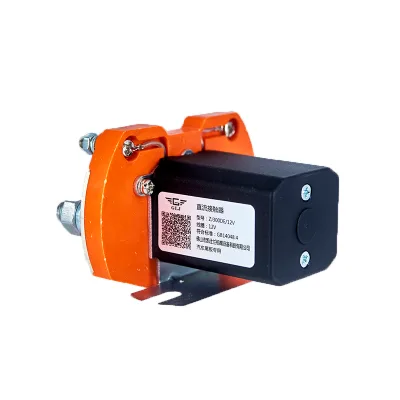
12V DC Contactor for Hydraulic DC Motor
$9.00 - $10.00
MOQ: 1 Pieces
Changzhou Sanghao Mechanical and Electrical Technology Co., Ltd.




Comprehensive Sourcing Guide
Strategic Sourcing Guide for DC Motor Reversing Forklift Contactors
Understanding the Technical Landscape of DC Contactors
Sourcing a DC Motor Reversing Forklift Contactor requires a precise understanding of the component's role within the high-current, high-vibration environment of electric lift trucks. These contactors are not merely switches; they are critical control elements that manage the direction and power flow to the traction motor. The observed product data indicates a diverse range of specifications, suggesting that a "one-size-fits-all" approach is insufficient for procurement. Buyers must first recognize that the core functionality revolves around the ability to handle direct current (DC) loads, which presents unique challenges compared to alternating current (AC) systems, particularly regarding arc suppression and contact wear.
The technical specifications observed in the market reveal significant variation in voltage ratings and current capacities. For instance, specific units are identified with voltage ratings of 24V, 36V, 48V, and 60V, while current handling capabilities range from 200A to 260A. This variance is not arbitrary; it corresponds to the specific battery configurations and motor requirements of different forklift models. A contactor designed for a 24V system will likely fail prematurely if applied to a 48V application due to arc voltage differences, while a unit rated for 200A may be undersized for a heavy-duty 260A requirement. Furthermore, the physical characteristics vary, with observed weights ranging from 0.45kg to 1kg. This weight difference often correlates with the internal mass of the contacts and the robustness of the housing, which are critical for withstanding the mechanical shocks inherent in forklift operations.
The application data highlights that these components are specifically engineered for electric forklifts, though some data points suggest broader utility in household appliances and automotive relays. However, for the specific keyword of "DC Motor Reversing Forklift Contactor," the primary focus must remain on industrial traction applications. The observed "Action Principle" is listed as "Electronic Type," which implies the use of electronic control mechanisms rather than purely mechanical latching, though the "Protective Characteristics" are noted as "Open Relay," indicating the physical state of the contacts when de-energized. Understanding these nuances is the first step in defining the technical requirements for a successful procurement.
Critical Specification Verification and Compatibility
When evaluating potential suppliers, the buyer must conduct a rigorous verification of the model numbers and codes provided in the product listings. The market data shows a wide array of model identifiers, such as "Sw80p," "DC88-317T/B2DC11," "Qcc15-200A," and "Su80b-5447p." These codes are not merely marketing labels; they are unique identifiers that dictate the internal architecture and compatibility of the contactor. A mismatch in the model code can lead to immediate functional failure or, worse, safety hazards in a warehouse environment.
The voltage and current ratings are the most critical parameters to verify against the forklift's electrical schematic. The observed data includes specific voltage ratings of 12V, 24V, 36V, 48V, and 60V, alongside current ratings of 200A and 260A. Procurement teams must ensure that the selected contactor's voltage rating matches the nominal battery voltage of the forklift and that the current rating exceeds the peak load current of the motor, including starting surges. Additionally, the "Number of Pole" and "Contact Form" are essential compatibility factors. The data indicates a "Phase:Type:Dc Contactors" classification with a "1no" (one normally open) contact form. This configuration is typical for reversing circuits where the contactor switches the polarity of the motor armature or field winding.
Material composition is another vital specification to scrutinize. The observed data lists "Copper" as a primary material and "Silver Alloy" for the contact material. The use of silver alloy is standard for high-current applications due to its superior conductivity and resistance to welding under arc conditions. However, the presence of copper in the main body or busbars is also noted. Buyers should verify that the contact material is indeed a silver alloy suitable for DC interruption, as the arc characteristics in DC systems require specific metallurgical properties to prevent contact erosion. The "Theory" is listed as "Voltage Relay," which suggests the device is designed to respond to specific voltage thresholds, a feature that must be validated against the control circuit design of the forklift.
Compliance, Standards, and Certification Due Diligence
In the realm of industrial procurement, compliance is not a suggestion but a prerequisite. While the provided data includes a low-confidence background note regarding "REACH" certification, buyers must not assume that any listed product automatically meets this standard or any other regulatory requirement. The absence of explicit certification data in the high-confidence facts necessitates a proactive verification process. Buyers should request formal documentation from suppliers to confirm compliance with relevant international standards, such as IEC 60947-4-1 for low-voltage switchgear and controlgear, or specific national standards applicable to the destination market.
The observed "Standard" attribute is listed simply as "Standard," which is a generic descriptor that lacks the specificity required for regulatory compliance. This ambiguity underscores the need for buyers to ask for the specific standard numbers (e.g., ISO, UL, CE, or GB standards) that the product adheres to. Furthermore, the "prod_standard" attribute is oddly listed as "0.38kg," which appears to be a data entry error conflating weight with standard. This highlights the importance of verifying all data points with the supplier rather than relying solely on the initial product listing.
Regarding certifications, the "REACH" mention in the background data serves as a reminder that chemical compliance is a factor, particularly for components containing plastics or coatings. However, for a contactor, the primary safety certifications usually relate to electrical safety and fire resistance. Buyers should verify if the product has undergone testing for dielectric strength, thermal endurance, and mechanical life. The "Protective Characteristics" being listed as "Open Relay" implies a specific safety state, but this must be validated through test reports. Without explicit certification claims in the high-confidence facts, the procurement strategy must include a clause requiring the supplier to provide valid third-party test reports before the order is finalized.
Cost Drivers and Pricing Structure Analysis
The pricing landscape for DC motor reversing forklift contactors is highly variable, with observed listed prices ranging from $1.35 to $7,000. This massive disparity is not indicative of a single product line but rather reflects the inclusion of vastly different product categories, from miniature relays to heavy-duty industrial contactors. The lower end of the price spectrum likely corresponds to the "Miniature" size specification and lower current ratings, while the upper end may include complete assemblies, high-current units, or specialized models with custom packaging and certifications.
Several factors drive the cost of these components. The material composition is a primary driver; contactors utilizing silver alloy contacts and copper busbars will inherently cost more than those with alternative materials. The current rating is another significant cost factor; a 260A contactor requires larger internal components and more robust arc suppression mechanisms than a 200A unit, leading to higher manufacturing costs. Additionally, the "Customized" attribute is listed as "Non-Customized" in the high-confidence facts, yet "Customization" is also listed as "Available." This suggests that while standard models are available, custom modifications (such as specific mounting brackets, terminal types, or voltage ratings) can significantly increase the unit price.
The packaging method also influences the final cost. The observed data lists "Carbon Box," "Carton Box," and "Carton Box+Wooden Pallet" as packing options. The inclusion of a wooden pallet suggests a need for heavy-duty shipping protection, which adds to the logistics cost and, consequently, the unit price. Furthermore, the "Standard" of "0.38kg" (likely a weight error) and the various weight observations (0.45kg to 1kg) indicate that the physical size and material density are factors in the pricing model. Buyers should be wary of extremely low prices, as they may indicate inferior materials or a lack of necessary testing. Conversely, the high-end prices may include value-added services such as custom engineering or extended warranties.
Supplier Evaluation and Quality Assurance Protocols
Selecting a reliable supplier for DC contactors requires a multi-faceted evaluation process that goes beyond price comparison. The observed data indicates that products originate from "China," which is a major manufacturing hub for electrical components. However, the origin alone does not guarantee quality. Buyers must evaluate the supplier's manufacturing capabilities, quality control processes, and track record in the industrial sector. The presence of specific model codes and detailed specifications suggests a level of technical sophistication, but this must be verified through site audits or detailed questionnaires.
Quality assurance is paramount for components that operate in high-stress environments. The "Action Principle" being "Electronic Type" and the "Theory" being "Voltage Relay" suggest complex internal mechanisms that require precise assembly. Buyers should request evidence of the supplier's quality management systems, such as ISO 9001 certification, and inquire about their in-house testing procedures. The "Low-confidence background" regarding "REACH" certification serves as a reminder that buyers must verify all compliance claims independently. A robust supplier will provide detailed test reports covering electrical life, mechanical life, and environmental testing.
The "Customization" availability is a key differentiator among suppliers. While the high-confidence facts state "Non-Customized," the availability of customization options implies that some suppliers can tailor products to specific forklift models. Buyers should assess the supplier's ability to handle custom orders, including lead times and minimum order quantities (MOQ). The observed MOQ range of 1 to 100 units suggests flexibility, but buyers should confirm if this applies to custom configurations or only standard items. Additionally, the "prod_packing" variations (Carbon Box, Carton Box, etc.) indicate that suppliers may have different packaging capabilities, which can affect the condition of the goods upon arrival.
Long-Term Procurement and Lifecycle Management
Sourcing DC motor reversing forklift contactors is not a one-time transaction but part of a long-term maintenance strategy. The "Application" is listed as "Electric Forklift," a critical piece of equipment where downtime can result in significant operational losses. Therefore, buyers must consider the lifecycle of the contactor, including its expected service life, availability of spare parts, and the ease of replacement. The "Weight" variations (0.45kg to 1kg) and "Size" (Miniature) suggest that space constraints within the forklift's electrical compartment may dictate the choice of component, affecting future maintenance procedures.
The "Current" ratings of 200A and 260A are critical for determining the longevity of the contactor. Higher current ratings generally imply a more robust design, but they also subject the contacts to greater wear. Buyers should inquire about the expected number of operations (electrical and mechanical life) for the specific models they are considering. The "Contact Form" of "1no" and the "Number of Pole" being "Phase:Type:Dc Contactors" are standard configurations, but the specific design of the contacts will determine how quickly they degrade under load.
Furthermore, the "Voltage" ratings (12V to 60V) must be matched to the forklift's battery system to ensure optimal performance and longevity. Mismatched voltages can lead to premature failure, increasing the total cost of ownership. Buyers should also consider the "Material" composition, specifically the "Silver Alloy" contacts, as this directly impacts the contactor's resistance to arcing and welding. A supplier that offers a warranty or a guaranteed service life can provide additional peace of mind. Finally, the "Standard" and "Customization" aspects should be aligned with the forklift manufacturer's recommendations to ensure compatibility and maintain the vehicle's warranty.
Comparative Analysis of Key Product Attributes
To facilitate a clear decision-making process, the following table summarizes the key attributes observed in the market data for DC motor reversing forklift contactors. This comparison highlights the variability in specifications that buyers must navigate.
| Attribute | Observed Range / Options | Relevance to Procurement |
|---|---|---|
| Voltage Rating | 12V, 24V, 36V, 48V, 60V | Must match forklift battery system exactly to prevent arc failure. |
| Current Rating | 200A, 260A | Determines the capacity to handle motor starting surges and peak loads. |
| Weight | 0.45kg to 1.0kg | Affects mounting and space allocation within the electrical compartment. |
| Contact Material | Silver Alloy | Critical for arc suppression and contact life in DC applications. |
| Model Codes | Sw80p, DC88-317T, Qcc15-200A, etc. | Unique identifiers for compatibility with specific forklift models. |
| Packaging | Carbon Box, Carton Box, Palletized | Influences shipping costs and protection during transit. |
| Origin | China | Indicates the primary manufacturing region; requires supplier vetting. |
| Customization | Available (despite "Non-Customized" flag) | Allows for tailoring to specific forklift requirements. |
This table serves as a reference point for buyers to ensure they are comparing apples to apples when evaluating different suppliers. The wide range of values for each attribute underscores the necessity of a detailed technical review before placing an order. By systematically addressing these factors, buyers can secure high-quality DC motor reversing forklift contactors that meet their operational needs while minimizing the risk of failure and downtime.
FAQs
What voltage ratings are available for these contactors?
Available voltage ratings include 12V, 24V, 36V, 48V, and 60V. Buyers must match the specific rating to the forklift battery configuration to ensure safe operation and prevent premature failure due to arc voltage differences.
Which current capacities are supported by the listed models?
The observed current capacities range from 200A to 260A. Procurement teams must verify that the selected unit exceeds the peak load current of the motor, including starting surges, to maintain reliability in high-stress environments.
Can these contactors be customized for specific forklift models?
Customization is available despite some standard listings indicating non-customized options. Buyers should confirm if specific modifications like mounting brackets or terminal types are possible, as custom orders may affect unit pricing and lead times.
How does the packaging affect the shipping cost?
Packaging options include Carbon Box, Carton Box, and Carton Box with Wooden Pallet. The inclusion of a wooden pallet adds to logistics costs and indicates a need for heavy-duty shipping protection for larger or heavier units.
What material is used for the electrical contacts?
The contact material is specified as Silver Alloy, while the main body may use Copper. Silver alloy is standard for high-current applications due to its superior conductivity and resistance to welding under arc conditions in DC systems.
What is the weight range for these components?
Observed weights range from 0.45kg to 1kg. This variation often correlates with the internal mass of the contacts and the robustness of the housing, which are critical for withstanding mechanical shocks in forklift operations.
Which model codes are available for DC contactors?
Available model codes include Sw80p, DC88-317T/B2DC11, Qcc15-200A, and Su80b-5447p. These codes dictate the internal architecture and compatibility, so a mismatch can lead to immediate functional failure or safety hazards.
What is the price range for these contactors?
Listed prices range from 1.35 to 7000 USD. This disparity reflects different product categories, from miniature relays to heavy-duty industrial contactors, with costs driven by material composition and current ratings.