Source Disc Clarifier for Brewing, Water Treatment, and Chemical Processing
Explore 30 verified listings for the Disc Clarifier, featuring options in liquid dosage forms with CE, GMP, and ISO certifications. Buyers can compare models like BRSX and MCSX across vertical and horizontal installations for diverse industrial needs.
Key considerations
Products List


Industrial Disc Centrifuge for Optimal Milk Clarification Solutions
$20000.00 - $60000.00
MOQ: 1 Pieces

Industrial Disc Centrifuge for Optimal Milk Clarification Solutions
$20000.00 - $60000.00
MOQ: 1 Pieces


Cost Effective Water Clarification Solids Removal Inclined Lamella Clarifier
$4688.00 - $4888.00
MOQ: 1 Pieces

Advanced Effluent Treatment Settling Unit Compact Plate Settler Lamella Clarifier
$4688.00 - $4888.00
MOQ: 1 Pieces


High-Performance Inclined Plate Clarifier for Efficient Water Filtration
$5000.00 - $5500.00
MOQ: 1 Pieces

Lamella Clarifier System Lamella Clarifier Used in Solid and Liquid Separation
$5000.00 - $5500.00
MOQ: 1 Pieces


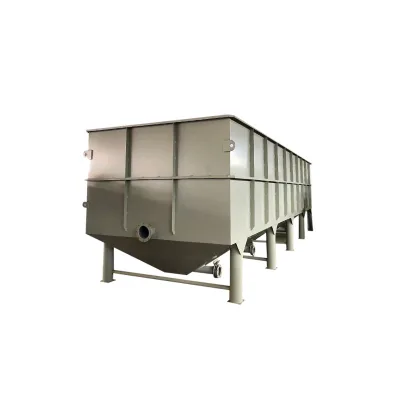


$9968.00 - $15986.00
MOQ: 1 Sets
Comprehensive Sourcing Guide
Strategic Sourcing Guide for Disc Clarifier Equipment and Systems
Procuring industrial disc clarifiers requires a disciplined approach that balances technical performance with supply chain reliability. The market for these separation units is diverse, ranging from specialized machinery for beverage processing to chemical treatment systems for water management. Buyers must navigate a landscape where product attributes vary significantly between models, such as the BRSX series designed for specific liquid processing needs and the MCSX series tailored for different operational contexts. This guide outlines the critical factors for sourcing disc clarifiers, focusing on verified specifications, compliance requirements, and cost structures derived from current market data.
Technical Specifications and Operational Parameters
Understanding the technical architecture of a Disc Clarifier is the first step in any procurement process. The core mechanism relies on a stack of conical discs that create thin layers for rapid sedimentation, significantly increasing the effective settling area within a compact footprint. When evaluating potential units, buyers should verify the specific centrifuge type, as the market offers Disc Centrifuges optimized for continuous operation. The operating type is a critical differentiator; many high-efficiency units operate on a Continuous Type basis, allowing for uninterrupted processing which is essential for large-scale industrial applications.
The physical installation configuration is another vital specification. While some systems are designed for Vertical installation to save floor space, others utilize Horizontal installation to accommodate specific piping layouts or facility constraints. The voltage requirements for the drive motors must also be confirmed against the buyer's local infrastructure. Data indicates that 380V is a common standard for these industrial units, though this must be verified for each specific model to ensure compatibility. Furthermore, the precision of the separation process is typically categorized as Normal Precision, which is suitable for general industrial separation tasks but may require specific adjustments for ultra-fine applications.
Material selection plays a pivotal role in the longevity and chemical resistance of the clarifier. The market frequently lists Stainless Steel as the primary material for contact parts due to its corrosion resistance and hygiene properties. In some configurations, Carbon Steel is also utilized, particularly for structural components where direct contact with the product is not required. The choice between these materials depends heavily on the nature of the fluid being processed, whether it is a beer-related liquid, a swimming pool clarifier, or an industrial wastewater stream.
Compliance and Certification Verification
In the global B2B market, regulatory compliance is non-negotiable. Buyers must ensure that any Disc Clarifier or associated chemical treatment system carries the necessary certifications to operate legally in their target jurisdiction. The most frequently observed certifications for this category of equipment include CE, GMP, and ISO. The CE mark indicates conformity with health, safety, and environmental protection standards for products sold within the European Economic Area. GMP (Good Manufacturing Practice) is particularly relevant for units intended for food and beverage processing, such as those used in beer production or liquid food clarification. ISO certification demonstrates that the manufacturer adheres to international quality management standards.
It is important to note that certification status is not universal across all listed products. While some units explicitly list these certifications, others may only hold ISO certification or none at all. Buyers should not assume that a specific model meets all regulatory requirements without requesting valid documentation. Additionally, for chemical clarifiers used in conjunction with the machinery, such as those with a concentration of 20% or a pH range of 3-7, environmental protection certifications are essential. These products often carry labels indicating they are suitable for neutral surface disposal or are designed with environmental protection features, ensuring they meet local waste disposal regulations.
Cost Drivers and Pricing Structure
The pricing of disc clarifiers is highly variable, influenced by a complex mix of factors including material composition, automation level, and customization requirements. Market observations show a price range spanning from approximately $2.60 to $100,000 USD. This vast disparity reflects the difference between small-scale chemical additives and large, fully automated industrial separation units. The lower end of the spectrum typically corresponds to consumable clarifying agents or smaller, non-computerized units, while the higher end encompasses large-scale, computerized, and fully customized machinery.
Several key drivers influence the final cost. First, the level of customization is a primary factor. Products labeled as "Customized" or offering ODM (Original Design Manufacturer) and OEM (Original Equipment Manufacturer) services will command a premium over standard off-the-shelf models. Second, the degree of automation significantly impacts price. Units described as "Computerized" with advanced control systems are more expensive than those with manual or semi-automatic operation. Third, the material grade affects cost; stainless steel construction is generally more expensive than carbon steel alternatives. Finally, the complexity of the installation, such as the requirement for a specific vertical or horizontal setup, can add to the engineering and shipping costs.
Buyers should also consider the Minimum Order Quantity (MOQ) when budgeting. The observed MOQ range in the market is between 1 and 100 units. For chemical clarifiers, the MOQ might be as low as a single liter or a 200-liter drum, whereas for heavy machinery, the MOQ could be higher depending on the manufacturer's production capacity. Understanding these thresholds is crucial for small-to-medium enterprises that may not have the volume to meet higher MOQs.
Typical Applications and Industry Use Cases
Disc clarifiers serve a wide array of industries, and identifying the correct application is essential for selecting the right equipment. One prominent use case is in the beverage industry, where units are specifically categorized as "Beer Machines." These systems are designed to separate yeast and particulates from beer during the brewing process, ensuring clarity and stability. The "Separate" function is a key attribute for these applications, ensuring that the liquid product is free from unwanted solids.
Another significant application area is water treatment, particularly for swimming pools and industrial wastewater. Products in this category often function as "Swimming Pool Water Clarifiers," utilizing chemical treatments to coagulate suspended particles. These systems may operate with a specific concentration, such as 20%, and have a density range of 1.01 to 1.05 g/cm³. The pH of these agents typically falls between 3 and 7, making them suitable for various water conditions. The "Neutral Surface Disposal Agent" attribute suggests that these chemicals are designed to be environmentally friendly and safe for disposal.
Beyond beverages and water, disc clarifiers are used in agriculture, hospitals, and general industrial settings. The "Usage" field often lists "Industrial, Agriculture, Home, Hospital," indicating the versatility of the technology. In these contexts, the separation mode may vary, with some units utilizing a "Filter Type" separation mode and others relying on the centrifugal force of the disc stack. The "Extraction Tower Type" may also be relevant, with "Turntable Tower" designs being common in specific extraction and separation processes.
Supplier Evaluation and Service Capabilities
When evaluating potential suppliers, buyers must look beyond the product specifications to assess the supplier's service capabilities and logistical support. A critical attribute to verify is the availability of customization services. Many suppliers offer "Customization" options, allowing buyers to tailor the machine to their specific production line requirements. The "Service" attribute often highlights ODM or OEM capabilities, which are vital for companies seeking branded or uniquely engineered solutions.
The location of the supplier and their showroom presence are also important indicators of reliability. While the primary production origin for many of these units is China, specifically Yixing, Jiangsu, reputable suppliers often maintain showrooms in key markets such as Canada, Britain, America, and Germany. This global presence suggests a commitment to international trade and the ability to provide local support. Buyers should verify the "Showroom Location" to ensure that the supplier has a physical presence in their region, which can facilitate easier communication and after-sales support.
Furthermore, the condition of the equipment is a standard expectation. Most suppliers offer "New" condition units, but buyers should confirm this explicitly, especially when dealing with refurbished or second-hand machinery. The "Installation" method, whether vertical or horizontal, should be discussed during the supplier evaluation to ensure the supplier can provide the necessary technical guidance for a successful setup.
Quality Control and Long-Term Procurement Considerations
Quality control in the procurement of disc clarifiers involves rigorous verification of standards and packaging. The "Standard Exporting Packing" is a common requirement to ensure that the equipment arrives without damage during international transit. For larger units, "Steel Frame" or "Wooden Case" packaging may be used to provide additional structural support. Buyers should insist on packaging that meets these standards to prevent shipping damage.
The shelf life of associated chemical clarifiers is another quality factor. Products such as swimming pool water clarifiers typically have a shelf life of 1 year, which must be managed carefully to ensure efficacy. Buyers should also verify the "Production Standard," which may be listed as "Customized" or "Depends on the model." This indicates that there is no single universal standard, and the buyer must request the specific standard applicable to their order.
Long-term procurement considerations include the availability of spare parts and the reliability of the "Operating Type." Continuous type operations require robust maintenance schedules to prevent downtime. The "Advantage" of being "Cost-Effective" is a selling point, but buyers should balance this against the potential costs of maintenance and energy consumption. The "Voltage" of 380V and the "Computerized" nature of the units imply a need for skilled operators and potentially higher energy costs.
| Feature | Typical Observation | Verification Requirement |
|---|---|---|
| Centrifuge Type | Disc Centrifuge | Confirm model compatibility with fluid viscosity |
| Operating Type | Continuous Type | Verify suitability for batch vs. continuous needs |
| Material | Stainless Steel / Carbon Steel | Check chemical resistance for specific application |
| Certification | CE, GMP, ISO | Request valid certificates for target market |
| Packaging | Standard Exporting / Wooden Case | Ensure protection for long-distance shipping |
| Origin | Yixing, Jiangsu / China | Verify logistics and lead times from origin |
Final Procurement Recommendations
Sourcing disc clarifiers requires a methodical approach that prioritizes technical fit, regulatory compliance, and supplier reliability. Buyers should begin by defining their specific application, whether it is for beer processing, water clarification, or industrial separation. Once the application is clear, they must verify the technical specifications, including the centrifuge type, installation orientation, and material composition. Compliance checks are equally critical, with a focus on CE, GMP, and ISO certifications to ensure legal operation in the target market.
Cost analysis should go beyond the unit price to include the total cost of ownership, factoring in energy consumption, maintenance, and the cost of consumables like chemical clarifiers. Supplier evaluation must include a review of their service capabilities, customization options, and global presence. Finally, quality control measures, such as verifying packaging standards and shelf life, should be integrated into the procurement process to mitigate risks. By adhering to these guidelines, buyers can secure high-quality Disc Clarifier systems that meet their operational needs while maintaining compliance and cost efficiency.
FAQs
Can disc clarifiers be customized for specific production needs?
Yes, customization is available for disc clarifiers to meet unique production requirements. Buyers can request specific models like BRSX or MCSX and choose from ODM or OEM services to tailor the machine's voltage, installation type, and material composition to their facility.
What certifications do Disc Clarifier manufacturers typically hold?
Many Disc Clarifier units carry CE, GMP, and ISO certifications to ensure regulatory compliance. These marks indicate conformity with safety standards and quality management systems, which is essential for food processing applications like beer machines or water treatment systems.
Which installation types are available for Disc Clarifier equipment?
Disc clarifiers are available in both vertical and horizontal installation configurations. The choice depends on facility constraints, with vertical setups saving floor space and horizontal setups accommodating specific piping layouts or operational requirements for continuous processing.
What is the typical voltage requirement for industrial disc clarifiers?
The standard voltage for these industrial units is typically 380V. Buyers must verify this specific requirement against their local infrastructure before purchase, as it is a critical compatibility factor for the drive motors and computerized control systems.
How does the price range vary for Disc Clarifier systems?
Prices for disc clarifiers range from approximately 2.60 to 100,000 USD depending on the product type. Lower costs apply to chemical additives while higher prices cover large, computerized, and fully customized machinery with advanced separation capabilities.
What materials are used to construct Disc Clarifier units?
Stainless steel is the primary material used for contact parts due to its corrosion resistance. Some configurations also utilize carbon steel for structural components, ensuring durability for applications ranging from beer processing to industrial wastewater treatment.
Can buyers find Disc Clarifier suppliers with showrooms in Europe?
Yes, suppliers maintain showrooms in key markets including Britain, Germany, and America. While production often originates from Yixing, Jiangsu, China, these global showrooms facilitate local support and verification of product specifications for international buyers.