Source Disposable White Elastic Hair Headband for Salon, Spa, Hotel
Explore 30 listings of disposable white elastic hair headbands to compare materials, sizes, and packaging options. This guide helps buyers evaluate non-woven products for professional salon, spa, and hotel environments; compare the available evidence and request quotations based on your requirements.
Key considerations
Products List




Comprehensive Sourcing Guide
Disposable White Elastic Hair Headband Sourcing Guide
Procuring disposable white elastic hair headbands requires a clear understanding of the specific material composition and intended usage environment. The market offers products primarily constructed from non-woven polypropylene, which provides the necessary elasticity and softness for salon and spa applications. Buyers must distinguish between standard sizes and custom dimensions, as the observed listings indicate a range from general long lengths to specific measurements like 78*11cm. This variation directly impacts inventory planning and the suitability of the product for different client demographics, including adults and all ages.
The commercial landscape for these items is characterized by significant volume requirements and flexible customization options. Suppliers typically enforce minimum order quantities ranging from 2,000 to 200,000 units, reflecting the industrial nature of the manufacturing process. While the base material is often white, some listings feature specific color combinations like white with red threads, necessitating precise specification checks before ordering. Understanding these baseline constraints is essential for aligning procurement strategies with budgetary limits and logistical capabilities, ensuring that the selected supplier can meet the required scale without compromising on the eco-friendly attributes often demanded by modern buyers.
Product Scope and Observed Listing Signals
The product scope for disposable headbands encompasses a variety of functional designs tailored for professional and personal use. Listings frequently highlight features such as ultra-soft textures and quick-drying capabilities, which are critical for comfort during extended salon treatments or spa sessions. The observed data confirms that these items are available in both folded and unfolded states, with some products specifically marketed as biodegradable to meet sustainability goals. Buyers should verify whether the "elastic" property is inherent to the non-woven structure or if it involves additional components, as this affects the product's durability and reusability potential.
Listing signals also reveal diverse packaging configurations that influence downstream logistics and storage efficiency. Common packaging formats include 100 pieces per bag with 2,000 pieces per carton, or variations like 100 pieces per bag and 1,000 pieces per carton. These variations require careful calculation of total unit counts to ensure the order meets the supplier's minimum order quantity thresholds. Additionally, the presence of standard size options alongside customized models suggests that buyers must clearly define their size requirements early in the negotiation process to avoid receiving mismatched inventory that cannot be utilized for their specific application needs.
Technical Specifications to Verify
Technical verification begins with confirming the material composition, as the supplied facts indicate a mix of PP25g and general non-woven materials. Buyers must ensure the specified gram weight aligns with the desired durability and absorbency levels for their intended application, whether it is for hotel use, salon services, or home care. The thickness is generally noted as normal, but specific requests for ultra-soft textures should be validated against physical samples to guarantee the product meets the tactile expectations of end-users. This step is crucial for maintaining brand reputation, as the perceived quality of the headband directly correlates with the overall service experience.
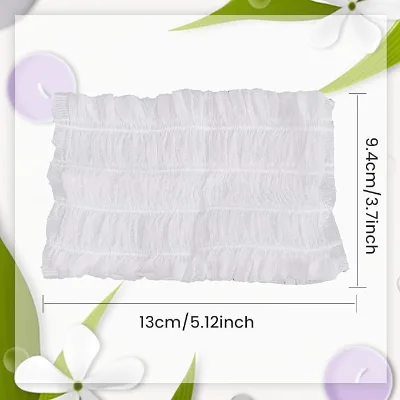
Dimensional accuracy and structural integrity are equally critical parameters that require strict verification. The observed listings mention standard sizes such as 18, 21, and 24 inches, as well as specific dimensions like 78*11cm, alongside free-size options. Procurement teams must confirm that the selected model number corresponds to the exact physical dimensions required for their target demographic, particularly for adult or unisex applications. Furthermore, the distinction between folded and unfolded states must be clarified, as this affects the packaging volume and the ease of use for staff during service delivery.
Compliance and Safety Documentation
Compliance documentation for disposable headbands often centers on material safety and environmental impact, given the frequent claims of eco-friendly and biodegradable properties. Buyers should request specific test reports that validate these environmental assertions, ensuring that the non-woven materials do not contain harmful substances that could irritate sensitive skin or the scalp. While some listings mention CE and ISO certifications, these should be treated as potential attributes rather than guaranteed standards for every product. It is imperative to verify the current validity of these certifications and confirm that they cover the specific manufacturing facility and product batch being sourced.
Safety standards also extend to the hygiene and disposability of the product, particularly for applications in salons, spas, and hotels. The documentation must confirm that the headbands are single-use items designed to prevent cross-contamination between clients. Buyers need to ensure that the supplier adheres to strict hygiene protocols during production, as the product is in direct contact with the user's hair and skin. Verifying that the product is explicitly labeled as disposable and suitable for the intended age group, such as adults or all ages, is essential for mitigating liability and ensuring regulatory compliance in the destination market.
Cost Drivers and Commercial Terms
Cost drivers for disposable headbands are heavily influenced by material selection, customization levels, and order volume. The use of specific materials like PP25g or non-woven fabrics, combined with features such as biodegradability, can significantly impact the unit price. Buyers must analyze the trade-off between standard white products and customized options, such as those with red threads or specific branding, as these variations often incur additional setup and production costs. Understanding these cost components allows for more accurate budgeting and helps in negotiating better terms based on the projected annual volume.
Commercial terms and payment structures play a pivotal role in the final procurement agreement. The observed data indicates that payment terms typically include T/T and L/C, which are standard for international trade but require careful financial planning. Lead times and loading ports, such as Wuhan or Shanghai, also affect the total landed cost and delivery schedule. Buyers should clarify the Incoterms to understand who bears the risk and cost during transit, ensuring that the logistics chain is robust enough to handle the high minimum order quantities observed in the market.
Supplier Qualification and Quality Control
Supplier qualification requires a thorough assessment of the manufacturing location and production capacity, as the data points to origins in Hubei and China. Buyers should verify the supplier's ability to consistently meet the high minimum order quantities ranging from 2,000 to 200,000 units without compromising on quality. It is essential to confirm that the supplier has the necessary infrastructure to handle customization requests, such as specific sizes or packaging configurations, while maintaining the standard size and material consistency required for bulk orders. This verification ensures that the supply chain remains stable and capable of scaling with business growth.
Quality control processes must be rigorously defined to ensure that every batch meets the specified technical and aesthetic standards. Buyers should implement a sampling protocol to check for consistency in texture, color, and elasticity, particularly for products marketed as ultra-soft or biodegradable. The inspection should also cover packaging integrity to prevent damage during shipping, especially given the fragile nature of non-woven materials. Establishing clear acceptance criteria and defect thresholds before production begins is vital for minimizing disputes and ensuring that the delivered goods align with the initial product specifications and expectations.
Long-Term Procurement Checks
Long-term procurement success depends on establishing a reliable supply chain that can adapt to changing market demands and regulatory requirements. Buyers should regularly review the supplier's performance against key metrics such as on-time delivery, defect rates, and responsiveness to customization requests. Given the observed range of product models and standards, maintaining open communication channels is essential for addressing any shifts in material availability or production capabilities. This proactive approach helps in mitigating risks associated with supply chain disruptions and ensures a steady flow of high-quality headbands for ongoing business operations.
Sustainability and innovation should also be central to long-term procurement strategies, as the market increasingly values eco-friendly and biodegradable products. Buyers must stay informed about advancements in non-woven materials and production techniques that could offer better performance or lower environmental impact. Regularly auditing the supplier's commitment to these values ensures that the procurement strategy remains aligned with corporate sustainability goals. By fostering a partnership based on continuous improvement and shared values, buyers can secure a competitive advantage and build a resilient supply chain for the future.
FAQs
What material is used for disposable white elastic hair headbands
These headbands are typically made from non-woven PP25g material. This specific composition provides a soft and stretchy texture that is comfortable for extended wear. The material is also biodegradable and eco-friendly, making it a sustainable choice for disposable salon and spa applications.
What are the standard sizes for disposable white elastic hair headbands
Standard sizes generally include 18 inches, 21 inches, and 24 inches. Some products are also available in a free size of 78 by 11 cm. Buyers should verify the specific dimension requirements for their target market to ensure the headband fits comfortably and functions effectively for hair styling.
Can disposable white elastic hair headbands be customized for branding
Yes, customization is available for these products. Suppliers can offer customized designs, including specific colors like white with red thread or unicolor options. This allows businesses to align the product with their brand identity while maintaining the standard functional features of the non-woven material.
What is the typical packaging for disposable white elastic hair headbands
Common packaging configurations include 100 pieces per bag with 2000 pieces per carton, or 100 pieces per bag with 1000 pieces per carton. The products are often shipped in master cartons. Buyers should confirm the exact packing structure to ensure it meets their logistics and storage requirements.
Which certifications are associated with disposable white elastic hair headbands
Some suppliers list CE and ISO standards for their products. These certifications indicate that the manufacturing process and product quality meet specific international safety and quality management criteria. Buyers should request current documentation to verify compliance with their local regulatory requirements.
What is the minimum order quantity for disposable white elastic hair headbands
Observed minimum order quantities range from 2000 to 200000 units. The specific MOQ depends on the supplier and the customization level required. Buyers should negotiate based on their inventory needs and storage capacity to find a volume that balances cost efficiency with operational flexibility.
Where are disposable white elastic hair headbands typically manufactured
Many of these products are manufactured in Hubei, China. This region is a known production hub for non-woven textile products. Buyers can expect to find various suppliers in this area offering different specifications and packaging options for disposable hair accessories.