Source Motorized Bioclimatic Aluminum Canopy Awning for Patios
Explore 30 listings for the Motorized Bioclimatic Aluminum Canopy Awning designed for patios, gardens, and commercial spaces. Buyers can compare features like waterproofing, wind resistance, and customization options to find the right supplier.
Key considerations
Products List


Outdoor Retratcable Awnings Bioclimatic Patio Electric Aluminum Roofing Canopy
$70.00 - $90.00
MOQ: 9 Square Meters

Retractable Awning Canopy High-Quality Motorized Waterproof Aluminum Roof
$86.00 - $100.00
MOQ: 10 Square Meters


Garden Motorized Aluminium Outdoor Canopy High Quality Balcony Retractable Awning Outdoor Awning
$49.90 - $85.00
MOQ: 99 Square Meters

Retractable Sun Shelter Motorized Aluminium Roof Adjustable Outdoor Awning
$69.00 - $115.00
MOQ: 9 Square Meters

Folding Remote Control Awning Motorized Aluminium Retractable Awning Outdoor Waterproof Canopy
$49.90 - $85.00
MOQ: 99 Square Meters


Outdoor Waterproof Motorized Patio Cover Aluminum Retractable Awning
$150.00 - $280.00
MOQ: 9 Square Meters

Direct Factory Retractable Awning Folding Canopy Awning with Electric System
$100.00 - $380.00
MOQ: 1 Square Meters


Outdoor Sun Shades Motorized Retractable Car Awnings/Aluminum Patio Cover/Motorized Awnings
$48.00 - $66.00
MOQ: 1 Square Meters

Premium Lightweight Retractable Car Awning for Outdoor Adventures Awning
$91.00 - $98.30
MOQ: 30 Pieces
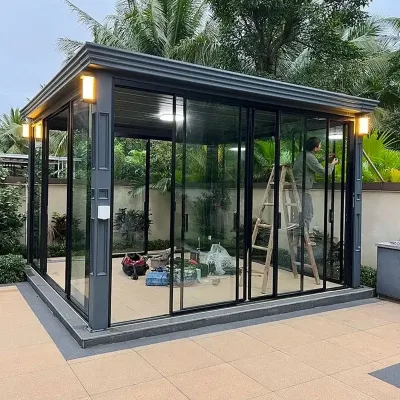
Comprehensive Sourcing Guide
Strategic Sourcing Guide for Motorized Bioclimatic Aluminum Canopy Awnings
The global demand for outdoor living solutions has elevated the Motorized Bioclimatic Aluminum Canopy Awning from a luxury amenity to a standard requirement for commercial hospitality and high-end residential projects. These structures, often referred to as retractable pergolas or sun-shade systems, integrate advanced mechanical engineering with durable materials to provide dynamic protection against sun and rain. For procurement professionals, navigating this market requires a disciplined approach to verifying technical specifications, understanding compliance frameworks, and evaluating supplier capabilities. This guide synthesizes observed market data and verified product attributes to establish a robust framework for sourcing these complex systems without relying on unverified claims.
Technical Architecture and Material Specifications
The core of a motorized bioclimatic awning lies in its structural integrity and the performance of its moving components. Based on observed product data, the primary structural material is consistently identified as aluminum or aluminum alloy. This choice is driven by the material's inherent resistance to corrosion, high strength-to-weight ratio, and suitability for powder-coated finishes. The frame finishing process is frequently noted as "Powder Coated," a critical detail for ensuring longevity in outdoor environments where exposure to moisture and UV radiation is constant. Buyers must verify that the specific aluminum alloy grade meets the structural load requirements for the intended span and wind conditions.
The canopy fabric itself is a pivotal component of the system's functionality. Market observations indicate a prevalence of PVC-coated fabrics, with specific mentions of "PVC Coated" sail finishing and "Polyester 850g/S.Qm" specifications. The weight of the fabric, measured in grams per square meter (g/S.Qm), is a direct indicator of durability and wind resistance. A weight of 850g/S.Qm suggests a heavy-duty application suitable for high-wind zones. Furthermore, the fabric's waterproofing capabilities are often quantified by a hydrostatic head rating. While some data points list an "Outer Tent Waterproof Index" of less than 1000 mm, this may apply to specific tent configurations rather than the primary canopy. For bioclimatic systems, buyers should explicitly request the waterproof rating for the retractable roof fabric, as this determines the system's ability to function as a rain barrier when closed.
The motorization system is another critical technical differentiator. The "Motor Control" and "Remote Control Switch" attributes confirm that these systems are electrically operated. The operation method typically involves a remote control, which allows for seamless adjustment of the louvers or the entire canopy structure. In bioclimatic designs, the motor must precisely control the angle of the aluminum slats to regulate light and airflow. Buyers should verify the voltage requirements, the type of motor (e.g., AC or DC), and the integration with smart home systems or weather sensors, which are common in advanced installations. The "Operation" attribute listing "Motorzied (Remote Control)" underscores the necessity of reliable electrical components that can withstand frequent cycling.
Compliance, Certification, and Safety Standards
Navigating the regulatory landscape is essential for international procurement, as compliance varies significantly by region. The supplied data references a range of international standards, including ASTM, JIS, GB, and EN. The presence of "ASTM" and "JIS" (Japanese Industrial Standards) alongside "GB" (Guobiao, Chinese National Standards) and "EN" (European Norms) indicates that suppliers often manufacture to multiple compliance frameworks. However, buyers must not assume a single product satisfies all listed standards simultaneously. Instead, the procurement strategy should focus on verifying that the specific batch or model being purchased is certified against the standards required by the destination country's building codes.
Certification documentation is a primary tool for risk mitigation. Observed product attributes list "SGS," "B1," and "CE" as available certificates. The "SGS" certification typically refers to third-party testing for material quality and safety. The "B1" rating is a specific fire classification standard (DIN 4102) indicating that the material is difficult to ignite, a crucial requirement for commercial venues and public spaces. The "CE" marking indicates conformity with health, safety, and environmental protection standards for products sold within the European Economic Area. While "CE" is mentioned in the low-confidence background, the explicit listing of "SGS/B1/CE" in the high-confidence facts suggests these are common offerings. Buyers must request valid, up-to-date test reports from accredited laboratories to confirm that the specific aluminum frame and fabric meet these fire and safety ratings.
Waterproofing and weather resistance are also subject to rigorous testing. The "Waterproof Rating: IP67" attribute, while potentially referring to the motor control unit or electrical components, highlights the need for high ingress protection in wet environments. Additionally, wind resistance is a critical safety parameter. Data indicates a "Wind Resistant" range of "180-220 Km/H," which is exceptionally high. Buyers should treat this as a maximum theoretical limit and verify the actual wind load rating for the specific size and configuration of the awning, as larger spans may have lower wind resistance thresholds. The "Feature: Weather Resistance" and "Feature: Waterproofing" attributes confirm the system's intended durability, but these claims must be backed by specific test data for the installed model.
Cost Drivers and Pricing Dynamics
Understanding the cost structure of motorized bioclimatic awnings is vital for budgeting and value analysis. The observed price range in the market spans from 1 to 380 USD. This wide variance is not indicative of the final installed cost but rather reflects the diversity of product types, sizes, and configurations available. A unit priced at 1 USD likely represents a small accessory or a specific component, whereas the 380 USD figure may represent a smaller, standard-sized unit or a specific fabric sample. For a full bioclimatic pergola system, the cost is driven by several factors.
The primary cost driver is the customization level. The "Standard: Customize Size" and "Specification: Customized Sizes" attributes indicate that these are not off-the-shelf products. Custom dimensions, unique louver angles, and specific color requirements (such as "White/Grey" or "Customized") add significant engineering and manufacturing time. The "Frame Material: Aluminum Alloy" versus standard aluminum also impacts cost, as higher-grade alloys offer better strength and corrosion resistance. Additionally, the "Surface Treatment: Customized" and "Frame Finishing: Powder Coated" processes add to the unit price, especially if specialized colors or textures are requested.
The complexity of the motorization system is another major cost factor. Systems with advanced "Motor Control," integration with "LED Light" or "Fan Beam" optional items, and "Zip Screen" or "Sliding Glass Door" add-ons will command a higher price. The "Optional Items" list suggests that the base price may not include essential features like lighting or side screens, which are often necessary for a complete outdoor living solution. Buyers should also consider the "Product Packing" variations, such as "Inside Plastic Bag Outside Carton" versus "Wooden Box." Wooden packaging is more expensive but offers superior protection for large, fragile components during international shipping, reducing the risk of damage and associated replacement costs.
Typical Applications and Functional Versatility
Motorized bioclimatic aluminum canopy awnings are designed for a wide array of applications, ranging from residential patios to large-scale commercial venues. The "Installation" methods listed as "Freestanding/Wall-Mounted/Wall Hanging/Semi-Attach" demonstrate the system's adaptability to different architectural contexts. Freestanding units are ideal for garden centers, poolside areas, or open plazas where no existing wall structure is available. Wall-mounted or semi-attached systems are common for restaurant terraces, hotel balconies, and residential extensions, where the awning is anchored to an existing building facade.
The functional attributes of "Sunshade Waterproof Roof" and "Function: Sun Rain Protection" highlight the dual-purpose nature of these systems. In commercial hospitality, they serve as temporary outdoor dining areas that can be quickly converted from open-air to fully enclosed spaces in response to weather changes. The "Feature: Insulation" attribute suggests that these systems also contribute to thermal regulation, reducing heat gain in summer and retaining warmth in cooler months when fully closed. This versatility makes them suitable for "Outdoor Retractable Roof Pergola Shade Awning" applications where year-round usability is desired.
The "Shape: Quad" attribute indicates that these systems can be configured in various geometric layouts, allowing for creative architectural designs. The "Optional Items" such as "Sliding Glass Door" and "Zip Screen" further expand their application potential, enabling the creation of semi-enclosed spaces that offer protection from insects and wind while maintaining an open feel. For large commercial projects, the "R&D Capacity: OEM/ODM/Own Brand" attribute suggests that suppliers can tailor the design to fit specific brand identities or unique site requirements, making these systems highly adaptable for corporate campuses, luxury resorts, and public parks.
Supplier Evaluation and Quality Assurance
Selecting the right supplier is as critical as selecting the product itself. The "Location: China" attribute identifies the primary manufacturing hub for these systems, but it does not define the quality. Buyers must evaluate suppliers based on their "R&D Capacity" and ability to provide "3D Design Drawing" services. A supplier with strong R&D capabilities is more likely to offer innovative solutions and reliable technical support. The ability to provide detailed 3D designs is essential for visualizing the final installation and ensuring that the custom dimensions fit the site perfectly.
Quality control should be a central part of the procurement process. The "Condition: New" attribute confirms that products are manufactured as new, but buyers should verify the manufacturing process and quality assurance protocols. The "Standard: ASTM" and "Standard: JIS,GB,EN,ASTM" references indicate that reputable suppliers adhere to international standards, but buyers must request specific test reports for the batch being ordered. The "Certificate: SGS/B1/CE" should be validated through direct contact with the issuing bodies to ensure authenticity.
When evaluating suppliers, buyers should also consider the "Product Packing" standards. The variation between "Inside Plastic Bag Outside Carton" and "Wooden Box" suggests that packaging quality can vary. For international shipments, a "Wooden Box" is generally preferred to prevent damage during transit. The "Lead Time" and "MOQ" (Minimum Order Quantity) are also critical factors. While the observed MOQ range is 1-100, buyers should negotiate based on their project scale. The "Customization: Available" attribute implies that lead times may be longer for custom orders compared to standard sizes. Buyers should establish clear timelines for design approval, manufacturing, and shipping to avoid project delays.
Long-Term Procurement and Maintenance Considerations
Sourcing a motorized bioclimatic awning is a long-term investment that requires careful consideration of maintenance and lifecycle costs. The "Feature: Weather Resistance" and "Waterproofing" attributes are not just initial selling points but indicators of long-term durability. However, the mechanical components, such as the motors and gears, require regular maintenance to ensure smooth operation. Buyers should inquire about the availability of spare parts and the supplier's warranty policy. The "Operation: Motorzied (Remote Control)" system relies on electrical components that may need replacement over time, so a reliable supply chain for parts is essential.
The "Surface Treatment: Customized" and "Frame Finishing: Powder Coated" processes affect the aesthetic longevity of the system. Powder coating is generally more durable than paint, but buyers should verify the thickness and quality of the coating to ensure it resists chipping and fading. The "Color: White/Grey" and "Structure Color: Grey/White/Customized" options allow for customization, but lighter colors may show dirt more easily in certain environments. Buyers should consider the local climate and the ease of cleaning when selecting colors.
Finally, the "Optional Items" such as "LED Light" and "Fan Beam" add value but also complexity. These electrical components require their own maintenance and may have shorter lifespans than the structural frame. Buyers should ensure that the supplier provides comprehensive installation and maintenance guides. The "3D Design Drawing" service can also be leveraged for future modifications or expansions, making the initial design phase a strategic investment in the system's long-term utility. By focusing on these long-term factors, buyers can ensure that their Motorized Bioclimatic Aluminum Canopy Awning remains a functional and attractive asset for years to come.
Comparative Analysis of Key Product Attributes
To facilitate decision-making, the following table summarizes the key attributes observed in the market data, highlighting the variability and specific requirements for buyers.
| Attribute Category | Observed Values | Procurement Verification Requirement |
|---|---|---|
| Frame Material | Aluminum, Aluminum Alloy | Verify alloy grade and thickness for structural load. |
| Fabric Material | PVC Coated, Polyester 850g/S.Qm | Confirm fabric weight and waterproof rating (hydrostatic head). |
| Standards | ASTM, JIS, GB, EN | Request specific test reports for the target market's standards. |
| Certifications | SGS, B1, CE | Validate certificates with issuing bodies; check fire rating B1. |
| Operation | Motor Control, Remote Control | Verify voltage, motor type, and integration with smart systems. |
| Wind Resistance | 180-220 Km/H (Observed Range) | Confirm specific wind load rating for the installed span size. |
| Waterproofing | IP67 (Electrical), <1000mm (Tent) | Clarify waterproof rating for the canopy fabric specifically. |
| Packing | Carton, Plastic Bag, Wooden Box | Specify "Wooden Box" for international shipping protection. |
| Customization | Size, Color, Surface Treatment | Confirm lead times and costs for custom dimensions and colors. |
This table serves as a checklist for buyers to ensure that all critical aspects of the product are addressed during the sourcing process. By systematically verifying each attribute against the supplier's documentation, buyers can mitigate risks and secure high-quality motorized bioclimatic aluminum canopy awnings that meet their specific project needs.
FAQs
What materials are used for the frame and fabric?
The frame is constructed from aluminum or aluminum alloy with a powder-coated finish. The canopy fabric is typically polyester rated at 850g per square meter and features a PVC coating for durability and weather resistance.
Can the awning be customized to specific sizes?
Yes, customization is available for size and color. Buyers can request specific dimensions and choose from white, grey, black, or brown finishes, with the option for fully customized colors to match project requirements.
How is the motorized system controlled?
The system operates via motor control using a remote control switch. This allows for seamless adjustment of the canopy and louvers, providing convenient sunshade and waterproof protection at the touch of a button.
What certifications do these products typically hold?
Products often carry SGS, B1 fire rating, and CE certifications. These documents verify material quality, fire safety compliance, and conformity with European health and safety standards for international procurement projects.
What are the wind resistance capabilities of the structure?
The structure is designed to withstand wind speeds ranging from 180 to 220 kilometers per hour. This high resistance ensures stability in severe weather conditions, though specific ratings depend on the installed configuration.
How are the products packed for shipping?
Packaging varies between inside plastic bag with outside carton or wooden box. The wooden box option provides superior protection for large components during international transit to prevent damage upon arrival.