Source Double Braided Dacron Rope for mooring, towing, and lifting
Compare 30 listings for Double Braided Dacron Rope suitable for mooring, towing, and lifting applications. Buyers can evaluate specifications like diameter, strand count, and certifications from verified manufacturers in China.
Key considerations
Products List


$150.00 - $3100.00
MOQ: 1 Rolls


Comprehensive Sourcing Guide
Strategic Sourcing Guide for Double Braided Dacron Rope
Procuring high-performance Double Braided Dacron Rope requires a nuanced understanding of material science, certification landscapes, and supply chain logistics. For buyers in the maritime, industrial, and outdoor sectors, the distinction between generic polyester ropes and specialized double-braided variants is critical for operational safety and longevity. This guide synthesizes available product data and industry standards to provide a disciplined framework for evaluating suppliers and specifications. The focus remains strictly on verifiable attributes, ensuring that procurement decisions are grounded in factual evidence rather than marketing assertions.
Technical Specifications and Material Composition
The foundation of a successful procurement strategy lies in defining precise technical requirements. The core keyword, "Double Braided Dacron Rope," implies a specific construction method and material composition. Dacron is a trade name for polyester, a material known for its resistance to UV degradation, rot, and mildew, making it superior to natural fibers for marine applications. The supplied data confirms that materials such as Polyester and Dacron are available, often listed alongside Nylon and Polypropylene (PP) in broader product catalogs.
Construction is equally vital. The data indicates a "32-strand braided" instruction and an "8-strand" configuration for certain models. A double-braided rope typically consists of a braided inner core and a braided outer cover. This design offers high strength-to-weight ratios and flexibility. The "Double Braided" construction is distinct from twisted ropes, which are also listed in the data but serve different mechanical functions. Buyers must verify the strand count and braiding pattern, as these directly influence the rope's load-bearing capacity and handling characteristics.
Diameter specifications vary significantly across the market. Observed data lists ranges from 5 mm up to 152 mm, with specific models citing 28 mm to 128 mm or 20 mm to 160 mm. The 5 mm diameter is noted for specific models, while larger diameters are associated with heavy-duty mooring and towing. Procurement teams must align the required diameter with the intended load capacity. The data suggests that load capacities can reach 4400-4800 TEU (Twenty-foot Equivalent Units) for large-scale marine applications, though this specific metric likely refers to the vessel capacity the rope is designed to service rather than the rope's tensile strength in isolation. Buyers should request specific tensile strength data sheets for the exact diameter and construction they intend to purchase.
Compliance and Certification Verification
In the maritime and industrial sectors, certification is not merely a formality but a prerequisite for liability and safety compliance. The supplied product facts highlight a robust array of certifications, including BV, CCS, ABS, GL, DNV, LR, and ISO9001. These organizations represent major classification societies and standards bodies that validate the quality and safety of marine equipment.
When sourcing Double Braided Dacron Rope, buyers must verify that the specific product variant holds the necessary approvals for its intended use. The data lists certifications such as "CCS approved" and "International Standard," alongside specific material certifications like "ISO9001: 2000" and "RoHS." It is crucial to distinguish between certifications for the manufacturing process (e.g., ISO9001) and certifications for the product itself (e.g., DNV, ABS). A supplier may claim ISO9001 compliance for their factory, but the rope itself must carry the specific marine class approvals required by the vessel operator or regulatory body.
The data also mentions certifications like FDA, FCC, DOT, and CE, which may be relevant for specific applications outside of pure marine mooring, such as lifting slings or equipment used in regulated environments. However, for heavy-duty marine applications, the primary focus should remain on the classification society approvals (BV, CCS, ABS, GL, DNV, LR). Buyers should explicitly request certification documents for the specific batch or model number, ensuring that the certification matches the material (Polyester/Dacron) and the diameter. Relying on a general claim of "International Standard" without specific class society backing can expose the buyer to significant risk.
Cost Drivers and Pricing Variables
Understanding the cost structure of Double Braided Dacron Rope is essential for budgeting and negotiation. The observed price range in the market spans from $0.10 to $3,100.00 USD. This vast disparity is not indicative of a single product line but rather reflects the extreme variance in diameter, length, certification level, and order volume. A 5 mm rope will naturally cost significantly less per unit than a 128 mm heavy-duty mooring line.
Several factors drive these costs. First, the material grade of the polyester/Dacron fiber plays a major role. High-tenacity fibers used in marine-grade ropes are more expensive than standard industrial grades. Second, the complexity of the braiding process, particularly for 32-strand or double-braided constructions, adds to the manufacturing cost compared to simpler twisted or single-braided ropes. Third, certification fees and the administrative burden of maintaining class society approvals are often factored into the unit price.
Minimum Order Quantity (MOQ) is another critical cost driver. The observed MOQ range is 1 to 1000 units. Buyers purchasing small quantities for testing or specific projects may face higher per-unit costs due to the lack of economies of scale. Conversely, large orders can leverage lower MOQ thresholds to reduce the average cost. The data indicates a supply ability of 25 tons per month for some suppliers, which serves as a benchmark for capacity planning. Buyers should align their order volume with the supplier's production capacity to avoid delays or premium pricing for expedited orders.
Typical Applications and Usage Scenarios
The versatility of Double Braided Dacron Rope is evident in the diverse applications listed in the product data. The primary usage categories include Shipping, Ship Docking, Mooring, Lifting slings, Towing ropes, and Heaving ropes. The data explicitly mentions "Marine Parts: Mooring" and "Usage: Lifting sling, towing rope, heaving rope, mooring lines," confirming its suitability for heavy-duty maritime operations.
Beyond marine environments, the data notes "General Use: Outdoor Furniture," suggesting that the material's resistance to weathering makes it suitable for architectural and recreational applications. The "Folded: Yes" attribute indicates that some products are pre-folded for specific uses, such as life-saving parts or specific rigging configurations. The "Inflatable: No" attribute clarifies that these are solid ropes, not buoyant aids, which is a critical distinction for safety planning.
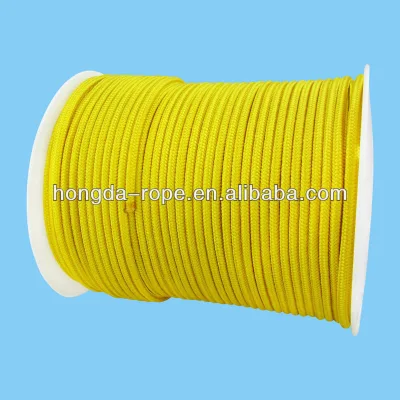
The "Model No: Life Saving Parts" entry suggests that certain configurations may be approved for safety-critical applications. However, buyers must exercise caution here; not all Dacron ropes are suitable for life-saving purposes. The distinction between a general mooring line and a life-saving line often lies in the specific certification and testing protocols. For outdoor furniture or general industrial use, the focus shifts to UV resistance and color stability, with the data noting available colors like White and Yellow, as well as "Any" color option.
Supplier Evaluation and Geographic Considerations
Selecting the right supplier involves evaluating their geographic location, production capabilities, and logistical readiness. The data points to two primary regions of origin: Baoying, Jiangsu, China (Mainland) and Guangdong, China. These regions are known for their robust textile and rope manufacturing industries. The "Place of Origin" and "Product Origin" fields confirm that the majority of the supply chain is concentrated in these Chinese provinces.
When evaluating suppliers, buyers should look for evidence of "Customization: Available." The ability to customize diameter, color, length, and packing is a strong indicator of a supplier's flexibility and technical capability. The data lists specific packing details such as "220m Per Coil or Reel and Packed in PP Woven Bag" and "Export Packing," which are standard for international shipping. Buyers should verify if the supplier can accommodate specific packing requests, such as spools, rolls, or reels, to ensure compatibility with their storage and deployment equipment.
Logistical factors like the "Port of dispatch: FOB Shantou" are also relevant. Shantou is a major port in Guangdong, which may influence shipping costs and transit times depending on the buyer's location. Buyers should confirm the Incoterms and the specific port of loading to accurately calculate the landed cost. Additionally, the "Supply Ability: 25 tons per Month" provides a concrete metric for assessing whether a supplier can meet large-scale demand without compromising quality or delivery schedules.
Quality Control and Long-Term Procurement
Ensuring long-term value requires a rigorous approach to quality control (QC) and supplier relationship management. The "Advantage: High Strength, Good Quality" attribute is a common claim, but buyers must verify this through independent testing or by requesting third-party test reports. The data mentions "International Standard" and "CCS approved" as standards, but specific test results for tensile strength, elongation, and abrasion resistance should be requested for every batch.
The "Instruction: 32-strand briaded" (noting the typo in the source data as "briaded") highlights the importance of verifying the construction details. Quality control should include visual inspections for uniform braiding, consistent diameter, and proper finishing. For marine applications, resistance to saltwater corrosion and UV degradation are paramount. Buyers should inquire about the specific treatment or additives used in the Dacron fiber to ensure longevity in harsh environments.
Long-term procurement considerations also involve the "Customization: Available" aspect. As operational needs evolve, the ability to source ropes with modified specifications can be a strategic advantage. Buyers should establish a framework for regular quality audits and performance reviews with their suppliers. The "Model Number" and "Product Model" (e.g., XCDG, XCBG, rope) serve as unique identifiers that should be locked into procurement contracts to ensure consistency across orders. By maintaining strict adherence to verified specifications and certifications, buyers can mitigate the risks associated with supply chain variability and ensure the reliability of their Double Braided Dacron Rope assets.
Comparative Analysis of Product Attributes
To assist in the decision-making process, the following table summarizes key attributes observed in the market for Double Braided Dacron Rope. This comparison highlights the variance in specifications that buyers must navigate.
| Attribute | Observed Range / Options | Relevance to Procurement |
|---|---|---|
| Material | Polyester, Dacron, Nylon, PP | Dacron/Polyester is preferred for UV resistance; Nylon for elasticity. |
| Diameter | 5 mm to 152 mm | Critical for load capacity; must match application requirements. |
| Construction | 8-strand, 32-strand braided | Double-braided (32-strand) offers higher strength and flexibility. |
| Certifications | BV, CCS, ABS, GL, DNV, LR, ISO9001 | Essential for marine safety; verify specific class society approval. |
| Color | White, Yellow, Any | Affects visibility and UV absorption; "Any" allows for branding. |
| Length | 200 m, Various | Determines inventory management and deployment logistics. |
| Packing | 220m/Coil, PP Woven Bag, Export Packing | Impacts storage efficiency and protection during transit. |
| Origin | Jiangsu, Guangdong, China | Influences lead times, shipping costs, and regulatory compliance. |
| MOQ | 1 to 1000 units | Affects unit price and order feasibility for small vs. large buyers. |
This table serves as a checklist for buyers to ensure all critical parameters are addressed during the sourcing process. By systematically verifying each attribute against the specific needs of the project, buyers can secure high-quality Double Braided Dacron Rope that meets both technical and regulatory standards.
FAQs
What certifications are available for Double Braided Dacron Rope?
Available certifications include BV, CCS, ABS, GL, DNV, LR, and ISO9001. These approvals validate the product for marine applications like mooring and towing, ensuring compliance with international standards for safety and quality.
Which diameter ranges are offered for this rope type?
Diameter options range from 5 mm up to 160 mm depending on the specific model. Larger sizes like 28 mm to 128 mm are common for heavy-duty shipping, while smaller diameters suit lighter lifting or outdoor furniture uses.
Can buyers request custom colors and packaging for orders?
Yes, customization is available for color, including white and yellow, or any specific request. Packaging can be tailored to spools, rolls, reels, or 220m per coil in PP woven bags to meet export requirements.
How is the rope constructed and what materials are used?
The rope is constructed as a 32-strand braided or 8-strand double braided design. Materials include high-tenacity polyester or Dacron, which offer resistance to UV degradation and rot for long-lasting marine performance.
What are the typical lead times and supply capabilities?
Suppliers typically offer a supply ability of 25 tons per month. While specific lead times vary, the production capacity supports bulk orders for shipping, docking, and industrial lifting applications with standard export packing.
Where are the manufacturers located and what is the origin?
Manufacturers are primarily located in Baoying, Jiangsu, and Guangdong, China. These regions provide access to major ports like Shantou for FOB dispatch, ensuring efficient logistics for international buyers sourcing marine parts.