Source Dutch Claw Foot Bathtub for Hotels, Villas, and Spas
Source 30 Dutch Claw Foot Bathtub options from verified Chinese manufacturers. Compare freestanding acrylic and artificial stone models with modern designs, CE and CUPC certifications, and online technical support for hotel, villa, and spa projects; compare the available evidence and request quotations based on your requirements.
Key considerations
Products List
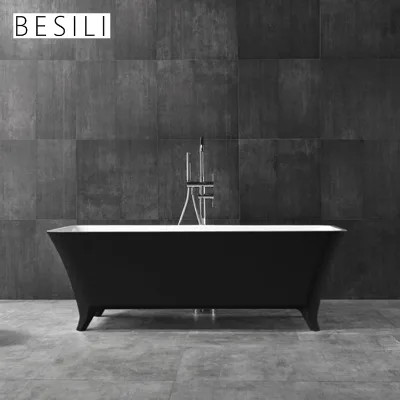


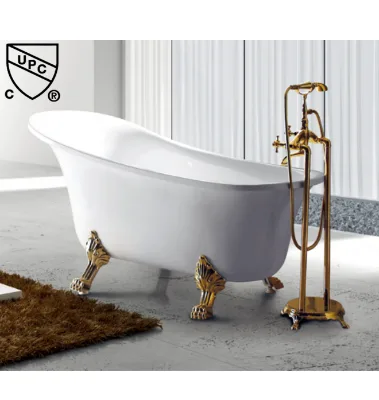


Freestanding Classical Acrylic Claw Foot Bathtub Fiberglass Claw Foot Tub
$120.00 - $270.00
MOQ: 5 Pieces

Claw Foot Tub Portable Bathtub for Adult Classical Freestanding Hot Tub Acrylic
$40.00 - $220.00
MOQ: 50 Pieces



Comprehensive Sourcing Guide
Dutch Claw Foot Bathtub Sourcing Guide
Procuring a Dutch Claw Foot Bathtub requires distinguishing between traditional cast iron designs and modern interpretations often found in current listings. The observed market data indicates a significant presence of freestanding units constructed from artificial stone or acrylic, which diverges from the classic heavy cast iron profile. Buyers must verify if the specific "claw foot" aesthetic is achieved through structural legs or if the product is a modern freestanding tub with a minimalist base, as the supplied facts list both "Leg Tubs" and general "Freestanding Tub" structures.
The sourcing landscape reveals a diverse range of applications, from residential villas to commercial hotels and hospitals, suggesting that durability standards vary by intended use. While the term "Dutch" implies a specific historical style, the actual products available often blend contemporary minimalist design with soaking functionality. Procurement teams should prioritize suppliers who can clearly articulate the structural differences between a true claw-foot design and a modern freestanding alternative to ensure the final installation matches the architectural intent of the project.
Product Scope and Observed Listing Signals
Current market listings for this category frequently feature artificial stone and acrylic materials rather than traditional cast iron, offering distinct advantages in weight and thermal retention. The observed product attributes highlight a "Soaking" function with specific dimensions like 1700mm in length, catering to both single-person and dual-user configurations depending on the width. Buyers should note that while some listings specify a "Drainer" as a standard accessory, others may require separate verification of the pop-up drainer inclusion, as this is a critical component for immediate usability.
Commercial availability signals indicate a strong supply capability from Chinese manufacturing hubs, with specific ports like Foshan and Guangzhou serving as primary dispatch points. The observed price range is broad, spanning from affordable entry-level units to high-end custom models, reflecting differences in material quality and finish. Procurement strategies must account for the "Customization" availability, as many suppliers offer OEM and ODM services to adapt the modern, contemporary design to specific project requirements, ensuring the tub fits unique spatial constraints.
Technical Specifications to Verify
Dimensional accuracy is paramount when sourcing these units, as observed listings show variations in depth and width, such as 650mm depth versus 790mm width. Buyers must rigorously verify the "Tub Size" against their bathroom floor plans, noting that some models are specified as 1700x800x650mm while others differ slightly in footprint. The "Drainage Size" of 50mm is a standard specification to confirm, ensuring compatibility with existing plumbing infrastructure and preventing potential installation delays due to mismatched pipe diameters.
Material composition significantly impacts the long-term performance and maintenance requirements of the bathtub. The observed data lists both "Artificial Stone" and "Acrylic" as primary materials, each offering different surface finishes like "Glossy" and varying resistance to impact. Verification of the "Structure" type is essential, as the market includes both "Leg Tubs" and general "Freestanding" designs. Buyers should request detailed material data sheets to confirm the specific resin or stone blend used, ensuring the selected unit meets the required load-bearing and thermal retention standards for the intended application.
Compliance and Safety Documentation
Safety certifications are a non-negotiable aspect of procurement, with observed listings frequently citing CE, ISO9001, and CUPC standards. These certifications indicate that the product has undergone testing for electrical safety, material quality, and plumbing compliance, which is critical for projects in regulated markets. Buyers must ensure that the specific batch of tubs being ordered carries valid, up-to-date certification documents that match the model number, as compliance status can vary between different production runs or custom configurations.
Documentation regarding the product's origin and manufacturing standards provides a baseline for quality assurance and liability protection. The observed "Place of Origin" is consistently listed as China, with specific manufacturing regions like Zhejiang noted for certain models. Procurement teams should verify that the supplier can provide a Certificate of Origin and detailed test reports for the specific "Bathtub body" warranty claims. This documentation is vital for insurance purposes and ensures that the product meets the safety expectations of the destination country's building codes.
Cost Drivers and Commercial Terms
The total cost of ownership is influenced by material selection, with artificial stone and acrylic units presenting different price points and shipping profiles. The observed supply ability of 600 sets per month suggests that volume discounts may be available for large projects, but buyers must confirm if the quoted price includes the "Packaging Details" such as bubble bags, corner foam, and plywood-reinforced cartons. Proper packaging is a significant cost driver, as it prevents damage during transit from ports like Foshan or Shenzhen to the final destination.
Lead times and payment terms are critical variables that affect project scheduling and cash flow management. The observed "Sample Lead Time" of 15 days provides a benchmark for initial prototyping, but bulk production lead times can vary based on customization requirements. Buyers should negotiate clear terms regarding the "Warranty," which is observed as a 5-year coverage for the main body, and ensure that the contract explicitly defines the scope of "After-sale Service," including online technical support availability for installation troubleshooting.
Supplier Qualification and Quality Control
Supplier qualification should focus on their ability to deliver consistent quality across large orders, given the observed "Supply Ability" of 600 sets monthly. Buyers must assess the supplier's track record in handling "Project Solution Capability" for diverse applications ranging from hotels to warehouses. It is essential to verify that the supplier has a robust quality control process in place to maintain the "Glossy" surface finish and structural integrity of the "Leg Tubs" or freestanding units, ensuring that every unit meets the specified dimensions and material standards.
Quality control protocols must extend to the final packaging and dispatch stages to minimize the risk of transit damage. The observed packaging details, including inner bubble bags and reinforced plywood cartons, indicate a focus on protection, but buyers should request photos of the packing process for large orders. Additionally, verifying the supplier's "Service" capabilities, such as acceptance of OEM and ODM requests, ensures they can adapt to specific design changes without compromising the structural "Structure" or the "Function" of the soaking tub.
Long-Term Procurement Checks
Establishing a long-term relationship requires a clear understanding of the warranty terms and the mechanism for claiming support. The observed "Warranty" of 5 years for the bathtub body is a significant value proposition, but buyers must clarify the specific conditions under which this coverage applies and the response time for "Online technical support." A robust after-sales agreement should include provisions for replacement parts or full unit replacement in the event of manufacturing defects, ensuring minimal disruption to the facility's operations.
Future procurement strategies should account for the potential need for customization and the scalability of the supply chain. As the market offers "Customized" options, buyers should maintain open communication channels with suppliers to discuss upcoming design trends and material innovations. Regular audits of the supplier's production capacity and quality control records will help ensure that the "Design Style" remains consistent with the project's aesthetic requirements, securing a reliable supply of high-quality Dutch claw foot bathtubs for future expansions or renovations.
FAQs
How is the Dutch Claw Foot Bathtub packaged for shipping and export?
The bathtub is packed in multiple protective layers: an inner bubble bag, corner protective foam, and an outside carton reinforced by plywood. This layered packaging helps prevent chipping and cracking during long-distance transport. Shipping typically departs from ports such as Foshan, Guangzhou, or Shenzhen, and buyers should confirm final carton dimensions and container loading plans with the supplier.
What materials are available for this Dutch Claw Foot Bathtub?
Listed products are offered in artificial stone and acrylic, giving buyers options between a solid, stone-like feel and a lighter, more economical construction. Both materials suit freestanding installation and modern or minimalist bathroom designs. Material choice affects weight, surface finish, and cost, so request material specifications and surface finish details, such as glossy coating, before confirming an order.
Which certifications should I verify before importing this bathtub?
Check for CE, CUPC, and ISO9001 certification, which are listed for these products and cover European market access, North American plumbing compliance, and quality management systems respectively. Always request current certificate copies from the supplier and confirm they match the exact model number you plan to order, since certification scope can vary between models and production batches.
Can the Dutch Claw Foot Bathtub be customized in size or color?
Yes, customization is available, and the listed products support OEM and ODM service alongside online technical support after sale. The standard shape is 1700X800X650mm in black with a glossy surface, but buyers can discuss alternative dimensions, colors, or finishes. Confirm customization scope, tooling implications, sample lead time of around 15 days, and any price adjustments before placing a production order.
What is included with the bathtub and what warranty applies?
A pop-up drainer is included as a fitting, while the faucet is not included and must be sourced separately. The bathtub body carries a 5-year warranty, and after-sale service is provided through online technical support. Clarify in writing whether fittings, drainage components, and freight damage fall under the warranty terms, and keep the model number documented for any claims.
How much production capacity and lead time can buyers expect?
Supply ability is listed at 600 sets per month, with a sample lead time of about 15 days. Production order lead times depend on quantity, customization level, and current order backlog, so confirm the schedule in the proforma invoice. MOQ ranges observed span from single units to 100 units, allowing both sample evaluation and larger project procurement.