Source Energy Saving Gold Flotation Plant for mining, ore processing, and recovery
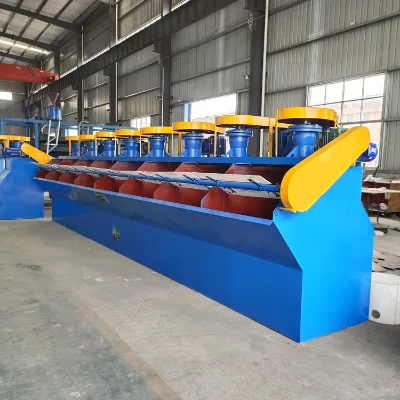
Compare 30 listings for the Energy Saving Gold Flotation Plant, featuring heat resistant casting steel, CE and ISO9001 certifications, and customizable dimensions. Buyers can evaluate specifications like 380V voltage, 100-200tph capacity, and 1-2 year warranty options from suppliers in Henan, China.
Key considerations
Products List


Metal Ore Beneficiation Plant Gold Copper Ore Flotation Machine Flotation Process Plant
$19999.00 - $29999.00
MOQ: 1 Pieces


High Quality Gold Platinum Copper Ore Processing Flotation Plant for Ores Separating
$6800.00 - $79000.00
MOQ: 1 Sets


Advanced Copper Ore Processing Plant with Zinc Gold Flotation Technology
$900.00 - $1000.00
MOQ: 1 Pieces

Advanced Gold Copper Mineral Processing Plant for Efficient Ore Beneficiation
$900.00 - $1000.00
MOQ: 1 Pieces



Comprehensive Sourcing Guide
Strategic Sourcing Guide for Energy Saving Gold Flotation Plants
The global demand for gold recovery has intensified the need for processing equipment that balances high efficiency with operational economy. For procurement professionals, the "Energy Saving Gold Flotation Plant" represents a critical asset class where technical performance directly impacts the bottom line. Sourcing such complex industrial machinery requires a disciplined approach that moves beyond simple price comparisons to a rigorous evaluation of technical specifications, compliance frameworks, and long-term operational viability. This guide outlines the essential factors buyers must consider when evaluating suppliers and products in this specialized sector, grounded in observable market data and verified product attributes.
Technical Specifications and Operational Efficiency
When evaluating an Energy Saving Gold Flotation Plant, the primary focus must be on the core mechanical and electrical specifications that define its performance. The fundamental architecture of these systems typically centers on the flotation cell, which serves as the heart of the separation process. Buyers should verify that the equipment includes essential core components such as high-efficiency motors and dedicated flotation machines designed specifically for mineral beneficiation. The application scope for these units is broad, covering both copper ore and gold ore processing, which necessitates a versatile design capable of handling varying feed characteristics.
A critical technical differentiator is the energy consumption profile. Products in this category are frequently marketed with "Energy Saving" as a key attribute, often paired with claims of "High Efficiency Low Energy" operation. To validate these claims, procurement teams must examine the voltage requirements and motor specifications. Standard industrial configurations often operate at 380V, but the specific power rating of the motor relative to the throughput capacity is the true metric of efficiency. The physical dimensions of the plant, often listed as customizable or model-dependent, must align with the available floor space and the specific gravity of the ore being processed.
Furthermore, the material composition of the plant is a decisive factor in its longevity and resistance to wear. Observed product data indicates the use of casting steel, a material chosen for its durability in harsh mining environments. The equipment is also frequently described as having "Heat Resistant" features, which is vital for maintaining structural integrity during continuous operation. The weight of the machinery varies significantly, ranging from compact units under 1 ton to large-scale installations weighing up to 10 tons. This variance dictates the logistics strategy, including the need for specialized lifting equipment and the structural reinforcement required at the installation site.
Compliance, Certification, and Regulatory Standards
Navigating the regulatory landscape is non-negotiable when importing heavy industrial machinery. The supply chain for gold flotation plants is heavily regulated to ensure safety and environmental compliance. Buyers must rigorously verify that the equipment carries recognized international certifications. The most prevalent standards observed in this sector include CE marking and ISO 9001 certification. These certifications are not merely administrative formalities; they indicate that the manufacturer adheres to specific quality management systems and safety standards.
In addition to product-specific certifications, the manufacturing facility itself should ideally comply with environmental standards such as ISO 14000. This standard is particularly relevant for "energy saving" claims, as it suggests the manufacturer has implemented processes to minimize environmental impact throughout the production lifecycle. The presence of these certifications should be cross-referenced with the specific product model and batch to ensure authenticity. Buyers should be wary of generic claims and insist on seeing valid, up-to-date documentation for each unit being purchased.
The origin of the equipment also plays a role in compliance. A significant portion of the market for these plants originates from specific industrial hubs in China, such as Henan and Zhengzhou. While these regions are known for their manufacturing capabilities, the buyer must ensure that the export documentation from these locations meets the import regulations of the destination country. This includes verifying that the electrical components meet local voltage and frequency standards, as well as ensuring that the "Standard Export Packing" or "Standard Container" specifications are sufficient to protect the machinery during international transit.
Cost Drivers and Pricing Structures
Understanding the cost structure of a gold flotation plant is essential for budgeting and financial planning. The market for these units exhibits a wide price range, with observed listings spanning from approximately $900 to $285,000. This vast disparity is not indicative of a single product tier but rather reflects the massive variation in capacity, customization, and component quality. A unit priced at the lower end of the spectrum is likely a smaller, single-cell machine or a modular component, whereas the higher price points correspond to full-scale processing plants with capacities ranging from 100 to 200 tons per hour (tph).
Several key factors drive these costs. First, the customization level is a major variable. Products listed as "Customized" or with "Customizable" dimensions and standards often command a premium due to the engineering time and specialized tooling required. Second, the warranty period significantly influences the initial purchase price. While some units may come with a standard one-year warranty, others offering a two-year warranty or "Lifelong" spare parts supply may be priced higher to account for the extended risk coverage provided by the supplier.
The pricing model is also frequently described as "Negotiable," indicating that the final cost is subject to volume, payment terms, and the inclusion of ancillary services. Buyers should be aware that the base price of the machine often excludes installation, commissioning, and the cost of the engineer guide service, which are listed as separate value-added features. Additionally, the "Fast Delivery in Africa" or similar regional logistics promises may carry a surcharge depending on the destination and the complexity of the shipping route.
Typical Applications and Performance Metrics
The primary application for energy saving gold flotation plants is the beneficiation of gold ore, though these systems are equally effective for copper ore processing. The core mechanism relies on the principle of differential wettability, where hydrophobic gold particles attach to air bubbles and float to the surface, while hydrophilic waste material sinks. The efficiency of this process is often highlighted by "High Recovery Rate" as a key selling point. However, buyers must understand that recovery rates are highly dependent on the specific ore grade, particle size, and the chemical reagents used in the circuit, not just the mechanical design of the plant.
Performance is also measured by the rigidity and stability of the equipment. Products with "High Rigidity" are preferred for maintaining consistent flotation conditions under fluctuating feed rates. The "Easy to Operate" feature is another critical metric, particularly for sites with limited technical expertise. This is often achieved through automated control systems and user-friendly interfaces, though the specific level of automation should be verified against the operator's skill set.
The installation process is a crucial phase that impacts the overall performance. Many suppliers offer "Engineer Guide" services or "Supply" of installation support, which can be vital for ensuring the plant is set up correctly. For international buyers, the availability of "Overseas Service Provided" and "Local Service Location" in regions like Africa is a significant advantage, reducing downtime and ensuring that any operational issues can be addressed promptly. The "Factory Visit: Welcome Warmly" attribute suggests that suppliers are open to transparency, allowing buyers to witness the manufacturing process and quality control measures firsthand.
Supplier Evaluation and Quality Assurance
Selecting the right supplier requires a multi-faceted evaluation strategy that goes beyond the product listing. Buyers should prioritize suppliers who demonstrate a commitment to quality through their certifications and after-sales support. The presence of "High Reputation" as a product attribute is subjective and should be validated through independent references and case studies. A robust supplier will provide clear documentation regarding their "After-Sales Service Provided," including the availability of spare parts and the response time for technical support.
Quality control should be embedded in the procurement process. Buyers must verify that the "Condition" of the equipment is explicitly "New" and that the manufacturing process adheres to the stated standards. The "Standard Container" or "Container Shipping" packing methods should be inspected to ensure they meet international safety standards for heavy machinery. Furthermore, the "Lead Time" for delivery, which can range from 5 to 28 days, must be factored into the project schedule. A supplier with a consistent track record of meeting these timelines is preferable to one with variable delivery windows.
The "Spare Parts Supplying: Lifelong Provide" claim is a significant differentiator. This indicates a long-term partnership rather than a one-off transaction. Buyers should clarify the scope of this promise, including whether it covers standard wear parts or major components, and the logistics involved in shipping these parts to remote locations. The ability to visit the factory is a strong indicator of supplier confidence and transparency, allowing for a direct assessment of the manufacturing capabilities and quality control protocols.
Long-Term Procurement and Operational Considerations
Sourcing a gold flotation plant is a long-term investment that requires careful consideration of the total cost of ownership. While the initial purchase price is important, the operational costs, maintenance requirements, and potential for future upgrades are equally critical. The "Energy Saving" feature, while promising, must be evaluated in the context of the specific energy costs in the buyer's region. A plant that consumes less power may have a higher upfront cost but will yield significant savings over its operational life.
The warranty period is a key indicator of the manufacturer's confidence in their product. A two-year warranty offers more protection than a one-year term, reducing the financial risk associated with early-life failures. Buyers should also consider the "Customization" options available. As mining operations evolve, the ability to upgrade or modify the plant to handle different ore types or increased throughput is essential. The "Various Model" availability suggests a flexible product line that can adapt to changing needs.
Finally, the logistical aspects of the procurement cannot be overlooked. The "Standard Export Packing" and "Container Transportation" methods must be compatible with the destination port's infrastructure. For buyers in regions like Africa, the "Fast Local Delivery" promise is a significant advantage that can reduce storage costs and accelerate the commissioning timeline. By thoroughly understanding these long-term factors, buyers can make informed decisions that ensure the gold flotation plant delivers sustained value and operational efficiency for years to come.
FAQs
What certifications do energy saving gold flotation plants have?
These plants typically hold CE and ISO9001 certifications. Some units also meet ISO14000 standards for environmental compliance. Buyers should verify specific documentation for each model to ensure regulatory adherence.
How is the material of the flotation plant constructed?
The equipment is primarily constructed from casting steel to ensure durability. It features heat-resistant properties to maintain structural integrity during continuous operation in harsh mining environments.
Can the plant dimensions be customized for specific sites?
Yes, dimensions are customizable according to the specific model requirements. This flexibility allows the plant to fit various floor spaces and align with the specific gravity of the ore being processed.
What is the warranty period for these gold processing units?
Warranty periods vary, with options including one year or two years of coverage. Some suppliers also offer lifelong spare parts supply to ensure long-term operational viability for the buyer.
How is the installation process managed for international buyers?
Suppliers provide engineer guide services or supply installation support to ensure correct setup. Overseas service is available in locations like Africa to address operational issues and reduce downtime effectively.
What is the typical delivery lead time for these plants?
Delivery times generally range from 5 to 28 days depending on the order specifics. Buyers should confirm the exact timeline as it may vary based on customization and current production schedules.
Which core components are included in the flotation machine?
Core components typically include high-efficiency motors and dedicated flotation cells. These units are designed for copper ore and gold ore beneficiation to ensure high recovery rates and operational efficiency.