Find EPA and CE Certified Used Tracked Excavator for mining, marine, and special uses
Source 30 epa and ce certified used tracked excavators with hydraulic transmission and internal combustion drive options. Compare specifications for mining, marine, and special applications across models like TK20 and Cat 325C.
Key considerations
Products List


General-Purpose Used Excavator with Hydraulic Drive and CE Certification
$15000.00 - $21500.00
MOQ: 1 Pieces

Used Excavator with CE Certification General-Purpose Hydraulic Drive
$15000.00 - $21500.00
MOQ: 1 Pieces

Specialized Used Excavator with EAC Certification and Hydraulic Drive
$15000.00 - $21500.00
MOQ: 1 Pieces

CE Certified Used Excavator for General-Purpose Applications with Hydraulic Drive
$15000.00 - $21500.00
MOQ: 1 Pieces

General-Purpose Used Excavator with EAC Certification and Hydraulic Drive
$15000.00 - $21500.00
MOQ: 1 Pieces

Specialized Used Excavator with Hydraulic Drive CE Certified for Quality
$15000.00 - $21500.00
MOQ: 1 Pieces


Hot Sale Used Cat 320d2 Hydraulic Tracked Excavator with High Quality
$24000.00 - $26000.00
MOQ: 1 Pieces

Efficient Used Excavator with 21800kg Weight and Low Operating Costs
$19000.00 - $26000.00
MOQ: 1 Pieces


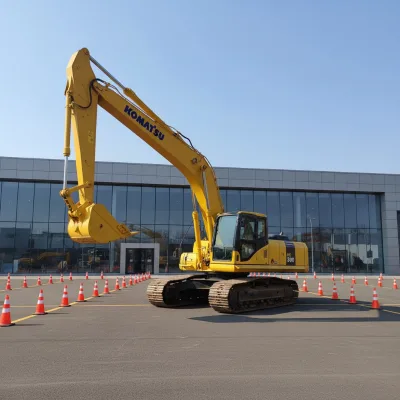
Comprehensive Sourcing Guide
Sourcing Guide for EPA and CE Certified Used Tracked Excavators
The global market for used tracked excavators presents a complex landscape for B2B procurement professionals seeking equipment that balances operational efficiency with regulatory compliance. When the core search parameters include "EPA and CE Certified Used Tracked Excavator," buyers must navigate a fragmented inventory where certification status, origin, and technical specifications vary significantly across listings. This guide provides a disciplined approach to evaluating these assets, relying strictly on observed market data and established industry standards to mitigate procurement risks. The following sections detail the technical realities, compliance verification processes, and strategic considerations necessary for acquiring reliable heavy machinery.
Technical Specifications and Operational Variability
Understanding the technical baseline of a used excavator is the first step in any sourcing strategy. The market data reveals a wide spectrum of configurations, ranging from small-scale units to large-scale industrial machines. Buyers should not assume that a single model designation implies uniform performance. For instance, observed listings include models such as the TK20, which is characterized as a small-scale unit, alongside larger counterparts like the Cat 325C, which falls into the medium to large category with a standard weight of 25 tons.
The drive type is a critical differentiator. While many units in the current inventory utilize internal combustion drives powered by diesel engines, there are also listings for electric drive models. This distinction impacts maintenance requirements and operational costs. A diesel-powered unit, such as the one described with a "Diesel Engine" attribute, typically offers higher torque for heavy digging but requires strict adherence to emission standards. Conversely, electric drive options may offer lower noise levels and reduced local emissions, though their availability in the used market is often more limited.
Bucket capacity and size are equally variable. Data indicates that bucket capacities range from 0.1 to 0.5 cubic meters for smaller units, up to 1.0 to 1.5 cubic meters for larger models. The specific application dictates the required size; a "Grab Shovel" configuration is observed for certain units, suggesting specialized material handling capabilities, while others are standard digging buckets. Furthermore, the condition of the machine is a primary variable. The market contains both "New" and "Used" units, with used equipment often retaining the "Original" color and finish but potentially showing wear consistent with their service history. Buyers must verify the actual physical condition against the listed status, as "Used" does not inherently imply a specific level of wear.
Compliance and Certification Verification
The requirement for "EPA and CE certified" equipment introduces a layer of complexity, particularly when sourcing used machinery from different origins. The CE mark is a widely observed certification in the provided data, appearing on listings for machines originating from China, the US, and Japan. However, the presence of a CE mark on a used unit does not automatically guarantee that the machine meets current EPA standards, especially if the equipment was originally manufactured for a different market.
EPA (Environmental Protection Agency) certification is specific to the United States market and applies to engines and emission control systems. When a listing claims "EPA and CE certified," the buyer must scrutinize the engine's original certification status. For example, a unit listed with an origin of "Japan" and a model like the CAT 308E2 may have been manufactured to Japanese or European standards initially. If such a unit is being imported into the US, it may require re-certification or verification that it meets specific EPA Tier standards for its engine model year.
The provided data confirms that CE certification is a common attribute, with some listings explicitly stating "CE, ISO9001: Condition: Used." This suggests that some suppliers bundle quality management system certifications with product compliance. However, buyers must verify that the ISO9001 certification applies to the manufacturing entity or the refurbishment process, not just the product listing itself. It is crucial to understand that certification is not a static attribute; a machine certified in 2010 may not meet the emission requirements of 2024. Therefore, the verification process must include checking the engine serial number against EPA databases to confirm the specific emission tier.
Cost Drivers and Pricing Dynamics
The financial aspect of sourcing used excavators is influenced by a multitude of factors beyond the simple purchase price. The observed price range in the market spans from $7,300 to $49,000 USD. This significant variance is driven by the machine's size, condition, age, and specific configuration. Small-scale units, such as the TK20 with a 2000kg standard, naturally command lower prices compared to the 25-ton Cat 325C.
Condition is a primary cost driver. A "New" unit will invariably be priced at the higher end of the spectrum, while "Used" units vary based on their remaining service life. The "Original" color and finish mentioned in some listings can indicate a well-maintained exterior, but this does not guarantee internal mechanical health. Buyers should expect that units with "High Digging Power" or specialized features like "Hydraulic Transmission" may carry a premium over standard models.
Additionally, the origin of the machine affects the final landed cost. Units from "China" may have different pricing structures compared to those from the "US" or "Japan." Import duties, shipping costs, and the logistics of transporting heavy machinery from a "Nude" or "Wooden Box" packing state to the final destination must be factored into the total cost of ownership. The Minimum Order Quantity (MOQ) is observed to be 1 set for most listings, which allows for flexible purchasing but does not necessarily reduce unit costs through volume discounts.
Typical Applications and Usage Scenarios
The versatility of used tracked excavators is evident in the diverse usage categories observed in the market. These machines are deployed in a wide array of sectors, including general construction (GM Excavator), mining operations, marine environments, and specialized applications. The "GM Excavator" tag appears frequently, indicating suitability for general construction tasks such as trenching, grading, and material handling.
For more demanding environments, the market offers units specifically rated for "Mining Excavator" and "Marine Excavator" usage. These applications often require higher durability and specific track configurations. The "Large-Scale" units, with bucket capacities up to 1.5 cubic meters, are better suited for heavy mining or large-scale earthmoving projects, whereas "Small-Scale" units are ideal for urban construction or confined spaces.
The "Special Excavator" category suggests that some units are equipped with unique attachments or configurations, such as the "Grab Shovel" bucket. This versatility allows a single machine to perform multiple functions, reducing the need for specialized equipment on a job site. The "Gradeability" of 35° observed in some listings indicates the machine's ability to operate on steep terrain, a critical factor for mining or rugged construction sites. Buyers should align the machine's specific usage rating with their intended application to ensure operational safety and efficiency.
Supplier Evaluation and Quality Control
Evaluating a supplier for used heavy machinery requires a rigorous approach to quality control and verification. The market data indicates that suppliers provide "Machinery Test Reports," which is a valuable asset for due diligence. These reports should be reviewed to confirm the machine's performance metrics, such as the "Rated Speed" of 3km/h or the "Maximum Digging Height" of 3700mm. However, buyers must treat these reports as observations of a specific unit rather than guarantees for all units of that model.
When assessing a supplier, the "Customization" availability is a key indicator of flexibility. Suppliers that offer customization can tailor the machine to specific project needs, such as adjusting the "Arm Length" to 2.5 meters or modifying the bucket type. The "Product Packing" method, whether "Wooden Box," "Nude," or "Sea" packing, also reflects the supplier's attention to logistics and protection during transit.
Quality control should extend to the verification of the machine's origin and history. A unit from "Japan" may have different maintenance standards compared to one from "China" or the "US." Buyers should request detailed service records and inspection reports that go beyond the standard test report. The presence of certifications like CE and ISO9001 should be verified through independent channels to ensure they are current and applicable to the specific unit being purchased.
Long-Term Procurement Considerations
Procuring a used tracked excavator is a long-term investment that requires careful consideration of maintenance, parts availability, and regulatory compliance over the machine's lifespan. The "Diesel Engine" and "Hydraulic Transmission" systems are critical components that will require regular maintenance. Buyers should assess the availability of spare parts for the specific model, such as the Cat 308E2 or TK20, to avoid costly downtime.
Regulatory compliance is another long-term factor. As emission standards evolve, a machine certified for a specific year may face restrictions in the future. Buyers should consider the remaining regulatory lifespan of the engine and whether the machine can be retrofitted to meet new standards. The "Original" condition of the machine may also impact its resale value; a well-maintained unit with a clean history will retain value better than one that has been heavily modified or neglected.
Finally, the "Unique Selling Point" of "High Digging Power" should be evaluated in the context of the buyer's specific operational needs. While high power is advantageous, it may come with higher fuel consumption and maintenance costs. A balanced approach that considers the total cost of ownership, including fuel, maintenance, and potential downtime, is essential for a successful procurement strategy. By adhering to these disciplined evaluation criteria, buyers can navigate the complexities of the used excavator market and secure equipment that meets their operational and compliance requirements.
FAQs
Can I find EPA and CE certified used tracked excavators with hydraulic transmission?
Yes, hydraulic transmission is available on these units, though EPA certification requires specific engine verification. The market offers diesel engine models with this transmission type, but buyers must confirm the engine's emission tier against current US standards before purchase.
What bucket capacities are available for small-scale EPA and CE certified used tracked excavators?
Small-scale units typically feature bucket capacities ranging from 0.1 to 0.5 cubic meters. Larger models may offer capacities up to 1.5 cubic meters, so buyers should select the size that matches their specific excavation requirements and site constraints.
Which models of EPA and CE certified used tracked excavators are listed as new condition?
New condition units are available alongside used options in the current inventory. These new machines often come with CE certification and may include features like grab shovel attachments, but buyers must verify the specific model year and engine compliance for EPA standards.
How does the origin of the excavator affect EPA and CE certification verification?
Origin impacts certification because CE marks appear on units from China, the US, and Japan, but EPA rules are US-specific. A unit from Japan or China may need re-certification to meet US emission standards, so buyers must check the engine serial number against EPA databases.
Can I source EPA and CE certified used tracked excavators with a minimum order quantity of one set?
Yes, the market allows purchasing individual units with a minimum order quantity of one set. This flexibility applies to various models like the TK20 or Cat 325C, enabling buyers to acquire single machines without needing to meet bulk purchase thresholds.
What pricing range can I expect for EPA and CE certified used tracked excavators?
Prices for these units range from 7,300 to 49,000 USD depending on size and condition. Smaller models like the TK20 generally cost less, while larger 25-ton units like the Cat 325C command higher prices due to their increased capacity and power.
Which drive types are available for EPA and CE certified used tracked excavators?
Both internal combustion diesel engines and electric drive options are available in the market. Diesel engines provide high torque for heavy digging, while electric drives offer lower noise, but buyers must verify that the specific drive system meets the required emission certification standards.