Source Epoxy Silanes Silane Coupling Agent for Rubber, Coating, and Plastic
Compare 30 Epoxy Silanes Silane Coupling Agent options from Chinese manufacturers. Buyers can review CAS numbers, purity levels, and packaging details for applications in rubber, coating, and plastic industries.
Key considerations
Products List


![Silane Coupling Agent 2- (3, 4-Epoxycyclohexyl) Ethyl]Trimethoxysilane (CAS No. 3388-04-3)](https://image.made-in-china.com/221f0j00ZcKoyeMJwfbQ/Silane-Coupling-Agent-2-3-4-Epoxycyclohexyl-Ethyl-Trimethoxysilane-CAS-No-3388-04-3-.webp)


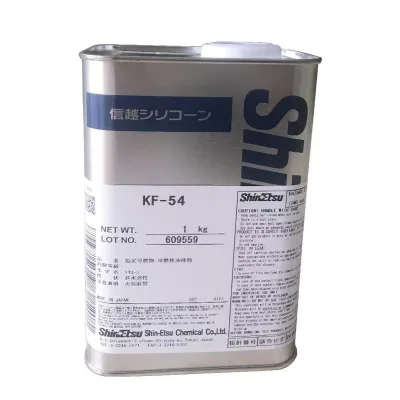
Shin-Etsu KF-862 1Kg Silane Coupling Agent Silicone Oil Seal Price of Silicon Oil for Sale
$35.87 - $40.66
MOQ: 1 kilometers


Comprehensive Sourcing Guide
Strategic Sourcing Guide for Epoxy Silanes and Silane Coupling Agents
The global demand for high-performance silane coupling agents continues to rise, driven by the need for enhanced adhesion in composite materials, coatings, and sealants. Epoxy silanes, specifically, serve as critical intermediates that bridge the gap between inorganic substrates and organic polymers. For procurement professionals, navigating the market requires a disciplined approach that distinguishes between generic silane classes and specific epoxy-functional variants. This guide synthesizes available product data and industry standards to provide a robust framework for sourcing these essential chemical auxiliaries without relying on unverified claims or speculative market data.
Technical Specifications and Chemical Identification
The foundation of any successful procurement strategy lies in the precise identification of the chemical product. Silane coupling agents are often categorized by their organofunctional groups, with epoxy silanes being distinct due to their ability to react with both silanol groups on glass or mineral surfaces and epoxy resins. Buyers must verify the Chemical Abstracts Service (CAS) number to ensure chemical identity, as different silanes possess vastly different reactivities and applications.
Based on observed market data, specific epoxy silane models such as KH-571, KH-572, and KH-575 are frequently encountered. The CAS number 21142-29-0 is associated with specific epoxy-functional silanes, while other variants like KH-557 are linked to different functional groups (CAS 3068-78-8). It is imperative for buyers to cross-reference the requested model number with its corresponding CAS number. For instance, the KH-570 model, often cited with CAS 59004-18-1, represents a different chemical profile than the KH-571. Confusion between these models can lead to formulation failures in end products.
Physical form is another critical specification. While some silane coupling agents are supplied as clear, colorless liquids, others may appear yellow or white depending on purity and storage conditions. Observed listings indicate products with a "White" appearance and others described as "Yellow," alongside "Colorless, Clear Liquid" descriptions. The physical state often dictates the handling requirements and the compatibility with specific resin systems. Buyers should verify the physical form against their processing equipment capabilities, particularly regarding viscosity and solubility.
Compliance, Standards, and Purity Verification
In the chemical industry, "Industrial Grade" is a common designation, but it does not guarantee a specific purity level without further verification. Procurement documents must explicitly state the required purity threshold. Market observations show products claiming a purity greater than 97% or 98%, while others reference specific internal standards like "GX-570" or "GX-560." These internal codes often correlate with specific manufacturer formulations but may not align with international pharmacopoeia or ASTM standards unless explicitly defined.
Buyers must verify the "Grade Standard" of the product. While "Industrial Grade" is a standard classification, the actual performance depends on the consistency of the batch. The presence of a standard such as "Purity >97%" is a positive indicator, but it should be accompanied by a Certificate of Analysis (CoA) for every shipment. The origin of the product, frequently listed as the People's Republic of China or specific provinces like Anhui, is a logistical fact but does not inherently dictate quality. However, it is a factor in supply chain risk assessment.
Certification status is a frequent point of confusion. While some products list "Industry" as their standard, this is a vague descriptor. Buyers should not assume that a product labeled "Industry" meets specific regulatory requirements for food contact, medical devices, or automotive safety unless the supplier provides third-party certification documents. The absence of a specific certification name in the product listing should trigger a request for documentation rather than an assumption of compliance.
Cost Drivers and Pricing Structures
The pricing of silane coupling agents is influenced by raw material volatility, specifically the cost of chlorosilanes and the energy required for synthesis. The observed price range in the market spans from $1 to $99.99 USD, a wide variance that reflects differences in packaging, purity, and volume. A unit price of $1 is likely indicative of a bulk industrial transaction or a specific promotional listing, whereas prices approaching $100 may reflect smaller packaging sizes or higher purity grades.
Packaging is a significant cost driver. Products are available in various configurations, including 5kg plastic drums, 25kg drums, 200L drums, and IBC totes (1000kg or 950kg). The choice of packaging directly impacts the unit cost and the handling logistics. For example, a product packed in 200L drums may offer a lower cost per kilogram compared to the same chemical in 5kg units due to reduced packaging material and labor costs. Buyers must calculate the total landed cost, including the cost of the packaging itself and the waste disposal costs for empty containers.
Minimum Order Quantity (MOQ) is another critical financial factor. The observed MOQ range spans from 1 unit to 1000 units. This flexibility allows small R&D labs to purchase single units while large manufacturers can negotiate bulk rates. However, buyers should be wary of extremely low MOQs if they require consistent long-term supply, as small batches may come from different production runs, leading to variability. Conversely, high MOQs may tie up capital and require significant storage capacity.
Typical Applications and Usage Stages
Silane coupling agents are versatile auxiliaries used across a broad spectrum of industries. The primary function is to improve adhesion between inorganic fillers and organic matrices. The observed usage categories include Water Treatment Chemicals, Rubber Auxiliary Agents, Plastic Auxiliary Agents, Coating Auxiliary Agents, Textile Auxiliary Agents, and Leather Auxiliary Agents. The specific application dictates the required silane type.
For the coating industry, epoxy silanes are often used in appliance paints and car paints. The "Auxiliary System" is frequently noted as a "Water Type Coating Auxiliary Agent," indicating compatibility with water-based formulations. In the rubber and plastic sectors, these agents act as coupling agents to enhance mechanical properties and durability. The "Usage Stage" is typically the "Manufacturing Stage," where the silane is added during the compounding or mixing process.
Some listings also mention applications in Oil Drilling Auxiliary Agents, Paper Chemicals, and Electronics Chemicals. This breadth of application highlights the need for precise selection. A silane suitable for a water treatment process may not be compatible with an electronics manufacturing process due to ionic impurities or specific reactivity requirements. Buyers must match the "Application" field in the product data with their specific end-use requirements. For instance, if the application is an "Adhesion Promoter," the silane must be selected based on the specific substrate and resin combination.
Supplier Evaluation and Product Consistency
Evaluating a supplier for chemical auxiliaries requires a focus on consistency and transparency. The market data shows a variety of product models, including KH-570, KH-571, KH-572, KH-575, and others like A1100, A1110, A171, and A187. Some products are cross-referenced with brand names such as "Dow Corning Z-6033" or "Shin-Etsu Kbm-502." While these references can indicate compatibility with established formulations, buyers should verify if the supplier is an authorized distributor or if these are generic equivalents.
The "Customization" attribute is listed as "Available" for many products. This suggests that suppliers may offer tailored packaging, specific purity levels, or modified formulations. However, customization introduces complexity. Buyers must ensure that any custom request is documented in the purchase order and that the supplier has the capacity to maintain consistency across custom batches. The origin of the product, whether from Anhui, China, or other regions, should be verified for logistical reliability and regulatory compliance.
Supplier reliability is also tied to the clarity of their product specifications. Listings that provide detailed information on CAS numbers, purity standards, and physical forms are generally more reliable than those with vague descriptions. Buyers should prioritize suppliers who provide complete technical data sheets (TDS) and safety data sheets (SDS) that align with the product model and CAS number.
Quality Control and Long-Term Procurement
Quality control is paramount when sourcing silane coupling agents. The "Standard" field often lists "Industry" or specific internal codes like "GX-570." These are not sufficient on their own for quality assurance. Buyers must implement a rigorous incoming quality control (IQC) process that includes verifying the CAS number, checking the purity against the CoA, and testing the physical properties such as color and clarity. The observed variation in color (White, Yellow, Colorless) necessitates visual inspection and potentially spectroscopic analysis to confirm the absence of degradation products.
Long-term procurement considerations involve supply chain resilience. The "prod_packing" options, ranging from 5kg drums to 1000kg IBCs, offer flexibility but also require storage management. Buyers should assess their storage capabilities to handle the specific packaging formats. Additionally, the "Usage" range is extensive, and a supplier's ability to support multiple applications indicates a robust production capacity.
Buyers should also consider the "Lead Time" and "MOQ" in their strategic planning. While specific lead times are not provided in the data, the wide range of MOQs suggests that suppliers are willing to accommodate different order sizes. However, for long-term contracts, buyers should negotiate fixed pricing and guaranteed lead times to mitigate market volatility. The "Product Origin" being China is a common fact, but buyers should verify if there are any trade restrictions or tariffs that could affect the cost and availability of the product.
Comparative Analysis of Product Models
To assist in decision-making, the following table summarizes key observed product models and their associated attributes based on the provided data. This comparison helps in distinguishing between different silane types and their potential applications.
| Product Model | CAS Number | Purity Standard | Physical Form | Primary Usage Categories | Packaging Options |
|---|---|---|---|---|---|
| KH-571 | 21142-29-0 | Purity >97% | Liquid | Water Treatment, Rubber, Plastic, Coating | 200L Drum |
| KH-557 | 3068-78-8 | Purity >98% | Liquid | Textile, Rubber, Plastic, Coating | As Customer's Request |
| KH-570 | 59004-18-1 | GX-570 | Liquid | Textile, Surfactants, Rubber, Plastic, Coating | 5kg, 25kg, 200kg |
| KH-572 | N/A | N/A | N/A | Textile, Surfactants, Rubber, Plastic, Leather | N/A |
| KH-575 | N/A | N/A | N/A | Rubber, Plastic, Coating | N/A |
| A1100/A1110 | N/A | N/A | N/A | Rubber, Plastic, Coating | N/A |
| A187/KH-560 | N/A | GX-560 | N/A | N/A | IBC 1000kg, Drum 200kg |
| GX-602 | N/A | N/A | N/A | N/A | N/A |
| GX-792 | N/A | GX-792 | N/A | N/A | IBC 950kg, Drum 200kg |
This table highlights the diversity of the market. While some models have clear CAS numbers and purity standards, others lack specific data points in the provided listings. Buyers must request this missing information before finalizing a purchase. The variation in packaging options also underscores the need for a tailored approach to procurement, ensuring that the chosen format aligns with the buyer's operational scale and storage capabilities.
In conclusion, sourcing epoxy silanes and silane coupling agents requires a meticulous approach that prioritizes technical verification, quality assurance, and supply chain stability. By focusing on the specific attributes provided in product listings and adhering to rigorous quality control protocols, buyers can secure high-performance materials that meet their manufacturing needs without compromising on safety or consistency.
FAQs
What is the CAS number for epoxy silane coupling agents like KH-571?
The CAS number for KH-571 is 21142-29-0. Buyers must verify this number against other models like KH-557, which has CAS 3068-78-8, to ensure correct chemical identity and avoid formulation failures.
Which physical forms are available for silane coupling agents?
Products appear as colorless clear liquids, white solids, or yellow liquids depending on purity and storage. Buyers should verify the physical form against their processing equipment capabilities regarding viscosity and solubility.
Can I find epoxy silanes with a purity greater than 97 percent?
Yes, some listings specify a purity greater than 97 percent or 98 percent. Buyers must request a Certificate of Analysis for every shipment to verify batch consistency against these internal or industry standards.
What packaging options exist for bulk epoxy silane orders?
Options include 5kg plastic drums, 200L drums, and 1000kg IBC totes. The choice of packaging directly impacts unit cost and handling logistics, with larger drums often offering lower costs per kilogram.
Which industries commonly use epoxy silane coupling agents?
These agents are used in water treatment, rubber, plastic, and coating industries. Specific applications include adhesion promotion in appliance paints, car paints, and various manufacturing stages requiring enhanced substrate bonding.
How does the origin of the product affect sourcing decisions?
Products frequently originate from the People's Republic of China or specific provinces like Anhui. While origin is a logistical fact, it does not inherently dictate quality without third-party certification or verified standards.