Source European Style Kitchen Storage Cart for Party Wedding Kitchen
Find a European Style Kitchen Storage Cart among 30 available options featuring iron frames, stainless steel tops, and rolling wheels. Buyers can compare models with varying layer counts, customization support, and anti-rust powder coating finishes for home or event use.
Key considerations
Products List


Northern European Style Kitchen Storage Trolley 3 Layers Movable Wheels
$16.60 - $16.80
MOQ: 200 Pieces

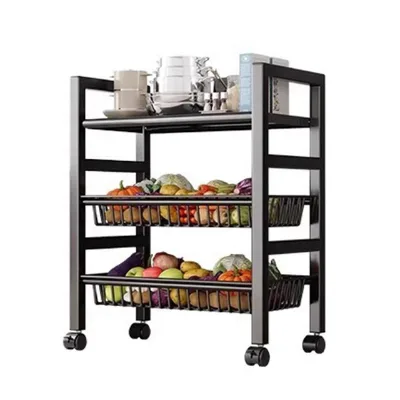


Chrome Kitchen Utility Cart with Tabletop Storage Basket Three-Layer Metal Rack
$36.33 - $108.99
MOQ: 20 Pieces


Comprehensive Sourcing Guide
Strategic Sourcing Guide for European Style Kitchen Storage Carts
Understanding Product Variations and Core Specifications
When sourcing a European Style Kitchen Storage Cart, buyers must first navigate the significant variance in product definitions found in the current market. The term "European style" often implies specific aesthetic choices, such as clean lines, minimalist designs, and the use of materials like chrome plating or powder-coated iron frames. However, the actual product specifications provided in the supply chain reveal a diverse range of configurations that may or may not align with a strict interpretation of this style. The observed product data indicates that while some units are explicitly labeled with a "Northern European" or "European" style, others are categorized simply as "Modern Design" or generic "BBQ Cart" models.
A critical observation in the current supply landscape is the discrepancy between the product name and its functional classification. For instance, items marketed as "Kitchen storage shelf carts" often share structural similarities with "Movable Outdoor Kitchen Cars" or "BBQ Carts." This overlap requires buyers to scrutinize the specific product model numbers, such as AEM-71604 or HTC-10001, rather than relying solely on the category title. The physical dimensions also vary significantly; while one standard specification lists a size of 40x22x90cm, another entry records dimensions of 433686. These variations directly impact the cart's suitability for specific kitchen layouts or outdoor party settings.
The structural composition is another area of high variability. Some units feature a robust "Iron Frame + Stainless Steel Top" combination, which offers durability and a specific aesthetic finish. In contrast, other models utilize "Chrome Plated" materials, which provide a different visual appeal and potentially different maintenance requirements. The number of layers is equally inconsistent, with available options ranging from two layers to three, four, or even five layers. This flexibility allows for customization based on storage needs, but it also means that a buyer seeking a specific capacity must verify the exact "Number of Layers" attribute for each SKU. The "Structure" attribute further complicates the selection process, with some carts described as having a "Mesh" structure while others are defined by their "2 Layers" or "3 Layers" configuration.
Material Integrity and Surface Treatment Standards
The longevity and aesthetic retention of a European Style Kitchen Storage Cart are heavily dependent on the materials used and the surface treatments applied. The supply data highlights "Iron Frame + Stainless Steel Top" as a primary material combination for certain models. This pairing is often chosen for its resistance to corrosion and its ability to support heavy loads, which is essential for kitchen environments where water and grease are common. However, buyers must verify if the stainless steel component is of a grade suitable for food contact if the cart is intended for direct food preparation, although the provided data does not explicitly confirm food-grade certification for all listed items.
Surface treatment is a critical factor in preventing rust and maintaining the "European" aesthetic over time. The data explicitly mentions "Anti-Rust Powder Coating" as a standard process for some units. This treatment is generally superior to standard paint for metal furniture, offering better adhesion and resistance to chipping. For chrome-plated units, the integrity of the plating is paramount; any breach in the chrome layer can lead to rapid oxidation, which would detract from the desired modern or European look. Buyers should request detailed information on the thickness of the powder coating or the quality of the chrome plating process, as these are not standardized across all suppliers.
The condition of the product is listed as "New" across the observed range, which is a baseline expectation for B2B procurement. However, the "Quality" attribute is described generally as "High Quality" without specific grading metrics. This vagueness necessitates a more rigorous quality control process during the inspection phase. The "Folded" attribute indicates that some models are designed to be unfolded for use, suggesting a collapsible design that may impact the structural rigidity of the cart when in the open position. Buyers should assess whether the unfolding mechanism compromises the stability of the cart, especially when loaded with heavy kitchenware.
Functional Design and Operational Features
The functional design of these carts is defined by their mobility, storage capacity, and adaptability to various occasions. A recurring feature in the product data is the inclusion of "Rolling Wheels" or "Universal Brake Casters." The presence of brakes is a significant safety feature, particularly for carts used in busy kitchen environments or during events like weddings and parties where the cart might be moved frequently. The data also notes "Four-Wheel" configurations, which generally provide better stability than two-wheel designs, especially when the cart is fully loaded.
Storage functionality is another key differentiator. The "Number of Layers" varies from two to five, allowing buyers to select a cart that matches their specific storage volume requirements. Some models include a "Drawer" design, which adds a layer of security and organization for smaller items. The "Armrest" feature is also noted in certain listings, which can enhance the usability of the cart for serving food or drinks at social gatherings. The "Occasion" attribute lists a wide range of uses, including "Party, Wedding, Kitchen, Bathroom, Living Room," indicating that these carts are marketed as multi-purpose furniture rather than specialized kitchen equipment.
The "Use" and "Function" attributes describe the carts as "General" and "Multi-purpose," respectively. This broad categorization suggests that the carts are not limited to a single application but are designed to serve multiple roles. For example, a cart with a "Stainless Steel Top" might be used for food preparation, while a "Mesh" structure cart might be better suited for storing dry goods or cleaning supplies. The "Packing" method, often listed as "Single" or "Brown Box," and the "prod_packing" detail of "1 Set / Carton" or "by Sea" are important logistical considerations. Buyers must ensure that the packaging is robust enough to protect the cart during transit, especially given the "Anti-Rust Powder Coating" which could be scratched if the packaging is inadequate.
Compliance, Certification, and Origin Verification
In the B2B procurement of kitchen storage carts, verifying the origin and compliance status of the supplier is essential for risk management. The supply data indicates that products originate from various locations in China, including "Ningbo, Zhejiang," "Jilin," and general "China" designations. Ningbo is a major port city known for its manufacturing capabilities, while Jilin is a different industrial region. The diversity of origins suggests that buyers may be dealing with multiple manufacturers or trading companies, each with different capabilities and quality control standards.
Regarding certifications and standards, the provided data lists "BBQ Cart" as a "prod_standard" for some items and specific dimensions like "40x22x90cm" as standards for others. However, there is no explicit mention of international safety certifications such as ISO, CE, or FDA for food contact materials. The "Warranty" is listed as "1 Year" for some products, which is a standard industry offering but does not guarantee compliance with specific safety regulations. Buyers must independently verify if the supplier can provide documentation for material safety, particularly if the cart is intended for food preparation. The "Customized support" for OEM and ODM indicates that suppliers are willing to adapt products, but this also means that the final product may deviate from the standard specifications, requiring additional quality checks.
The "MOQ" (Minimum Order Quantity) ranges from 1 to 1000, offering flexibility for both small-scale buyers and large distributors. The "Selling Units" are listed as "Single item," which simplifies the ordering process for smaller purchases. However, the "prod_packing" of "by Sea" suggests that larger orders may require ocean freight, which impacts lead times and logistics planning. Buyers should confirm the lead times and shipping terms with the supplier, as these are not explicitly detailed in the product data. The "Condition" being "New" is a standard expectation, but buyers should ensure that the supplier does not sell refurbished or returned items as new.
Cost Drivers and Pricing Dynamics
The pricing of European style kitchen storage carts is influenced by several factors, including material quality, design complexity, and order volume. The observed price range in the market is between 7.1 and 150 USD, a wide spectrum that reflects the diversity of product configurations. Lower-priced items likely correspond to basic models with fewer layers, simpler materials, or less robust surface treatments. Conversely, higher-priced items may feature premium materials like high-grade stainless steel, advanced powder coating, or complex designs with drawers and armrests.
The "MOQ" is a significant cost driver. Suppliers with a high MOQ of 1000 units may offer lower per-unit prices due to economies of scale, while those with an MOQ of 1 may charge a premium for flexibility. Buyers should calculate the total cost of ownership, including shipping, duties, and potential quality control costs, rather than focusing solely on the unit price. The "Packaging" method also affects costs; "Brown Box" or "Carton" packaging may be cheaper than custom-branded packaging, but it might offer less protection during transit.
The "Customization" attribute is available, which can increase costs if the buyer requires specific modifications such as custom colors, logos, or dimensions. The "Style" variations, such as "Northern European" or "Modern Design," may also influence pricing if they require more intricate manufacturing processes. Buyers should request detailed cost breakdowns to understand how much of the price is attributed to materials, labor, and logistics. The "Warranty" of 1 year is a standard inclusion, but buyers should clarify what is covered under the warranty to avoid unexpected costs for repairs or replacements.
Supplier Evaluation and Quality Control Protocols
Evaluating suppliers for European style kitchen storage carts requires a multi-faceted approach that goes beyond the basic product data. Buyers should assess the supplier's ability to meet the specific "Style" and "Material" requirements, as the market offers a mix of "Iron Frame," "Chrome Plated," and "Stainless Steel" options. The "Customized support" for OEM and ODM is a positive indicator of a supplier's flexibility, but it also requires clear communication to ensure that the final product matches the buyer's expectations.
Quality control is paramount, especially given the general "High Quality" claim without specific metrics. Buyers should implement a rigorous inspection process that includes checking the "Surface Treatment" for consistency, verifying the "Wheel" functionality and brake effectiveness, and inspecting the structural integrity of the "Layers." The "Folded" and "Unfolded" states should be tested to ensure the cart remains stable in both configurations. The "Packing" should be inspected to ensure that the "1 Set / Carton" or "by Sea" packaging protects the product from damage during transit.
Buyers should also verify the supplier's production capacity and lead times, as these are not explicitly stated in the product data. The "Place of Origin" being "Ningbo, Zhejiang" or "Jilin" may indicate different logistical advantages, such as proximity to ports or specific industrial clusters. The "Standard" of "BBQ Cart" or specific dimensions should be cross-referenced with the buyer's requirements to ensure compatibility. Finally, the "Warranty" terms should be clearly defined in the contract to protect the buyer against defects or premature failure.
Long-Term Procurement and Strategic Sourcing Considerations
For long-term procurement, buyers should focus on building relationships with suppliers who can consistently deliver high-quality European style kitchen storage carts. The "Customization" and "OEM/ODM" capabilities suggest that suppliers are willing to adapt to changing market demands, which is a valuable asset for long-term partnerships. Buyers should consider the "Occasion" versatility of the carts, as products that can be used in "Party, Wedding, Kitchen, Bathroom, Living Room" settings have a broader market appeal and may offer better sales potential.
The "Material" and "Surface Treatment" choices should be aligned with the target market's expectations for durability and aesthetics. If the market values a "Northern European" or "European" style, buyers should prioritize suppliers who can consistently deliver these designs with high-quality finishes. The "Number of Layers" and "Structure" should be optimized based on customer feedback to ensure the carts meet storage needs effectively. The "Warranty" of 1 year is a standard offering, but buyers should negotiate extended warranty terms if possible to enhance customer satisfaction.
Logistics and supply chain stability are also critical for long-term success. The "prod_packing" of "by Sea" and the "MOQ" range of 1 to 1000 offer flexibility, but buyers should plan for potential disruptions in the supply chain. The "Location" of the supplier, whether "Ningbo, Zhejiang" or "Jilin," should be considered in terms of shipping costs and lead times. Finally, buyers should stay informed about market trends and consumer preferences to ensure that the European style kitchen storage carts they source remain relevant and competitive in the long run.
FAQs
What materials are used for european style kitchen storage carts?
Materials typically include an iron frame with a stainless steel top or chrome plating. Some models feature mesh structures while others use solid surfaces. Buyers must verify the specific material grade for each product model to ensure durability.
How many layers do these carts usually have?
Available configurations range from two to five layers depending on the specific model. Some units are described as having three layers while others offer four or five options. The exact number of layers varies by product specification and design.
Can I customize the design of a European Style Kitchen Storage Cart?
Customization is available with support for OEM and ODM services. Buyers can request specific modifications to meet their unique requirements. However, custom orders may deviate from standard specifications and require additional quality checks.
Which wheels are equipped on these storage carts?
Most carts come with universal brake casters or four-wheel configurations for stability. Some models feature rolling wheels designed for easy movement. The presence of brakes is a key safety feature for busy environments.
What is the typical price range for these products?
The observed price range spans from 7.1 to 150 USD per unit. Lower prices often correspond to basic models with fewer layers while higher prices reflect premium materials. Costs vary based on customization and order volume.
How do I verify the origin of these kitchen carts?
Products originate from various locations in China including Ningbo, Zhejiang, and Jilin. Buyers should confirm the specific place of origin for each supplier. The diversity of origins suggests multiple manufacturers with different quality standards.
What is the minimum order quantity for these items?
The minimum order quantity ranges from 1 to 1000 units depending on the supplier. Lower MOQs allow for smaller purchases while higher volumes may offer better pricing. Buyers must check the specific MOQ for each vendor.